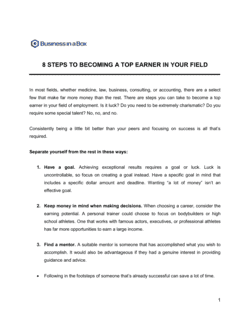
Becoming An Influencer Guide

Free to read β€’ Save or share with one click

FreeBecoming An Influencer Guide Template

At a glance

What it is
A Becoming an Influencer Guide is a structured planning document that maps out every operational stage of building a personal brand and monetizable social media presence β€” from niche selection and platform strategy to content production, audience growth, and brand partnership outreach. This free Word download gives you a ready-to-customize framework you can edit online and export as PDF to share with collaborators, managers, or brand partners.
When you need it
Use it when you are ready to move beyond casual posting and build a deliberate, income-generating presence on one or more platforms. It is equally useful for creators starting from zero and for established micro-influencers who need a documented strategy to attract brand deals.
What's inside
Niche and audience definition, platform selection rationale, content pillars and editorial calendar structure, growth tactics, engagement strategy, monetization roadmap, brand partnership outreach framework, and key performance metrics β€” all in a single structured document.

What is a Becoming an Influencer Guide?

A Becoming an Influencer Guide is a structured operational document that maps every stage of building a personal brand and monetizable social media presence β€” from selecting a niche and primary platform to producing content consistently, growing an engaged audience, and converting that audience into revenue through brand partnerships, affiliate programs, and owned products. It functions as both a strategic roadmap and a working reference document, giving creators a clear sequence of decisions and milestones rather than a loose collection of tips. Unlike general social media advice, this guide is built around your specific niche, target audience, and monetization goals β€” making it actionable from day one.

Why You Need This Document

Without a written plan, most creators cycle through the same failure pattern: post inconsistently for 60 days, struggle to define what their channel is actually about, burn out trying to maintain too many platforms at once, and give up before reaching the follower thresholds that unlock meaningful income. The cost is not just lost time β€” it is the compounding audience and brand relationships that never have a chance to develop. A documented influencer guide forces you to make the critical decisions upfront: which niche you will own, which platform you will prioritize, what your content pillars are, and which revenue stream you will pursue first. Brands that receive outreach from creators with a clear, documented strategy β€” and a media kit to match β€” respond at significantly higher rates than those who receive generic pitches. This template gives you the framework to build once and execute consistently, so that when brand opportunities arrive, you are ready to convert them.

Which variant fits your situation?

If your situation is…Use this template
Building an audience primarily through short-form videoTikTok / Reels Content Strategy Plan
Monetizing through brand sponsorships and paid partnershipsInfluencer Partnership Proposal
Launching a newsletter alongside social channelsContent Marketing Plan
Formalizing a media kit to pitch to brandsInfluencer Media Kit
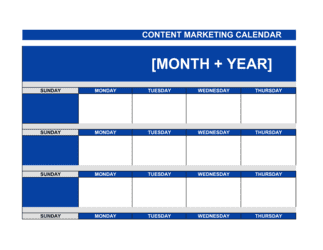
Managing an editorial calendar across multiple platformsSocial Media Content Calendar
Turning influence into a registered business entityBusiness Plan
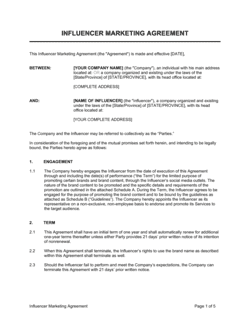
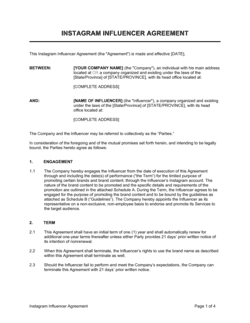
Drafting terms for a paid brand collaborationInfluencer Agreement

Common mistakes to avoid

❌ Starting on too many platforms at once

Why it matters: Creating content for Instagram, TikTok, YouTube, and LinkedIn simultaneously splits creative energy and produces below-average content on all four channels. Algorithms reward consistency and quality; showing up sporadically on five platforms builds an audience on none of them.

Fix: Commit to one primary platform for the first 90 days. Only add a second channel once you have hit a follower or engagement milestone that proves the first channel is working.

❌ Treating follower count as the primary success metric

Why it matters: An account with 4,000 highly engaged followers in a specific niche can command $500–$1,500 per brand post; an account with 40,000 disengaged followers in a broad niche may struggle to land any deal. Brands increasingly use engagement rate and audience quality as their primary screening criteria.

Fix: Track engagement rate (target 3–6% on Instagram, 5–10% on TikTok) and link-in-bio clicks alongside follower count. Report all three metrics in your media kit.

❌ Posting without a defined content pillar structure

Why it matters: Accounts that post randomly across unrelated topics confuse both the algorithm and the audience. Followers who cannot predict what they will get from an account have no reason to follow it; platforms that cannot categorize an account show it to smaller, less relevant audiences.

Fix: Define three to five content pillars before publishing your first post and tag every piece of content to a pillar. Review the distribution quarterly and cut any pillar that is not resonating.

❌ Pitching brands before building a media kit

Why it matters: A cold pitch with no media kit forces the brand to manually research your metrics, audience demographics, and content quality β€” most will not bother. Without documented data, you also have no basis for negotiating your rate.

Fix: Create a one-to-two page media kit showing your platform metrics, audience demographics, engagement rate, content categories, and rate card before sending any outreach. Update it monthly.

❌ Setting an unsustainable posting frequency

Why it matters: Committing to daily content without accounting for scripting, filming, editing, and captioning time leads to burnout within 30–60 days. A visible drop in posting consistency signals instability to both the algorithm and to potential brand partners who review publishing history.

Fix: Calculate the realistic time each post format requires end-to-end, then set your schedule at 60–70% of your available capacity to leave room for evergreen and trending content opportunities.

❌ Ignoring disclosure requirements for sponsored content

Why it matters: The FTC requires US-based creators to clearly disclose paid partnerships, gifted products, and affiliate relationships. Undisclosed sponsored content can result in FTC enforcement actions, platform penalties, and reputational damage if discovered by an audience that values authenticity.

Fix: Add a clear disclosure label β€” '#ad', '#sponsored', or 'Paid partnership with [BRAND]' β€” to every sponsored post and affiliate link. Use the platform's built-in paid partnership tag where available.

The 9 key sections, explained

Niche and Audience Definition

Platform Selection and Rationale

Content Pillars and Brand Voice

Content Production Plan

Audience Growth Strategy

Engagement and Community Management

Monetization Roadmap

Brand Partnership Outreach Framework

Key Metrics and Performance Review

How to fill it out

  1. 1

    Define your niche with a one-sentence positioning statement

    Write a single sentence that names your topic area, your target audience, and the specific problem or aspiration you address. Test it by asking whether a brand could immediately picture their customer in your description.

    πŸ’‘ The narrower your niche statement, the easier it is for the algorithm to categorize you and serve your content to the right people.

  2. 2

    Select one primary platform and document your rationale

    Choose the platform where your target audience is most active and where your preferred content format (video, photo, text) performs best. Write two to three sentences explaining the choice so you can revisit it at your 90-day review.

    πŸ’‘ Check the platform's creator monetization thresholds before committing β€” some programs require follower counts that take 12–18 months to reach.

  3. 3

    Identify three to five content pillars

    List the recurring themes your content will rotate through. Each pillar should be specific enough that you could generate 20 post ideas from it today without repeating yourself.

    πŸ’‘ One pillar should be designed to perform well with new audiences (broad appeal, shareable) and one should deepen loyalty with existing followers (behind-the-scenes, community-specific).

  4. 4

    Set a realistic posting schedule and production workflow

    Decide how many posts per week you can produce at a quality level you are proud of. Block time on your calendar for batch recording and editing and treat it like a client deadline.

    πŸ’‘ Start at 50% of what you think you can manage. It is far easier to increase frequency from two posts to three than to recover from public burnout after 30 days of daily posting.

  5. 5

    Document your audience growth tactics

    List the specific actions you will take each week to grow your audience beyond just posting β€” collaborations, hashtag research, community engagement, and any paid promotion. Assign time estimates to each tactic.

    πŸ’‘ Schedule a 15-minute daily engagement block immediately after posting, not at the end of the day β€” early engagement signals trigger algorithmic distribution within the first 30–60 minutes.

  6. 6

    Map out your monetization phases with milestones

    Decide which revenue stream you will pursue first (affiliate, brand deals, or owned product) and set the follower or engagement milestone that triggers each new phase. Write down the target monthly revenue for each phase.

    πŸ’‘ Sign up for one to two affiliate programs before you hit your first milestone so you have links ready to share the moment you start recommending products.

  7. 7

    Build your brand outreach list and rate card

    Identify 20 brands whose products you already use and whose audience overlaps yours. Draft your rate card based on industry benchmarks (typically $10–$100 per 1,000 followers per post, adjusted for engagement rate).

    πŸ’‘ Research whether each brand has a formal creator program or affiliate portal before cold-pitching β€” applying through an existing program is faster than cold outreach and signals professionalism.

  8. 8

    Set your weekly and monthly KPIs before you publish anything

    Decide on the three to five metrics you will track from day one β€” engagement rate, follower net adds, link clicks β€” and record your baseline numbers before your first post so you have a true starting point for comparison.

    πŸ’‘ Export your analytics data to a simple spreadsheet every Monday morning. Patterns only become visible when you look at four to eight weeks of data together, not post by post.

Frequently asked questions

What is a becoming an influencer guide?

A becoming an influencer guide is a structured planning document that walks a creator through every operational stage of building a monetizable social media presence β€” from choosing a niche and platform to producing content, growing an audience, and securing brand partnerships. Unlike a casual blog post, it provides a repeatable framework with specific milestones, metrics, and outreach templates a creator can act on immediately.

How many followers do you need to become an influencer?

There is no single threshold. Nano-influencers (1,000–10,000 followers) regularly land gifted brand deals and affiliate income. Micro-influencers (10,000–100,000) typically begin commanding paid sponsorships ranging from $150 to $2,000 per post depending on engagement rate and niche. Platform monetization programs have their own floors β€” YouTube requires 1,000 subscribers and 4,000 watch hours; TikTok's Creator Fund requires 10,000 followers and 100,000 views in the past 30 days.

Which platform should a new influencer start on?

The right platform depends on your content format and target audience. Short-form video creators with younger audiences typically grow fastest on TikTok. Visual lifestyle and product creators find Instagram most effective for brand partnerships. Educators and tutorial creators often build deeper, more monetizable audiences on YouTube despite the longer time to traction. Start with one platform where your audience already spends time and your preferred format performs well.

How long does it take to become a paid influencer?

Most creators posting consistently β€” two to four times per week in a defined niche β€” reach their first paid brand deal within six to twelve months. Creators who document a strategy, pitch proactively, and build a media kit before their first outreach typically reach paid partnerships faster than those who wait to be discovered. Niche difficulty, content quality, and posting consistency are the three biggest variables.

What is the difference between an influencer guide and a social media strategy?

A social media strategy is typically written for a brand managing its own corporate channels β€” it focuses on brand voice, content approvals, paid advertising, and customer service protocols. An influencer guide is written for an individual building a personal brand β€” it covers niche positioning, personal content production, audience growth, and direct monetization through brand deals and owned products. The two documents serve different audiences with different goals.

What should a creator's media kit include?

A media kit should include platform follower counts and engagement rates, audience demographic breakdown (age, gender, location), top content categories, two to three examples of previous brand collaborations or high-performing posts, a rate card by content format, and contact information. One to two pages is standard; longer kits rarely get read in full by brand managers reviewing multiple pitches.

Do influencers need to disclose sponsored content?

Yes. The FTC requires US-based creators to clearly and conspicuously disclose any material connection to a brand β€” including paid posts, gifted products, and affiliate commissions. Most major platforms now provide built-in paid partnership labels. Using '#ad' or '#sponsored' in the caption also satisfies the requirement. Failure to disclose can result in FTC enforcement, platform suppression, and audience trust damage.

Can this guide be used by a business building a personal brand, not just individual creators?

Yes. Small business owners, consultants, and professionals frequently use an influencer-style personal brand strategy to drive inbound leads and industry authority. The same framework β€” niche definition, content pillars, platform selection, and audience engagement β€” applies whether the goal is brand deals, consulting clients, or product sales. The monetization section simply maps to different revenue streams.

What metrics should a new influencer track from day one?

From your first post, track follower net adds per week, average engagement rate per post, profile visits, and link-in-bio clicks. Once you begin brand outreach, add media kit open rate and deal pipeline value. Tracking from day one β€” even when the numbers are small β€” gives you a baseline that makes growth visible and helps you identify which content formats and topics are actually driving audience behavior.

How this compares to alternatives

vs Social Media Marketing Plan

A social media marketing plan is designed for a brand managing its corporate channels β€” covering paid advertising budgets, customer service workflows, and multi-team approvals. A becoming an influencer guide is written for an individual building a personal brand with direct monetization goals. The influencer guide focuses on personal niche positioning, content production, and brand deal outreach rather than organizational marketing operations.

vs Content Marketing Plan

A content marketing plan is an organizational document that maps how a company will use content across blog, email, video, and social to support marketing and sales goals. A becoming an influencer guide is focused on an individual creator's platform presence, audience growth, and personal revenue streams. The two may overlap for a solo operator, but the influencer guide includes platform-specific growth tactics and brand partnership frameworks that a corporate content plan does not.

vs Personal Branding Plan

A personal branding plan covers how an individual positions themselves across all professional touchpoints β€” resume, LinkedIn, speaking, and media presence. A becoming an influencer guide is narrower and more operational, focusing specifically on building and monetizing a social media audience. Use both together if the goal is a comprehensive professional presence; use the influencer guide alone if the immediate objective is audience growth and brand deals.

vs Influencer Agreement

An influencer agreement is a legal contract between a creator and a brand that governs a specific paid collaboration β€” deliverables, deadlines, payment terms, and usage rights. A becoming an influencer guide is a planning document for the creator, not a binding document with a brand. The guide helps you reach the point where you need an agreement; the agreement governs what happens when you get there.

Industry-specific considerations

Fashion and Beauty

Heavy reliance on visual content and product review formats; brand deal rates are among the highest across niches due to product margins and creator-audience purchase intent.

Health, Wellness, and Fitness

Strong affiliate income potential through supplement and equipment programs; FTC and platform-specific health claim restrictions require careful content planning.

Food and Beverage

Recipe and review formats perform well on both short and long-form video; local restaurant partnerships and CPG brand deals are the dominant monetization paths.

Finance and Business

High CPM and affiliate commission rates due to financial product margins; creators must navigate platform demonetization risks and regulatory disclaimers for investment-adjacent content.

Travel and Lifestyle

Tourism board partnerships, hotel collaborations, and travel gear affiliates are primary revenue streams; seasonal content cycles require 90-day advance planning.

Education and Professional Development

Course sales and consulting conversions are the dominant monetization model; long-form video and newsletters outperform short-form content for audience conversion in this niche.

Template vs pro β€” what fits your needs?

PathBest forCostTime
Use the templateIndividual creators, small business owners, and professionals starting or formalizing their personal brand strategyFree2–4 hours to complete
Template + professional reviewCreators seeking feedback from a talent manager, digital marketing consultant, or brand strategist before pitching their first major partner$200–$800 for a strategy session or consultant review3–5 days
Custom draftedCreators signing with a talent agency or management company that requires a bespoke strategy document as part of onboarding$1,000–$5,000 for a full managed creator strategy2–4 weeks

Glossary

Niche
A specific, focused topic area or audience segment a creator consistently addresses β€” narrow enough to attract a loyal following, broad enough to sustain ongoing content.
Content Pillar
One of three to five core themes that anchor all content on a channel, ensuring consistency and making the creator easy to categorize for both audiences and algorithms.
Engagement Rate
The percentage of an account's followers who interact with a given post (likes, comments, shares, saves) β€” a more meaningful metric than follower count alone.
Micro-Influencer
A creator with between 10,000 and 100,000 followers whose audience tends to be highly engaged and niche-specific, making them attractive for targeted brand campaigns.
UGC (User-Generated Content)
Content created by a brand's audience or customers rather than the brand itself β€” influencers are frequently hired to produce UGC for brands to use in their own paid ads.
CPM (Cost Per Mille)
The rate an advertiser pays per 1,000 impressions; used by creators to price sponsored content and by brands to evaluate influencer campaign efficiency.
Media Kit
A one-to-two page document a creator shares with potential brand partners, summarizing their audience demographics, engagement metrics, content categories, and partnership rates.
Affiliate Marketing
A monetization model where a creator earns a commission for each sale generated through a unique tracking link or discount code shared with their audience.
Brand Deal
A paid or gifted collaboration between a creator and a company in which the creator produces content featuring or endorsing the brand's product or service.
Algorithm
The platform's automated system for deciding which content to show to which users β€” understanding its ranking signals (watch time, saves, shares) is central to organic growth.
Monetization Threshold
The minimum follower or view count a platform requires before a creator can access its native revenue programs, such as YouTube's Partner Program (1,000 subscribers, 4,000 watch hours).

Part of your Business Operating System

This document is one of 3,000+ business & legal templates included in Business in a Box.

  • Fill-in-the-blanks β€” ready in minutes
  • Compatible with all office suites
  • Export to PDF and share electronically

Create your document in 3 simple steps.

From template to signed document β€” all inside one Business Operating System.
1
Download or open template

Access over 3,000+ business and legal templates for any business task, project or initiative.

2
Edit and fill in the blanks with AI

Customize your ready-made business document template and save it in the cloud.

3
Save, Share, Send, Sign

Share your files and folders with your team. Create a space of seamless collaboration.

Save time, save money, and create top-quality documents.

β˜…β˜…β˜…β˜…β˜…

"Fantastic value! I'm not sure how I'd do without it. It's worth its weight in gold and paid back for itself many times."

Managing Director Β· Mall Farm
Robert Whalley
Managing Director, Mall Farm Proprietary Limited
β˜…β˜…β˜…β˜…β˜…

"I have been using Business in a Box for years. It has been the most useful source of templates I have encountered. I recommend it to anyone."

Business Owner Β· 4+ years
Dr Michael John Freestone
Business Owner
β˜…β˜…β˜…β˜…β˜…

"It has been a life saver so many times I have lost count. Business in a Box has saved me so much time and as you know, time is money."

Owner Β· Upstate Web
David G. Moore Jr.
Owner, Upstate Web

Run your business with a system β€” not scattered tools

Stop downloading documents. Start operating with clarity. Business in a Box gives you the Business Operating System used by over 250,000 companies worldwide to structure, run, and grow their business.

Start freeΒ Β·Β No credit card required