Trial Balance Template

Free Excel download • Edit online • Save & share with Drive • Export to PDF

2 pages15–25 min to fillDifficulty: Standard
Learn more ↓
FreeXLSTrial Balance Template

At a glance

What it is
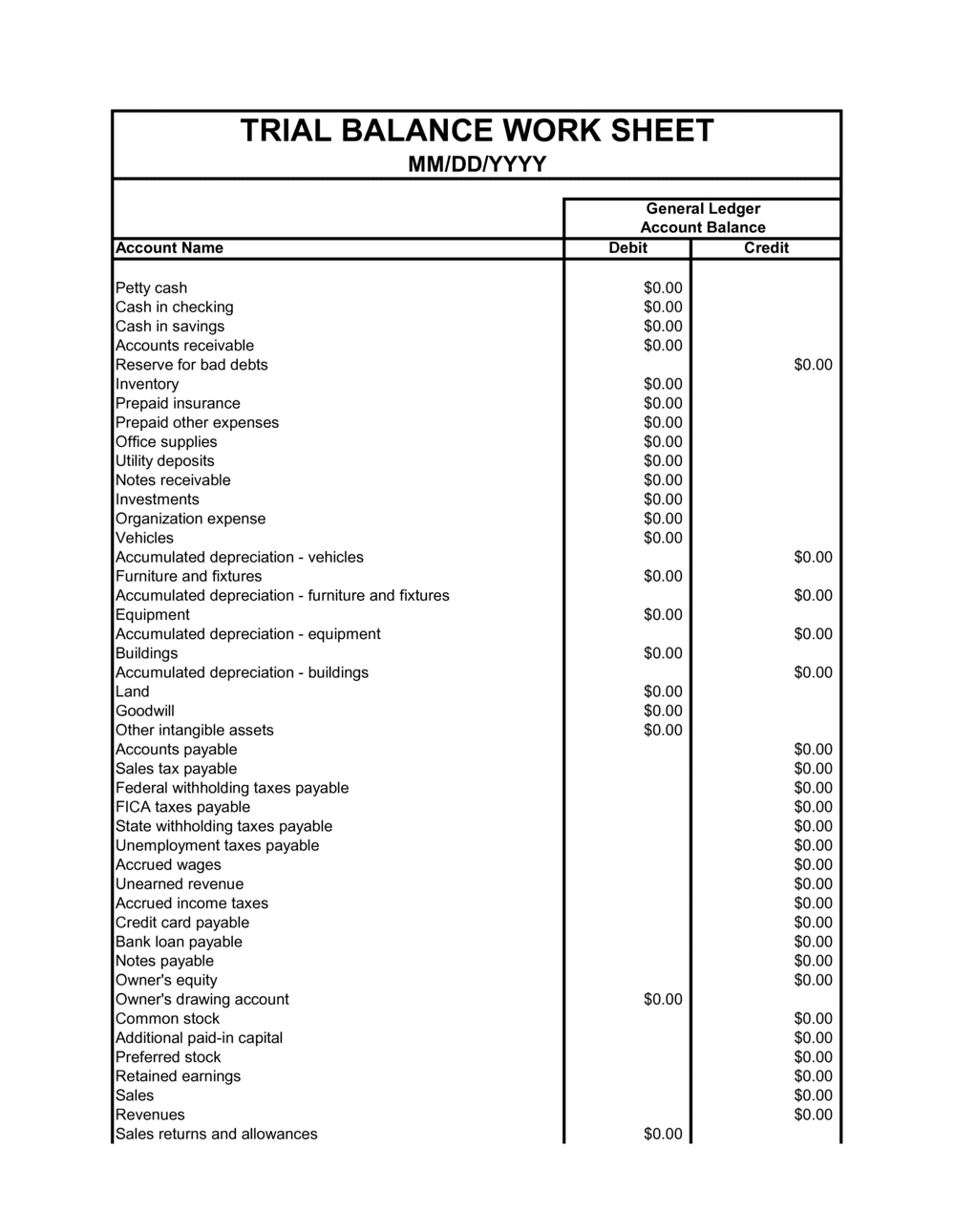
A Trial Balance is an accounting report that lists every general ledger account alongside its closing balance, with debit balances in one column and credit balances in another. This free Word download gives you a ready-to-use template you can populate at any period-end and export as PDF to share with your accountant or auditor.
When you need it
Run it at the end of every accounting period — monthly, quarterly, or annually — before preparing financial statements. It is also the first diagnostic step when debits and credits fail to balance after posting journal entries.
What's inside
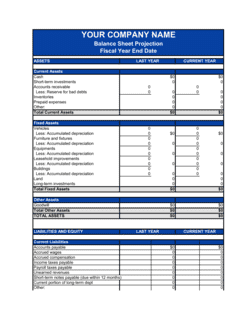
A structured table covering the reporting date, account numbers, account names, debit and credit balance columns, and a totals row that confirms whether the ledger is in balance — plus a notes field for flagging discrepancies.

What is a Trial Balance?

A Trial Balance is an internal accounting report that lists every general ledger account alongside its closing balance at a specific point in time, with debit balances in one column and credit balances in another. When the two columns sum to equal totals, the ledger is arithmetically balanced — a required condition before preparing the income statement, balance sheet, and cash flow statement. It is produced at three stages of the accounting cycle: as an unadjusted report immediately after posting routine transactions, as an adjusted report after period-end accruals and deferrals, and as a post-closing report after year-end closing entries zero out temporary accounts.

Why You Need This Document

Skipping the trial balance and moving directly to financial statement preparation is one of the most reliable ways to produce incorrect financials. A single transposed digit, a journal entry posted to the wrong account, or a missing credit can flow undetected into your income statement and balance sheet, creating figures that are wrong and, in an audit context, potentially misleading. The trial balance is the checkpoint that catches arithmetic errors before they compound. For small businesses preparing year-end tax filings, lenders reviewing quarterly financials, or accountants compiling statements for external parties, a clean, dated trial balance is the first document requested — and the absence of one signals disorganized books. This template gives you a structured, reusable format to run that check every period in under 30 minutes.

Which variant fits your situation?

If your situation is…Use this template
Preparing the initial balance check before any adjustmentsUnadjusted Trial Balance
Running the balance after posting accruals and deferralsAdjusted Trial Balance
Confirming balances after closing temporary accounts at year-endPost-Closing Trial Balance
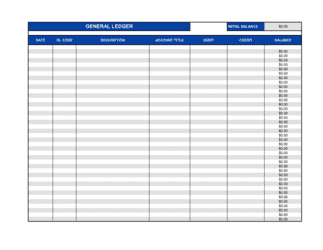
Tracking all individual journal entries feeding into the trial balanceGeneral Ledger
Summarizing the final account balances as a formal financial statementBalance Sheet
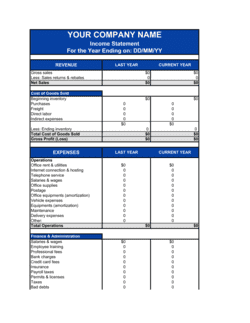
Presenting operating results alongside the balance checkIncome Statement

Common mistakes to avoid

❌ Treating equal totals as proof of accuracy

Why it matters: A trial balance can balance perfectly while still containing errors — posting $500 to the wrong account, for example, keeps totals equal but misclassifies the transaction.

Fix: Use the balanced trial balance as the starting point for account-level review, not the end point. Compare each account to prior periods and investigate movements above a materiality threshold.

❌ Omitting accounts with zero balances

Why it matters: A zero-balance account that should have a non-zero balance signals a missing entry. Leaving it off the trial balance removes it from the review entirely.

Fix: Always pull the full chart of accounts into the trial balance, including zero-balance accounts. Review each zero for reasonableness given the period's activity.

❌ Using an undated report header

Why it matters: A trial balance without a specific 'As of' date cannot be tied to journal entries, reconciliations, or prior-period comparisons — making it useless for audit purposes.

Fix: Always state the exact calendar date in the header. If you are preparing a post-closing trial balance, use the day after the closing entries were posted.

❌ Netting contra accounts against their parent

Why it matters: Combining Accumulated Depreciation into the Fixed Assets balance hides the gross asset cost and the total depreciation taken — both figures needed for financial statement disclosure.

Fix: List Accumulated Depreciation and other contra accounts as separate line items in the Credit column, clearly labeled as contra.

The 8 key fields, explained

Report header

Account number

Account name

Debit column

Credit column

Totals row

Adjusting entries column (adjusted trial balance)

Notes / variance field

How to fill it out

  1. 1

    Enter the company name and reporting date

    Add your legal entity name and the exact date the trial balance covers — 'As of March 31, 2026.' This ties the report to a specific point in time.

    💡 Use the last calendar day of the period, not the date you are preparing the report — the two are often different.

  2. 2

    Pull every account from your chart of accounts

    List all active general ledger accounts in chart-of-accounts order, including accounts with a zero balance. Missing a zero-balance account can hide an error.

    💡 Export the account list directly from your accounting software to avoid transcription errors.

  3. 3

    Enter each account's closing balance in the correct column

    Place asset, expense, and drawing account balances in the Debit column. Place liability, equity, and revenue account balances in the Credit column. Do not net contra accounts against their parent.

    💡 If an account has a balance on the opposite side of its normal balance (e.g., a negative cash balance), flag it in the notes field rather than switching columns.

  4. 4

    Total both columns and check for balance

    Sum all debit balances and all credit balances. If the totals match, the ledger is arithmetically balanced. If they do not match, the difference is your search target.

    💡 Divide the out-of-balance amount by 2 and search for that figure — a common error is posting a debit as a credit, which creates a difference equal to twice the transaction amount.

  5. 5

    Post adjusting entries if producing an adjusted trial balance

    Add a debit and credit adjustment column. Enter period-end accruals, deferrals, depreciation, and inventory adjustments. Calculate adjusted balances in a final column.

    💡 Number each adjusting entry (AJE-1, AJE-2) and keep a separate journal entry log so every adjustment can be traced back to its source.

  6. 6

    Document any unusual balances in the notes field

    Flag accounts with unexpected balances, suspense account amounts, or variances greater than 10% from the prior period. Include a one-line explanation for each.

    💡 A well-documented notes field cuts your accountant's review time significantly and prevents the same question from being asked period after period.

Frequently asked questions

What is a trial balance?

A trial balance is an accounting report that lists every general ledger account and its closing balance, with debit balances in one column and credit balances in another. Its primary purpose is to confirm that total debits equal total credits — a necessary condition before preparing formal financial statements. It does not prove that every transaction was recorded correctly, only that the books are arithmetically balanced.

What is the difference between a trial balance and a balance sheet?

A trial balance lists all general ledger accounts — assets, liabilities, equity, revenue, and expenses — as an internal working document. A balance sheet is a formal financial statement that presents only assets, liabilities, and equity at a point in time, formatted for external readers. The adjusted trial balance is the direct input used to prepare the balance sheet and income statement.

What is the difference between an unadjusted and an adjusted trial balance?

An unadjusted trial balance is pulled directly from the general ledger before any period-end adjusting entries are posted. An adjusted trial balance is produced after accruals, deferrals, depreciation, and other adjustments have been recorded. The adjusted version is the one used to prepare financial statements; the unadjusted version is the starting point for identifying what adjustments are needed.

Does a balanced trial balance mean there are no errors?

No. A trial balance confirms only that total debits equal total credits — it cannot detect errors where the correct amount was posted to the wrong account, where a transaction was omitted entirely, or where the same error was made on both sides. These are called errors of omission, commission, and principle, and they require account-level review to catch.

How often should a trial balance be prepared?

Most businesses prepare a trial balance at the end of every accounting period — monthly at minimum, and always at quarter-end and year-end before closing the books. High-volume businesses or those with complex operations may run an informal balance check weekly to catch posting errors before they accumulate.

What causes a trial balance to be out of balance?

Common causes include posting a debit entry without a corresponding credit (or vice versa), entering the wrong amount on one side of a transaction, transposing digits (e.g., $1,260 entered as $1,620), and adding a new account to the ledger without a balancing entry. Dividing the out-of-balance difference by 2 and searching for that amount is the fastest first diagnostic step.

What is a post-closing trial balance?

A post-closing trial balance is prepared after closing entries have been posted at year-end. It lists only permanent accounts — assets, liabilities, and equity — confirming that all temporary accounts (revenue, expenses, dividends) have been zeroed out and their net balances transferred to retained earnings. It becomes the opening balance for the next fiscal year.

How this compares to alternatives

vs General Ledger

The general ledger is the detailed transaction-level record showing every individual journal entry posted to each account. The trial balance is the summary that collapses each account down to a single closing balance. You need the general ledger to investigate errors found on the trial balance; you need the trial balance to confirm the ledger is in balance before closing.

vs Balance Sheet

The balance sheet is a formal financial statement showing assets, liabilities, and equity, formatted for external readers — investors, lenders, and tax authorities. The trial balance is an internal working document that includes all account types and is never issued externally. The adjusted trial balance is the direct source used to populate the balance sheet.

vs Income Statement

The income statement presents revenue and expense performance over a period, drawn from the revenue and expense accounts in the adjusted trial balance. The trial balance itself is not a performance report — it is a pre-statement accuracy check. Both documents are produced from the same underlying data but serve different audiences and purposes.

vs Chart of Accounts

The chart of accounts is the numbered master list of all accounts available in the general ledger. The trial balance populates that structure with actual balances at a point in time. The chart of accounts defines the framework; the trial balance fills it in with period-end figures.

Industry-specific considerations

Professional Services

Monthly trial balances track unbilled work-in-progress and accrued revenue, ensuring project costs and client billings are matched in the correct period.

Retail and E-commerce

Period-end trial balances reconcile inventory accounts against physical counts and separate cost of goods sold from operating expenses before the income statement is prepared.

Construction

Job-cost accounts and progress billings make construction trial balances more complex — the report is used to verify that costs are allocated to the correct project codes before draw requests are submitted.

Nonprofit Organizations

Fund accounting requires separate trial balances for each restricted and unrestricted fund, ensuring grant expenditures are reported within the correct funding category.

Template vs pro — what fits your needs?

PathBest forCostTime
Use the templateSmall businesses and bookkeepers performing monthly or year-end balance checksFree15–30 minutes per period
Template + professional reviewBusinesses with complex adjusting entries or preparing for an external audit$100–$300 for an accountant review session1–2 hours
Custom draftedEnterprises with multi-entity consolidations or ERP-integrated reporting requirements$500–$2,000+ for system configuration or consultant setup1–5 days

Glossary

General Ledger
The master record of all financial transactions in a business, organized by account — the source data that a trial balance summarizes.
Debit
An entry that increases asset or expense accounts and decreases liability, equity, or revenue accounts.
Credit
An entry that increases liability, equity, or revenue accounts and decreases asset or expense accounts.
Double-Entry Bookkeeping
An accounting system in which every transaction affects at least two accounts, keeping total debits equal to total credits at all times.
Unadjusted Trial Balance
A trial balance produced directly from the general ledger before any period-end adjusting entries — such as accruals or depreciation — are posted.
Adjusted Trial Balance
A trial balance produced after all adjusting journal entries have been posted, used as the direct input to the formal financial statements.
Closing Entry
A journal entry made at year-end to transfer balances from temporary accounts (revenue, expense, dividends) to retained earnings, resetting them to zero.
Chart of Accounts
A numbered list of every account used in a company's general ledger, providing the structure that a trial balance follows.
Accrual
Revenue or expense recognized in the period it is earned or incurred, regardless of when cash changes hands — a common source of period-end adjusting entries.
Suspense Account
A temporary holding account used when a transaction cannot immediately be assigned to the correct account — a non-zero suspense balance flags an error on the trial balance.

Part of your Business Operating System

This document is one of 3,000+ business & legal templates included in Business in a Box.

  • Fill-in-the-blanks — ready in minutes
  • 100% customizable Word document
  • Compatible with all office suites
  • Export to PDF and share electronically

Create your document in 3 simple steps.

From template to signed document — all inside one Business Operating System.
1
Download or open template

Access over 3,000+ business and legal templates for any business task, project or initiative.

2
Edit and fill in the blanks with AI

Customize your ready-made business document template and save it in the cloud.

3
Save, Share, Send, Sign

Share your files and folders with your team. Create a space of seamless collaboration.

Save time, save money, and create top-quality documents.

★★★★★

"Fantastic value! I'm not sure how I'd do without it. It's worth its weight in gold and paid back for itself many times."

Managing Director · Mall Farm
Robert Whalley
Managing Director, Mall Farm Proprietary Limited
★★★★★

"I have been using Business in a Box for years. It has been the most useful source of templates I have encountered. I recommend it to anyone."

Business Owner · 4+ years
Dr Michael John Freestone
Business Owner
★★★★★

"It has been a life saver so many times I have lost count. Business in a Box has saved me so much time and as you know, time is money."

Owner · Upstate Web
David G. Moore Jr.
Owner, Upstate Web

Run your business with a system — not scattered tools

Stop downloading documents. Start operating with clarity. Business in a Box gives you the Business Operating System used by over 250,000 companies worldwide to structure, run, and grow their business.

Start free · No credit card required