- Audit Scope
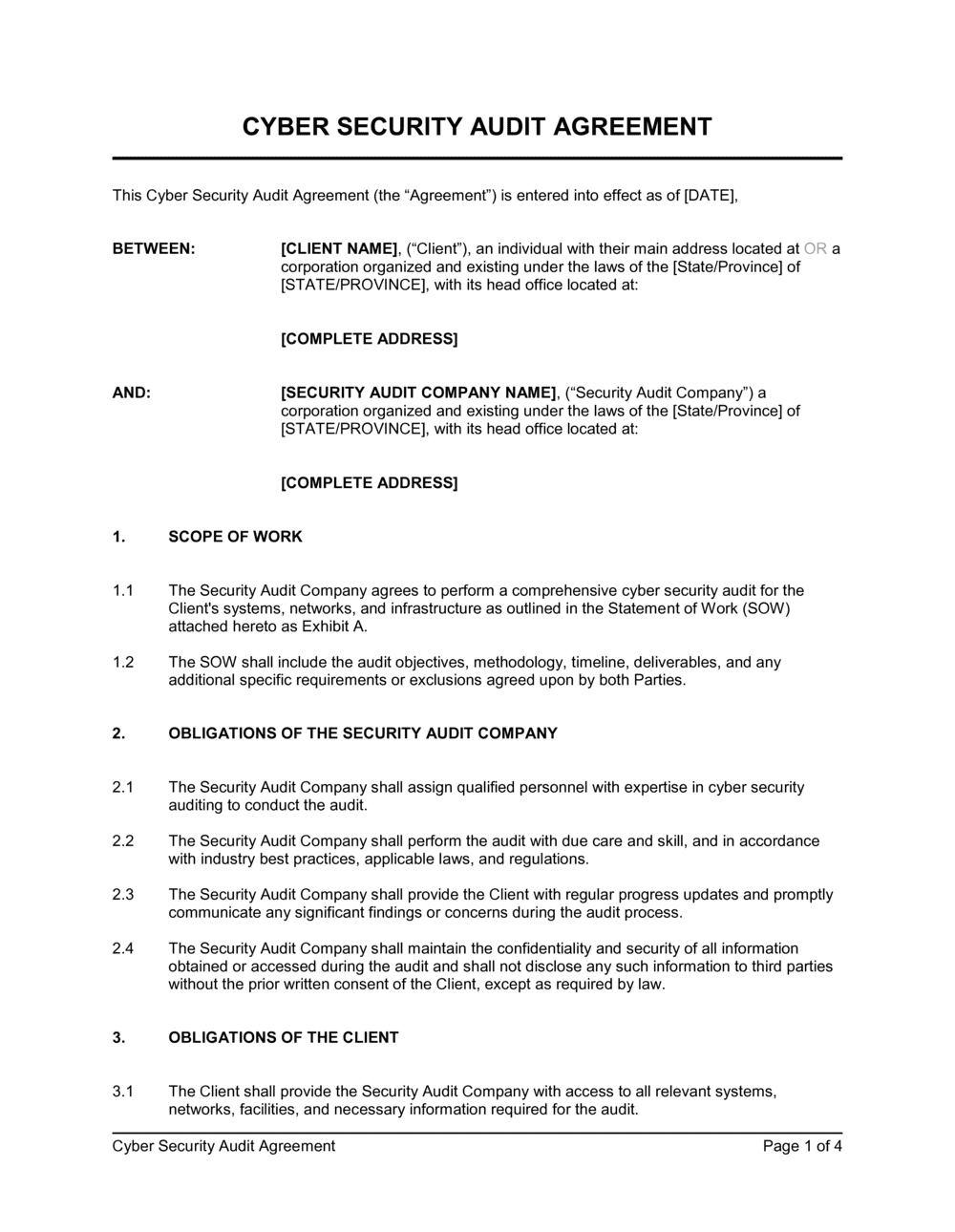
- The explicitly defined set of systems, networks, applications, and data repositories the auditor is authorized to access and test.
- Penetration Testing
- A controlled, authorized attempt to exploit vulnerabilities in a system in order to identify security weaknesses before malicious actors do.
- Statement of Work (SOW)
- An attachment to the agreement that details specific deliverables, timelines, testing methodologies, and personnel assigned to the engagement.
- Findings Report
- The formal document produced at the conclusion of the audit listing identified vulnerabilities, risk ratings, and recommended remediation steps.
- Liability Cap
- A contractual ceiling on the maximum financial damages either party can recover from the other, typically expressed as a multiple of fees paid.
- Indemnification
- A clause requiring one party to compensate the other for losses, claims, or damages arising from specified events — such as the auditor's negligence during testing.
- Chain of Custody
- The documented trail showing how sensitive data or findings collected during the audit were handled, stored, transmitted, and ultimately destroyed.
- Safe Harbor Clause
- A provision protecting the auditor from legal liability for discovering or disclosing vulnerabilities when acting within the authorized scope of the engagement.
- Data Classification
- The process of categorizing data by sensitivity level — such as public, internal, confidential, or restricted — to determine appropriate handling during the audit.
- Remediation Timeline
- The agreed schedule by which the audited organization commits to addressing identified vulnerabilities after receiving the findings report.
- Rules of Engagement
- A section or attachment defining exactly what testing techniques are permitted, which systems are off-limits, and the hours during which active testing may occur.