Risk Assessment Matrix Template

Free download β€’ Use as a template β€’ Print or share

1 pageβ€’20–30 min to useβ€’Difficulty: Standardβ€’Signature requiredβ€’Legal review recommended
Learn more ↓
FreeRisk Assessment Matrix Template

At a glance

What it is
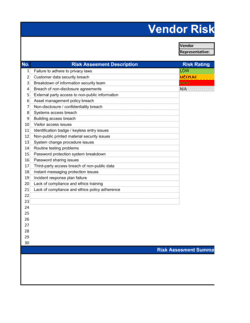
A Risk Assessment Matrix is a structured document that identifies, scores, and assigns ownership of every material risk facing a project, department, or organization β€” rating each risk by likelihood and impact to produce a prioritized action plan. This free Word download gives you a ready-to-use framework you can edit online and export as PDF for board reviews, regulatory submissions, or project kick-offs.
When you need it
Use it at the start of any project, during annual compliance reviews, when entering a new market or jurisdiction, or whenever a regulator, insurer, or board requires documented evidence that organizational risks have been formally identified and controlled.
What's inside
Risk identification fields, likelihood and impact scoring scales, a risk-priority rating (Low / Medium / High / Critical), mitigation controls, residual risk assessment, risk owner assignments, review dates, and an executive sign-off block.

What is a Risk Assessment Matrix?

A Risk Assessment Matrix is a structured governance document that identifies every material risk facing a project, department, or organization, scores each risk by likelihood and impact on a calibrated numeric scale, and produces a prioritized action plan assigning controls, treatment strategies, and named owners to every entry. The matrix translates qualitative judgment about uncertainty into a ranked, auditable record β€” separating risks that require immediate executive action from those that can be monitored at a lower level. It functions as both an internal management tool and the primary evidence of formal risk due diligence when submitted to regulators, auditors, insurers, or boards.

Why You Need This Document

Without a signed, scored risk assessment matrix, your organization's risk management activity exists only in people's heads β€” and that creates four concrete problems. First, when a risk materializes and results in regulatory inquiry or litigation, an undocumented process provides no legal defense: courts and regulators expect written evidence that the risk was known, scored, and controlled. Second, without named owners and review dates, high-priority risks go unmonitored until they become incidents. Third, insurers routinely condition coverage and premium levels on documented risk assessments β€” the absence of one can void a claim. Fourth, for any ISO certification, SOC 2 audit, or financial services regulatory examination, a formally structured risk matrix is a non-negotiable deliverable. This template gives you a complete, sign-off-ready framework in hours rather than weeks β€” so your risk management is documented before the event that makes documentation matter.

Which variant fits your situation?

If your situation is…Use this template
Assessing risks across an entire enterprise or business unitEnterprise Risk Management Framework
Tracking risks for a specific project from initiation to closeProject Risk Register
Documenting health and safety hazards in a workplaceHealth and Safety Risk Assessment
Evaluating cybersecurity and data-privacy exposureIT Risk Assessment
Assessing supplier or third-party vendor riskVendor Risk Assessment
Preparing a risk summary for board or executive committee reviewRisk Management Report
Identifying financial and credit risks for a lending decisionFinancial Risk Assessment

Common mistakes to avoid

❌ Using undefined numeric scales

Why it matters: When assessors apply their own interpretation to a 1–5 scale, two people evaluating the same risk will assign different scores β€” producing a priority ranking that reflects opinion rather than analysis.

Fix: Define each score level with specific, measurable criteria before any scoring begins, and circulate the definitions in writing to every participant.

❌ Assigning risk ownership to a team or department

Why it matters: Shared accountability is no accountability β€” when a risk materializes or a control fails, there is no single person responsible for the gap.

Fix: Name one specific individual as owner for every risk in the matrix, confirm their acceptance in writing, and make ownership visible to their manager.

❌ Skipping the inherent risk baseline

Why it matters: Without inherent scores, you cannot demonstrate to auditors or regulators that your controls are actually reducing exposure β€” the residual score becomes an assertion, not a measurement.

Fix: Always complete the inherent likelihood and impact columns before documenting any controls, even if the controls are already well-established.

❌ Listing 'monitor regularly' as the sole mitigation control

Why it matters: Monitoring detects risk events after they occur β€” it does not reduce their likelihood or limit their impact, so it fails every standard definition of a mitigation control.

Fix: Replace generic monitoring entries with specific actions that change either the probability of occurrence or the severity of consequences, and note monitoring separately as an oversight activity.

❌ Treating the completed matrix as a static document

Why it matters: An undated, unreviewed matrix filed away after completion gives organizations a false sense of security β€” and provides no legal protection if a risk materializes after the business environment has changed.

Fix: Set a mandatory review date on every matrix at the time of sign-off, and establish at least five named trigger events that require an immediate unscheduled re-assessment.

❌ Distributing the matrix without executive sign-off

Why it matters: An unsigned risk matrix has no regulatory or legal standing as evidence of formal due diligence β€” it is a working draft, not an organizational commitment.

Fix: Obtain a dated signature from an executive with appropriate authority before distributing or filing the matrix, and store it under version control.

The 10 key clauses, explained

Risk Identification and Description

In plain language: Names each risk event clearly, describes its nature and origin, and categorizes it by type β€” operational, financial, legal, reputational, or strategic.

Sample language
Risk ID: [RISK-001] | Category: [OPERATIONAL / FINANCIAL / LEGAL / REPUTATIONAL / STRATEGIC] | Description: [CONCISE DESCRIPTION OF THE RISK EVENT, INCLUDING CAUSE AND POTENTIAL TRIGGER].

Common mistake: Describing risks at too high a level β€” 'financial risk' or 'IT risk' without specifying the mechanism. Vague descriptions make it impossible to assign a meaningful score or an accountable owner.

Likelihood Scoring Scale

In plain language: Establishes the numeric scale and plain-language definitions used to rate the probability of each risk occurring, ensuring consistent scoring across assessors.

Sample language
Likelihood Scale: 1 β€” Rare (less than 10% probability within [PERIOD]); 2 β€” Unlikely (10–30%); 3 β€” Possible (30–50%); 4 β€” Likely (50–70%); 5 β€” Almost Certain (above 70%).

Common mistake: Omitting the probability definitions and relying on the numeric scale alone. Without anchored definitions, two assessors rating the same risk will routinely score it two or three points apart.

Impact Scoring Scale

In plain language: Defines what each impact rating represents across financial, operational, legal, and reputational dimensions so scores are applied consistently.

Sample language
Impact Scale: 1 β€” Negligible (financial loss under $[X], no regulatory exposure); 3 β€” Moderate (financial loss $[X]–$[Y], potential regulatory inquiry); 5 β€” Catastrophic (financial loss above $[Y], regulatory action or litigation likely).

Common mistake: Using the same flat impact scale for risks of fundamentally different types. A reputational risk scored identically to a financial risk without separate criteria produces a misleading priority ranking.

Risk Priority Rating and Heat Map

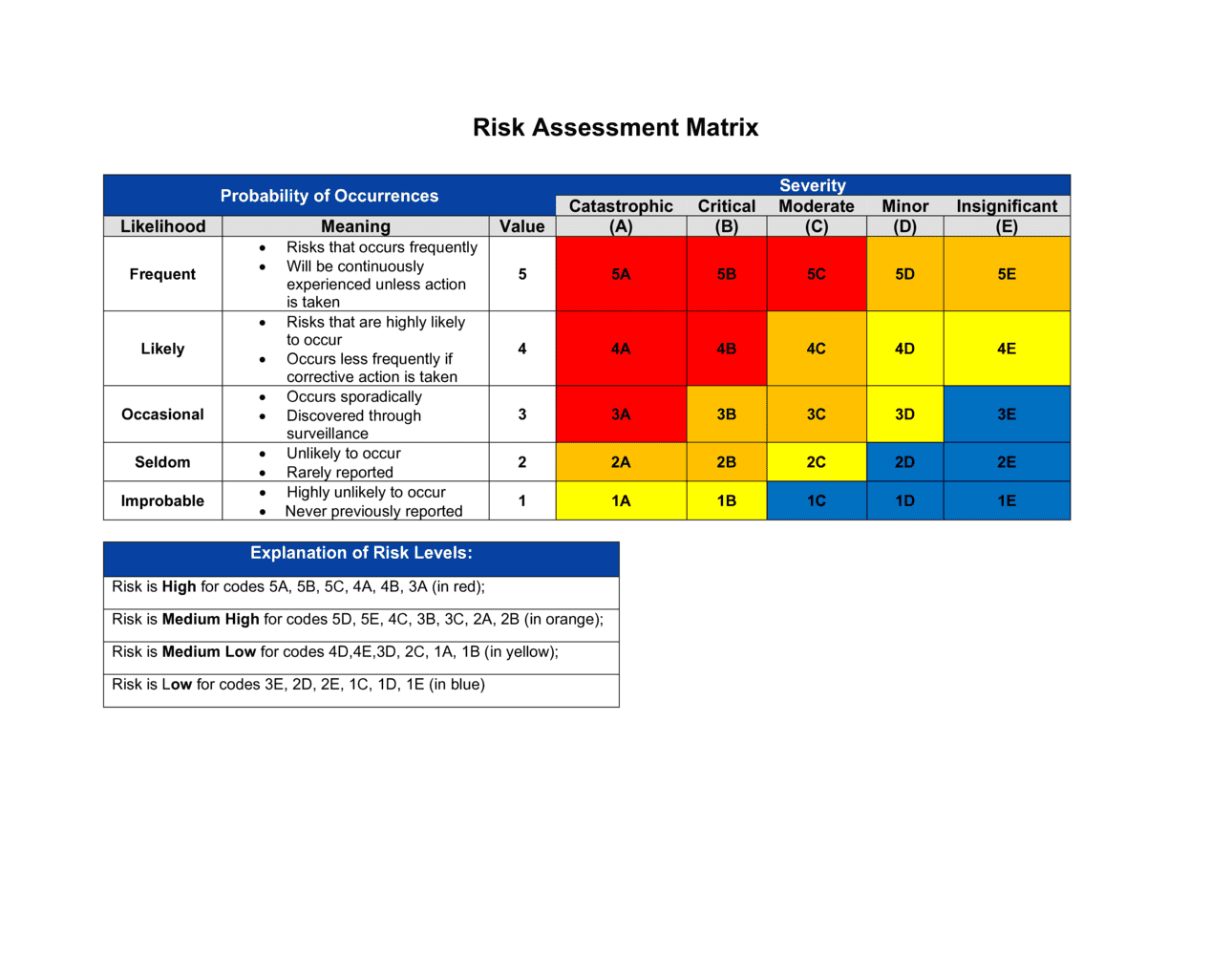
In plain language: Multiplies Likelihood by Impact to produce a Priority Rating score, then maps each risk to a color-coded heat map zone β€” Low, Medium, High, or Critical β€” to guide response sequencing.

Sample language
Priority Rating = Likelihood Score Γ— Impact Score. Zones: 1–4 = Low (green); 5–9 = Medium (yellow); 10–19 = High (orange); 20–25 = Critical (red). All Critical and High risks require a documented treatment plan within [X] business days.

Common mistake: Treating the heat map as the finished product rather than the starting point. A risk landing in 'Medium' still requires an assigned owner and a review date β€” the matrix does not manage itself.

Inherent Risk Assessment

In plain language: Records the raw likelihood and impact scores before any controls are applied, establishing a baseline for measuring the effectiveness of mitigation actions.

Sample language
Inherent Likelihood: [1–5] | Inherent Impact: [1–5] | Inherent Priority Rating: [SCORE] | Zone: [LOW / MEDIUM / HIGH / CRITICAL].

Common mistake: Skipping the inherent risk assessment and scoring only residual risk. Without the baseline, you cannot demonstrate to auditors or regulators that controls are actually reducing exposure.

Mitigation Controls and Treatment Plan

In plain language: Describes the specific actions, policies, and systems in place or planned to reduce the likelihood or impact of each risk, and classifies the treatment strategy as Avoid, Reduce, Transfer, or Accept.

Sample language
Treatment Strategy: [AVOID / REDUCE / TRANSFER / ACCEPT]. Current Controls: [DESCRIPTION OF EXISTING MEASURES]. Planned Actions: [ACTION 1] by [DATE], [ACTION 2] by [DATE]. Control Effectiveness: [INEFFECTIVE / PARTIAL / EFFECTIVE / FULLY EFFECTIVE].

Common mistake: Writing 'management review' or 'monitor regularly' as the sole mitigation control. These are oversight activities, not controls β€” they do not reduce likelihood or impact and will be flagged in any serious audit.

Residual Risk Assessment

In plain language: Re-scores likelihood and impact after controls are applied, producing the residual priority rating the organization must decide to accept, escalate, or reduce further.

Sample language
Residual Likelihood: [1–5] | Residual Impact: [1–5] | Residual Priority Rating: [SCORE] | Residual Zone: [LOW / MEDIUM / HIGH / CRITICAL] | Accepted by: [NAME / TITLE] on [DATE].

Common mistake: Setting residual scores lower than inherent scores without documenting why β€” specifically, which control drives the reduction. Auditors will not accept unexplained score reductions as evidence of genuine risk reduction.

Risk Owner and Accountability Assignment

In plain language: Names the specific individual accountable for each risk β€” responsible for implementing controls, monitoring status, and escalating changes β€” with contact details and their reporting line.

Sample language
Risk Owner: [FULL NAME], [TITLE], [DEPARTMENT]. Reports to: [SUPERVISOR NAME / TITLE]. Responsible for: implementing [CONTROL NAMES], reporting status at [FREQUENCY] intervals, and escalating if residual rating changes.

Common mistake: Assigning a team or department as the risk owner rather than a named individual. Shared ownership means no accountability β€” when the risk materializes, the gap in control execution is traced directly to the absence of a single owner.

Review Schedule and Trigger Events

In plain language: Sets the regular review cadence and lists the specific events that must trigger an unscheduled re-assessment β€” such as a regulatory change, a near-miss incident, or a significant business change.

Sample language
Standard review frequency: [QUARTERLY / SEMI-ANNUALLY / ANNUALLY]. Next scheduled review: [DATE]. Trigger events requiring immediate re-assessment: material change in business operations, regulatory amendment, significant incident or near-miss, or acquisition/disposal of assets.

Common mistake: Setting an annual review cycle without trigger events. A risk matrix reviewed once per year is outdated by definition β€” regulations change, operations shift, and new exposures emerge on timelines that have nothing to do with the calendar.

Executive Sign-Off and Version Control

In plain language: Documents who approved the completed matrix, at what authority level, on what date, and establishes version numbering so prior assessments are traceable.

Sample language
Approved by: [NAME], [TITLE] | Date: [DATE] | Version: [X.X] | Supersedes: Version [X.X] dated [PRIOR DATE] | Next mandatory review: [DATE].

Common mistake: Distributing an unsigned or undated matrix as a formal risk document. Without an authorizing signature and date, the document has no legal or regulatory standing as evidence of organizational due diligence.

How to fill it out

  1. 1

    Define the scope and assessment period

    Specify whether the matrix covers an entire organization, a single project, a department, or a process. Set the time horizon β€” typically 12 months for operational assessments or the project duration for project-specific use.

    πŸ’‘ A matrix with no defined scope is unauditable β€” assessors will score risks differently because they are imagining different organizational boundaries.

  2. 2

    Establish and document your scoring scales

    Define what each score of 1 through 5 means for both Likelihood and Impact β€” including specific financial thresholds for each impact band. Circulate definitions to all assessors before scoring begins.

    πŸ’‘ Anchor the top impact score (5) to a financial loss or legal consequence your organization would consider existential β€” this calibrates every score below it.

  3. 3

    Identify and categorize all material risks

    Conduct a structured risk identification workshop covering operational, financial, legal, reputational, and strategic categories. Record each risk as a discrete event with a clear cause, not as a broad theme.

    πŸ’‘ Use 'if–then' language to sharpen descriptions: 'If [CAUSE], then [RISK EVENT] occurs, resulting in [CONSEQUENCE].' This format forces specificity.

  4. 4

    Score inherent likelihood and impact

    Apply your documented scales to each identified risk before considering any existing controls. Use input from at least two subject-matter experts per risk category to reduce individual bias.

    πŸ’‘ Run a calibration exercise on two or three well-understood risks before scoring the full list β€” this surfaces scale interpretation differences before they distort the full matrix.

  5. 5

    Document existing controls and assess their effectiveness

    For each risk, list the specific controls currently in place β€” policies, systems, insurance, procedures β€” and rate each control's effectiveness on a four-point scale from Ineffective to Fully Effective.

    πŸ’‘ If you cannot name a specific control for a High or Critical inherent risk, that gap is itself a finding that must be addressed before the matrix is finalized.

  6. 6

    Score residual risk and assign treatment strategies

    Re-score likelihood and impact after controls, calculate the residual priority rating, and choose a treatment strategy β€” Avoid, Reduce, Transfer, or Accept β€” with documented rationale for each choice.

    πŸ’‘ Any residual High or Critical risk accepted without a reduction plan should require sign-off at least one level above the risk owner to ensure accountability is visible.

  7. 7

    Assign a named risk owner to every risk

    Enter a specific individual's name and title for each risk β€” not a team name. Confirm each owner accepts accountability before the matrix is finalized and signed.

    πŸ’‘ Send each owner their assigned risks in writing and ask for written confirmation β€” this avoids disputes about accountability if a risk materializes.

  8. 8

    Set review dates and obtain executive sign-off

    Enter the standard review frequency and next review date for every risk, add the list of trigger events, and obtain dated signatures from the approving executive before distributing the document.

    πŸ’‘ Store the signed matrix in a version-controlled document management system β€” regulators and auditors expect to see prior versions to assess whether risk management is improving over time.

Frequently asked questions

What is a risk assessment matrix?

A risk assessment matrix is a structured document that identifies each material risk facing a project or organization, scores it by likelihood and impact on a defined numeric scale, calculates a priority rating, and assigns a named owner and mitigation controls to every risk. The result is a ranked action plan that tells decision-makers where to focus resources and provides auditable evidence of formal risk governance.

How is the risk priority rating calculated?

The standard method multiplies the Likelihood Score (1–5) by the Impact Score (1–5) to produce a Priority Rating between 1 and 25. Ratings are then grouped into zones β€” typically Low (1–4), Medium (5–9), High (10–19), and Critical (20–25) β€” and color-coded on a heat map. The zones determine how urgently a treatment plan must be developed and at what authority level residual risk must be accepted.

What is the difference between inherent risk and residual risk?

Inherent risk is the exposure that exists before any controls are applied. Residual risk is what remains after controls are in place. The gap between the two measures demonstrates the value of your control environment. Regulators and auditors specifically look for both scores β€” a matrix that only reports residual risk cannot prove that controls are working.

Who should sign a risk assessment matrix?

The approving signature should come from the executive with authority over the scope covered β€” typically a department head, project sponsor, COO, or board-level risk committee. For regulatory submissions, confirm the authority level required by the applicable standard (ISO 31000, SOC 2, ISO 27001, or industry-specific frameworks). Each risk owner should also confirm their assignment in writing before the document is finalized.

How often should a risk assessment matrix be reviewed?

Most organizations review operational risk matrices quarterly or semi-annually, with a mandatory annual refresh. Project risk matrices should be reviewed at every major phase gate. Beyond the calendar, specific trigger events β€” a regulatory change, a material incident, an acquisition, or entry into a new market β€” should prompt an immediate unscheduled re-assessment regardless of when the last review occurred.

Is a risk assessment matrix legally required?

In many jurisdictions and sectors, yes. Workplace health and safety legislation in the US (OSHA), Canada, the UK (Health and Safety at Work Act 1974), and the EU (Framework Directive 89/391/EEC) requires documented risk assessments for workplace hazards. Financial services regulators (SEC, FCA, ESMA) require documented risk frameworks. ISO 27001 certification mandates a formal information security risk assessment. Even where not legally required, a signed matrix is the primary evidence of due diligence if a risk event generates litigation or regulatory inquiry.

What is the difference between a risk assessment matrix and a risk register?

A risk register is the complete inventory of all identified risks β€” it logs each risk's description, owner, status, and controls but does not always include a structured scoring methodology or heat map. A risk assessment matrix applies a systematic likelihood-by-impact scoring framework to produce a ranked priority list. In practice, many organizations embed the matrix scoring columns inside their risk register, but they serve different analytical purposes.

What risk treatment strategies should the matrix document?

Every risk should be assigned one of four treatment strategies: Avoid (change the plan to eliminate the risk entirely), Reduce (implement controls to lower likelihood or impact), Transfer (shift financial exposure through insurance, contracts, or outsourcing), or Accept (document that the residual risk is within appetite and will be monitored). Acceptance of any High or Critical residual risk should require sign-off at a senior level and a documented rationale.

Do I need a lawyer to complete a risk assessment matrix?

For standard operational or project risk assessments, a well-structured template is typically sufficient. Legal review is advisable when the matrix will be submitted to a regulator, included in a compliance certification (ISO, SOC 2, HIPAA), used as evidence in litigation, or covers legal and regulatory risks where the consequence descriptions involve statutory obligations. A lawyer or compliance specialist can also confirm that the scoring framework meets the specific standard required by your industry regulator.

How this compares to alternatives

vs Risk Register

A risk register is a running inventory that logs all identified risks with their status and owners. A risk assessment matrix adds a structured scoring methodology β€” likelihood and impact scales, priority ratings, and a heat map β€” to produce a ranked action list. The matrix provides the analytical rigor that turns a list into a prioritized governance tool. For organizations managing more than 20 risks, both documents are typically used together.

vs Business Continuity Plan

A business continuity plan describes how the organization will respond and recover after a critical risk has materialized. A risk assessment matrix identifies and scores risks before they occur and establishes controls to reduce their likelihood. The matrix drives prevention; the continuity plan drives response. Regulators and auditors typically require both, and the risk matrix should inform which scenarios the continuity plan addresses first.

vs SWOT Analysis

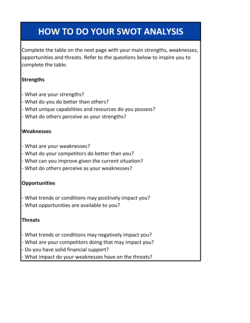
A SWOT analysis is a strategic planning tool that surfaces threats and weaknesses at a high level during ideation or direction-setting. A risk assessment matrix is an operational governance document that scores specific threats with numeric rigor, assigns owners, and documents controls. A SWOT identifies what to be concerned about; the risk matrix determines what to do about it, at what priority, and who is accountable.

vs Incident Report

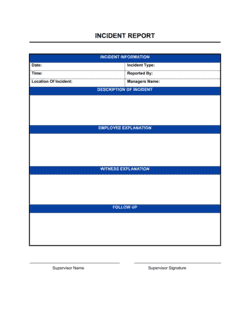
An incident report documents a risk event after it has already occurred β€” recording what happened, who was affected, and what was done in response. A risk assessment matrix operates prospectively, identifying and scoring risks before they occur and assigning controls to prevent or limit them. A well-maintained matrix will often include recently closed incidents as evidence that a previously identified risk materialized, validating or requiring revision of the original score.

Industry-specific considerations

Financial Services

Regulatory capital risk, credit risk, operational risk under Basel III/IV, and model risk all require scored, signed documentation submitted to prudential regulators on a defined cycle.

Healthcare

Patient safety, clinical, and data privacy risks must be documented to meet HIPAA, Joint Commission, and NHS standards β€” with risk owners traceable to licensed clinical or compliance officers.

Construction

OSHA and equivalent workplace safety regulations require documented hazard risk assessments for every project site, with contractor sign-off before work commences.

Technology / SaaS

ISO 27001 and SOC 2 certifications require a formal information security risk assessment matrix as a core deliverable, covering data breach, third-party vendor, and system availability risks.

Manufacturing

Process failure, supply chain disruption, and environmental compliance risks are scored and tracked under ISO 9001 and ISO 14001 quality and environmental management systems.

Professional Services

Engagement-level risk matrices are required for audit, consulting, and legal service delivery under professional indemnity insurance conditions and client contract terms.

Jurisdictional notes

United States

OSHA requires documented hazard risk assessments for workplace safety under 29 CFR 1910 and 1926. Financial services firms must maintain risk documentation under SEC, FINRA, and OCC frameworks. Healthcare entities must conduct and document security risk analyses under HIPAA's Security Rule (45 CFR Β§164.308). State-level requirements vary β€” California, New York, and Texas have specific sector rules that supplement federal standards.

Canada

Occupational health and safety legislation in each province β€” including Ontario's OHSA and BC's Workers Compensation Act β€” requires documented hazard assessments for workplace risks. OSFI's guidelines require federally regulated financial institutions to maintain formal risk frameworks. Quebec's Act respecting occupational health and safety imposes documented risk assessment obligations on all employers. Bilingual documentation is required for federally regulated employers operating in Quebec.

United Kingdom

The Management of Health and Safety at Work Regulations 1999 requires all UK employers with five or more employees to maintain a written risk assessment. The FCA requires authorized firms to document their risk management frameworks under SYSC 7. Post-Brexit, the UK retained the EU Framework Directive obligations through retained EU law, though sector-specific rules are now diverging. The HSE publishes sector-specific guidance on scoring methodology that courts treat as the standard of care.

European Union

EU Framework Directive 89/391/EEC requires all member state employers to conduct and document workplace risk assessments β€” member states set the specific procedural requirements. GDPR (Article 35) mandates a Data Protection Impact Assessment, which includes a structured risk matrix, for high-risk personal data processing activities. The EU AI Act introduces risk classification and documentation requirements for AI systems. Financial institutions must comply with EBA guidelines on internal governance and risk frameworks, which require formal scoring and board-level sign-off.

Template vs lawyer β€” what fits your deal?

PathBest forCostTime
Use the templateOperational teams, project managers, and small businesses completing internal risk assessments without regulatory submission requirementsFree4–8 hours for a first assessment; 1–2 hours for subsequent reviews
Template + legal reviewOrganizations submitting risk documentation to regulators, seeking ISO certification, or covering legal and compliance risk categories with statutory consequences$500–$2,000 for a compliance specialist or risk consultant review3–5 business days
Custom draftedRegulated financial institutions, healthcare providers, or organizations requiring a bespoke framework aligned to a specific standard such as ISO 31000, COSO ERM, or a sector regulator's prescribed methodology$3,000–$15,000 for a risk management consultant or specialist law firm2–6 weeks

Glossary

Inherent Risk
The level of risk present before any controls or mitigation measures are applied.
Residual Risk
The risk that remains after controls have been implemented β€” the exposure the organization chooses to accept or monitor.
Risk Appetite
The total amount and type of risk an organization is willing to accept in pursuit of its strategic objectives.
Risk Tolerance
The acceptable variation around a specific risk target β€” a narrower operational boundary within the broader risk appetite.
Likelihood Score
A numeric rating (typically 1–5) estimating the probability that a given risk event will occur within the assessment period.
Impact Score
A numeric rating (typically 1–5) estimating the severity of consequences if a risk event occurs β€” covering financial, operational, reputational, or legal harm.
Risk Priority Rating
The product of Likelihood Score multiplied by Impact Score, used to rank risks and determine the urgency of mitigation action.
Mitigation Control
A specific action, policy, system, or safeguard designed to reduce the likelihood or impact of an identified risk.
Risk Owner
The named individual accountable for monitoring a specific risk, implementing assigned controls, and reporting on residual exposure.
Risk Register
A complete log of all identified risks, their scores, owners, controls, and review dates β€” the Risk Assessment Matrix is the structured analytical layer on top of the register.
Control Effectiveness
An assessment of how well an existing mitigation measure actually reduces the identified risk, rated on a scale from ineffective to fully effective.
Risk Treatment
The chosen strategy for handling a risk: avoid it, reduce it, transfer it (e.g., via insurance), or accept it with documented rationale.

Part of your Business Operating System

This document is one of 3,000+ business & legal templates included in Business in a Box.

  • Fill-in-the-blanks β€” ready in minutes
  • 100% customizable Word document
  • Compatible with all office suites
  • Export to PDF and share electronically

Create your document in 3 simple steps.

From template to signed document β€” all inside one Business Operating System.
1
Download or open template

Access over 3,000+ business and legal templates for any business task, project or initiative.

2
Edit and fill in the blanks with AI

Customize your ready-made business document template and save it in the cloud.

3
Save, Share, Send, Sign

Share your files and folders with your team. Create a space of seamless collaboration.

Save time, save money, and create top-quality documents.

β˜…β˜…β˜…β˜…β˜…

"Fantastic value! I'm not sure how I'd do without it. It's worth its weight in gold and paid back for itself many times."

Managing Director Β· Mall Farm
Robert Whalley
Managing Director, Mall Farm Proprietary Limited
β˜…β˜…β˜…β˜…β˜…

"I have been using Business in a Box for years. It has been the most useful source of templates I have encountered. I recommend it to anyone."

Business Owner Β· 4+ years
Dr Michael John Freestone
Business Owner
β˜…β˜…β˜…β˜…β˜…

"It has been a life saver so many times I have lost count. Business in a Box has saved me so much time and as you know, time is money."

Owner Β· Upstate Web
David G. Moore Jr.
Owner, Upstate Web

Run your business with a system β€” not scattered tools

Stop downloading documents. Start operating with clarity. Business in a Box gives you the Business Operating System used by over 250,000 companies worldwide to structure, run, and grow their business.

Free Forever PlanΒ Β·Β No credit card required