1
Retrieve and catalog all reviewer feedback
Before opening the template, collect every piece of formal feedback — deficiency notices, evaluation scorecards, email comments, or verbal notes reduced to writing. Number each item so you can cross-reference it in the summary of changes.
💡 If feedback was delivered verbally, send a written recap to the reviewer for confirmation before starting revisions — misremembering a single objection can invalidate the whole resubmission.
2
Complete the resubmission cover statement
Enter the original proposal number, original submission date, and the date feedback was received. State explicitly that this document is a resubmission — not a new proposal — so it is routed correctly by the reviewing body.
💡 Reference any formal deficiency notice number if one was issued — procurement bodies track resubmissions by deficiency notice, not by original proposal number.
3
Build the summary of changes table
List every feedback item in column one, your specific response in column two, and the section number where the change appears in column three. This table is the most important section for busy reviewers.
💡 If you chose not to act on a piece of feedback, explain why — a documented rationale is far better than silence, which looks like an oversight.
4
Revise the scope of work and mark all changes
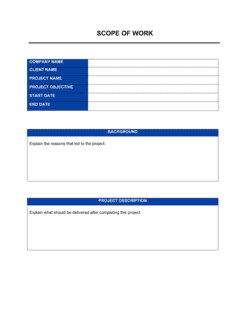
Update the scope to reflect all additions, removals, and modifications. Use tracked changes or a clear notation (e.g., [REVISED], [ADDED], [REMOVED]) so the reviewer does not have to compare two documents side by side.
💡 Limit scope changes to those directly tied to feedback. Introducing new, unrequested elements in a resubmission can reopen the evaluation process unnecessarily.
5
Update the timeline with a realistic new start date
Recalculate all milestone dates from a revised contract execution date that accounts for the time elapsed since original submission. Confirm with your delivery team that the revised schedule is achievable before submitting.
💡 Add a one-sentence assumption statement under the timeline: 'All dates assume contract execution by [DATE].' This protects you if the client delays further.
6
Revise pricing and explain every change
Update the fee schedule to reflect any scope changes, and add a brief rationale for each line that changed. If price increased, justify it; if it decreased, specify exactly what was removed.
💡 Present a side-by-side comparison table (original vs. revised) for proposals with more than three pricing line items — it removes ambiguity and demonstrates transparency.
7
Write the restatement and call to action
Close with a concise paragraph confirming that all feedback has been addressed, restating the core benefit you deliver, and proposing a specific next step with a named contact and deadline.
💡 Set the follow-up deadline 5–7 business days out — long enough to be reasonable, short enough to keep momentum.
8
Attach supporting documents and export as PDF
Compile appendices — case studies, certifications, updated CVs, references — that were requested or support your responses to qualitative objections. Export the final document as PDF and retain the editable Word file for your records.
💡 Label appendices by the feedback item they address (e.g., 'Appendix B — Response to Objection 3: Team Experience') so reviewers can navigate directly to supporting evidence.