Pre-Interview Questionnaire Template

Free Word download β€’ Edit online β€’ Save & share with Drive β€’ Export to PDF

3 pagesβ€’20–25 min to fillβ€’Difficulty: Standard
Learn more ↓
FreePre-Interview Questionnaire Template

At a glance

What it is
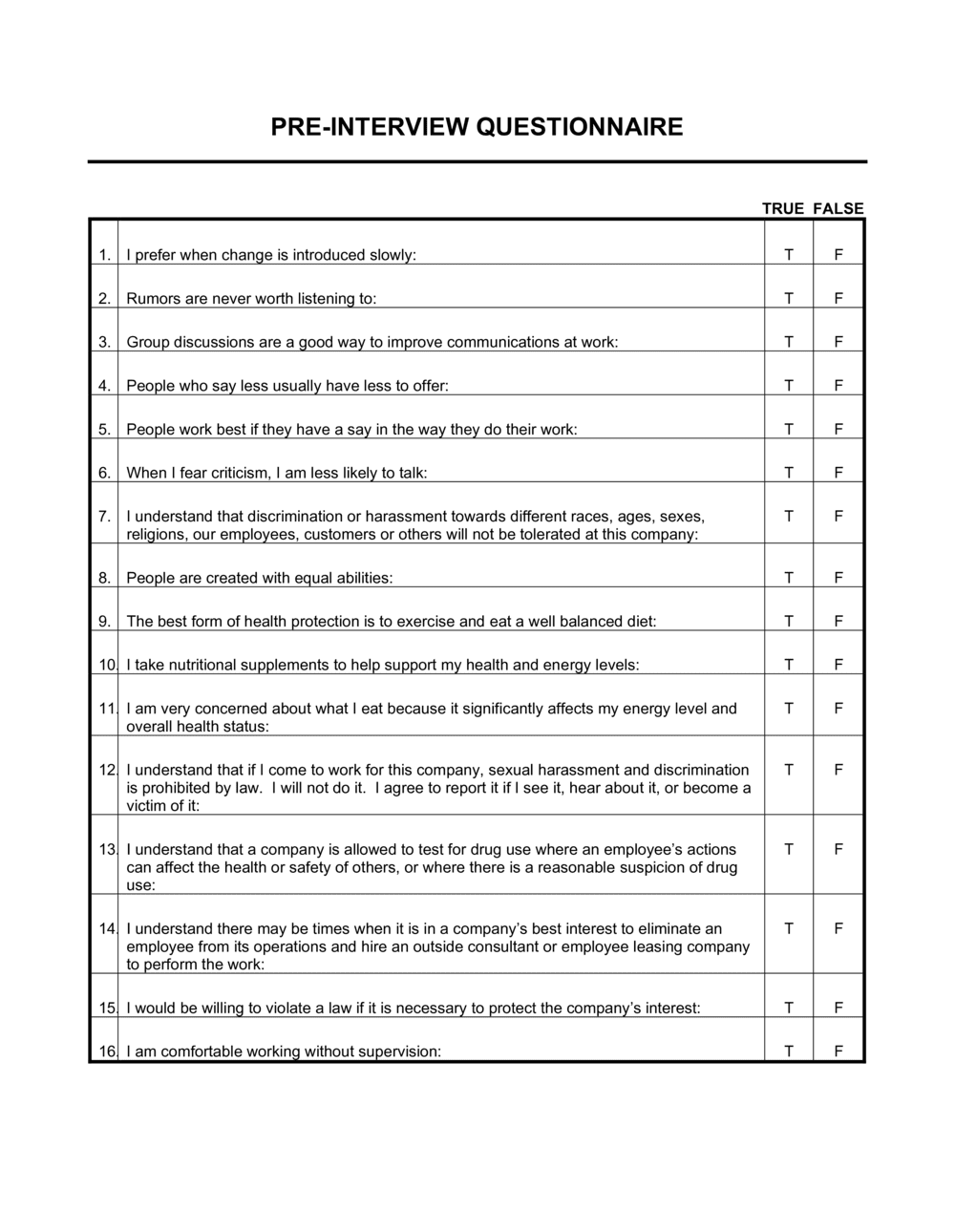
A Pre Interview Questionnaire is a structured form sent to job candidates before a formal interview to collect key screening information in writing. This free Word download lets you customize questions, send it to applicants by email, and review responses before committing time to a live interview.
When you need it
Use it when you have more applicants than interview slots and need an efficient way to prioritize who advances. It is especially useful for roles with specific salary, availability, or qualification thresholds that quickly filter out mismatched candidates.
What's inside
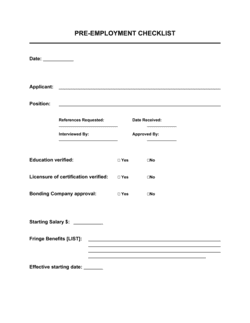
Candidate contact details, position applied for, availability and start date, salary expectations, relevant experience summary, motivation for applying, and a consent acknowledgment. Each section is clearly labeled so hiring managers can scan responses in under five minutes per candidate.

What is a Pre Interview Questionnaire?

A Pre Interview Questionnaire is a structured form sent to job candidates after their resume passes an initial review but before any live interview is scheduled. It collects written responses on availability, salary expectations, work authorization, relevant experience, and motivation β€” the specific data points hiring managers need to decide whether a candidate is worth an hour of their time. Unlike a phone screen, it is asynchronous and creates a written record that can be scored against a consistent rubric for every applicant.

Why You Need This Document

Without a pre interview questionnaire, hiring teams routinely spend 30 to 45 minutes per candidate in screening calls only to discover a salary mismatch in the final five minutes, or that the candidate cannot start for three months. Multiplied across ten applicants for a single role, that is seven hours of interviewer time that a well-designed form would have reclaimed. A standardized questionnaire also creates a documented, consistent screening process β€” a meaningful protection if a rejected candidate later claims the hiring process was discriminatory. This template gives you a ready-to-send form you can customize in under 15 minutes and deploy immediately for any open role.

Which variant fits your situation?

If your situation is…Use this template
Screening candidates for a technical or specialized roleTechnical Pre Interview Questionnaire
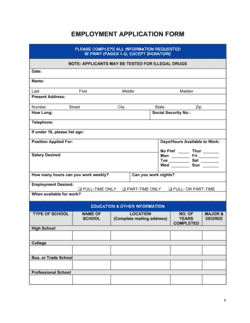
Collecting full work history and references before a first callEmployment Application Form
Structuring questions for the live interview itselfJob Interview Questions Template
Evaluating candidate responses after the interviewInterview Evaluation Form
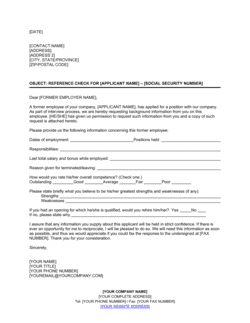
Documenting a reference check following a successful interviewReference Check Form
Sending a formal offer after the candidate clears screeningJob Offer Letter
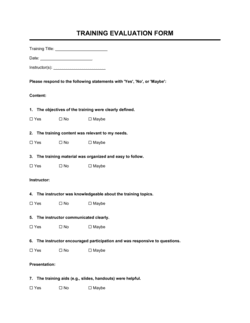
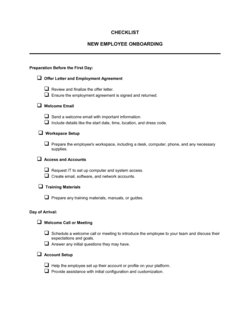
Onboarding the candidate once the offer is acceptedNew Employee Onboarding Checklist

Common mistakes to avoid

❌ Making all fields optional

Why it matters: Candidates skip salary expectations and availability fields, leaving the hiring team with incomplete data and the same gaps they were trying to close with the questionnaire.

Fix: Mark salary expectations, availability, and work authorization as required fields. Reserve optional status for supplemental questions only.
❌ Asking legally prohibited questions

Why it matters: Questions about age, marital status, national origin, or disability status at the screening stage violate equal employment opportunity laws in most jurisdictions and expose the employer to discrimination claims.

Fix: Limit pre-screening questions to job-related criteria β€” experience, availability, compensation, and authorization to work. Review the form against EEOC guidelines before first use.

❌ Sending the form too late in the process

Why it matters: Sending a questionnaire after the interview has already been scheduled defeats the purpose β€” the form exists to decide whether to schedule, not to prepare for a call that is already booked.

Fix: Trigger the questionnaire immediately after a resume passes initial review, before any interview slot is offered.

❌ Omitting the data consent field

Why it matters: Collecting candidate names, contact details, and employment history without documented consent violates GDPR, PIPEDA, and CCPA requirements and creates deletion-request obligations the company is unprepared to fulfill.

Fix: Add a single mandatory consent checkbox before the submission line and reference your company's privacy policy by URL.

The 9 key fields, explained

Candidate contact information

Position applied for

Availability and earliest start date

Work authorization status

Salary expectations

Relevant experience summary

Motivation for applying

Availability for interview scheduling

Data consent acknowledgment

How to fill it out

  1. 1

    Customize the header with your company and role details

    Replace the placeholder company name, logo block, and job title fields at the top of the form. Add the requisition number if your ATS uses one.

    πŸ’‘ Save a branded master version of the form so you only need to update the role-specific fields for each new opening.

  2. 2

    Add any role-specific knock-out questions

    Insert one to three yes/no questions that reflect non-negotiable requirements for the role β€” certifications, minimum years of experience, or specific tools. Place them near the top so disqualifying answers are immediately visible.

    πŸ’‘ Limit knock-out questions to genuinely non-negotiable criteria. Using them for nice-to-haves narrows your candidate pool unnecessarily.

  3. 3

    Set the salary range field to match your budget

    Pre-fill the salary field label with the budgeted range for the role so candidates can self-select. This saves both sides from discovering a mismatch after a 45-minute interview.

    πŸ’‘ If your organization does not disclose salary bands externally, at minimum keep the field mandatory so you capture the candidate's expectation before scheduling.

  4. 4

    Send the form to candidates within 24 hours of application

    Email the questionnaire as a Word attachment or via your ATS as soon as a candidate clears the initial resume screen. Include a clear deadline β€” typically three to five business days.

    πŸ’‘ Candidates who respond within 24 hours are statistically more likely to remain engaged through the full process. Prompt sending rewards responsive applicants.

  5. 5

    Score responses against a simple rubric before interviews

    Create a one-page rubric with three to four criteria and a 1–3 rating scale. Score each completed questionnaire before scheduling a live interview so selection is documented and consistent.

    πŸ’‘ Two reviewers scoring independently and then comparing notes reduces unconscious bias in the pre-screening stage.

  6. 6

    File completed forms with the candidate's application record

    Save the completed questionnaire alongside the resume and any interview notes in your ATS or a dedicated hiring folder. Retain records for at least one year after the role is filled.

    πŸ’‘ Consistent record retention protects you if a rejected candidate files a hiring discrimination complaint β€” you can show a documented, consistent process.

Frequently asked questions

What is a pre interview questionnaire?

A pre interview questionnaire is a structured form sent to job candidates before a formal interview is scheduled. It collects written responses on availability, salary expectations, work authorization, relevant experience, and motivation for applying. Hiring teams use the responses to decide which candidates to advance, making the process faster and more consistent than unstructured phone screens.

What questions should a pre interview questionnaire include?

At minimum: candidate contact details, the position applied for, earliest available start date, work authorization status, salary expectations, a brief relevant experience summary, motivation for applying, and availability for a follow-up call. Role-specific knock-out questions (required certifications, minimum experience) can be added near the top. Avoid any question touching protected characteristics such as age, marital status, or national origin.

How is a pre interview questionnaire different from a job application?

A job application collects complete employment history, education, and references β€” typically 2–4 pages. A pre interview questionnaire is a shorter, targeted form sent after the initial application to gather specific screening data before investing time in a live interview. The questionnaire filters the pipeline; the application documents the full history of candidates who advance.

Is a pre interview questionnaire legally required?

No jurisdiction requires employers to use a pre interview questionnaire. However, using one consistently β€” with the same questions for every candidate for the same role β€” supports an equal opportunity hiring defense if a rejected candidate files a discrimination complaint. The key is consistency: all candidates for the same role receive the same form.

Can I ask about salary history on a pre interview questionnaire?

Asking for salary history is prohibited in several US states and cities (including California, New York, and Massachusetts) as well as parts of Canada and the EU. Ask for salary expectations instead β€” what the candidate requires going forward β€” rather than what they earned previously. This question is legal in most jurisdictions and more useful for alignment.

How long should candidates take to complete the questionnaire?

A well-designed pre interview questionnaire should take candidates no more than 10 to 15 minutes to complete. Forms that take longer see higher abandonment rates, particularly from employed candidates who are passively looking. Limit open-ended responses to 100–150 words each and keep the total number of questions to eight to ten.

How do I use questionnaire responses to rank candidates?

Create a simple scoring rubric before sending the form β€” three to four criteria rated on a 1 to 3 scale. For example: salary alignment (1 = outside range, 3 = within range), experience relevance (1 = minimal, 3 = strong), and response quality (1 = vague, 3 = specific and role-aware). Score each completed form independently before scheduling any interviews so selection decisions are documented and defensible.

Should the pre interview questionnaire be signed by the candidate?

A formal signature is not required for a standard pre interview questionnaire to be useful. However, including a consent checkbox β€” confirming the candidate agrees to their data being collected and stored β€” serves as a lightweight acknowledgment that satisfies GDPR and similar privacy regulations. For roles in regulated industries, a dated electronic signature may be advisable.

How this compares to alternatives

vs Employment Application Form

An employment application form collects a candidate's complete work history, education, and references β€” typically two to four pages. A pre interview questionnaire is shorter and targeted, sent after the application to screen for specific criteria before scheduling an interview. The application documents history; the questionnaire filters the pipeline.

vs Interview Evaluation Form

An interview evaluation form is completed by the interviewer after a live interview to rate the candidate on defined competencies. A pre interview questionnaire is completed by the candidate before any interview takes place. One is a hiring-team tool for assessing performance; the other is a candidate-facing screening instrument.

vs Job Interview Questions Template

An interview questions template gives the interviewer a structured list of questions to ask verbally during a live session. A pre interview questionnaire collects written responses asynchronously before any meeting is scheduled. Both support consistency, but they operate at different stages and serve different purposes in the hiring funnel.

vs Reference Check Form

A reference check form is used late in the hiring process to verify a finalist candidate's background through their former managers or colleagues. A pre interview questionnaire is used early to screen candidates before interview slots are allocated. They address opposite ends of the hiring funnel.

Industry-specific considerations

Technology / SaaS

Knock-out questions cover specific programming languages, years of experience with key tools, and remote-work setup requirements for distributed engineering teams.

Healthcare

Licensing and certification fields are added as mandatory knock-out questions, and availability questions account for shift requirements and on-call obligations.

Retail / Hospitality

Weekend and holiday availability fields are critical knock-out criteria, and the form is kept to five to six questions to reduce abandonment among hourly candidates.

Professional Services

Experience summaries focus on specific client industries or engagement types, and billable-hours expectations are addressed alongside base salary alignment.

Template vs pro β€” what fits your needs?

PathBest forCostTime
Use the templateAny employer screening candidates for standard roles without complex compliance requirementsFree10–15 minutes to customize per role
Template + professional reviewEmployers hiring in multiple jurisdictions or regulated industries where question legality varies$150–$400 for an HR consultant or employment lawyer review1–2 days
Custom draftedEnterprise HR teams needing ATS integration, multi-language support, or legally tailored forms across five or more jurisdictions$500–$2,000 for a custom HR forms build1–2 weeks

Glossary

Pre-screening
The stage in a hiring process where candidates are evaluated on basic criteria before a formal interview is scheduled.
Knock-out question
A yes/no question on a screening form whose answer immediately disqualifies a candidate who doesn't meet a non-negotiable requirement.
Candidate pipeline
The pool of applicants moving through the stages of a hiring process from application to offer.
Notice period
The amount of time a candidate must give their current employer before starting a new role, typically two weeks to three months.
Salary expectation
The compensation range a candidate states they require, used to check alignment with the employer's budgeted range before investing in interviews.
Open-ended question
A question that requires a written narrative response rather than a yes/no or multiple-choice answer, used to assess communication and motivation.
Hiring funnel
The sequence of stages β€” application, screening, interview, offer, and acceptance β€” through which candidates progress during recruitment.
Structured screening
A consistent, documented approach to evaluating candidates where every applicant answers the same questions under the same conditions.
Data consent
Acknowledgment from the candidate that personal information collected during the hiring process will be stored and used in accordance with applicable privacy policy.

Part of your Business Operating System

This document is one of 3,000+ business & legal templates included in Business in a Box.

  • Fill-in-the-blanks β€” ready in minutes
  • 100% customizable Word document
  • Compatible with all office suites
  • Export to PDF and share electronically

Create your document in 3 simple steps.

From template to signed document β€” all inside one Business Operating System.
1
Download or open template

Access over 3,000+ business and legal templates for any business task, project or initiative.

2
Edit and fill in the blanks with AI

Customize your ready-made business document template and save it in the cloud.

3
Save, Share, Send, Sign

Share your files and folders with your team. Create a space of seamless collaboration.

Save time, save money, and create top-quality documents.

β˜…β˜…β˜…β˜…β˜…

"Fantastic value! I'm not sure how I'd do without it. It's worth its weight in gold and paid back for itself many times."

Managing Director Β· Mall Farm
Robert Whalley
Managing Director, Mall Farm Proprietary Limited
β˜…β˜…β˜…β˜…β˜…

"I have been using Business in a Box for years. It has been the most useful source of templates I have encountered. I recommend it to anyone."

Business Owner Β· 4+ years
Dr Michael John Freestone
Business Owner
β˜…β˜…β˜…β˜…β˜…

"It has been a life saver so many times I have lost count. Business in a Box has saved me so much time and as you know, time is money."

Owner Β· Upstate Web
David G. Moore Jr.
Owner, Upstate Web

Run your business with a system β€” not scattered tools

Stop downloading documents. Start operating with clarity. Business in a Box gives you the Business Operating System used by over 250,000 companies worldwide to structure, run, and grow their business.

Free Forever PlanΒ Β·Β No credit card required