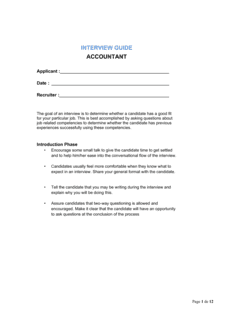
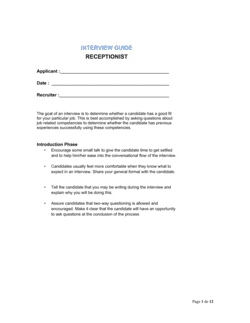
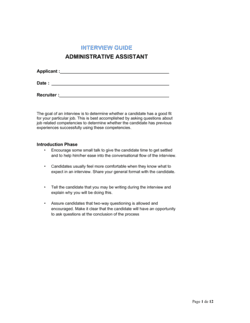
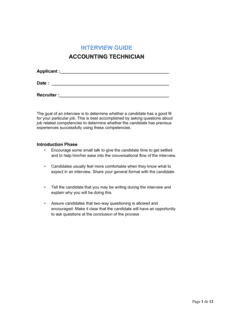
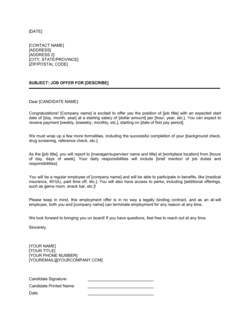
Knowledge Worker Interview Questionnaire Template

Free Word download β€’ Edit online β€’ Save & share with Drive β€’ Export to PDF

3 pagesβ€’20–25 min to fillβ€’Difficulty: Standard
Learn more ↓
FreeKnowledge Worker Interview Questionnaire Template

At a glance

What it is
A Knowledge Worker Interview Questionnaire is a structured form used by hiring managers and HR teams to systematically evaluate candidates for roles requiring specialized expertise, analytical thinking, or technical skills. This free Word download gives you a consistent, pre-built question set you can edit online and export as PDF for use across every interview panel.
When you need it
Use it whenever you are screening or interviewing candidates for roles where domain knowledge, problem-solving ability, or professional judgment are the primary hiring criteria β€” such as analysts, engineers, consultants, researchers, or senior specialists.
What's inside
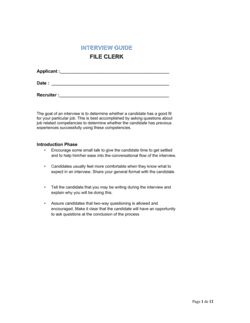
Candidate and position details, structured behavioral and technical questions, a skills and competency assessment grid, interviewer observations, a scoring rubric, and a final recommendation section for panel consolidation.

What is a Knowledge Worker Interview Questionnaire?

A Knowledge Worker Interview Questionnaire is a structured interview form that guides hiring managers and HR teams through a consistent set of targeted questions designed to evaluate candidates for roles requiring specialized expertise, critical thinking, or domain knowledge. Unlike an unstructured conversation, it sequences background, technical, and behavioral questions into a single document β€” with a scoring rubric and recommendation field β€” so that every candidate for the same role is assessed on identical criteria and the results can be compared directly across the panel.

Why You Need This Document

Without a standardized questionnaire, interviewers default to conversational exchanges that vary from candidate to candidate, making fair comparison nearly impossible and leaving the hiring decision vulnerable to inconsistency or bias. For knowledge worker roles β€” where the depth of a candidate's expertise is the primary factor β€” unstructured interviews frequently surface confident communication rather than actual domain competence. A completed questionnaire also creates a documented hiring record: if a rejected candidate raises a discrimination concern, scores tied to specific, observable evidence are the only reliable defense. This template gives you a ready-to-use structure in minutes, so your first interview is as rigorous as your fiftieth.

Which variant fits your situation?

If your situation is…Use this template
Hiring a technical specialist such as an engineer or data scientistTechnical Skills Interview Questionnaire
Screening candidates at an early stage before a full panel interviewPhone Screen Interview Form
Evaluating cultural fit and soft skills for any roleBehavioral Interview Questionnaire
Assessing a candidate immediately after the interview is completeInterview Evaluation Form
Documenting reference checks for a shortlisted candidateEmployee Reference Check Form
Formalizing the job offer after a successful interview processJob Offer Letter

Common mistakes to avoid

❌ Using inconsistent questions across candidates

Why it matters: Asking different questions to different candidates makes it impossible to compare responses fairly and exposes the hiring process to legal challenge.

Fix: Lock the question set before the first interview begins and use the same form for every candidate assessed for the same role.
❌ Scoring without recording supporting evidence

Why it matters: A score of 4 with no notes is meaningless in a panel debrief and indefensible if a rejected candidate queries the decision.

Fix: Require a specific quote or observed behavior for every score in the competency grid before the form is considered complete.

❌ Accepting hypothetical answers for behavioral questions

Why it matters: Hypothetical responses tell you how a candidate thinks they would behave, not how they have actually behaved β€” a materially weaker signal for predicting performance.

Fix: Redirect any hypothetical answer with 'Can you give me a specific example of a time you actually did this?'

❌ Delaying form completion until after the panel debrief

Why it matters: Memory of specific details degrades within hours. Scores completed after a group discussion are influenced by other interviewers' opinions rather than the candidate's actual performance.

Fix: Set a rule that every interviewer completes and submits their form within 30 minutes of the interview ending, before any group debrief takes place.

The 9 key fields, explained

Candidate and position information

Role requirements summary

Background and experience questions

Technical knowledge questions

Behavioral competency questions

Problem-solving and analytical exercise

Competency scoring grid

Candidate questions and responses

Overall recommendation

How to fill it out

  1. 1

    Complete the header with candidate and role details

    Enter the candidate's full name, the exact job title, department, interview date, and your name before the interview begins. This links the completed form to the right hire record.

    πŸ’‘ Pre-fill the position and department fields in a master template version so interviewers never leave them blank.

  2. 2

    Review the role requirements summary before the interview

    Read the role purpose statement and the three core competencies being assessed. Confirm they still match the current job description β€” requirements sometimes shift between when the form was created and when the interview takes place.

    πŸ’‘ If a panel of interviewers is sharing the form, assign each interviewer one or two specific competencies to probe in depth rather than having everyone cover everything.

  3. 3

    Ask background questions and take concise notes

    Work through the background and experience questions in order. Write brief notes on the candidate's responses β€” paraphrase their key points rather than transcribing verbatim.

    πŸ’‘ Note specific job titles, company names, and project outcomes the candidate mentions β€” these are the details you will need when comparing candidates days later.

  4. 4

    Probe technical knowledge with the scenario questions

    Present the technical question as written. If the candidate's answer is surface-level, use a prepared probing follow-up such as 'What would you do if [COMPLICATION]?' to test depth.

    πŸ’‘ Avoid telegraphing the 'right' answer through your tone or phrasing β€” let the candidate's reasoning emerge without steering.

  5. 5

    Record behavioral responses in full STAR format

    For each behavioral question, note whether the candidate provided a complete Situation, Task, Action, and Result. If they omit the Result, prompt them: 'What was the outcome?'

    πŸ’‘ Results should be specific and ideally quantified β€” 'improved turnaround by three days' is useful; 'made things faster' is not.

  6. 6

    Score each competency immediately after the interview

    Complete the scoring grid within 30 minutes of the interview ending, while the evidence is fresh. Record the specific quote or observation that supports each score.

    πŸ’‘ Score against the rubric criteria, not against other candidates you have already interviewed β€” comparative scoring inflates or deflates ratings based on the pool rather than the standard.

  7. 7

    Write the overall recommendation with a cited rationale

    Select Advance, Hold, or Decline and write two to three sentences citing specific evidence from the form. Reference scores and examples, not impressions.

    πŸ’‘ If you are on a panel, complete your recommendation independently before comparing with other interviewers β€” this prevents anchoring bias from the first person who speaks.

Frequently asked questions

What is a knowledge worker interview questionnaire?

A knowledge worker interview questionnaire is a structured form that guides interviewers through a consistent set of questions designed to evaluate candidates for roles requiring specialized expertise, analytical ability, or domain knowledge. It includes behavioral questions, technical scenarios, a scoring grid, and a recommendation section, ensuring every candidate for the same role is assessed against identical criteria.

How is this questionnaire different from a general interview form?

A general interview form covers broad employability factors like communication and teamwork. A knowledge worker questionnaire is specifically designed for roles where the depth of subject-matter expertise is the primary hiring criterion β€” it includes technical scenario questions and competency scoring tied to specific domain skills rather than generic soft skills. The format is built for analysts, engineers, researchers, consultants, and similar roles.

How many questions should a knowledge worker interview questionnaire include?

A standard structured interview for a knowledge worker role covers six to ten substantive questions across background, technical knowledge, and behavioral competencies, plus the analytical exercise. This supports a 45–60 minute interview. Fewer than six questions produces insufficient evidence for scoring; more than ten typically cannot be completed in a single session without rushing.

Can the same questionnaire be used for every knowledge worker role?

The structure and scoring framework can stay consistent, but the technical questions and competency definitions should be customized per role. An analyst role and a software engineer role both benefit from structured behavioral questions, but the domain-specific scenarios must reflect each role's actual day-to-day work to be useful.

Should multiple interviewers use the same form?

Yes. When multiple interviewers each complete the same questionnaire independently, the panel has a documented, comparable basis for the debrief discussion. Scoring and recommendation fields should be completed before the panel meets to prevent anchoring β€” the first interviewer to speak tends to disproportionately influence everyone else's final rating.

Is a signed questionnaire legally required?

No signature is required for the questionnaire to be a useful hiring tool. However, completed forms should be retained as part of the hiring record for at least one year β€” and longer in jurisdictions with extended employment discrimination complaint windows. Documented, consistent scoring is your primary defense if a hiring decision is ever challenged.

How should completed questionnaires be stored?

Store completed questionnaires in your applicant tracking system or a secure HR file alongside the candidate's resume and application. Forms for candidates who were not hired should be retained separately from the hired employee's personnel file. Do not store sensitive candidate notes in shared drives accessible to employees outside the hiring process.

What scoring scale works best for a knowledge worker questionnaire?

A 1–5 scale with defined behavioral anchors for each point works well for most knowledge worker roles. Score 1 represents no evidence of the competency; score 5 represents clear, specific, and quantified demonstration. Avoid even-numbered scales β€” a 1–4 scale forces interviewers to choose above or below average without a neutral midpoint, which skews distributions and makes calibration harder.

How this compares to alternatives

vs Interview Evaluation Form

An interview evaluation form is completed after the interview and focuses on scoring observed competencies and recording a final recommendation. The knowledge worker interview questionnaire is the in-session tool β€” it contains the actual questions and prompts the interviewer uses during the conversation. Use the questionnaire during the interview and the evaluation form to summarize findings for the hiring panel.

vs Job Application Form

A job application form collects a candidate's background, work history, and qualifications before any interview takes place. The interview questionnaire is used during the live interview to probe that background with targeted questions. Both documents are part of the same hiring workflow but serve distinct purposes at different stages of the process.

vs Employee Reference Check Form

A reference check form is used after the interview stage to verify a shortlisted candidate's track record with prior employers. The interview questionnaire is used with the candidate directly. Together they form a two-source validation β€” what the candidate claims in the interview and what references independently confirm.

vs Job Offer Letter

A job offer letter is issued after the hiring decision is made and documents the terms of employment. The interview questionnaire is part of the process that informs that decision. The questionnaire comes first in the workflow; the offer letter comes last.

Industry-specific considerations

Technology / SaaS

Technical scenario questions cover system design, debugging approach, or product thinking, with competency scoring weighted toward analytical problem-solving and cross-functional communication.

Professional Services

Behavioral questions probe client management, structured problem-solving under time pressure, and the ability to synthesize complex information into a clear recommendation.

Financial Services

Domain knowledge questions test regulatory awareness, quantitative reasoning, and experience with specific instruments or compliance frameworks relevant to the team.

Healthcare / Life Sciences

Questions address clinical or research methodology knowledge, experience with regulated data environments, and judgment in situations involving patient safety or data integrity.

Template vs pro β€” what fits your needs?

PathBest forCostTime
Use the templateHR teams, hiring managers, and founders conducting structured interviews for knowledge worker rolesFree10 minutes to customize per role
Template + professional reviewOrganizations building a formal competency framework or integrating the form into an ATS workflow$200–$500 for an HR consultant review1–3 days
Custom draftedEnterprises with regulated hiring processes, union environments, or EEO audit requirements$1,000–$3,000 for a custom HR assessment design1–3 weeks

Glossary

Knowledge Worker
An employee whose primary output is the application of specialized knowledge, analysis, or judgment rather than manual or routine task execution.
Structured Interview
An interview format in which every candidate is asked the same predetermined questions in the same order, enabling direct comparison.
Behavioral Question
A question asking the candidate to describe a specific past situation to predict how they will behave in similar future circumstances.
Competency Framework
A defined set of skills, behaviors, and knowledge areas used as the basis for evaluating candidates against a role's requirements.
Scoring Rubric
A standardized scale β€” typically 1–5 β€” with defined criteria for each score level, used to rate candidate responses consistently.
Panel Interview
An interview format in which two or more interviewers assess a candidate simultaneously, often using a shared questionnaire to align scoring.
Probing Question
A follow-up question used to draw out more detail from a candidate's initial response, typically beginning with 'Can you tell me more about...' or 'What specifically did you do?'
Candidate Fit
An overall assessment of how well a candidate's skills, experience, and working style align with the role's requirements and the team's environment.
Interview Bias
Systematic errors in judgment during candidate evaluation caused by factors unrelated to job performance, such as affinity bias or halo effect.

Part of your Business Operating System

This document is one of 3,000+ business & legal templates included in Business in a Box.

  • Fill-in-the-blanks β€” ready in minutes
  • 100% customizable Word document
  • Compatible with all office suites
  • Export to PDF and share electronically

Create your document in 3 simple steps.

From template to signed document β€” all inside one Business Operating System.
1
Download or open template

Access over 3,000+ business and legal templates for any business task, project or initiative.

2
Edit and fill in the blanks with AI

Customize your ready-made business document template and save it in the cloud.

3
Save, Share, Send, Sign

Share your files and folders with your team. Create a space of seamless collaboration.

Save time, save money, and create top-quality documents.

β˜…β˜…β˜…β˜…β˜…

"Fantastic value! I'm not sure how I'd do without it. It's worth its weight in gold and paid back for itself many times."

Managing Director Β· Mall Farm
Robert Whalley
Managing Director, Mall Farm Proprietary Limited
β˜…β˜…β˜…β˜…β˜…

"I have been using Business in a Box for years. It has been the most useful source of templates I have encountered. I recommend it to anyone."

Business Owner Β· 4+ years
Dr Michael John Freestone
Business Owner
β˜…β˜…β˜…β˜…β˜…

"It has been a life saver so many times I have lost count. Business in a Box has saved me so much time and as you know, time is money."

Owner Β· Upstate Web
David G. Moore Jr.
Owner, Upstate Web

Run your business with a system β€” not scattered tools

Stop downloading documents. Start operating with clarity. Business in a Box gives you the Business Operating System used by over 250,000 companies worldwide to structure, run, and grow their business.

Start freeΒ Β·Β No credit card required