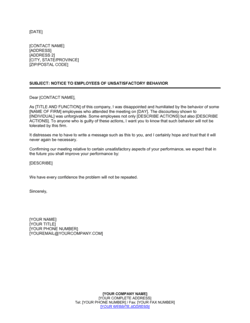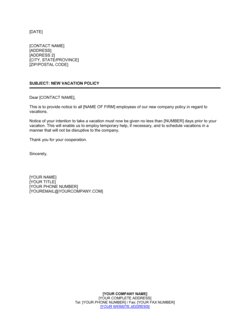
Notice to Employees of Bonus Cancellation Template

Free Word download β€’ Edit online β€’ Save & share with Drive β€’ Export to PDF

1 pageβ€’15–25 min to fillβ€’Difficulty: Standard
Learn more ↓
FreeNotice to Employees of Bonus Cancellation Template

At a glance

What it is
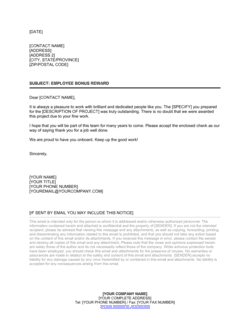
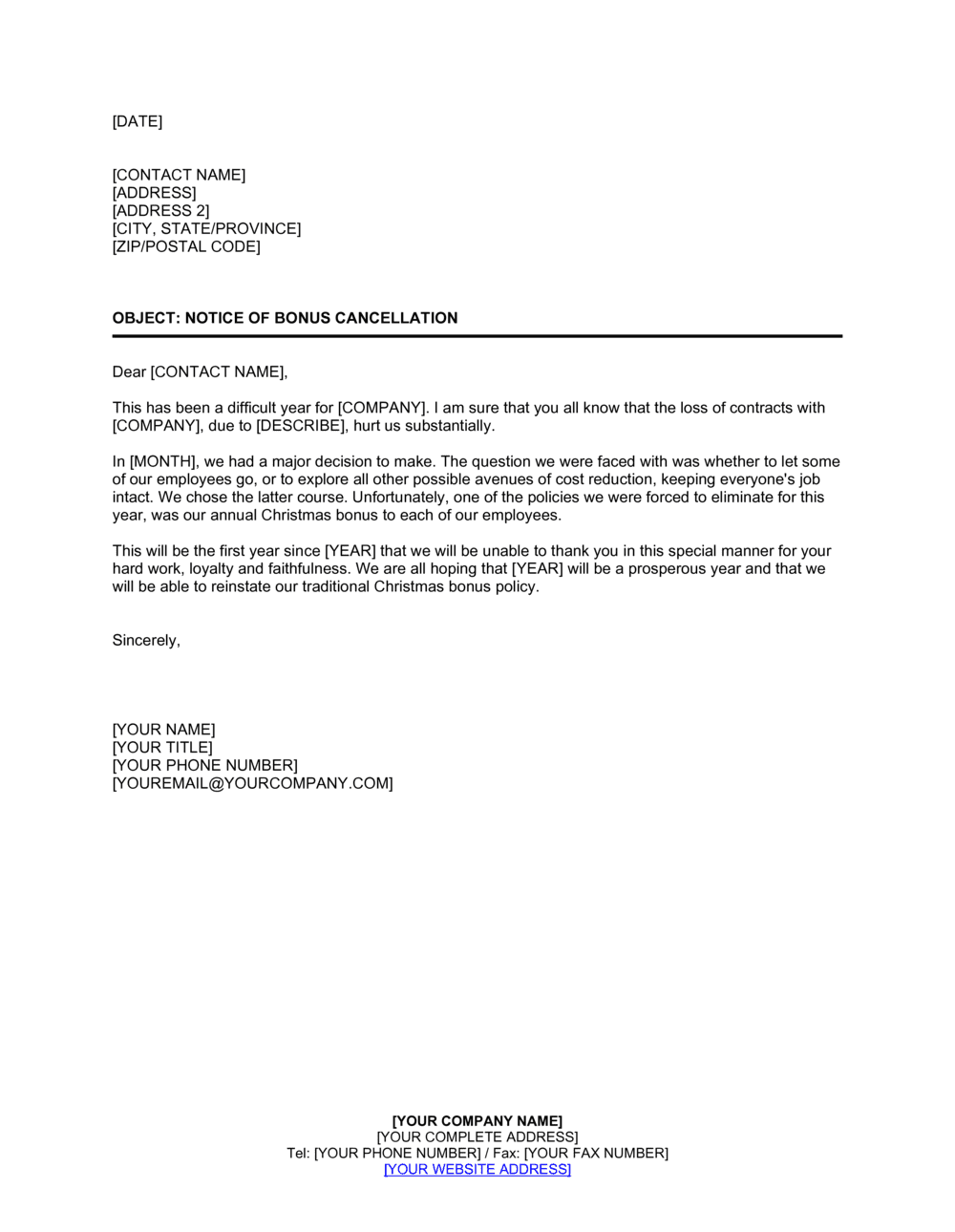
A Notice to Employees of Bonus Cancellation is a formal business letter issued by an employer to inform staff that a previously announced or anticipated bonus will not be paid in whole or in part. This free Word download gives you a structured, professional starting point you can edit online and export as PDF to distribute to your team in minutes.
When you need it
Use it when business conditions, budget constraints, or a change in company policy require you to cancel, reduce, or defer a discretionary bonus before the scheduled payment date. Issuing a written notice protects the company from ambiguity and gives employees a clear, documented explanation.
What's inside
A formal opening identifying the affected bonus and payment period, a plain explanation of the business reason for cancellation, a statement on whether the decision is permanent or subject to future review, and a professional closing with a point of contact for questions.

What is a Notice to Employees of Bonus Cancellation?

A Notice to Employees of Bonus Cancellation is a formal business letter an employer issues to inform staff that a bonus β€” previously announced, anticipated, or customarily paid β€” will not be distributed for a specified payment period. It identifies the affected bonus program, states the business reason for the decision, clarifies the scope and effective date, and provides a point of contact for employee questions. Unlike a casual verbal update, a written notice creates a clear record of when and how employees were informed, which protects both the company and its staff in the event of a later dispute.

Why You Need This Document

Cancelling a bonus without a written notice exposes the company to unnecessary risk and erodes employee trust far more than the cancellation itself. When employees receive no formal communication, they fill the gap with speculation β€” and in jurisdictions where employment standards are strictly enforced, a failure to document the change can be cited as evidence of poor faith or inadequate process. A properly drafted notice establishes that the bonus was discretionary, provides a documented business justification, and sets clear expectations about next steps. It also gives HR a consistent record to reference if any employee raises a formal grievance, files a complaint, or seeks advice from employment counsel. This template gives you a professional, plain-language starting point that takes under 20 minutes to complete and sends the right signal to your team: that the decision, while difficult, was made transparently and communicated with respect.

Which variant fits your situation?

If your situation is…Use this template
Cancelling a discretionary year-end bonus due to a revenue shortfallNotice to Employees of Bonus Cancellation
Reducing rather than fully cancelling an announced bonusNotice of Bonus Reduction Letter
Deferring a bonus to a future quarter with a confirmed new dateNotice of Bonus Deferral Letter
Cancelling a contractual bonus tied to a terminated employment agreementEmployee Termination Letter
Communicating a broad compensation policy change to all staffEmployee Compensation Change Notice
Formally acknowledging a missed performance target with no bonus payablePerformance Improvement Plan

Common mistakes to avoid

❌ Cancelling a contractual bonus without legal review

Why it matters: If the bonus was promised in an employment contract or offer letter, cancelling it unilaterally may breach that contract and expose the company to constructive dismissal or breach-of-contract claims.

Fix: Before issuing any notice, confirm with HR or employment counsel whether the bonus is discretionary or contractual. Use different language and process for each.
❌ Giving no reason for the cancellation

Why it matters: Employees who receive no explanation are more likely to assume bad faith, reduce engagement, and in some jurisdictions may use the lack of explanation to support an unfair treatment claim.

Fix: Include at least one specific business reason β€” even a brief reference to a missed revenue target or a company-wide budget freeze is significantly better than silence.

❌ Making speculative promises about future bonus reinstatement

Why it matters: A statement like 'we expect to restore bonuses next quarter' creates an expectation employees will hold the company to, even if circumstances change.

Fix: If you cannot commit, use conditional language: 'Management will assess the bonus program at the end of [PERIOD] and will communicate its decision by [DATE].'

❌ Distributing the notice without briefing managers first

Why it matters: Managers who learn of the cancellation at the same time as their direct reports cannot answer questions, which erodes trust and makes the cancellation feel more abrupt than it is.

Fix: Send a confidential manager briefing at least 24 hours before the employee notice goes out, covering the key talking points and the Q&A the HR contact will handle.

The 9 key clauses, explained

Date, Recipient, and Subject Line

In plain language: Identifies when the letter was written, who it is addressed to, and states the subject clearly so the employee understands the nature of the communication immediately.

Sample language
Date: [DATE] | To: [EMPLOYEE NAME / All Staff] | Re: Cancellation of [BONUS TYPE] Bonus for [PERIOD]

Common mistake: Using a vague subject line like 'Important Update' rather than naming the bonus directly β€” employees may delay reading the notice or feel the communication was deliberately obscured.

Opening Statement

In plain language: States the purpose of the letter plainly in the first sentence, identifying the specific bonus, the payment date that will not occur, and the affected employees or departments.

Sample language
We are writing to inform you that the [BONUS TYPE] bonus scheduled for payment on [DATE] will not be paid to [DEPARTMENT / all eligible employees] for the [PERIOD] period.

Common mistake: Burying the cancellation in the second or third paragraph after an extended preamble β€” employees read the opening line first, and delayed disclosure increases anxiety and mistrust.

Reason for Cancellation

In plain language: Provides a clear, honest explanation of why the bonus is being cancelled β€” typically financial performance, budget constraints, or a policy change.

Sample language
This decision reflects [COMPANY NAME]'s financial performance during [PERIOD], during which [REVENUE / PROFIT METRIC] fell short of the [TARGET] threshold required to fund the bonus pool.

Common mistake: Giving no reason at all, or using vague language like 'business reasons.' Employees who receive no explanation are more likely to escalate concerns, reduce engagement, or consult employment counsel.

Reference to Bonus Structure or Policy

In plain language: Reminds employees that the cancelled bonus was discretionary under the company's compensation policy, reinforcing that no contractual obligation has been breached.

Sample language
As outlined in [COMPANY NAME]'s Compensation Policy dated [DATE], the [BONUS TYPE] bonus is a discretionary payment subject to company financial performance and the sole discretion of management.

Common mistake: Omitting the discretionary language, especially when no written compensation policy exists β€” this leaves the company's position legally ambiguous if an employee disputes the cancellation.

Effective Date and Scope

In plain language: States exactly when the cancellation takes effect and which employees, departments, roles, or bonus programs are affected.

Sample language
This cancellation is effective for the [QUARTER / YEAR] bonus cycle ending [DATE] and applies to all [DEPARTMENT / ELIGIBLE EMPLOYEE CLASS] employees.

Common mistake: Failing to specify which bonus cycle is affected, leading employees to assume future bonuses are also cancelled when only the current period is impacted.

Future Outlook or Review Statement

In plain language: Indicates whether the company intends to reinstate the bonus program in a future period, or confirms that no commitment is being made at this time.

Sample language
Management will review the bonus program at the end of [NEXT PERIOD]. We will provide an update no later than [DATE] regarding the outlook for [NEXT BONUS CYCLE].

Common mistake: Making a speculative promise about future bonus reinstatement that the company may not be able to keep β€” this creates an implied expectation that can be cited in a later dispute.

Acknowledgement of Employee Contributions

In plain language: Recognizes the team's effort sincerely and briefly, without minimizing the impact of the cancellation or using hollow corporate language.

Sample language
We recognize the dedication and effort [DEPARTMENT / all employees] have demonstrated during [PERIOD], and we do not make this decision lightly.

Common mistake: Overloading this clause with excessive praise that feels tone-deaf alongside a cancellation notice β€” one or two sentences of genuine acknowledgement is more effective than a paragraph of platitudes.

Questions and Point of Contact

In plain language: Directs employees to a specific person or department for follow-up questions, reducing informal rumor-spreading and ensuring concerns are managed through a single channel.

Sample language
If you have questions regarding this notice, please contact [HR CONTACT NAME] at [EMAIL ADDRESS] or [PHONE NUMBER] by [DATE].

Common mistake: Directing employees to 'your manager' without a named HR contact β€” managers who are unaware of the details of the decision become accidental sources of misinformation.

Closing and Sender Identification

In plain language: Closes the letter professionally and identifies the sender by name, title, and department to establish authority and accountability.

Sample language
Sincerely, [SENDER NAME] | [TITLE] | [DEPARTMENT] | [COMPANY NAME]

Common mistake: Sending the notice unsigned or from a generic 'HR Department' address β€” an identifiable sender signals accountability and reduces the perception that the company is hiding behind anonymity.

How to fill it out

  1. 1

    Identify the bonus type, period, and affected employees

    Before editing the template, confirm the exact name of the bonus program, the payment cycle it relates to, and the specific employees or departments receiving the notice. Have payroll confirm eligibility lists.

    πŸ’‘ Sending the notice to the wrong group β€” or omitting an eligible group β€” creates a second communication problem that amplifies the original bad news.

  2. 2

    State the cancellation plainly in the first paragraph

    Complete the opening statement clause with the bonus type, scheduled payment date, and affected group. Do not soften the opening to the point where the core message is unclear.

    πŸ’‘ Read the first two sentences aloud β€” if you cannot tell from those sentences that a bonus is being cancelled, rewrite them.

  3. 3

    Write a specific, honest reason for the cancellation

    Fill in the reason clause with a concrete business explanation β€” revenue shortfall, budget freeze, missed performance threshold, or policy change. Cite the specific metric or trigger where possible.

    πŸ’‘ Reference an actual number where you can β€” 'Q3 revenue of $[X] against a $[Y] target' is more credible than 'financial headwinds.'

  4. 4

    Cite your compensation policy

    Insert the name and date of your compensation policy in the reference clause. If no written policy exists, note that the bonus was communicated as discretionary in previous correspondence or handbook.

    πŸ’‘ Now is a good time to formalize a compensation policy if you do not have one β€” the absence of one is your biggest legal exposure on discretionary bonus disputes.

  5. 5

    Define the scope and effective date precisely

    Enter the exact bonus cycle start and end dates, and confirm in plain language whether the cancellation applies to the current period only or to a broader program suspension.

    πŸ’‘ Employees will assume the worst if scope is ambiguous. One extra sentence of specificity prevents dozens of individual queries.

  6. 6

    Add a measured future outlook statement

    If you intend to review the bonus program in the next cycle, say so clearly with a review date. If you cannot commit to reinstatement, do not imply it β€” state that no decision has been made.

    πŸ’‘ A vague 'we hope to reinstate bonuses in the future' creates an implied promise. Write only what you can stand behind.

  7. 7

    Name a point of contact and set a response deadline

    Insert a specific HR or management contact with an email address and the date by which questions should be submitted. Brief that person before the notice is distributed.

    πŸ’‘ Distribute the notice to the named contact 24 hours before it goes to employees β€” a point of contact who is surprised by questions is not a point of contact.

Frequently asked questions

Can an employer legally cancel a bonus?

Whether an employer can legally cancel a bonus depends on whether the bonus is discretionary or contractual. A discretionary bonus β€” one not promised in an employment contract and paid at management's sole discretion β€” can typically be cancelled without legal consequence in most jurisdictions. A contractual bonus, explicitly promised in a signed contract or offer letter contingent on defined conditions, generally cannot be withheld if those conditions were met. When in doubt, review the employment agreement before issuing any notice.

What should a bonus cancellation notice include?

At minimum: the name and type of bonus being cancelled, the affected payment period and employees, a clear reason for the cancellation, a reference to whether the bonus was discretionary, the effective date, any information about future review, and a named point of contact for employee questions. Missing the reason or the effective date are the two most common gaps that generate follow-up confusion.

Does a bonus cancellation notice need to be signed?

A signature is not legally required for a bonus cancellation notice to be effective in most jurisdictions. However, identifying the sender by name and title β€” and distributing via a channel that creates a delivery record, such as company email β€” establishes accountability and creates a documentation trail that is useful if the decision is later disputed.

Should I ask employees to acknowledge receipt of the bonus cancellation notice?

Requesting acknowledgement of receipt is good practice, particularly in larger organizations or when the cancelled bonus was significant in value. A simple email reply, an electronic signature, or an HR system acknowledgement confirms the employee received the notice and reduces the risk of a later claim that they were never informed. It also closes the communication loop for HR recordkeeping.

What is the difference between a bonus cancellation and a bonus deferral?

A cancellation means the bonus will not be paid for the specified period β€” the payment is eliminated, not postponed. A deferral means the bonus will be paid at a confirmed future date, typically the next payment cycle or after a defined condition is met. The distinction matters legally and motivationally: a deferral preserves the employee's expectation of payment; a cancellation extinguishes it. Use the correct term and be explicit in your notice.

How much notice should the company give before cancelling a bonus?

There is no universal legal minimum for notice of a discretionary bonus cancellation, but issuing the notice as soon as the decision is made β€” and at least several weeks before the scheduled payment date β€” is considered best practice. Late notice, particularly on the day of an expected payment, increases employee frustration and the risk of formal complaints. Earlier notice also allows employees to adjust financial plans that may have been made in anticipation of the payment.

Should a bonus cancellation notice go to all employees or only affected ones?

The notice should go only to the employees directly affected by the cancellation β€” those who were eligible for the specific bonus program in the relevant period. Sending a company-wide notice when only one department is affected creates unnecessary alarm among employees who were never eligible. If the cancellation is truly company-wide, a company-wide notice is appropriate, ideally preceded by a manager briefing.

Can I use the same notice template for a partial bonus reduction?

The template can be adapted for a partial reduction by adjusting the opening statement to specify the reduced amount or percentage rather than a full cancellation, and by updating the reason clause to reflect the partial nature of the decision. The overall structure β€” reason, scope, effective date, future outlook, and contact β€” applies equally to reductions and cancellations.

How this compares to alternatives

vs Salary Reduction Notice

A salary reduction notice informs employees of a permanent or temporary decrease in their base pay β€” a significantly more serious employment change than cancelling a discretionary bonus. Salary reductions typically require explicit employee consent in most jurisdictions, whereas discretionary bonus cancellations generally do not. Use a bonus cancellation notice only for variable pay components.

vs Employee Dismissal Letter

An employee dismissal letter terminates the employment relationship entirely. A bonus cancellation notice affects only one element of compensation while employment continues. If a contractual bonus cancellation is significant enough to constitute a fundamental change to the employment terms, it may trigger constructive dismissal β€” making the distinction between these two documents legally significant.

vs Performance Improvement Plan

A performance improvement plan addresses an individual employee's failure to meet defined standards and sets a remediation path. A bonus cancellation notice addresses a company-level or department-level financial or policy decision affecting multiple employees. The two documents may be issued concurrently but serve entirely different purposes.

vs Employee Warning Letter

An employee warning letter responds to a specific individual's conduct or performance and initiates a formal disciplinary process. A bonus cancellation notice is a neutral operational communication about compensation β€” it is not disciplinary in nature and should never be framed or filed as a disciplinary document.

Industry-specific considerations

Professional Services

Performance bonuses tied to billable hours or client revenue are common; cancellation notices must carefully reference whether the bonus was tied to a missed utilization or revenue target.

Retail and Hospitality

Seasonal bonuses linked to holiday-period sales performance are frequently cancelled during low-revenue years; notices often cover large hourly workforces requiring clear, plain-language communication.

Manufacturing

Production-based bonuses tied to output or quality metrics may be cancelled when equipment downtime or supply-chain disruptions cause a plant to miss targets.

Technology and SaaS

Sales commission and performance bonuses are high-value and closely watched; cancellation or deferral notices require precise language distinguishing discretionary bonuses from OTE components governed by sales compensation agreements.

Template vs pro β€” what fits your needs?

PathBest forCostTime
Use the templateEmployers cancelling a clearly discretionary bonus with a straightforward business reasonFree15–20 minutes
Template + professional reviewSituations where the bonus was mentioned in offer letters, employment contracts, or HR policies without explicit discretionary language$150–$400 (HR consultant or employment lawyer review)1–2 days
Custom draftedCancellation of high-value contractual bonuses, executive compensation adjustments, or multi-jurisdiction workforces$500–$2,000+3–7 days

Glossary

Discretionary Bonus
A bonus the employer has sole discretion to pay or withhold, with no contractual obligation to the employee.
Contractual Bonus
A bonus explicitly promised in an employment contract or offer letter, which the employer is legally obligated to pay if specified conditions are met.
Bonus Deferral
A delay in bonus payment to a future date, as opposed to an outright cancellation.
Performance Threshold
The minimum individual or company metric β€” such as revenue, profit margin, or KPI β€” that must be achieved for a bonus to be earned.
Constructive Dismissal
A legal concept in which a significant unilateral change to employment terms β€” such as cancelling a contractual bonus β€” may entitle an employee to treat themselves as dismissed.
Notice Period
The time between issuing a formal notice and the effective date of the change, giving employees adequate warning to adjust expectations.
At-Will Employment
An employment arrangement common in US states allowing either party to end or modify the relationship at any time for any lawful reason.
Compensation Policy
A written internal document governing how salaries, bonuses, and other pay elements are determined, modified, and communicated.
Acknowledgement of Receipt
A confirmation β€” written or electronic β€” that an employee received and read a formal notice, used to establish a documented communication trail.

Part of your Business Operating System

This document is one of 3,000+ business & legal templates included in Business in a Box.

  • Fill-in-the-blanks β€” ready in minutes
  • 100% customizable Word document
  • Compatible with all office suites
  • Export to PDF and share electronically

Create your document in 3 simple steps.

From template to signed document β€” all inside one Business Operating System.
1
Download or open template

Access over 3,000+ business and legal templates for any business task, project or initiative.

2
Edit and fill in the blanks with AI

Customize your ready-made business document template and save it in the cloud.

3
Save, Share, Send, Sign

Share your files and folders with your team. Create a space of seamless collaboration.

Save time, save money, and create top-quality documents.

β˜…β˜…β˜…β˜…β˜…

"Fantastic value! I'm not sure how I'd do without it. It's worth its weight in gold and paid back for itself many times."

Managing Director Β· Mall Farm
Robert Whalley
Managing Director, Mall Farm Proprietary Limited
β˜…β˜…β˜…β˜…β˜…

"I have been using Business in a Box for years. It has been the most useful source of templates I have encountered. I recommend it to anyone."

Business Owner Β· 4+ years
Dr Michael John Freestone
Business Owner
β˜…β˜…β˜…β˜…β˜…

"It has been a life saver so many times I have lost count. Business in a Box has saved me so much time and as you know, time is money."

Owner Β· Upstate Web
David G. Moore Jr.
Owner, Upstate Web

Run your business with a system β€” not scattered tools

Stop downloading documents. Start operating with clarity. Business in a Box gives you the Business Operating System used by over 250,000 companies worldwide to structure, run, and grow their business.

Free Forever PlanΒ Β·Β No credit card required