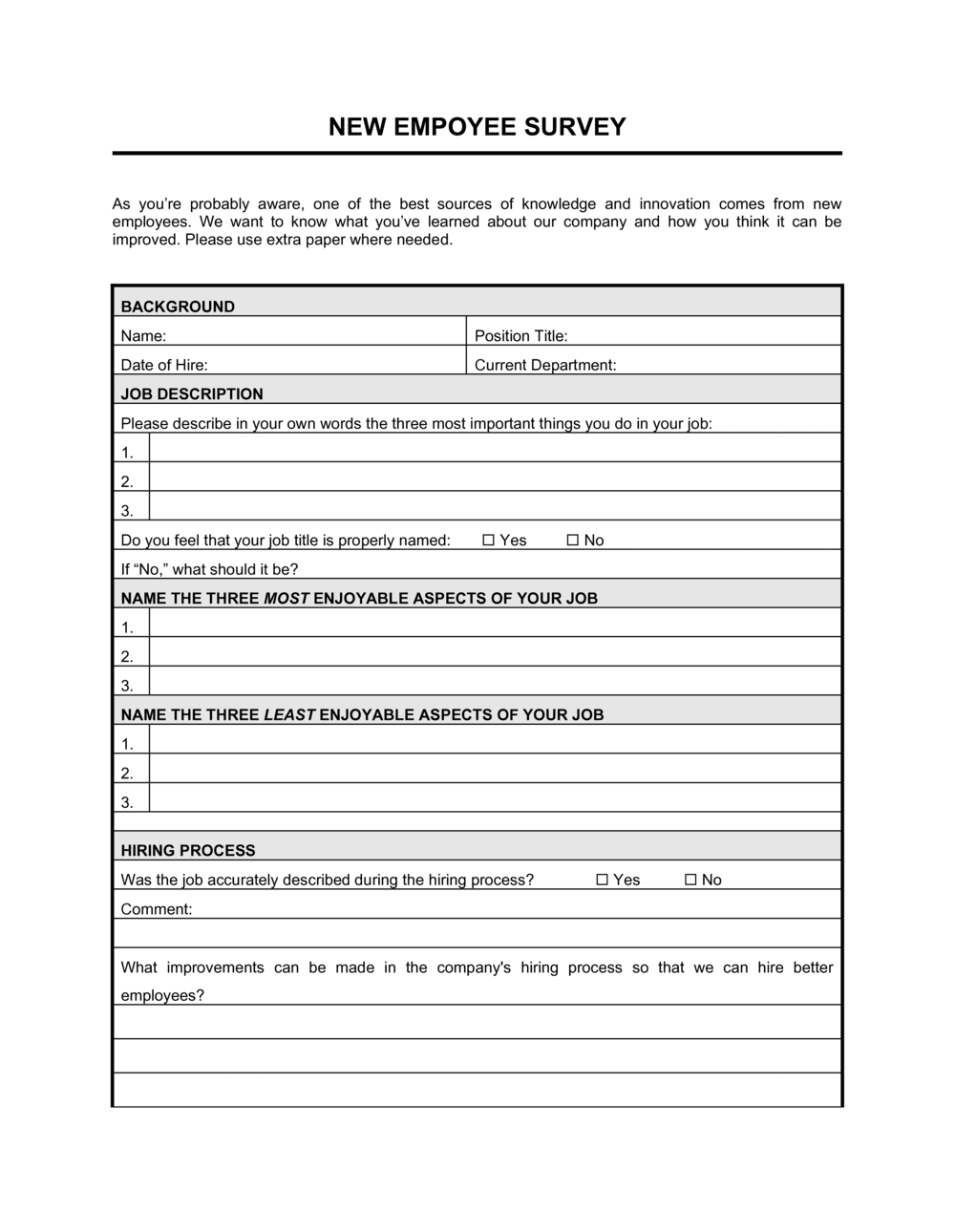
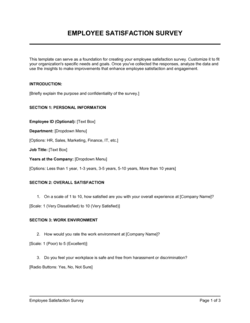
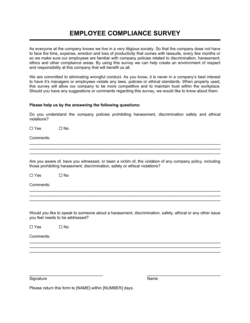
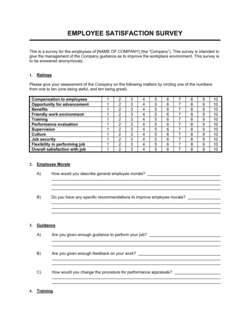
New Employee Survey Template

Free Word download β€’ Edit online β€’ Save & share with Drive β€’ Export to PDF

2 pagesβ€’20–30 min to fillβ€’Difficulty: Standardβ€’Signature requiredβ€’Legal review recommended
Learn more ↓
FreeNew Employee Survey Template

At a glance

What it is
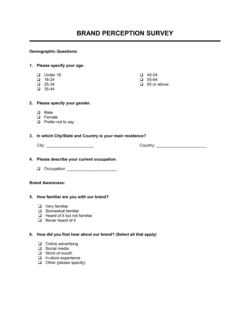
A New Employee Survey is a structured feedback instrument administered to new hires at defined points during their onboarding period β€” typically at 30, 60, and 90 days β€” to assess their experience, identify training gaps, and surface concerns before they affect retention. This free Word download gives HR teams and managers a ready-to-use questionnaire covering role clarity, manager support, team integration, and overall satisfaction that can be edited online and exported as PDF.
When you need it
Use it at the end of a new hire's first 30 days, again at 60 days, and at the 90-day mark to capture how the onboarding experience evolves over time. It is especially critical when onboarding cohorts of five or more employees simultaneously or after a period of rapid hiring where informal feedback loops have broken down.
What's inside
Sections covering role clarity and expectations, manager and team support, training adequacy, workplace culture fit, tools and resources, and an open comments block. An acknowledgement and consent clause is included so responses can be used for HR program evaluation under applicable privacy law.

What is a New Employee Survey?

A New Employee Survey is a structured feedback instrument administered to recent hires at defined intervals during their first 90 days β€” typically at the 30-, 60-, and 90-day marks β€” to assess the quality of the onboarding experience, identify training and resource gaps, and measure early employee satisfaction and intent to stay. Unlike a one-time orientation form, a properly designed new employee survey creates a repeatable data collection process that gives HR teams and managers quantifiable, time-stamped evidence of where their onboarding program works and where it fails. The signed consent and data handling clause included in this template ensures that response collection complies with applicable privacy legislation, including GDPR, PIPEDA, and US state privacy laws.

Why You Need This Document

Without a structured new employee survey, onboarding problems are invisible until they show up as voluntary turnover β€” at which point the cost of replacing the employee (typically 50–200% of annual salary) has already been incurred. A new hire who lacks role clarity at day 30, receives no follow-up on a missing system access, or feels disconnected from their team will rarely raise these issues unprompted; they will simply begin looking for another role. A formal survey with a documented action protocol gives HR a 60-day intervention window before disengagement becomes a resignation. It also creates the paper trail required under GDPR and equivalent legislation to demonstrate that employee personal data was collected with documented consent and for a stated purpose β€” protecting the organization from privacy complaints that can follow a contentious separation.

Which variant fits your situation?

If your situation is…Use this template
Gathering feedback at the end of the first 30 days30-Day New Employee Survey
Assessing onboarding progress at the 60-day mark60-Day New Employee Check-In Survey
Evaluating the full onboarding experience at 90 days90-Day New Employee Survey
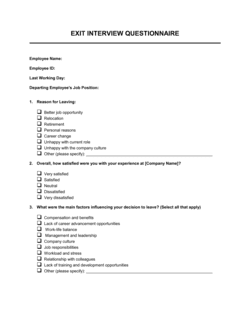
Collecting exit feedback from a departing employeeExit Interview Questionnaire
Measuring ongoing employee satisfaction for existing staffEmployee Satisfaction Survey
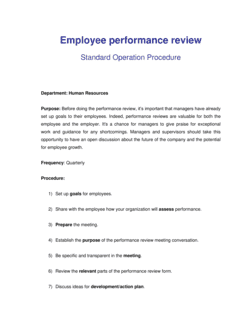
Surveying managers on a new hire's performance during probationEmployee Performance Review
Documenting onboarding steps and responsibilities for HREmployee Onboarding Checklist

Common mistakes to avoid

❌ Promising anonymity when the survey collects identifying information

Why it matters: Employees who believe their responses are anonymous answer more honestly. Discovering post-submission that their name was recorded destroys trust and typically causes a sustained drop in future survey participation.

Fix: Use the accurate term β€” 'confidential, not anonymous' β€” and explain exactly who can access individual responses and under what circumstances.

❌ Distributing the survey on the employee's last day of their first week

Why it matters: A survey issued on day five captures first-week impressions only β€” role clarity and culture-fit scores at this point are too early to be reliable and may not reflect actual onboarding quality.

Fix: Issue the first survey at day 28–30, when the employee has enough experience to evaluate training adequacy, manager support, and team integration meaningfully.

❌ Collecting responses and taking no documented action

Why it matters: When new hires discover their feedback resulted in no visible change, participation in subsequent surveys drops sharply and trust in the HR function erodes across the organization.

Fix: Publish a one-paragraph summary of actions taken from each survey cohort's results β€” even minor process fixes demonstrate that feedback is reviewed and acted upon.

❌ Skipping the data handling and consent clause to keep the form short

Why it matters: Processing employee personal data without a documented lawful basis or consent clause exposes the employer to regulatory action under GDPR, PIPEDA, and similar legislation β€” fines scale with the size of the organization.

Fix: Keep the consent clause to two sentences and place it at the top of the form where it cannot be missed. It adds under 30 seconds to completion time and eliminates material compliance risk.

❌ Using the same survey version for every seniority level

Why it matters: A junior associate and a VP have fundamentally different onboarding experiences β€” strategic alignment, cross-functional introductions, and leadership integration matter more at senior levels and are not captured by a standard onboarding form.

Fix: Create a base template for individual contributors and a separate version for managers and above that adds questions on strategic context, leadership team introductions, and resource authorization.

❌ Reporting results only at year-end rather than after each cohort

Why it matters: Onboarding issues identified six months after they occur cannot be fixed retroactively for the employees who experienced them β€” and the cohort affected may have already left.

Fix: Review and act on each survey wave within two weeks of the closing date. For cohorts of fewer than five respondents, wait until you have enough data to protect confidentiality before reporting aggregate results.

The 10 key clauses, explained

Survey Purpose and Scope

In plain language: States why the survey is being administered, who it applies to, and how the results will be used β€” setting expectations before the respondent answers a single question.

Sample language
This survey is administered by [COMPANY NAME] to new employees within their first [30/60/90] days of employment. Responses are used solely to evaluate and improve our onboarding program. Results will be reviewed by [HR DEPARTMENT / MANAGER TITLE] and reported in aggregate.

Common mistake: Omitting the stated purpose entirely. Without it, employees may fear responses will affect their standing, suppressing honest answers and skewing the data.

Respondent Identification and Consent

In plain language: Identifies the employee completing the survey, their start date and department, and includes their acknowledgement that responses may be used for HR program evaluation.

Sample language
Employee Name: [FULL NAME] | Start Date: [DATE] | Department: [DEPARTMENT] | Manager: [MANAGER NAME]. I acknowledge that my responses to this survey may be used by [COMPANY NAME] for internal HR evaluation and program improvement purposes.

Common mistake: Collecting personal data without a consent clause. In jurisdictions with data-protection legislation (GDPR, PIPEDA), processing employee survey responses without documented consent or a lawful basis can trigger regulatory penalties.

Role Clarity and Expectations

In plain language: Asks the new hire to rate how clearly their responsibilities, performance standards, and success metrics were communicated during onboarding.

Sample language
On a scale of 1–5, please rate: (1) My job responsibilities were clearly explained before my start date. (2) I understand what is expected of me in the first 90 days. (3) I know how my performance will be evaluated.

Common mistake: Using only open-ended questions in this section. Without a numeric scale, HR cannot track role-clarity scores over time or compare cohorts.

Manager and Leadership Support

In plain language: Measures whether the new hire feels their direct manager has been available, communicative, and supportive during the onboarding period.

Sample language
My manager has been accessible when I needed guidance. | My manager clearly communicated priorities and expectations in my first week. | I have received regular feedback from my manager since joining. [Rate each 1–5]

Common mistake: Framing manager questions as personal judgements rather than behaviors. Questions about specific behaviors ('My manager scheduled a 1:1 in my first week') yield actionable data; questions about character ('My manager is a good leader') do not.

Training and Development Adequacy

In plain language: Assesses whether the formal training, materials, and on-the-job learning provided were sufficient for the new hire to perform their role effectively.

Sample language
The training I received prepared me to perform my core job duties. | I had access to the tools, systems, and information I needed from day one. | I know who to contact when I have a technical or process question. [Rate each 1–5]

Common mistake: Asking only about formal training and ignoring informal knowledge transfer. New hires who rate formal training highly but lack a go-to resource for day-to-day questions are still at elevated retention risk.

Team Integration and Culture

In plain language: Evaluates how welcomed and included the new hire feels within their immediate team and the broader organization.

Sample language
I feel welcomed and included by my immediate team. | I understand and identify with [COMPANY NAME]'s values and culture. | I have built at least one working relationship with a colleague outside my direct team.

Common mistake: Treating culture questions as purely qualitative and skipping numeric ratings. Culture scores are early-warning indicators of flight risk β€” they need to be trackable over successive survey waves.

Tools, Resources, and Systems Access

In plain language: Identifies whether the new hire had the physical equipment, software access, and administrative setup required to be productive from day one.

Sample language
My workstation, equipment, and software access were ready on my first day. | I have been given access to all the systems and platforms I need to perform my role. | Please list any tools or access you are still waiting for: [OPEN FIELD]

Common mistake: Omitting the open-text follow-up for missing resources. Rating questions show the scale of the problem; the open field identifies the specific blocker HR can fix within 24 hours.

Overall Satisfaction and Intent to Stay

In plain language: Captures the new hire's overall satisfaction with the role and organization, and a forward-looking indicator of whether they intend to remain with the company.

Sample language
Overall, I am satisfied with my decision to join [COMPANY NAME]. | I intend to still be working here in 12 months. | On a scale of 0–10, how likely are you to recommend [COMPANY NAME] as a great place to work? (eNPS)

Common mistake: Skipping the intent-to-stay question to avoid uncomfortable data. A new hire who scores low on intent to stay in the 30-day survey gives HR a 60-day window to intervene before losing a recently trained employee.

Open Comments and Suggestions

In plain language: Provides an unstructured space for the new hire to share anything not covered by the rated questions β€” positive experiences, unresolved concerns, or specific suggestions.

Sample language
Is there anything about your onboarding experience you would like to highlight β€” positive or negative β€” that was not covered above? [OPEN TEXT FIELD] | What is the single most important change that would improve the onboarding experience for future new hires? [OPEN TEXT FIELD]

Common mistake: Placing open comments at the start of the survey before rated questions. Respondents who vent first in the open field then rate everything lower β€” ordering rated questions before open comments reduces this anchoring bias.

Data Handling and Confidentiality Statement

In plain language: Explains how responses will be stored, who will have access, whether individual answers can be identified, and how long data will be retained.

Sample language
Your responses will be stored securely by [COMPANY NAME]'s HR team and retained for [RETENTION PERIOD, e.g., 2 years]. Responses will be reported in aggregate only. Individual responses will not be shared with your direct manager without your prior written consent, except where required by law.

Common mistake: Promising full anonymity when the survey collects the employee's name and start date. If individual responses can be traced back to a respondent, the survey is confidential β€” not anonymous. Using the wrong term destroys trust when employees learn the difference.

How to fill it out

  1. 1

    Customize the survey header with company and respondent details

    Replace [COMPANY NAME], department, manager name, and survey date placeholders. Confirm whether you are issuing the 30-, 60-, or 90-day version and label it clearly.

    πŸ’‘ Pre-fill the employee's name and start date before distributing β€” removing that burden increases completion rates by reducing friction at the first question.

  2. 2

    Set the rating scale and confirm it is consistent throughout

    Choose either a 1–5 or 1–7 Likert scale and apply it uniformly across all rated sections. Mixing scales in a single survey confuses respondents and makes aggregate scoring impossible.

    πŸ’‘ A 1–5 scale is easier for respondents; a 1–7 scale gives more granularity for statistical analysis. Pick one before distributing and never change it between survey waves.

  3. 3

    Review and localize the consent and data handling clauses

    Confirm the data handling statement matches your actual retention period and access policy. If your organization is subject to GDPR, PIPEDA, or similar legislation, have the consent language reviewed before first use.

    πŸ’‘ If you operate in the EU or UK, add a reference to your Privacy Notice or Data Protection Policy directly in the consent clause β€” a hyperlink is sufficient for digital versions.

  4. 4

    Add any role-specific or department-specific questions

    Insert up to three additional questions tailored to the employee's function β€” for example, a sales-specific question about CRM access or an engineering question about dev environment setup.

    πŸ’‘ Keep total question count under 25. Surveys exceeding 25 questions see a sharp drop in response quality after the first 15 minutes β€” every additional question past that point adds noise, not signal.

  5. 5

    Determine distribution method and timing

    Decide whether the survey will be sent via email as an attached form, distributed through your HRIS, or completed in a one-on-one meeting with HR. Schedule distribution 2–3 days before the 30-, 60-, or 90-day mark so results are back before the formal check-in conversation.

    πŸ’‘ Surveys completed in a facilitated setting (HR present but not asking questions aloud) yield more complete responses than self-administered email surveys, especially for new hires who are unsure how candid to be.

  6. 6

    Establish a follow-up and action protocol before distributing

    Define in advance who reviews responses, within what timeframe, and what the escalation path is for a new hire who scores below a defined threshold on intent to stay or manager support.

    πŸ’‘ A survey with no documented follow-up process is a trust-destroying exercise β€” employees quickly learn their feedback goes nowhere. Publish the action taken from the previous cohort's results before launching the next wave.

  7. 7

    Collect signatures and store completed surveys

    Have the employee sign the completed survey to acknowledge the consent clause, then store the signed copy in the employee's HR file for the retention period stated in the data handling section.

    πŸ’‘ Use Business in a Box eSign to timestamp submission and store the executed copy automatically β€” this satisfies GDPR and PIPEDA record-keeping requirements without a paper file.

Frequently asked questions

What is a new employee survey?

A new employee survey is a structured questionnaire administered to recent hires during their first 30, 60, or 90 days to assess their onboarding experience, identify training or resource gaps, and measure early satisfaction and intent to stay. It gives HR teams and managers quantifiable data to improve onboarding programs and intervene before early attrition becomes a pattern.

When should a new employee survey be administered?

The most effective cadence is at the end of Day 30, Day 60, and Day 90. The 30-day survey captures first impressions of role clarity, manager support, and training adequacy. The 60-day survey tracks whether early issues were resolved. The 90-day survey β€” aligned to the end of most probationary periods β€” provides the most reliable picture of onboarding quality and flight risk.

Should new employee survey responses be anonymous?

True anonymity β€” where responses cannot be traced back to any individual β€” is difficult to guarantee when a small team has only two or three new hires. Most organizations operate on a confidentiality model instead: responses are identified but access is restricted to HR and not shared with direct managers without the employee's consent. Be precise about which model you use β€” telling employees responses are anonymous when they are not destroys trust.

How many questions should a new employee survey include?

Between 15 and 25 questions is the practical range for a substantive onboarding survey. Below 15 questions, the data is too thin to identify systemic issues. Above 25 questions, completion rates drop and response quality deteriorates after the first 15 minutes. Use a mix of Likert-scale rated questions for trend tracking and two to three open-text fields for qualitative insight.

Who should see the results of a new employee survey?

HR should review all individual responses. Aggregate results β€” with identifying information removed β€” should be shared with department heads and managers so they can act on onboarding feedback within their teams. Direct managers should not see their own direct reports' verbatim responses unless the employee explicitly consents, as this chills honest feedback on management quality.

How do new employee survey results improve retention?

Retention improvement comes from acting on the data, not from collecting it. Low scores on role clarity or manager support in the 30-day survey give HR a specific, addressable window before the employee begins disengaging. Organizations that review results within two weeks of each survey wave and make visible process changes report measurably lower 90-day voluntary turnover than those that aggregate data annually.

What is the difference between a new employee survey and a performance review?

A new employee survey measures the organization's performance β€” how well it onboarded the new hire. A performance review measures the employee's performance β€” how well they are executing their role. The two are complementary: a new hire who scores low on training adequacy in the survey but receives a poor performance review at 90 days may be failing because of an onboarding gap, not a capability gap. Using both together prevents misdirected performance management.

How this compares to alternatives

vs Employee Satisfaction Survey

An employee satisfaction survey targets existing staff and measures ongoing engagement, compensation satisfaction, and culture across the full workforce. A new employee survey is time-bounded to the first 90 days and focuses specifically on onboarding quality, training adequacy, and early intent to stay. Use both: the new employee survey drives onboarding improvements; the satisfaction survey tracks organization-wide engagement.

vs Exit Interview Questionnaire

An exit interview captures feedback from a departing employee about why they are leaving. A new employee survey captures feedback while the employee is still in the organization and still influenceable. Exit data explains why people left; new employee survey data gives you the opportunity to intervene before they decide to go.

vs Employee Performance Review

A performance review evaluates what the employee delivered against defined goals and competencies. A new employee survey evaluates what the organization delivered to the employee β€” training, support, resources, and culture integration. A new hire who scores low on both may be failing because of an onboarding deficit rather than a capability gap, making the survey an essential complement to the review.

vs Employee Onboarding Checklist

An onboarding checklist tracks whether specific tasks were completed β€” equipment issued, system access granted, policies signed. A new employee survey assesses whether those completed tasks were effective β€” whether the training made sense, whether the manager was accessible, whether the new hire feels ready to perform. The checklist confirms what happened; the survey measures whether it worked.

Industry-specific considerations

Technology / SaaS

Fast-scaling teams with distributed onboarding need survey data to identify which remote onboarding modules are failing before they affect developer or sales ramp time.

Healthcare

Credentialing, compliance training, and patient-safety orientation make onboarding especially complex β€” survey data pinpoints which mandatory training steps are being completed late or poorly understood.

Retail / Hospitality

High turnover makes 30-day survey data critical for identifying whether scheduling, manager behavior, or role expectations are driving early exits before the next seasonal hire cycle.

Professional Services

New consultants and associates need rapid client-facing readiness β€” surveys at 30 and 60 days identify gaps in technical training and mentorship that affect billable utilization within the first quarter.

Manufacturing

Safety orientation and equipment training are legally mandated in most jurisdictions β€” survey questions on training adequacy double as a documented record that safety onboarding was completed and understood.

Financial Services

Regulatory licensing, compliance training, and systems access are prerequisites to productivity β€” surveys track whether new hires have completed required certifications and received all system permissions on schedule.

Jurisdictional notes

United States

No single federal law governs employee surveys in the US, but the California Privacy Rights Act (CPRA) and the Virginia Consumer Data Protection Act (VCDPA) extend privacy protections to employment data in those states. Employers collecting sensitive data categories β€” such as health status or national origin β€” should include an explicit consent clause and a documented retention policy. Union environments may require disclosure to the relevant labor organization before deploying surveys.

Canada

PIPEDA applies to federally regulated employers; provincial privacy legislation (PIPA in Alberta and BC, Act respecting the protection of personal information in Quebec) governs others. Quebec's Law 25 requires organizations to document the purpose of personal data collection and retain a Privacy Impact Assessment for any new data-collection tool. Consent should be explicit and documented. French-language versions are required for Quebec employees under the Charter of the French Language.

United Kingdom

UK GDPR and the Data Protection Act 2018 require a lawful basis for processing employee survey data β€” legitimate interest is commonly relied upon, but it must be documented in a Legitimate Interests Assessment. Employees have the right to access their individual survey responses under a Subject Access Request. The ICO recommends that employers be transparent about who sees individual responses and for how long data is retained.

European Union

GDPR Article 6 requires a lawful basis for processing personal data; Article 9 imposes stricter requirements for special category data (health, religion, ethnicity) that may surface in open comments. Employee consent under GDPR is considered potentially non-freely-given due to the power imbalance in employment relationships β€” legitimate interest with a documented assessment is typically the more defensible basis. Member states including Germany and the Netherlands require works council consultation before deploying new employee data-collection instruments.

Template vs lawyer β€” what fits your deal?

PathBest forCostTime
Use the templateHR teams and small businesses running standard onboarding surveys for domestic employeesFree20–30 minutes to customize and distribute
Template + legal reviewOrganizations subject to GDPR, PIPEDA, or state privacy laws that collect sensitive employee data categories$200–$500 for an employment lawyer or privacy counsel review2–5 business days
Custom draftedMultinationals deploying surveys across multiple jurisdictions with different privacy regimes, or organizations in regulated industries requiring documented compliance$1,000–$3,000+1–3 weeks

Glossary

Onboarding
The structured process of integrating a new hire into an organization, covering orientation, training, role introduction, and culture immersion β€” typically spanning the first 90 days.
30/60/90-Day Review
A series of check-in conversations or surveys administered at one, two, and three months after a new hire's start date to track progress and surface issues early.
Probationary Period
A defined initial employment period β€” commonly 30 to 90 days β€” during which performance and fit are evaluated before full employment terms take effect.
Likert Scale
A five- or seven-point rating scale (e.g., 'Strongly Disagree' to 'Strongly Agree') used in surveys to measure attitudes or satisfaction levels consistently across respondents.
Employee Net Promoter Score (eNPS)
A single-question metric asking how likely an employee is to recommend the employer to a friend, scored 0–10, used to benchmark engagement.
Role Clarity
The degree to which a new hire understands their responsibilities, performance expectations, reporting structure, and success criteria.
Data Processing Consent
A written acknowledgement by the survey respondent authorizing the employer to collect, store, and use their responses for specified HR purposes under applicable privacy law.
Anonymized Response
Survey data from which identifying information has been removed so individual answers cannot be traced back to a specific respondent.
Retention Risk
The likelihood that an employee will voluntarily leave the organization within a defined period, often identified through low survey scores in engagement and satisfaction sections.
Pulse Survey
A short, frequent survey β€” typically five to fifteen questions β€” administered on a recurring schedule to track employee sentiment in near real time.

Part of your Business Operating System

This document is one of 3,000+ business & legal templates included in Business in a Box.

  • Fill-in-the-blanks β€” ready in minutes
  • 100% customizable Word document
  • Compatible with all office suites
  • Export to PDF and share electronically

Create your document in 3 simple steps.

From template to signed document β€” all inside one Business Operating System.
1
Download or open template

Access over 3,000+ business and legal templates for any business task, project or initiative.

2
Edit and fill in the blanks with AI

Customize your ready-made business document template and save it in the cloud.

3
Save, Share, Send, Sign

Share your files and folders with your team. Create a space of seamless collaboration.

Save time, save money, and create top-quality documents.

β˜…β˜…β˜…β˜…β˜…

"Fantastic value! I'm not sure how I'd do without it. It's worth its weight in gold and paid back for itself many times."

Managing Director Β· Mall Farm
Robert Whalley
Managing Director, Mall Farm Proprietary Limited
β˜…β˜…β˜…β˜…β˜…

"I have been using Business in a Box for years. It has been the most useful source of templates I have encountered. I recommend it to anyone."

Business Owner Β· 4+ years
Dr Michael John Freestone
Business Owner
β˜…β˜…β˜…β˜…β˜…

"It has been a life saver so many times I have lost count. Business in a Box has saved me so much time and as you know, time is money."

Owner Β· Upstate Web
David G. Moore Jr.
Owner, Upstate Web

Run your business with a system β€” not scattered tools

Stop downloading documents. Start operating with clarity. Business in a Box gives you the Business Operating System used by over 250,000 companies worldwide to structure, run, and grow their business.

Free Forever PlanΒ Β·Β No credit card required