Awarding Contract Letter Template

Free Word download β€’ Edit online β€’ Save & share with Drive β€’ Export to PDF

1 pageβ€’15–20 min to fillβ€’Difficulty: Standard
Learn more ↓
FreeAwarding Contract Letter Template

At a glance

What it is
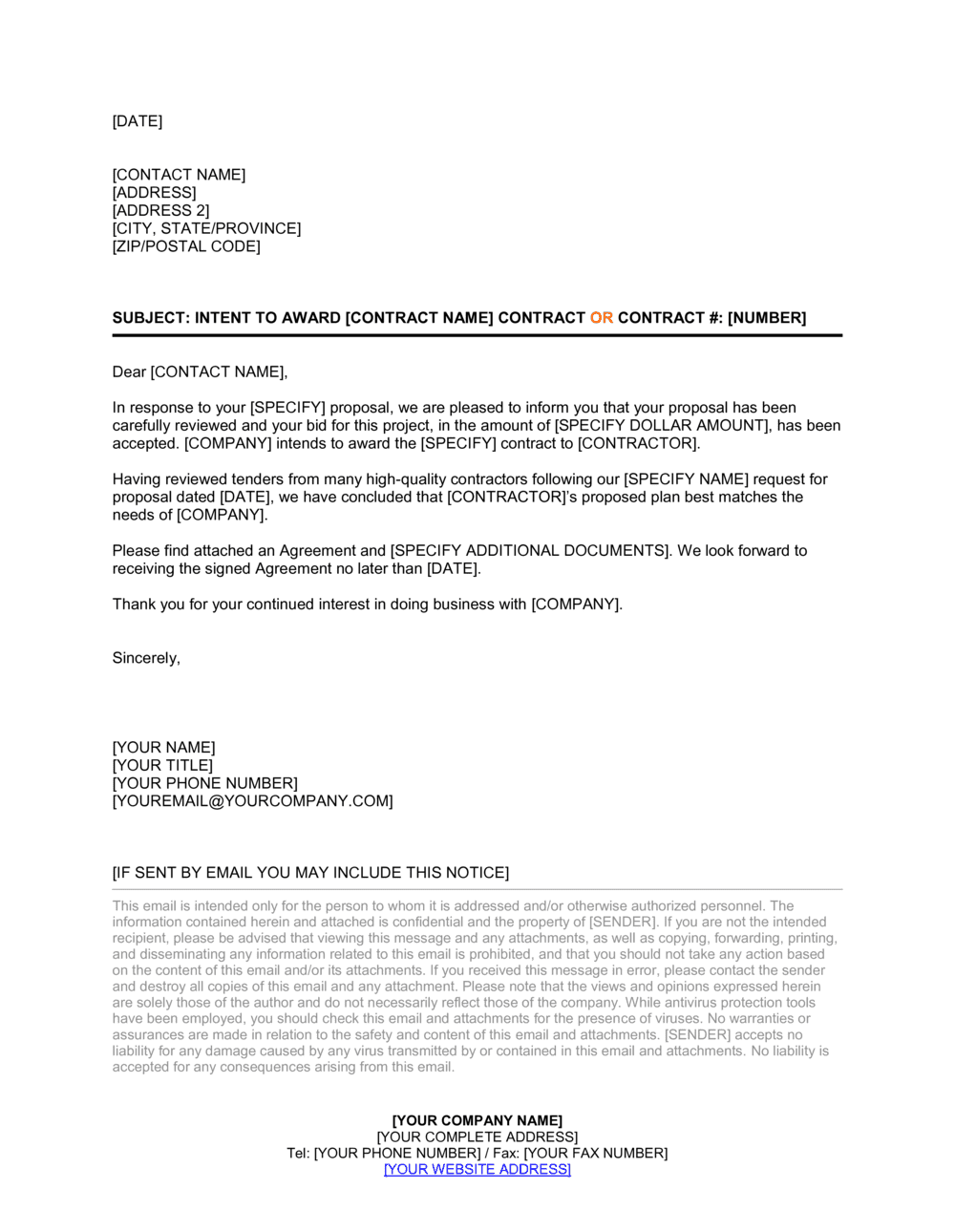
An Awarding Contract Letter is a formal written notification from a buyer or contracting authority to a selected bidder confirming that their proposal has been chosen and a contract is being awarded. This free Word download gives you a structured, professional template you can edit online and export as PDF β€” covering the RFP reference, awarded price, key terms, and next steps for executing the definitive agreement.
When you need it
Send it immediately after internal approval of a winning bid, before the definitive contract is signed, to give the selected vendor official written confirmation of the award. It is also used to set a clear timeline for the next steps and protect both parties against miscommunication during the contract execution phase.
What's inside
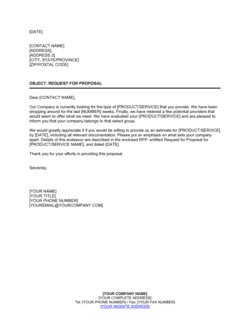
The letter includes a formal salutation, a reference to the originating RFP or tender, a clear statement of award with the agreed contract value, a summary of the key terms and conditions that will govern the engagement, the next steps required before work begins, and an authorized signature block from the contracting authority.

What is an Awarding Contract Letter?

An Awarding Contract Letter is a formal written notification issued by a buyer or contracting authority to the winning bidder in a competitive procurement process, confirming that their proposal has been selected and a contract is being awarded to them. It references the originating RFP or tender by title and number, states the agreed contract value and key commercial terms, lists any conditions the vendor must satisfy before work begins, and sets out the timeline for executing the definitive agreement. The letter functions as the official close of the bidding process and the trigger for contract execution β€” it is not the contract itself, but it creates the formal record of the award decision.

Why You Need This Document

Failing to issue a formal award letter exposes your organization on several fronts at once. Without written confirmation of the award, vendors have no official basis to begin mobilization, procure materials, or allocate staff β€” and any verbal notification is easily disputed. A properly structured letter prevents the winning bidder from renegotiating price after selection by locking in the accepted contract value in writing. It also protects you against claims from unsuccessful bidders by establishing a clear, documented decision point. For public-sector and regulated-industry procurement, a formal written notice is often a statutory requirement, and its absence can invalidate the entire award process. This template gives you a professional, complete award letter in under 20 minutes β€” so the gap between your internal decision and the vendor's official notification is measured in hours, not weeks.

Which variant fits your situation?

If your situation is…Use this template
Awarding a contract after a formal public tender or RFP processAwarding Contract Letter
Notifying unsuccessful bidders that they were not selectedRejection of Bid Letter
Inviting vendors to submit bids for a projectRequest for Proposal (RFP)
Engaging the awarded vendor under a definitive services agreementService Agreement
Awarding a construction-specific subcontract after tenderSubcontractor Agreement
Requesting a formal price quotation before awardingRequest for Quotation (RFQ)

Common mistakes to avoid

❌ Using tentative award language

Why it matters: Phrases like 'we intend to award' or 'subject to final approval' create ambiguity about whether the award is final, allowing the vendor to withdraw or reprice without penalty.

Fix: Use a definitive statement of award once internal approvals are complete. If approvals are still pending, delay sending the letter rather than issuing a conditional notice.
❌ Omitting the RFP reference number

Why it matters: Vendors managing multiple active bids cannot reliably match an award letter to the correct submission, causing delays in returning signed contracts and compliance documents.

Fix: Include both the RFP title and reference number in the subject line and in the first paragraph of the letter body.

❌ Skipping conditions precedent

Why it matters: Without a written list of what the vendor must provide before work begins, insurance and bonding gaps are discovered after the start date, creating schedule risk and liability exposure.

Fix: Confirm required documents with your insurance adviser and legal team before drafting the letter, then list them with individual deadlines in the conditions precedent clause.

❌ Signing the letter without verifying signatory authority

Why it matters: An award letter signed by someone without delegated authority to commit the contract value may not constitute a valid obligation, exposing the buyer to a dispute if the vendor has already mobilized resources.

Fix: Check your organization's delegation of authority policy before issuing. For high-value awards, obtain written confirmation of approval from the appropriate level before signing.

The 8 key clauses, explained

Header and reference line

In plain language: Identifies the letter's date, the recipient's full name and address, and a clear subject line referencing the originating RFP or tender by title and number.

Sample language
Date: [DATE] | To: [VENDOR CONTACT NAME], [VENDOR COMPANY NAME], [ADDRESS] | Re: Contract Award β€” [RFP/TENDER TITLE], Reference No. [RFP NUMBER]

Common mistake: Omitting the RFP or tender reference number. Without it, the vendor cannot match the letter to the correct submission, causing delays in the contract execution process.

Formal notification of award

In plain language: States clearly and unambiguously that the recipient's proposal has been selected and that the contract is being awarded to them.

Sample language
We are pleased to inform you that [COMPANY NAME] has been selected as the successful bidder for [PROJECT/SERVICE DESCRIPTION] and that the contract is hereby awarded to [VENDOR COMPANY NAME].

Common mistake: Using tentative language such as 'we intend to award' instead of a clear award statement. Conditional phrasing creates ambiguity about whether the award is final.

Contract value and pricing

In plain language: States the total agreed contract value or the pricing basis (fixed fee, unit rate, or schedule of rates) as accepted from the winning proposal.

Sample language
The contract is awarded at a total value of [CURRENCY SYMBOL][CONTRACT AMOUNT] ([AMOUNT IN WORDS]), as set out in your proposal dated [PROPOSAL DATE], in accordance with the pricing schedule attached as Schedule A.

Common mistake: Referencing 'the submitted price' without restating the actual figure. Any discrepancy between the letter and the proposal creates a dispute before the contract is even signed.

Key terms and conditions

In plain language: Summarizes the primary governing terms β€” start date, completion date, payment terms, and a reference to the standard conditions that will be incorporated in the definitive contract.

Sample language
The engagement shall commence on [START DATE] and be completed by [END DATE]. Payment terms are [NET 30 / MILESTONE-BASED]. The definitive contract will incorporate the terms and conditions set out in [RFP DOCUMENT TITLE] dated [DATE].

Common mistake: Restating the full contract terms in the award letter rather than summarizing them and deferring to the definitive agreement. Conflicting language between the letter and the contract creates enforceability problems.

Conditions precedent to commencement

In plain language: Lists any requirements the vendor must satisfy before work begins β€” signed contract, insurance certificates, performance bond, or other compliance documents.

Sample language
Prior to commencement of work, [VENDOR COMPANY NAME] must provide: (a) two signed copies of the definitive contract by [DATE]; (b) a certificate of insurance naming [BUYER COMPANY NAME] as additional insured; and (c) a performance bond in the amount of [AMOUNT], if applicable.

Common mistake: Skipping this clause entirely and assuming the vendor knows what is required. Unspecified preconditions cause last-minute delays when the vendor is unprepared to meet insurance or bonding requirements.

Next steps and execution timeline

In plain language: Sets out the specific actions required from both parties β€” signing the definitive contract, attending a kickoff meeting, or submitting a project schedule β€” with clear deadlines.

Sample language
Please sign and return two copies of the enclosed definitive contract by [DATE]. A project kickoff meeting is scheduled for [DATE/TIME] at [LOCATION/VIDEO LINK]. Work may commence upon issuance of a formal Notice to Proceed.

Common mistake: Providing next steps without deadlines. An undated action list is treated as advisory, not mandatory, and the vendor may deprioritize execution paperwork.

Confidentiality and non-disclosure reminder

In plain language: Reminds the vendor that the award, pricing, and any proprietary information shared during the bidding process remain confidential until the contracting authority issues a public notice.

Sample language
The details of this award, including contract value and terms, are confidential and must not be disclosed to third parties without the prior written consent of [BUYER COMPANY NAME] until a public award notice has been issued.

Common mistake: Omitting confidentiality language when the procurement involved sensitive pricing or proprietary specifications, leaving the buyer exposed if the vendor discloses terms to competitors.

Authorized signature block

In plain language: Identifies the individual signing on behalf of the contracting authority, their title, and their authority to commit the organization, with a dated wet or electronic signature.

Sample language
Authorized by: [SIGNATORY NAME] | Title: [TITLE] | Organization: [BUYER COMPANY NAME] | Date: [DATE] | Signature: _______________

Common mistake: Signing with a name but no title or organizational authority reference. If the signatory's authority is later questioned, the letter may not constitute a valid commitment.

How to fill it out

  1. 1

    Enter the date, recipient details, and RFP reference

    Fill in today's date, the winning vendor's full legal name, address, and primary contact, and the exact title and reference number of the originating RFP or tender in the subject line.

    πŸ’‘ Copy the vendor's legal name from their proposal cover page exactly β€” mismatches between the award letter and the eventual contract create administrative headaches.

  2. 2

    State the award clearly and name the project

    Write a direct, unambiguous opening paragraph confirming that the vendor has been selected and identifying the project or service by its full name as referenced in the RFP.

    πŸ’‘ Avoid conditional phrases. 'You have been selected' is correct. 'We intend to select' leaves the award open to challenge.

  3. 3

    Confirm the contract value and pricing basis

    Enter the total awarded contract value in both numeric and written form, specify the currency, and reference the pricing schedule from the vendor's proposal.

    πŸ’‘ If the award is based on a unit-rate or time-and-materials structure rather than a lump sum, state the pricing basis and the estimated total clearly.

  4. 4

    Summarize key terms and reference the definitive contract

    State the start date, completion date, and payment terms. Reference the specific RFP document and standard conditions that will be incorporated into the definitive contract rather than repeating them in full.

    πŸ’‘ Keep this section to three to five bullet points. The letter is a notification, not the contract β€” brevity reduces the risk of conflicting language.

  5. 5

    List all conditions precedent with deadlines

    Specify every document the vendor must provide before work can begin β€” signed contract, insurance certificates, performance bonds β€” and assign a deadline to each.

    πŸ’‘ Call your insurance broker before sending the letter to confirm what certificates you will actually require, so the list is accurate and complete.

  6. 6

    Set out next steps with specific dates

    List the actions required from both parties in sequence β€” contract signing deadline, kickoff meeting date, Notice to Proceed issuance β€” with named responsible parties and firm dates.

    πŸ’‘ Schedule the kickoff meeting before sending the letter so you can insert a confirmed date rather than a placeholder.

  7. 7

    Have an authorized signatory review and sign

    Confirm that the person signing has documented authority to commit the organization to this contract value, then date and sign the letter before sending.

    πŸ’‘ For awards above a defined dollar threshold, obtain a second approval from finance or legal before issuing β€” document the approval in your procurement file.

Frequently asked questions

What is an awarding contract letter?

An awarding contract letter is a formal written notification from a buyer or contracting authority to the winning bidder confirming that their proposal has been selected and a contract is being awarded. It typically references the originating RFP or tender, states the agreed contract value, summarizes key terms, and sets out the next steps required before work begins. It is not the definitive contract itself but rather the official notice that triggers the contract execution process.

Is an awarding contract letter legally binding?

In many jurisdictions, a clear and unconditional award letter can create a binding obligation to contract, even before the definitive agreement is signed β€” particularly if the vendor can show they relied on it to mobilize resources. The letter should therefore be issued only after internal approvals are complete and all conditions have been satisfied. If the award is still subject to approvals, use a letter of intent rather than an award letter.

What is the difference between an award letter and a letter of intent?

An award letter is a definitive notification that a contract has been awarded and will be executed. A letter of intent expresses a party's intention to enter into a contract but is typically conditional on further approvals or negotiations. Award letters are appropriate once the decision is final; letters of intent are used when the buyer wants to signal selection to the vendor while conditions remain outstanding.

When should the awarding contract letter be sent?

Send it immediately after all internal approvals of the winning bid have been obtained and before the vendor is expected to mobilize or incur costs. Delays between the internal award decision and the formal notification create uncertainty for the vendor and may affect their ability to meet your start date. Include a deadline for the vendor to return signed contract documents so the execution timeline stays on track.

Should the award letter include the full contract terms?

No. The award letter should summarize the key commercial terms β€” value, start and end dates, payment terms β€” and reference the definitive contract document for the complete terms and conditions. Restating full contract language in the letter creates a risk of conflicting provisions between the letter and the contract, which can complicate dispute resolution later.

Does an awarding contract letter need to be signed?

Yes. The letter should be signed by an individual with documented authority to commit the organization to the contract value being awarded. While a physical signature is not always legally required for a letter to be effective, a signed letter from an authorized representative reduces the risk of the vendor challenging the authority of the commitment. For high-value awards, some organizations require countersignature from a finance or legal approver.

What should I do if I need to cancel an award letter after sending it?

Withdrawing or canceling an award letter after it has been received by the vendor carries legal and reputational risk, particularly if the vendor has already incurred costs in reliance on it. Issue a formal written withdrawal notice immediately, document the reason, and seek legal advice before taking further action. To reduce this risk, ensure all internal approvals are finalized before the letter is sent.

Can I use this template for a government or public-sector procurement?

This template provides a solid structural starting point for public-sector award notifications, but government and public-sector procurement is subject to specific statutory requirements that vary by jurisdiction β€” including mandatory standstill periods, publication obligations, and prescribed notification formats. Review the applicable procurement regulations for your jurisdiction before adapting this template for a public tender process.

How this compares to alternatives

vs Letter of Intent

A letter of intent signals that a buyer plans to enter into a contract but is typically conditional on further approvals or negotiation. An awarding contract letter is a definitive notification that the award decision is final. Use a letter of intent when internal approvals are still pending; use an award letter once the decision is confirmed and unconditional.

vs Request for Proposal (RFP)

An RFP invites vendors to submit competitive proposals for a project. The awarding contract letter is the document that closes the RFP process by formally notifying the winning vendor of their selection. The two documents bookend the procurement cycle β€” the RFP opens it, the award letter concludes it.

vs Service Agreement

A service agreement is the full legally binding contract governing the rights, obligations, and detailed terms of the engagement. The awarding contract letter is a shorter notification document that confirms selection and references the service agreement to follow. The letter triggers execution; the service agreement governs the relationship.

vs Notice to Proceed

A notice to proceed authorizes the awarded vendor to begin work and is typically issued after the definitive contract is signed. An awarding contract letter precedes the notice to proceed β€” it confirms selection and sets the conditions that must be met before work can start. Confusing the two can result in vendors mobilizing before the contract is fully executed.

Industry-specific considerations

Construction and engineering

Award letters reference the bill of quantities, performance bond requirements, and site mobilization date as conditions precedent to commencement.

Government and public sector

Public procurement award notices must comply with jurisdiction-specific standstill periods and transparency obligations before the definitive contract can be signed.

Professional services

Service-based awards reference the accepted statement of work, billing rate schedule, and confidentiality obligations that carry over from the RFP into the engagement.

Information technology

IT procurement award letters commonly include data security and compliance conditions β€” such as SOC 2 certification or cybersecurity insurance β€” as prerequisites to contract execution.

Template vs pro β€” what fits your needs?

PathBest forCostTime
Use the templateProcurement managers, small business owners, and project managers issuing standard vendor award notificationsFree15–20 minutes
Template + professional reviewHigh-value awards, public-sector procurement, or situations where the award letter may create binding pre-contract obligations$150–$400 for a lawyer or procurement specialist review1–2 days
Custom draftedComplex multi-party procurements, regulated industries, or international contracts with jurisdiction-specific award notification requirements$500–$1,500+3–7 days

Glossary

Contract Award
The formal decision by a buyer or contracting authority to accept a specific bidder's proposal and enter into a contract with them.
RFP (Request for Proposal)
A document issued by a buyer inviting vendors to submit detailed proposals for a project, including technical approach, timeline, and pricing.
Tender
A formal competitive bidding process in which suppliers submit sealed price offers to be evaluated against defined criteria.
Contracting Authority
The organization or individual with the legal authority to commit funds and execute binding contracts on behalf of the buyer.
Letter of Intent (LOI)
A preliminary document expressing one party's intention to enter into a formal contract β€” less binding than the contract itself but more formal than verbal agreement.
Definitive Agreement
The full legally binding contract signed by both parties that governs all rights, obligations, and terms of the engagement.
Contract Value
The total agreed price or compensation payable under the contract, as referenced in the award letter.
Notice to Proceed (NTP)
A written instruction from the buyer authorizing the awarded vendor to begin work, typically issued after the definitive contract is signed.
Bid Bond
A financial guarantee submitted with a bid ensuring that the winning bidder will execute the contract β€” forfeited if they decline after award.
Performance Bond
A surety bond required from the awarded contractor guaranteeing completion of the work to the specified standard.

Part of your Business Operating System

This document is one of 3,000+ business & legal templates included in Business in a Box.

  • Fill-in-the-blanks β€” ready in minutes
  • 100% customizable Word document
  • Compatible with all office suites
  • Export to PDF and share electronically

Create your document in 3 simple steps.

From template to signed document β€” all inside one Business Operating System.
1
Download or open template

Access over 3,000+ business and legal templates for any business task, project or initiative.

2
Edit and fill in the blanks with AI

Customize your ready-made business document template and save it in the cloud.

3
Save, Share, Send, Sign

Share your files and folders with your team. Create a space of seamless collaboration.

Save time, save money, and create top-quality documents.

β˜…β˜…β˜…β˜…β˜…

"Fantastic value! I'm not sure how I'd do without it. It's worth its weight in gold and paid back for itself many times."

Managing Director Β· Mall Farm
Robert Whalley
Managing Director, Mall Farm Proprietary Limited
β˜…β˜…β˜…β˜…β˜…

"I have been using Business in a Box for years. It has been the most useful source of templates I have encountered. I recommend it to anyone."

Business Owner Β· 4+ years
Dr Michael John Freestone
Business Owner
β˜…β˜…β˜…β˜…β˜…

"It has been a life saver so many times I have lost count. Business in a Box has saved me so much time and as you know, time is money."

Owner Β· Upstate Web
David G. Moore Jr.
Owner, Upstate Web

Run your business with a system β€” not scattered tools

Stop downloading documents. Start operating with clarity. Business in a Box gives you the Business Operating System used by over 250,000 companies worldwide to structure, run, and grow their business.

Start freeΒ Β·Β No credit card required