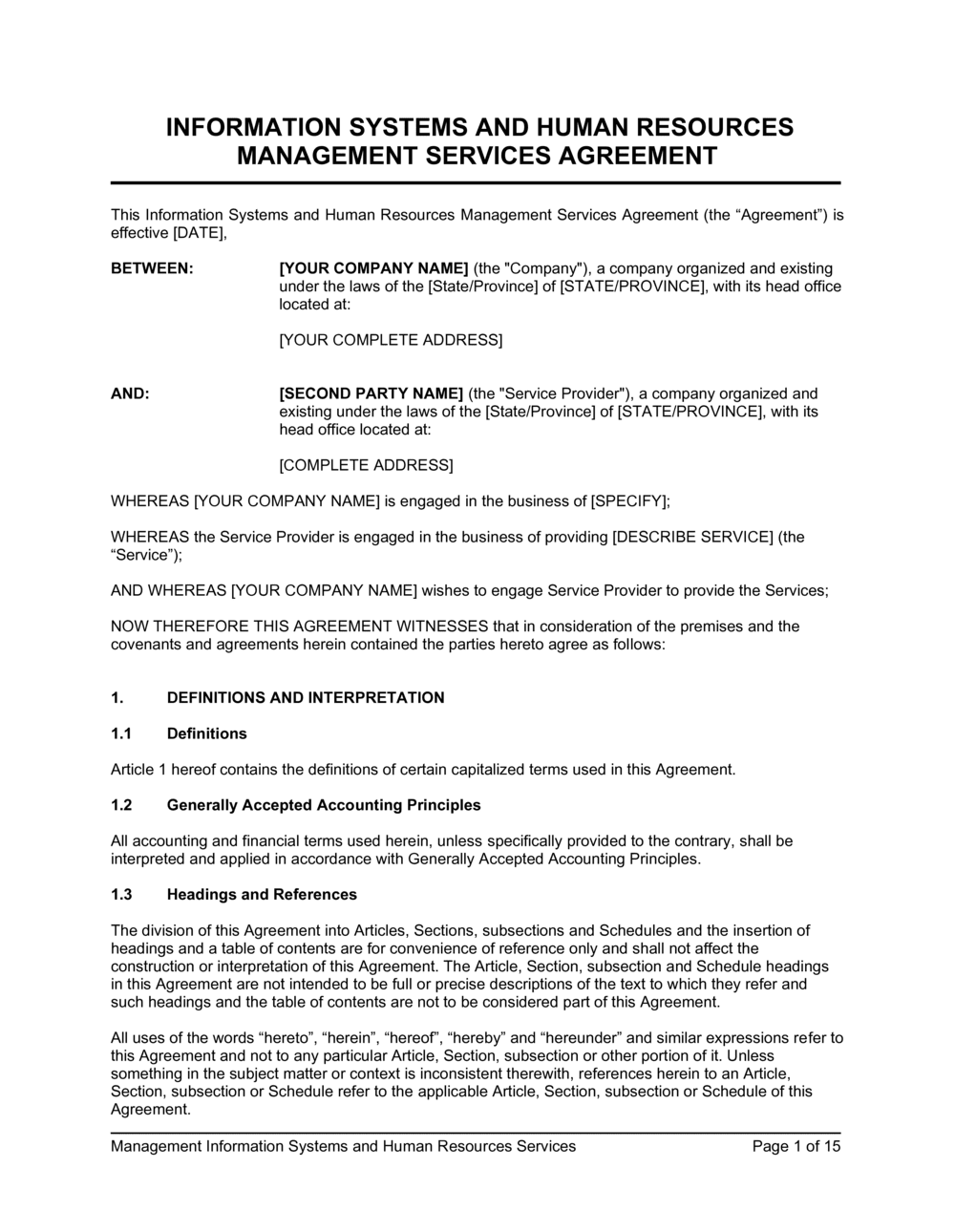
IT Systems & HR Management Services Agreement Template

Free Word download • Edit online • Save & share with Drive • Export to PDF

15 pages30–45 min to fillDifficulty: ComplexSignature requiredLegal review recommended
Learn more ↓
FreeIT Systems & HR Management Services Agreement Template

At a glance

What it is
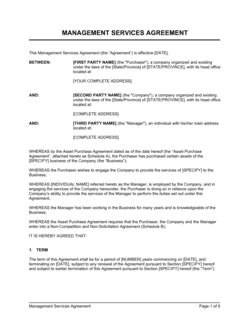
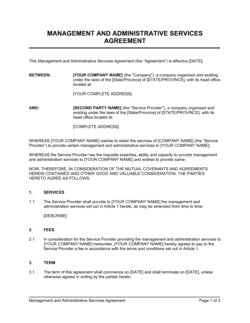
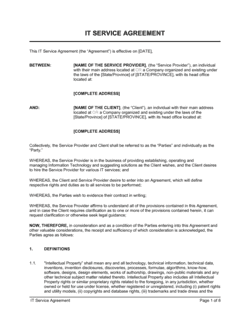
An IT Systems HR Management Services Agreement is a legally binding contract between a company and an external provider engaged to deliver information technology and human resources management services — such as HRIS platform administration, payroll processing, benefits systems, and employee data management. This free Word download covers scope of services, service-level commitments, data protection obligations, intellectual property ownership, and termination rights in a single document you can edit online and export as PDF.
When you need it
Use it when engaging a third-party vendor to manage your HR technology infrastructure or HR administrative functions — including onboarding a managed HR services provider, outsourcing payroll and benefits administration, or contracting IT support for an HRIS platform. It is also appropriate when renegotiating an existing vendor relationship to add enforceable SLA and data-security obligations.
What's inside
Scope of IT and HR services, service-level agreements and performance metrics, data protection and confidentiality obligations, intellectual property ownership and licensing, fees and payment terms, representations and warranties, limitation of liability, and termination rights with transition assistance provisions.

What is an IT Systems HR Management Services Agreement?

An IT Systems HR Management Services Agreement is a legally binding contract between a client organization and an external provider engaged to deliver combined information technology and human resources management services — including HRIS platform administration, payroll processing support, benefits systems management, and HR data security. It establishes the scope of every service the provider will perform, the performance standards they must meet, the data protection obligations that govern access to employee records, and the rights each party holds over intellectual property and confidential information. Unlike a generic services agreement, this contract addresses the heightened sensitivity of HR data — payroll records, compensation structures, health benefit information — alongside the operational criticality of IT systems that must function without interruption for a workforce to run.

Why You Need This Document

Without a written IT Systems HR Management Services Agreement, every aspect of your vendor relationship defaults to the provider's standard terms — which are written to limit their liability, not protect yours. A provider with unrestricted access to your HRIS and payroll systems and no contractual breach notification obligation leaves your organization exposed to regulatory fines under GDPR, CCPA, and applicable state privacy laws if employee data is compromised. No defined SLAs means payroll delays have no contractual remedy. No transition assistance obligation means that when you need to change providers, your years of employee data can be held hostage or exported in an unusable format. This template gives you an enforceable framework — covering scope, performance, data security, IP ownership, and exit rights — before a vendor touches a single employee record.

Which variant fits your situation?

If your situation is…Use this template
Engaging a provider for IT services only, with no HR administration componentIT Services Agreement
Outsourcing HR functions without an IT systems componentHR Outsourcing Agreement
Contracting for SaaS-based HR software access rather than managed servicesSoftware as a Service (SaaS) Agreement
Engaging an independent HR consultant for project-based advisory workIndependent Contractor Agreement
Formalizing a broader managed services relationship covering IT, HR, and financeManaged Services Agreement
Adding a standalone data processing addendum to an existing services contractData Processing Agreement
Protecting confidential HR and IT system information before contract negotiationsNon-Disclosure Agreement

Common mistakes to avoid

❌ Vague scope language without a detailed Schedule A

Why it matters: Without an itemized service schedule, every request that falls outside the provider's interpretation of 'IT and HR management services' becomes a change order — driving up costs and creating relationship friction.

Fix: Attach a Schedule A listing every service, system, and function the provider will manage, with exclusions noted explicitly so both parties share the same baseline.

❌ SLAs without defined remedies

Why it matters: A provider who misses a 99.5% uptime commitment but faces no contractual consequence has no financial incentive to prioritize remediation. The SLA becomes decorative.

Fix: Pair every SLA metric with a specific, automatic remedy — a percentage service credit, a right to escalate, or a termination trigger after repeated failures.

❌ No data breach notification timeline

Why it matters: GDPR requires breach notification to supervisory authorities within 72 hours. CCPA and various US state laws impose their own deadlines. A contract silent on notification timeline does not protect the client from regulatory exposure caused by the provider's delay.

Fix: State a specific notification window — 24 to 72 hours for actual or suspected breaches — and require the provider to notify by a documented method, not just 'reasonable efforts'.

❌ Applying the liability cap to data breach claims

Why it matters: HR data breaches involving payroll records and sensitive employee information can generate regulatory fines, class-action exposure, and reputational damage far exceeding 12 months of management fees.

Fix: Carve out data breach liability and IP indemnification from the general liability cap, or negotiate a separate, higher sub-limit for these categories — typically 2–3 times annual fees.

❌ No transition assistance obligation or a 30-day window

Why it matters: Migrating an HRIS platform with years of employee records, payroll history, and benefits data to a new provider realistically takes 60–120 days. A 30-day contractual transition window leaves the client without a functioning HR system mid-migration.

Fix: Negotiate a minimum 90-day transition assistance period with specific deliverables: structured data export, system documentation, and reasonable cooperation with the incoming provider.

❌ Omitting ownership of custom integrations and configurations

Why it matters: Custom workflows, API integrations, and reporting configurations built for your organization default to provider ownership in most jurisdictions if the contract is silent — meaning you cannot take them to a new vendor without a separate license or repurchase.

Fix: Specify in Schedule B that all custom configurations developed exclusively for the client are owned by the client upon payment, with the provider retaining a license only to operate them during the term.

The 10 key clauses, explained

Parties, Recitals, and Definitions

In plain language: Identifies the client and service provider as legal entities, describes the purpose of the agreement, and defines all key terms used throughout the contract.

Sample language
This IT Systems HR Management Services Agreement ('Agreement') is entered into as of [DATE] between [CLIENT LEGAL NAME], a [STATE/COUNTRY] [ENTITY TYPE] ('Client'), and [PROVIDER LEGAL NAME], a [STATE/COUNTRY] [ENTITY TYPE] ('Provider').

Common mistake: Using trade names instead of registered legal entity names. Enforcement actions, indemnification claims, and data breach notices must reference the correct contracting entity — a mismatch creates jurisdictional and procedural complications.

Scope of Services and Service Schedule

In plain language: Precisely defines which IT and HR management services the provider will deliver, referencing a detailed Schedule A that can be updated without amending the main agreement.

Sample language
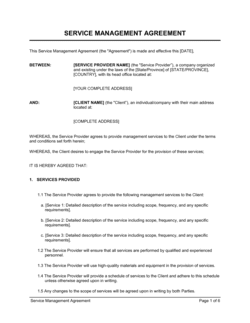
Provider shall deliver the IT and HR management services described in Schedule A ('Services'), which may be amended by mutual written agreement. Services include, but are not limited to, HRIS platform administration, payroll processing support, benefits system management, and IT helpdesk support for HR systems.

Common mistake: Defining services too broadly in the body of the contract without a detailed Schedule A. Vague scope language leads to disputes over whether a requested service is included, creating costly change-order friction.

Service-Level Agreements and Performance Metrics

In plain language: Establishes measurable performance standards — system uptime, response times, payroll accuracy rates — and defines the remedies, such as service credits, available when standards are missed.

Sample language
Provider shall maintain system availability of no less than [99.5]% per calendar month, measured excluding scheduled maintenance. For payroll processing, Provider shall achieve [99.9]% accuracy. Failure to meet SLAs for two consecutive months entitles Client to a service credit of [X]% of monthly fees.

Common mistake: Including SLA targets without defining measurement methodology or the remedy for breach. An SLA without a remedy is an aspiration, not an enforceable obligation.

Data Protection and Security Obligations

In plain language: Requires the provider to implement and maintain appropriate technical and organizational measures to protect employee personal data, comply with applicable privacy laws, and notify the client of any data breach within a defined timeframe.

Sample language
Provider shall implement and maintain security measures meeting or exceeding [ISO 27001 / SOC 2 Type II] standards. Provider shall notify Client of any actual or suspected data breach affecting Client's employee data within [72] hours of discovery. Provider shall process personal data solely on Client's documented instructions.

Common mistake: No breach notification timeline in the contract. GDPR requires 72-hour notification to supervisory authorities; HIPAA requires 60-day notification to affected individuals — contractual silence does not eliminate statutory obligations, and a provider who misses these windows can expose the client to regulatory fines.

Intellectual Property Ownership and Licensing

In plain language: Clarifies who owns the IT systems, custom configurations, HR data, and work product created under the agreement — typically granting the client ownership of its data and a license to use the provider's platform, while the provider retains ownership of its proprietary systems.

Sample language
All Client Data, including employee records and HR reports, remain the sole property of Client. Provider grants Client a non-exclusive, non-transferable license to use the Provider's platform and tools solely for the purposes described in Schedule A. Any custom configurations or integrations developed exclusively for Client shall be owned by [CLIENT / PROVIDER] as specified in Schedule B.

Common mistake: Failing to specify ownership of custom integrations or configurations built specifically for the client. If ownership is silent, it defaults to the provider in most jurisdictions — leaving the client without rights to migrate those configurations to a new vendor.

Fees, Payment Terms, and Adjustments

In plain language: States the fee structure (monthly, per-employee, or project-based), payment due dates, late-payment consequences, and any mechanisms for annual fee adjustments.

Sample language
Client shall pay Provider a monthly fee of $[AMOUNT] (or $[X] per active employee per month), due within [30] days of invoice. Invoices unpaid after [30] days accrue interest at [1.5]% per month. Provider may adjust fees annually by no more than [CPI + 3]% upon [60] days' written notice.

Common mistake: No cap on annual fee increases. Without a ceiling tied to a specific index or percentage, the provider has effective discretion to raise prices significantly at each renewal — leaving the client with no contractual lever to push back short of termination.

Confidentiality

In plain language: Prohibits both parties from disclosing the other's confidential information — including employee data, HR processes, proprietary systems, and commercial terms — during and after the engagement.

Sample language
Each party agrees to hold the other's Confidential Information in strict confidence and not to disclose or use it except as necessary to perform its obligations under this Agreement. 'Confidential Information' includes employee personal data, compensation structures, system architecture, and pricing. Obligations survive termination for [3] years.

Common mistake: Omitting employee personal data from the definition of Confidential Information. HR data contains sensitive personal information protected by statute — relying on the data protection clause alone without an explicit confidentiality obligation creates a gap in coverage.

Representations, Warranties, and Compliance

In plain language: Each party represents that it has authority to enter the agreement and will comply with applicable laws, including employment, data protection, and IT security regulations relevant to the services.

Sample language
Provider represents and warrants that: (a) it has full authority to enter this Agreement; (b) the Services will be performed in compliance with applicable law, including [GDPR / CCPA / applicable employment standards]; and (c) Provider holds all necessary licenses and certifications to deliver the Services.

Common mistake: No compliance representation tied to jurisdiction-specific privacy laws. A provider operating across multiple jurisdictions who gives only a generic 'comply with applicable law' warranty leaves the client unable to invoke a specific breach if the provider fails to meet GDPR or CCPA obligations.

Limitation of Liability and Indemnification

In plain language: Caps each party's total financial exposure and allocates liability for specific risk categories — with the provider typically indemnifying the client for data breaches, IP infringement, and gross negligence.

Sample language
Provider's aggregate liability under this Agreement shall not exceed the total fees paid by Client in the [12] months preceding the claim. Provider shall indemnify Client against third-party claims arising from Provider's breach of the data protection obligations in Section [X], infringement of third-party IP, or gross negligence.

Common mistake: Applying the liability cap to data breach indemnification. A data breach involving employee records can generate regulatory fines and class-action exposure far exceeding 12 months of fees — carve out data breach liability from the cap or negotiate a separate, higher sub-limit.

Term, Termination, and Transition Assistance

In plain language: Defines the initial contract term, renewal mechanics, termination triggers (for cause and convenience), notice periods, and the provider's obligation to assist with data migration and service handover after termination.

Sample language
This Agreement commences on [START DATE] and continues for an initial term of [12/24/36] months, renewing automatically for successive [12]-month terms unless either party provides [90] days' written notice. Either party may terminate for material breach upon [30] days' written notice if the breach is uncured. Upon termination, Provider shall provide Transition Assistance for up to [90] days, including data export in [CSV / JSON / mutually agreed format] and documentation of system configurations.

Common mistake: No transition assistance obligation or a transition period too short to complete a realistic migration. HR and IT system migrations involving payroll data and employee records routinely take 60–120 days — a 30-day transition window contractually strands the client.

How to fill it out

  1. 1

    Identify the contracting parties with full legal names

    Enter both parties' registered legal entity names, states or countries of incorporation, and registered addresses. Confirm these match the entities that will receive invoices and execute payroll.

    💡 Cross-reference the provider's corporate registry filing — managed services companies frequently operate through subsidiaries, and the contracting entity must be the one with E&O and cyber liability insurance.

  2. 2

    Define the scope of services in Schedule A

    List every IT and HR management service the provider will deliver — HRIS administration, payroll processing, benefits platform support, help desk, reporting — and note which are included in the base fee versus priced separately.

    💡 Attach current system documentation and a service catalog as exhibits so the scope is anchored to a known baseline, not subject to later interpretation.

  3. 3

    Set specific, measurable SLA targets

    Define uptime percentages, incident response time tiers (P1/P2/P3), payroll processing accuracy rates, and any HR reporting turnaround commitments. Tie each metric to a defined remedy — service credit, escalation path, or termination right.

    💡 Request the provider's historical SLA performance reports for the past 12 months before agreeing to targets — setting a target the provider routinely misses is not a protection.

  4. 4

    Complete the data protection and security obligations

    Specify the security framework the provider must maintain (SOC 2 Type II, ISO 27001), the breach notification timeline (72 hours for GDPR; 30 days is typical for US contracts), and whether a separate Data Processing Agreement is required.

    💡 If your workforce includes EU or UK employees, a standalone DPA is mandatory under GDPR — incorporate it as Schedule C rather than relying on generic contract language.

  5. 5

    Clarify IP ownership for custom configurations

    Specify in Schedule B whether any custom integrations, workflows, or reports built specifically for your organization are owned by you or licensed back. Address data portability — confirm the format and frequency with which you can export your HR data.

    💡 Request a data export test before signing. If the provider cannot produce a clean, structured export of your employee data today, the transition assistance clause will be hard to enforce at termination.

  6. 6

    Negotiate the fee structure and annual adjustment cap

    Enter the monthly or per-employee fee, payment due date, late-payment interest rate, and an annual fee adjustment cap tied to a specific index (CPI or CPIU) plus a defined percentage ceiling.

    💡 Cap annual increases at CPI + 3% to 5%. Anything higher gives the provider pricing power that can erode the economics of the engagement by Year 3.

  7. 7

    Set the term length and transition assistance period

    Choose an initial term of 12, 24, or 36 months. Set auto-renewal notice at 90 days. Define transition assistance as at least 90 days post-termination, including data export, system documentation handover, and reasonable cooperation with the replacement vendor.

    💡 Negotiate a termination-for-convenience right at any renewal date without penalty — this preserves leverage if the relationship deteriorates but avoids early-termination fees.

  8. 8

    Execute before the service start date

    Both authorized signatories must sign before the provider accesses any employee data or begins systems administration. Post-start-date execution leaves the early service period ungoverned by the contract's data protection and IP obligations.

    💡 Use a date-stamped electronic signature platform and store the fully executed agreement alongside the Schedule exhibits as a single package.

Frequently asked questions

What is an IT Systems HR Management Services Agreement?

An IT Systems HR Management Services Agreement is a legally binding contract between a client organization and an external provider engaged to deliver combined information technology and human resources management services — such as HRIS platform administration, payroll processing, benefits systems support, and HR data management. It defines the scope of services, performance standards, data protection obligations, intellectual property ownership, fees, and termination rights in a single governing document.

When do I need this type of services agreement?

You need this agreement whenever you engage a third party to manage your HR technology infrastructure or HR administrative functions. Common triggers include onboarding a managed HR services provider, outsourcing payroll and benefits administration to an external vendor, contracting IT support for an HRIS platform, or renegotiating an existing vendor relationship to add enforceable SLA and data-security obligations. Without a written agreement, the engagement is governed by the vendor's standard terms — which typically favor the provider.

What should an IT Systems HR Management Services Agreement include?

At minimum: full legal names of both parties, a detailed scope of services schedule, specific SLA targets with defined remedies, data protection and breach notification obligations, IP ownership for client data and custom configurations, fee structure with an annual adjustment cap, confidentiality obligations covering employee personal data, a limitation of liability and indemnification framework, and termination provisions with a transition assistance period of at least 90 days. Missing any of these creates gaps that become costly to resolve after a dispute or termination.

How is this agreement different from a standard IT services agreement?

A standard IT services agreement covers technology support without specific HR data and employment law considerations. This agreement adds HR-specific obligations: compliance with employment data protection laws (GDPR, CCPA, provincial privacy statutes), payroll processing accuracy SLAs, employee data portability rights, and HR-regulatory compliance warranties. The combination of IT and HR functions also creates higher data sensitivity requirements that warrant stronger breach notification and indemnification terms than a typical IT contract.

Does this agreement need to include GDPR or data protection provisions?

Yes, if the provider processes personal data of employees located in the EU, UK, or any jurisdiction with a comprehensive privacy law. Under GDPR, a Data Processing Agreement is mandatory when a processor handles personal data on behalf of a controller — and HR data (payroll records, health information, identification data) is among the most sensitive categories of personal data. Even outside the EU, US state laws including CCPA and Canada's PIPEDA impose obligations that the services agreement or a DPA addendum must address.

Who owns the employee data processed by the provider?

The client organization typically owns its employee data in all circumstances — this should be stated explicitly in the agreement. The provider processes that data as a service on the client's behalf and should not acquire any independent rights to it. The agreement should also specify data portability: the format, frequency, and cost (if any) of data exports, and the provider's obligation to delete or return all data upon termination.

What SLA terms are typical for HR and IT managed services?

Typical SLA benchmarks for combined HR and IT managed services include: system uptime of 99.5% to 99.9% per calendar month; P1 incident response within 1–4 hours; payroll processing accuracy at 99.9% or higher; and HR reporting turnaround of 1–3 business days. Service credits for SLA misses typically range from 5% to 15% of the affected month's fees. Repeated SLA failures over two to three consecutive months should trigger a termination-for-cause right.

Can I terminate the agreement early if the provider is not performing?

Yes, if the contract includes a termination-for-cause provision — which this template does. Typically, termination for cause requires written notice identifying the material breach, a cure period (usually 30 days), and the right to terminate if the breach is uncured. For critical failures — a data breach or payroll processing failure — some agreements allow immediate termination without a cure period. Termination-for-convenience rights (with notice but without cause) are negotiable and valuable at auto-renewal dates.

Do I need a lawyer to finalize this agreement?

For straightforward domestic engagements with standard services and a well-established provider, a high-quality template reviewed by a knowledgeable HR or IT operations lead is often sufficient. A lawyer review is recommended when the engagement involves processing EU or UK employee data (requiring a formal DPA), when fees exceed $100,000 annually, when the provider will have administrative access to sensitive payroll or benefits systems, or when the liability and indemnification framework needs to be negotiated against the provider's standard terms.

How this compares to alternatives

vs IT Services Agreement

An IT Services Agreement covers technology support and infrastructure management without HR-specific data protection, payroll accuracy SLAs, or employment law compliance warranties. Use an IT Services Agreement when engaging a vendor for pure technology support. Use this agreement when the vendor's scope includes HR data processing, HRIS administration, or payroll system management — the combination of IT and HR functions requires additional protections.

vs Managed Services Agreement

A Managed Services Agreement is a broader framework for outsourcing any business function to an MSP. This agreement is a specialized version focused on the intersection of IT infrastructure and HR administration — adding HR-regulatory compliance warranties, employee data portability rights, and payroll SLAs that a generic managed services template does not address. Use the broader MSA when bundling IT, finance, and other operational functions together.

vs Independent Contractor Agreement

An Independent Contractor Agreement governs an individual consultant engaged for project-based HR or IT work. This agreement governs an ongoing, multi-function managed services relationship with a vendor organization. The contractor agreement lacks SLA frameworks, data processing obligations, and transition assistance provisions — it is not appropriate when the vendor has ongoing access to live HR systems and employee data.

vs Software as a Service (SaaS) Agreement

A SaaS Agreement governs access to a cloud-based HR platform — it covers software licensing, uptime, and data rights but does not address the managed services layer where the provider actively administers HR processes on the client's behalf. Use the SaaS Agreement when buying access to HRIS software. Use this agreement when the vendor both provides the platform and manages the HR and IT functions running on top of it.

Industry-specific considerations

Technology / SaaS

Remote-first workforces with employees across multiple states or countries require providers to handle multi-jurisdiction payroll compliance, equity administration system access, and GDPR-compliant employee data processing.

Healthcare

HIPAA considerations extend to HR systems holding employee health benefit and leave data; BAA addendum may be required; credentialing and licensure tracking is a common additional service scope item.

Financial Services

Regulatory requirements for employee data retention, background check system administration, and FINRA/SEC licensing tracking add compliance obligations that must be reflected in the SLA and warranty provisions.

Manufacturing

High hourly workforce volumes require payroll processing accuracy SLAs covering shift differentials, overtime calculations, and multi-site time and attendance system integration.

Jurisdictional notes

United States

No single federal statute governs HR data processing in private employment, but a patchwork of state laws applies — CCPA in California, VCDPA in Virginia, and similar statutes in 15+ states impose data subject rights and breach notification obligations. Payroll-related SLAs must account for state-specific minimum wage, overtime, and final-pay timing laws. HIPAA applies if the provider administers health benefit systems containing protected health information.

Canada

PIPEDA (and Quebec's Law 25 effective 2023) govern collection, use, and disclosure of employee personal information — providers must be designated as authorized processors with documented security safeguards. Quebec contracts must include a French-language version for provincially-regulated employers. Provincial employment standards across all 13 jurisdictions affect payroll SLA design, particularly for termination pay timing and record-keeping obligations.

United Kingdom

UK GDPR (retained post-Brexit) and the Data Protection Act 2018 require a formal Data Processing Agreement where the provider processes employee personal data as a processor. Breach notification to the ICO is required within 72 hours. IR35 rules may affect the characterization of the provider relationship if individuals are engaged through personal service companies. Standard Contractual Clauses are required for data transfers to non-UK countries.

European Union

GDPR Article 28 mandates a formal Data Processing Agreement for any processor handling employee personal data on behalf of a controller — the services agreement alone is insufficient. HR data including health, biometric, and trade union information constitutes special category data under Article 9, requiring explicit legal basis. Cross-border data transfers to non-EEA countries require Standard Contractual Clauses or an adequacy decision. Data breach notification to the supervisory authority is required within 72 hours.

Template vs lawyer — what fits your deal?

PathBest forCostTime
Use the templateDomestic engagements with a single provider managing standard HR and IT services for a US or Canadian workforce below 250 employeesFree1–2 hours to customize
Template + legal reviewEngagements involving EU or UK employee data, annual fees above $75,000, or providers requiring negotiation of their standard terms$500–$1,500 for a 1–2 hour lawyer review2–5 business days
Custom draftedLarge enterprise outsourcing arrangements, multi-jurisdiction workforce, regulated industries (healthcare, financial services), or complex IP and liability negotiations$3,000–$10,000+2–6 weeks

Glossary

Service-Level Agreement (SLA)
A defined commitment within the contract specifying performance standards — such as system uptime percentage, incident response time, or payroll processing accuracy — and the remedies available if those standards are not met.
HRIS (Human Resources Information System)
Software that centralizes employee data and automates HR processes including payroll, benefits enrollment, time tracking, and reporting.
Managed Services Provider (MSP)
A third-party company that remotely manages a client's IT infrastructure and end-user systems under a proactive service model, typically under a recurring contract.
Data Processing Agreement (DPA)
A contract or addendum that governs how a service provider processes personal data on behalf of the client, defining purposes, security measures, and sub-processor obligations.
Intellectual Property Assignment
A contractual clause that transfers ownership of work product, custom configurations, or software created by the provider specifically for the client to the client.
Limitation of Liability
A clause capping the maximum financial exposure of one or both parties — typically expressed as a multiple of fees paid in the preceding 12 months.
Force Majeure
A provision excusing a party from performance obligations when failure is caused by events beyond reasonable control, such as natural disasters, cyberattacks, or government actions.
Transition Assistance
An obligation requiring the outgoing provider, upon contract termination, to cooperate with the client's migration to a new provider for a defined period — covering data export, documentation, and knowledge transfer.
Indemnification
A contractual obligation by one party to compensate the other for specific losses, claims, or damages — commonly covering IP infringement claims or data breach liability.
Uptime Guarantee
A specific commitment that an IT system or platform will be available for use a defined percentage of time per month — for example, 99.5% monthly uptime — with credits or remedies for shortfalls.

Part of your Business Operating System

This document is one of 3,000+ business & legal templates included in Business in a Box.

  • Fill-in-the-blanks — ready in minutes
  • 100% customizable Word document
  • Compatible with all office suites
  • Export to PDF and share electronically

Create your document in 3 simple steps.

From template to signed document — all inside one Business Operating System.
1
Download or open template

Access over 3,000+ business and legal templates for any business task, project or initiative.

2
Edit and fill in the blanks with AI

Customize your ready-made business document template and save it in the cloud.

3
Save, Share, Send, Sign

Share your files and folders with your team. Create a space of seamless collaboration.

Save time, save money, and create top-quality documents.

★★★★★

"Fantastic value! I'm not sure how I'd do without it. It's worth its weight in gold and paid back for itself many times."

Managing Director · Mall Farm
Robert Whalley
Managing Director, Mall Farm Proprietary Limited
★★★★★

"I have been using Business in a Box for years. It has been the most useful source of templates I have encountered. I recommend it to anyone."

Business Owner · 4+ years
Dr Michael John Freestone
Business Owner
★★★★★

"It has been a life saver so many times I have lost count. Business in a Box has saved me so much time and as you know, time is money."

Owner · Upstate Web
David G. Moore Jr.
Owner, Upstate Web

Run your business with a system — not scattered tools

Stop downloading documents. Start operating with clarity. Business in a Box gives you the Business Operating System used by over 250,000 companies worldwide to structure, run, and grow their business.

Start free · No credit card required