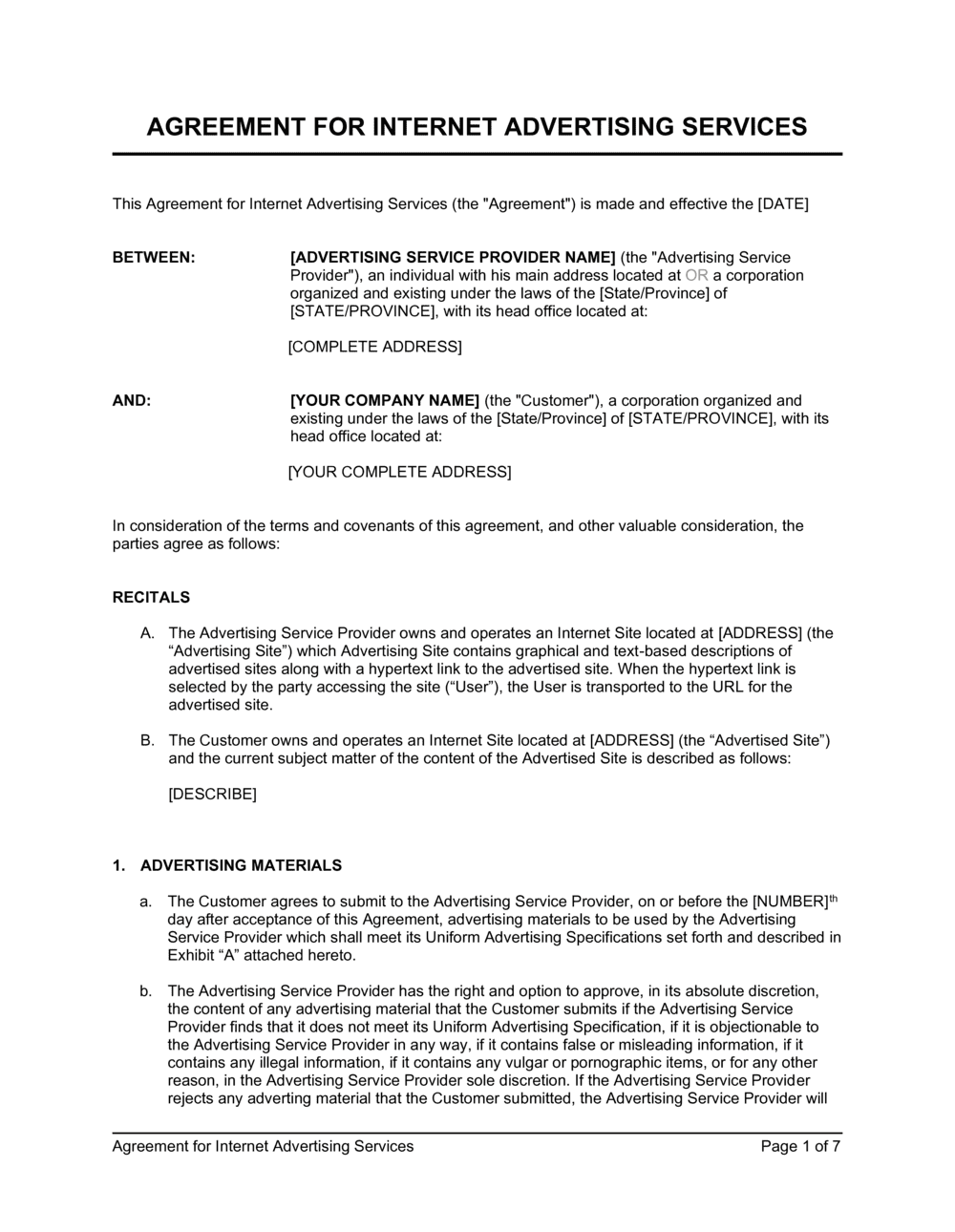
Agreement for Internet Advertising Services Template

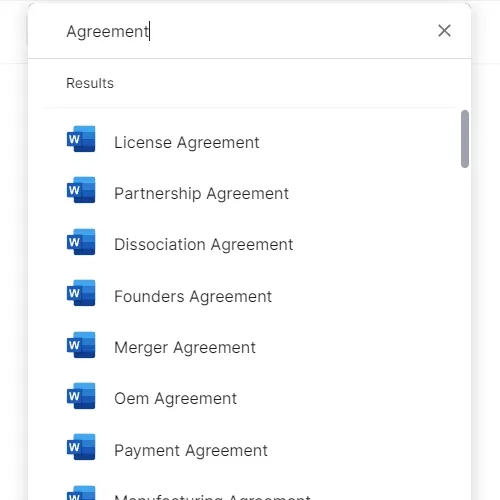
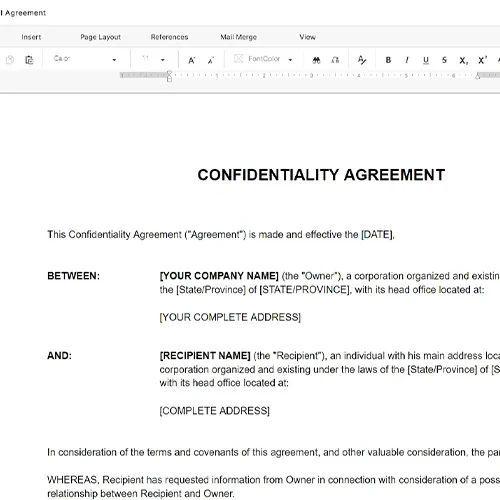
Free Word download • Edit online • Save & share with Drive • Export to PDF

7 pages25–35 min to fillDifficulty: ComplexSignature requiredLegal review recommended
Learn more ↓
FreeAgreement for Internet Advertising Services Template

At a glance

What it is
An Agreement for Internet Advertising Services is a legally binding contract between an advertiser and a publisher or digital advertising agency that governs the placement, delivery, and payment of online ads. This free Word download covers campaign scope, ad specifications, fee structures, performance obligations, IP ownership, and termination rights in a single document you can edit online and export as PDF.
When you need it
Use it whenever a business engages a publisher, ad network, or digital agency to run banner ads, sponsored content, paid search, or display campaigns on any internet-based platform. It is equally relevant when a website or platform sells advertising inventory directly to an advertiser.
What's inside
Campaign description and placement details, fee and billing terms, ad creative specifications and approval rights, performance metrics and reporting obligations, intellectual property ownership, confidentiality, representations and warranties, indemnification, limitation of liability, and termination conditions.

What is an Agreement for Internet Advertising Services?

An Agreement for Internet Advertising Services is a legally binding contract between an advertiser and a publisher, ad network, or digital agency that governs the purchase, delivery, and payment of online advertising placements. It defines the campaign scope, pricing model (CPM, CPC, flat fee, or performance-based), creative submission requirements, reporting obligations, IP ownership, and remedies when delivery falls short of contracted levels. Unlike a self-serve platform's standard terms of service, this agreement is negotiated between the parties and tailored to a specific campaign or ongoing commercial relationship — giving both sides enforceable protections that platform terms rarely provide.

Why You Need This Document

Running a digital advertising campaign without a written agreement exposes both the advertiser and the publisher to disputes that are surprisingly common and expensive to resolve. Advertisers who pay upfront for impressions that are never delivered have no contractual make-good remedy without a specific clause. Publishers who accept creative assets without an IP license have no explicit right to display them, creating infringement exposure on every impression served. Performance disagreements — which ad server's data governs billing, what qualifies as a valid click, whether placements were truly above the fold — become credibility contests rather than contract interpretation exercises. A properly drafted internet advertising services agreement closes these gaps before the campaign launches, protecting the advertiser's budget, the publisher's revenue, and both parties' reputations from disputes that a few well-drafted clauses could have prevented entirely.

Which variant fits your situation?

If your situation is…Use this template
Full-service agency managing multiple digital channelsDigital Marketing Services Agreement
One-off sponsored post or content placement on a single siteSponsored Content Agreement
Affiliate or referral-based advertising modelAffiliate Marketing Agreement
Influencer paid promotion on social media platformsInfluencer Marketing Agreement
Programmatic ad buying through a DSP or trading deskProgrammatic Advertising Insertion Order
Agency retainer covering strategy, creative, and media buyingMarketing Consulting Agreement
Print or broadcast advertising beyond digital channelsAdvertising Agency Agreement

Common mistakes to avoid

❌ No Schedule A defining placements and inventory

Why it matters: Without a written placement schedule, both parties interpret the campaign scope differently — leading to disputes over ad unit sizes, page positions, and total impressions that are nearly impossible to resolve after the fact.

Fix: Attach a Schedule A before signing that lists every placement by URL, ad unit, guaranteed or non-guaranteed status, impressions committed, and flight dates.

❌ Omitting a make-good clause

Why it matters: Publishers routinely under-deliver by 10–30% on large campaigns due to traffic fluctuations. Without a contractual make-good, the advertiser's only remedy is a general breach claim — expensive and disproportionate for a short-notice dispute.

Fix: Include a make-good provision stating that under-delivery beyond a defined threshold (e.g., 10%) triggers either equivalent replacement inventory or a pro-rated credit on the next invoice.

❌ Failing to name the governing ad server for billing

Why it matters: Publisher and advertiser ad servers consistently show 5–15% impression discrepancies due to latency, cookie differences, and bot filtering. Without naming the authoritative source, every invoice becomes disputed.

Fix: Designate a single ad server as the billing reference in the reporting clause, and define a process for flagging and resolving discrepancies above the agreed tolerance.

❌ No liability cap covering the publisher

Why it matters: A publisher whose platform fails to serve any impressions during a high-CPM campaign could face a claim equal to the full contract value — or more if the advertiser claims lost-revenue damages. Uncapped liability deters publishers from offering competitive rates.

Fix: Set a mutual liability cap equal to fees paid in the prior three months and explicitly exclude consequential, indirect, and punitive damages for both parties.

❌ Signing the agreement after campaign launch

Why it matters: In common-law jurisdictions, courts scrutinize whether consideration exists for restrictions and warranties signed after the work has already begun. Post-launch signatures also create ambiguity about what version of terms was agreed.

Fix: Execute the agreement before the campaign start date. For urgent launches, use a short-form insertion order to bridge the gap while the full agreement is being finalized.

❌ One-sided indemnification protecting only the publisher

Why it matters: If the publisher's platform is found to host illegal or brand-unsafe content next to the advertiser's ads, the advertiser's brand suffers and may face regulatory scrutiny — with no contractual recourse against the publisher.

Fix: Negotiate mutual indemnification so that each party covers claims arising from its own content, platform failures, or IP infringements.

The 10 key clauses, explained

Parties, campaign description, and flight dates

In plain language: Identifies the advertiser and the publisher or agency, describes the campaign by name or reference number, and sets the exact start and end dates during which ads will run.

Sample language
This Agreement is entered into as of [DATE] between [ADVERTISER LEGAL NAME] ('Advertiser') and [PUBLISHER / AGENCY LEGAL NAME] ('Publisher'). Publisher shall provide internet advertising services as described in Schedule A ('Campaign') commencing [START DATE] and ending [END DATE] ('Flight Period').

Common mistake: Using a campaign name without attaching a Schedule A that specifies placements, channels, and creative formats. An ambiguous scope leads to disputes over what was actually purchased.

Ad placement specifications and inventory

In plain language: Defines exactly where ads will appear — URL, page section, ad unit size, format — and whether placements are guaranteed (share-of-voice) or run-of-network.

Sample language
Publisher shall display Advertiser's creative assets in the following placements: [AD UNIT SIZE, e.g., 728×90 leaderboard] on [SITE / PAGE URL], above the fold, for a guaranteed [X] impressions per month throughout the Flight Period.

Common mistake: Omitting whether placements are guaranteed or non-guaranteed (run-of-network). Non-guaranteed placements can be displaced by higher-paying advertisers, leaving the advertiser with under-delivery and no contractual remedy.

Fees, billing, and payment terms

In plain language: States the total campaign cost or rate card (CPM, CPC, or flat fee), the billing cycle, accepted payment methods, and late-payment consequences.

Sample language
Advertiser shall pay Publisher a total fee of $[AMOUNT] based on a CPM rate of $[X] per 1,000 impressions. Invoices will be issued on the [1st] of each month covering the prior month's delivery. Payment is due Net [30] days from invoice date. Late payments accrue interest at [1.5]% per month.

Common mistake: Agreeing on a flat campaign fee without tying it to a delivery commitment. If the campaign underdelivers and no make-good clause exists, the advertiser may have paid for impressions never delivered.

Ad creative approval and content standards

In plain language: Sets out the process for the advertiser to submit creative assets, the publisher's right to reject non-compliant materials, and the content standards both parties must follow.

Sample language
Advertiser shall deliver all ad creative assets in the formats specified in Schedule B no later than [X] business days before the campaign start date. Publisher reserves the right to reject or remove any creative that violates its content policies, applicable law, or third-party rights, with written notice to Advertiser within [2] business days of receipt.

Common mistake: No defined creative submission deadline. Late creative delays launch and often consumes flight days, but without a clause attributing responsibility, neither party has clear recourse.

Performance metrics and reporting

In plain language: Defines the key performance indicators the publisher will report (impressions, clicks, CTR, conversions), the reporting frequency, and the measurement methodology or third-party ad server used.

Sample language
Publisher shall provide Advertiser with performance reports on a [weekly / monthly] basis, including total impressions served, clicks, CTR, and any conversion data available to Publisher. Measurement shall be based on Publisher's ad server ([AD SERVER NAME]). Discrepancies greater than [10]% from Advertiser's third-party tracking data shall be resolved by mutual agreement within [15] business days.

Common mistake: Not specifying which ad server's data is the reference for billing. Publisher and advertiser ad servers routinely show 5–15% discrepancies; without a contractual tiebreaker, every invoice becomes a negotiation.

Intellectual property ownership and license

In plain language: Clarifies that the advertiser owns all creative assets it submits, grants the publisher a limited license to display them during the campaign, and confirms neither party acquires any broader IP rights.

Sample language
Advertiser retains all right, title, and interest in the ad creative assets ('Advertiser Materials'). Advertiser grants Publisher a non-exclusive, non-transferable license to reproduce and display the Advertiser Materials solely for the purpose of executing the Campaign during the Flight Period. Publisher shall not use Advertiser Materials for any other purpose without prior written consent.

Common mistake: No license grant at all — the publisher has no explicit right to reproduce and display the creative, creating a technical infringement risk on every impression served.

Representations, warranties, and indemnification

In plain language: Each party warrants that its content and conduct comply with applicable law, and each agrees to indemnify the other against claims arising from its own breach or IP infringement.

Sample language
Advertiser represents and warrants that the Advertiser Materials do not infringe any third-party intellectual property rights, violate any applicable law, or contain false or misleading claims. Advertiser shall indemnify, defend, and hold Publisher harmless from any third-party claims arising from the Advertiser Materials. Publisher shall indemnify Advertiser from claims arising from Publisher's own content or platform.

Common mistake: One-sided indemnification that only covers the publisher. If a publisher's platform hosts illegal content and the advertiser's brand is associated with it, the advertiser needs a reciprocal protection clause.

Confidentiality

In plain language: Restricts both parties from disclosing campaign pricing, performance data, and business information shared during the engagement to third parties.

Sample language
Each party agrees to keep confidential all non-public information disclosed by the other party in connection with this Agreement, including pricing, campaign performance data, and business strategies, and shall not disclose such information to any third party without prior written consent for a period of [2] years following expiration or termination of this Agreement.

Common mistake: No confidentiality clause at all. Ad pricing and performance data are commercially sensitive — without NDA-level protection, either party can share competitive intelligence with the market.

Limitation of liability

In plain language: Caps each party's maximum financial exposure under the contract — typically the fees paid in the prior [3–12] months — and excludes consequential, indirect, and punitive damages.

Sample language
In no event shall either party be liable for indirect, incidental, consequential, or punitive damages. Publisher's aggregate liability under this Agreement shall not exceed the total fees paid by Advertiser in the [3] months immediately preceding the event giving rise to the claim.

Common mistake: No liability cap for the publisher. A failed campaign delivering zero impressions, combined with uncapped liability, could expose the publisher to claims far exceeding the contract value.

Termination, suspension, and make-good

In plain language: Sets the notice required to terminate the agreement, the conditions allowing immediate suspension (e.g., non-payment or illegal content), and the make-good remedy when delivery falls short of contracted levels.

Sample language
Either party may terminate this Agreement for convenience with [30] days' written notice. Publisher may suspend delivery immediately upon Advertiser's failure to pay any undisputed amount within [10] days of the due date. If Publisher delivers fewer than [90]% of contracted impressions in any billing period, Publisher shall provide a make-good of equivalent value in the following period or issue a pro-rated credit.

Common mistake: No make-good clause. Without it, an advertiser who paid for 1,000,000 impressions and received 700,000 has no contractual remedy beyond a general breach claim, which is expensive to pursue.

How to fill it out

  1. 1

    Identify the parties and their legal entity names

    Enter the full registered legal name of both the advertiser and the publisher or agency. Include state or country of incorporation and principal business address for each party.

    💡 Confirm the publisher's legal entity name matches the name on their invoices — trade names and legal names often differ, which creates enforcement problems.

  2. 2

    Complete Schedule A with precise campaign details

    List every placement by site URL, page section, ad unit size, format, and whether it is guaranteed or run-of-network. Include flight dates, total contracted impression volume, and the pricing model (CPM, CPC, flat fee).

    💡 Ambiguous scope is the single most common cause of digital advertising disputes — be specific enough that a third party who never spoke to either party understands what was purchased.

  3. 3

    Set the fee structure and billing cycle

    Enter the rate (CPM, CPC, or flat), total contract value, billing frequency, payment due date, and late-fee rate. Confirm whether fees are prepaid, post-paid, or milestone-based.

    💡 For large campaigns, negotiate a 50% deposit upfront with the balance billed monthly against delivered impressions — this protects both parties from cash-flow and credit risk.

  4. 4

    Define creative submission requirements

    Specify accepted file formats, maximum file sizes, pixel dimensions, animation length limits, and the submission deadline in business days before campaign launch. Reference these in Schedule B.

    💡 Build in at least 5 business days for creative review and revisions — technical rejections on day one of the flight are common and costly.

  5. 5

    Specify the reporting methodology and discrepancy threshold

    Name the ad server whose data governs billing, set the reporting cadence (weekly or monthly), and define the discrepancy threshold above which either party may raise a dispute.

    💡 A 10% discrepancy tolerance is industry standard. Anything below 10% requires manual reconciliation that rarely resolves in either party's favor.

  6. 6

    Tailor the make-good and termination provisions

    Set the under-delivery threshold that triggers a make-good (e.g., 90% of contracted impressions), the form of remedy (equivalent future inventory or pro-rated credit), and the notice period for convenience termination.

    💡 If you are the advertiser, negotiate make-good credits rather than future inventory — future inventory only helps if you plan to run another campaign with the same publisher.

  7. 7

    Review IP, indemnification, and liability cap clauses

    Confirm the IP license covers only the campaign flight period, ensure indemnification is mutual, and verify the liability cap is set to a number that reflects the actual risk each party is taking.

    💡 A liability cap equal to three months' fees is standard for digital advertising; anything lower leaves the advertiser underprotected on a large campaign.

  8. 8

    Execute before campaign launch with dated signatures

    Both parties must sign before the campaign goes live. Include the signing date explicitly — many digital agreements fail enforcement because the effective date is ambiguous when execution happens after launch.

    💡 Use a digital signature tool that timestamps execution and delivers a fully-executed PDF to both parties automatically — this eliminates 'I never signed that version' disputes.

Frequently asked questions

What is an internet advertising services agreement?

An internet advertising services agreement is a legally binding contract between an advertiser and a publisher or digital agency that governs the purchase, delivery, and payment of online ad placements. It defines the campaign scope, pricing model, creative requirements, performance reporting obligations, IP ownership, and remedies for under-delivery or breach. It replaces informal insertion orders as the authoritative governing document for the relationship.

When should I use an internet advertising services agreement?

Use one whenever you are spending more than a nominal amount on digital advertising with a publisher or agency outside of a self-serve platform with its own standard terms. Direct-sold display campaigns, sponsored content arrangements, newsletter placements, and managed paid-search engagements all benefit from a written agreement. Self-serve platforms like Google Ads and Meta Ads operate under their own platform terms of service, which typically replace the need for a separate contract.

What is the difference between an insertion order and an advertising services agreement?

An insertion order (IO) is a short-form authorization document specifying placements, dates, and prices for a single campaign run. An advertising services agreement is the master governing contract covering IP, indemnification, confidentiality, liability limits, and dispute resolution — terms that apply to all campaigns between the parties. Most professional relationships use both: a master agreement for legal terms and a per-campaign IO for commercial specifics. An IO alone without a master agreement leaves material legal gaps.

Who owns the ad creative — the advertiser or the publisher?

The advertiser typically retains ownership of ad creative assets it creates and supplies. The agreement should include a limited license granting the publisher the right to reproduce and display the creative solely for the campaign's flight period. Custom creative developed by the publisher or agency on behalf of the advertiser requires a separate IP assignment or work-for-hire clause to confirm that ownership transfers to the advertiser upon payment.

What happens if the publisher under-delivers on contracted impressions?

If the agreement includes a make-good clause — which it should — the publisher must provide replacement inventory or a pro-rated credit when delivery falls below the contracted threshold (typically 90%). Without a make-good clause, the advertiser's only contractual remedy is a general breach claim, which is disproportionately expensive relative to the value of most campaigns. Always negotiate a specific make-good provision before signing.

Does an internet advertising services agreement need to comply with GDPR or CCPA?

Yes, if the campaign involves targeting, retargeting, or any use of personal data — including cookies, pixel tracking, or third-party audience segments. The agreement should specify each party's data processing role (controller or processor under GDPR), reference the applicable privacy policy and cookie consent mechanism, and confirm compliance with CCPA opt-out rights if California residents are being targeted. Failing to address data privacy in the contract exposes both parties to regulatory liability.

Can I terminate an internet advertising services agreement early?

Typically yes, with the notice period defined in the contract — commonly 30 days. Some agreements impose a cancellation fee or require the advertiser to pay for inventory already committed to by the publisher. Campaigns already in flight at the time of notice are often non-cancellable. Review the termination for convenience clause carefully before signing, particularly for campaigns with long flight periods or large upfront commitments.

Is a liability cap standard in digital advertising contracts?

Yes, mutual liability caps are standard in the digital advertising industry. Publishers and ad networks routinely cap their liability at the fees paid in the prior three months and exclude consequential and indirect damages. Advertisers should seek a reciprocal cap and confirm it applies to both parties. Accepting a one-sided cap — protecting only the publisher — leaves the advertiser fully exposed for the publisher's platform failures or data breaches.

Do I need a lawyer to draft an internet advertising services agreement?

For straightforward direct-sold display campaigns between domestic parties, a well-drafted template is generally sufficient when reviewed by someone familiar with digital advertising commercial terms. Engage a lawyer when the campaign budget exceeds $50,000, when the agreement involves data sharing subject to GDPR or CCPA, when the publisher is in a different legal jurisdiction, or when proprietary data or audience segments are being licensed as part of the arrangement.

How this compares to alternatives

vs Advertising agency agreement

An advertising agency agreement governs a broader, ongoing agency relationship covering strategy, creative development, and media buying across all channels — not just internet placements. An internet advertising services agreement is narrower, focused on the delivery and billing of specific digital ad inventory. Use the agency agreement when engaging a full-service agency; use the internet advertising agreement for direct-sold digital placements with a publisher or ad network.

vs Affiliate marketing agreement

An affiliate marketing agreement pays a third party a commission only when a defined action — a sale, sign-up, or download — occurs. An internet advertising services agreement pays for placements or impressions regardless of downstream conversion performance. If you want payment tied entirely to results, the affiliate model is more appropriate; if you are buying guaranteed exposure or brand reach, use the advertising services agreement.

vs Marketing consulting agreement

A marketing consulting agreement engages an advisor or consultant for strategy, planning, and recommendations — not for the direct delivery of ad placements. An internet advertising services agreement is transactional and media-focused, covering specific inventory delivery and billing. The consulting agreement covers the thinking; the advertising services agreement covers the buying and running of campaigns.

vs Sponsored content agreement

A sponsored content agreement covers the creation and placement of editorial-style content — articles, videos, or podcasts — produced by the publisher for a fee. An internet advertising services agreement covers traditional ad units such as banners, display, and pre-roll video that are clearly labeled as advertising. Sponsored content involves publisher editorial involvement and FTC or ASA disclosure obligations that standard display advertising agreements do not address.

Industry-specific considerations

E-commerce and retail

CPA and ROAS-based performance targets, product feed integration requirements, and seasonal campaign flight scheduling with advance booking terms.

SaaS and technology

User acquisition cost commitments, B2B audience targeting specifications, and lead-quality definitions tied to payment triggers in performance-based deals.

Financial services

Regulatory compliance disclosures required in ad copy, FINRA or FCA-specific content approval processes, and geographic targeting restrictions for licensed products.

Healthcare and pharma

FDA and MHRA advertising regulations governing health claims, mandatory fair-balance language in ad creative, and publisher brand-safety requirements for sensitive health content.

Media and publishing

Share-of-voice guarantees for premium placements, editorial adjacency restrictions preventing ad placement near competitor or controversial content, and programmatic vs. direct-sold inventory demarcation.

Travel and hospitality

Dynamic pricing feed integration, seasonal flight-date flexibility provisions, and co-op advertising arrangements funded jointly by brands and distribution partners.

Jurisdictional notes

United States

FTC guidelines require clear disclosure of paid advertising, including sponsored content and native ads. CCPA requires advertisers targeting California residents to honor opt-out rights and address data processing in the contract. State contract law governs enforceability; New York and California have the most developed case law on digital advertising disputes. IAB standard terms are widely used as a baseline in the US market.

Canada

CASL (Canada's Anti-Spam Legislation) applies when advertising involves electronic messages or tracking technologies. PIPEDA governs personal data used for behavioral targeting. Quebec's Law 25 (Bill 64) imposes additional consent and data residency requirements for residents of Quebec. Advertising Standards Canada publishes content guidelines that many publishers incorporate by reference into their terms.

United Kingdom

The ASA (Advertising Standards Authority) requires all paid advertising to be clearly identified and comply with the CAP Code. UK GDPR applies to any use of cookies or personal data for targeting, requiring a lawful basis for processing and a Data Processing Agreement between controller and processor parties. Post-Brexit, UK ICO guidance applies independently of EU GDPR, though they remain substantially aligned.

European Union

GDPR requires explicit consent for behavioral targeting using cookies or personal data, and the agreement should designate each party as a data controller or processor with a compliant DPA. The EU Digital Services Act (DSA) imposes additional transparency obligations on large online platforms regarding advertising targeting parameters. Member state advertising codes vary — France, Germany, and the Netherlands have active self-regulatory bodies with binding rules for online advertising.

Template vs lawyer — what fits your deal?

PathBest forCostTime
Use the templateDirect-sold display campaigns under $25,000 between domestic parties with straightforward placement and billing termsFree30–45 minutes
Template + legal reviewCampaigns exceeding $25,000, cross-border arrangements, or agreements involving audience data sharing or performance-based pricing$300–$8002–4 days
Custom draftedLarge-scale programmatic deals, regulated industries (financial services, pharma), or multi-party arrangements involving licensed data or proprietary audience segments$1,500–$5,000+1–3 weeks

Glossary

Insertion Order (IO)
A signed authorization from an advertiser to a publisher specifying the ad placements, quantities, dates, and prices for a specific campaign.
CPM (Cost Per Mille)
The price an advertiser pays for one thousand ad impressions — a standard billing unit for display advertising.
CPC (Cost Per Click)
A pricing model where the advertiser pays only when a user clicks on the ad, regardless of how many times it was shown.
CPA (Cost Per Acquisition)
A performance pricing model where the advertiser pays only when a click results in a defined conversion — a purchase, sign-up, or download.
Ad Creative
The visual and copy assets — banners, videos, copy, and landing page URLs — supplied by the advertiser for placement by the publisher.
Impression
A single instance of an ad being displayed to a user, regardless of whether the user interacts with it.
Click-Through Rate (CTR)
The percentage of impressions that result in a click, calculated as clicks divided by impressions multiplied by 100.
Above the Fold
A placement position visible on screen without scrolling — commands a premium price because it receives higher viewability and engagement.
Ad Server
Technology that stores, selects, and delivers ad creatives to web pages and tracks impression and click data in real time.
Make-Good
Additional ad inventory or credit provided by the publisher to compensate the advertiser when a campaign underdelivers against contracted impressions or placements.
Viewability
A measurement standard — typically 50% of pixels visible for at least one second for display, two seconds for video — used to confirm an ad had a reasonable opportunity to be seen.
Flight Dates
The defined start and end dates of an advertising campaign, outside of which the contracted placements do not run.

Part of your Business Operating System

This document is one of 3,000+ business & legal templates included in Business in a Box.

  • Fill-in-the-blanks — ready in minutes
  • 100% customizable Word document
  • Compatible with all office suites
  • Export to PDF and share electronically

Create your document in 3 simple steps.

From template to signed document — all inside one Business Operating System.
1
Download or open template

Access over 3,000+ business and legal templates for any business task, project or initiative.

2
Edit and fill in the blanks with AI

Customize your ready-made business document template and save it in the cloud.

3
Save, Share, Send, Sign

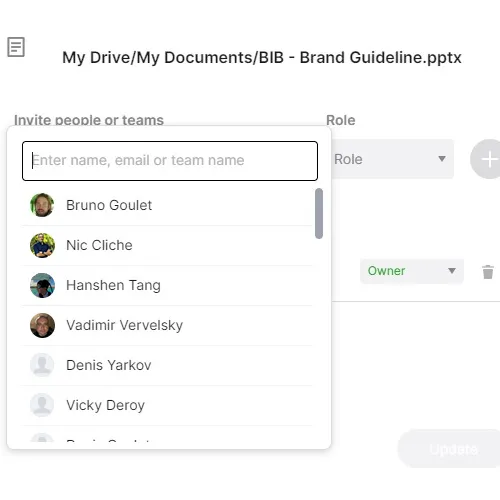
Share your files and folders with your team. Create a space of seamless collaboration.

Save time, save money, and create top-quality documents.

★★★★★

"Fantastic value! I'm not sure how I'd do without it. It's worth its weight in gold and paid back for itself many times."

Managing Director · Mall Farm
Robert Whalley
Managing Director, Mall Farm Proprietary Limited
★★★★★

"I have been using Business in a Box for years. It has been the most useful source of templates I have encountered. I recommend it to anyone."

Business Owner · 4+ years
Dr Michael John Freestone
Business Owner
★★★★★

"It has been a life saver so many times I have lost count. Business in a Box has saved me so much time and as you know, time is money."

Owner · Upstate Web
David G. Moore Jr.
Owner, Upstate Web

Run your business with a system — not scattered tools

Stop downloading documents. Start operating with clarity. Business in a Box gives you the Business Operating System used by over 250,000 companies worldwide to structure, run, and grow their business.

Free Forever Plan · No credit card required