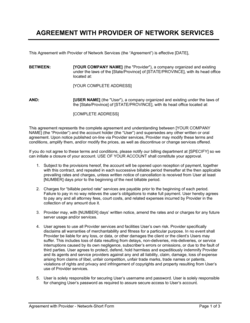
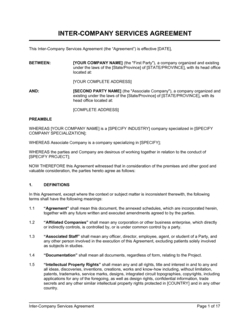
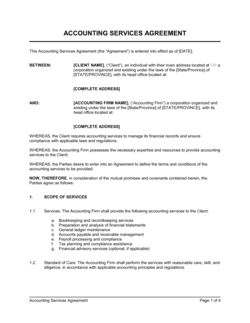
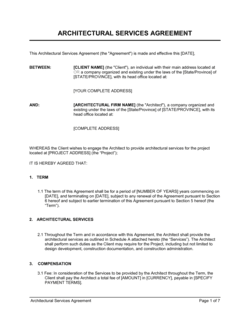
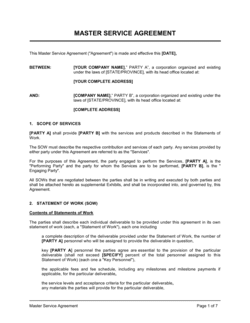
Travel Services Agreement Template

Free Word download β€’ Edit online β€’ Save & share with Drive β€’ Export to PDF

16 pagesβ€’30–45 min to fillβ€’Difficulty: Complexβ€’Signature requiredβ€’Legal review recommended
Learn more ↓
FreeTravel Services Agreement Template

At a glance

What it is
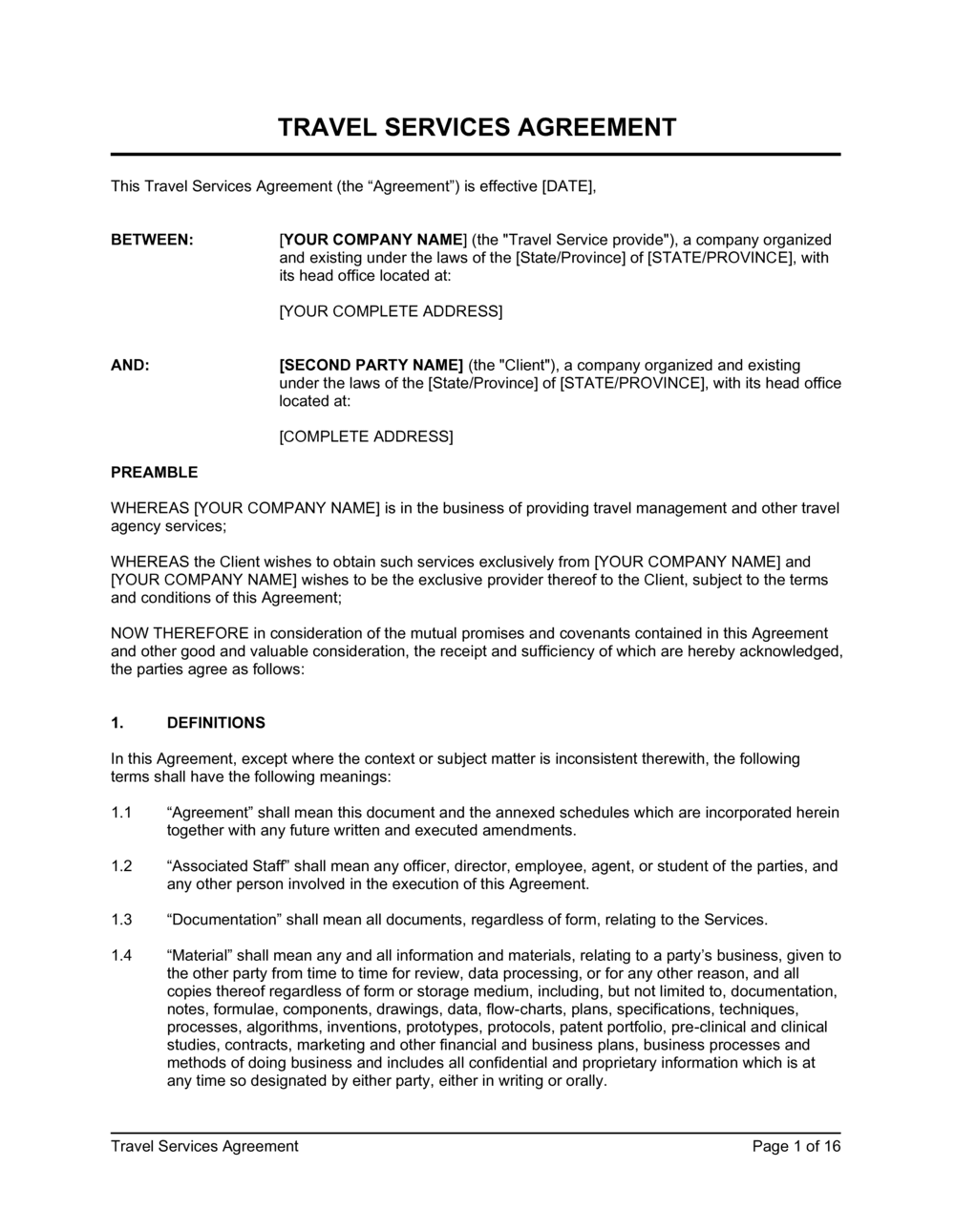
A Travel Services Agreement is a legally binding contract between a corporate buyer and a travel agency or travel management company (TMC) that governs the full scope of business travel services β€” booking platforms, service fees, reporting cadence, preferred vendor programs, traveler safety protocols, and service-level commitments. This free Word download gives you a structured, attorney-reviewed starting point you can edit online and export as PDF for execution.
When you need it
Use it when your company is engaging a travel agency or TMC to manage employee travel on an ongoing basis, when consolidating travel spend under a single vendor, or when renewing an existing corporate travel arrangement that lacks formal written terms.
What's inside
Scope of services and booking platform terms, service fee structure, preferred vendor and negotiated-rate commitments, traveler safety and duty-of-care obligations, data reporting and analytics requirements, SLAs with remedies, confidentiality, termination rights, and governing law β€” covering the full commercial and operational relationship in a single document.

What is a Travel Services Agreement?

A Travel Services Agreement is a legally binding contract between a corporate buyer and a travel agency or travel management company (TMC) that governs every operational and commercial dimension of a managed business travel program. It defines which travel categories the TMC will manage, how bookings are made and priced, which preferred vendors and negotiated rates must be honored, how the TMC must respond to traveler safety events, what data and reporting the client receives, and what service-level standards apply with defined remedies for failure. Unlike a simple vendor contract, a travel services agreement addresses the unique characteristics of corporate travel β€” unused tickets, duty-of-care obligations, OBT technology, and traveler PII β€” in a single enforceable document.

Why You Need This Document

Operating a corporate travel program without a written agreement leaves you exposed on four dimensions that a handshake arrangement cannot protect. First, without contractual SLAs and remedies, a TMC that consistently misses response times or fails to load your negotiated rates faces no financial consequence β€” your travel spend leaks into rack rates while the vendor relationship drifts. Second, traveler data β€” passport numbers, visa details, movement patterns β€” is sensitive personal information subject to GDPR, CCPA, and PIPEDA; a generic services arrangement does not satisfy the data-processing obligations these laws impose. Third, duty-of-care liability for traveling employees is a real organizational risk in most jurisdictions, and the contract is your primary mechanism for allocating responsibility between your company and the TMC during a crisis. Fourth, when a TMC relationship ends, unused ticket credits and booking data can be held effectively hostage without a contractual transition-assistance clause. This template gives you enforceable protection on all four fronts, formatted for execution and designed to survive the scrutiny of a TMC's legal team.

Which variant fits your situation?

If your situation is…Use this template
Engaging a full-service TMC for enterprise-wide travel managementTravel Services Agreement
Booking ad hoc travel through a single agency without ongoing managementService Agreement
Setting internal rules on bookings, approvals, and expense classesCorporate Travel Policy
Contracting directly with a hotel chain for negotiated corporate ratesHotel Corporate Rate Agreement
Engaging a ground transportation or car rental vendorVendor Services Agreement
Documenting a one-time group or event travel arrangementEvent Services Agreement
Outsourcing expense reporting and reconciliation to a third partyOutsourcing Agreement

Common mistakes to avoid

❌ No SLA remedies attached

Why it matters: SLAs without a defined financial consequence are treated as aspirational targets by courts, not enforceable obligations. A TMC that repeatedly misses response-time commitments faces no penalty.

Fix: Attach a Schedule C that maps every SLA to a specific credit β€” expressed as a percentage of monthly management fees β€” and confirm the credit is the buyer's sole remedy for that breach category.

❌ Vague scope covering 'all travel needs'

Why it matters: Open-ended scope makes it impossible to hold the TMC accountable for a specific deliverable or to enforce the fee schedule, because the TMC can always argue the service falls outside what was agreed.

Fix: List every included travel category explicitly in Schedule A and add a clause stating that additional service categories require a written amendment signed by both parties.

❌ No transition assistance clause

Why it matters: Without a contractual obligation to transfer data, unused ticket credits, and supplier rate files, a departing TMC can delay transitions for months β€” creating stranded credits and service gaps that cost far more than the contract itself.

Fix: Include a minimum 90-day transition period, require the TMC to deliver all data in a portable format within 10 business days of notice, and specify that unused ticket credits survive termination.

❌ Using a generic NDA for traveler data protection

Why it matters: Traveler PII β€” passport numbers, visa details, travel patterns β€” is subject to GDPR, CCPA, and PIPEDA. A standard NDA does not satisfy the specific obligations these laws impose on data processors.

Fix: Replace the generic confidentiality clause with a data-protection addendum that identifies the TMC as a data processor, limits data use to service delivery, and requires breach notification within 72 hours.

❌ Not specifying a preferred-vendor loading timeline

Why it matters: Negotiated rates that are not loaded into the OBT at launch are effectively lost β€” travelers book at rack rates, and the savings the company contracted for never materialize.

Fix: Set a hard loading deadline of 10 business days from execution, require written confirmation from the TMC when loading is complete, and include a right to audit OBT content at any time.

❌ Auto-renewal with insufficient notice period

Why it matters: A 30-day auto-renewal notice period is rarely enough time to complete a competitive RFP and transition to a new TMC β€” most transitions take 60–90 days minimum. Missing the notice window locks you in for another full term.

Fix: Negotiate a 90-day non-renewal notice period minimum, and set a calendar reminder 120 days before each renewal date to evaluate whether to re-bid or renew.

The 9 key clauses, explained

Scope of services

In plain language: Defines exactly which travel categories the TMC will manage β€” air, hotel, rail, car rental, group travel, visa services β€” and which are excluded.

Sample language
TMC shall provide the following services to Client: (a) booking and ticketing for domestic and international air travel; (b) hotel reservations; (c) car rental bookings; (d) rail ticketing; and (e) such other services as mutually agreed in writing. Services expressly excluded include: [EXCLUDED SERVICES].

Common mistake: Leaving the scope open-ended with language like 'all travel needs.' Without a defined list, the TMC's fee structure and SLA obligations become unenforceable because the deliverable is undefined.

Booking platform and technology

In plain language: Specifies which online booking tool the TMC will provide or integrate, uptime commitments, and the client's right to switch platforms on reasonable notice.

Sample language
TMC shall make available to Client the [PLATFORM NAME] online booking tool, integrated with Client's travel policy, with a minimum system availability of [99]% per calendar month measured during business hours. TMC shall provide [X] days' written notice before making any material change to the platform.

Common mistake: Not addressing platform changes or migrations. TMC mergers and platform consolidations are frequent β€” without notice and consent provisions, the buyer can find themselves on an inferior system with no contractual remedy.

Service fees and billing

In plain language: Sets out the full fee schedule β€” per-transaction fees by booking type, monthly management fees, out-of-hours surcharges, and the invoicing cycle.

Sample language
Client shall pay the following fees: domestic air transaction fee $[X]; international air transaction fee $[X]; hotel transaction fee $[X]; car rental transaction fee $[X]; after-hours service fee $[X] per call. TMC shall invoice Client monthly. Payment is due Net [30] days from invoice date.

Common mistake: Agreeing only on transaction fees without addressing after-hours, manual, and refund-processing charges. These ancillary fees can represent 20–40% of total TMC costs and create budget overruns if not capped.

Preferred vendor and negotiated rate program

In plain language: Obligates the TMC to honor the client's existing negotiated rates, load preferred vendors into the booking tool, and report compliance against preferred-vendor targets.

Sample language
TMC shall load and maintain Client's negotiated rates with the preferred suppliers listed in Schedule A within [10] business days of agreement execution. TMC shall report preferred-supplier compliance as a percentage of eligible bookings in each monthly MI report, with a target compliance rate of [X]%.

Common mistake: Not specifying a loading timeline or compliance target. Negotiated rates that are never loaded into the OBT go unused, and the client loses the savings they contracted for β€” with no basis to hold the TMC accountable.

Traveler safety and duty of care

In plain language: Requires the TMC to maintain traveler tracking, issue travel alerts for disruptions and safety events, and support the client's emergency response procedures.

Sample language
TMC shall provide real-time traveler tracking for all bookings made through its systems. In the event of a travel disruption, natural disaster, or security incident affecting Client travelers, TMC shall notify Client's designated travel manager within [2] hours of becoming aware of the event and shall assist in rebooking or evacuation as directed.

Common mistake: Treating duty of care as a policy matter rather than a contractual obligation. Without binding language on notification timelines and response support, the TMC has no contractual obligation to act during a crisis β€” and the client bears all liability exposure.

Data reporting and analytics

In plain language: Defines the frequency, format, and content of MI reports β€” spend by category, traveler, department, and supplier β€” and the client's right to access raw data.

Sample language
TMC shall deliver to Client a monthly MI report covering: (a) total travel spend by supplier category; (b) preferred-vendor compliance; (c) policy compliance rate; (d) top 20 travelers by spend; and (e) unused ticket balance. Client shall have the right to request raw booking data in [CSV/API] format upon [5] business days' written notice.

Common mistake: Accepting vague reporting commitments like 'regular reporting as agreed.' Without a defined format, frequency, and data set, the client has no basis to benchmark savings, enforce preferred-vendor compliance, or audit invoices.

Service level standards and remedies

In plain language: Sets minimum response times for booking requests, complaint resolution, and after-hours emergencies β€” with credit or fee-reduction remedies for SLA breaches.

Sample language
TMC shall respond to online booking requests within [2] hours during business hours. After-hours emergency requests shall be answered within [15] minutes. For each calendar month in which TMC fails to meet any SLA in Schedule B, Client shall receive a service credit equal to [X]% of management fees billed for that month.

Common mistake: Including SLAs without attaching a remedy. Courts treat unenforceable SLAs as aspirational targets, not contractual obligations β€” always pair each standard with a specific, calculated financial consequence for failure.

Confidentiality and data protection

In plain language: Restricts the TMC from disclosing or using client travel data, employee PII, and supplier pricing for any purpose outside the agreement β€” including benchmarking or data monetization.

Sample language
TMC shall treat all Client Data β€” including traveler PII, itinerary records, and negotiated supplier rates β€” as confidential. TMC shall not use Client Data for benchmarking, product development, or third-party data sharing without Client's prior written consent. TMC shall comply with applicable data protection laws, including [GDPR / CCPA / PIPEDA] where applicable.

Common mistake: Using a generic NDA instead of a data-protection clause tailored to travel data. Traveler PII (passport numbers, visa details, travel patterns) is sensitive personal data subject to GDPR and CCPA β€” general confidentiality language does not satisfy the specific compliance obligations.

Term, termination, and transition

In plain language: States the contract duration, auto-renewal conditions, notice required to terminate, and the TMC's obligation to support a transition to a new provider.

Sample language
This Agreement commences on [START DATE] and continues for [X] years ('Initial Term'), renewing automatically for successive [1]-year periods unless either party provides [90] days' written notice of non-renewal. Upon termination, TMC shall provide transition assistance for up to [90] days, including transfer of unused ticket credits, booking data, and supplier rate files.

Common mistake: No transition assistance clause. TMCs that hold unused ticket credits, traveler profiles, and supplier rate agreements can effectively hold a departing client hostage β€” without a contractual obligation to hand over this data, switching costs escalate sharply.

How to fill it out

  1. 1

    Identify the parties and confirm the TMC's legal entity

    Enter the corporate buyer's full legal entity name and the TMC's registered business name. Confirm the TMC's legal name from their corporate registry filing or invoice header β€” not a trading name.

    πŸ’‘ Ask for the TMC's Certificate of Incorporation or equivalent to verify the exact legal entity before execution, especially for international TMCs operating under a parent brand.

  2. 2

    Define the scope of services in Schedule A

    List every travel category the TMC will manage β€” domestic air, international air, hotel, rail, car rental, group travel, and visa support. Explicitly list any exclusions. Attach this as Schedule A rather than embedding it in the body clause.

    πŸ’‘ A separate Schedule A lets you amend the scope without redrafting the entire agreement β€” flag it as 'amendable by written mutual consent' to allow clean updates.

  3. 3

    Complete the fee schedule

    Enter per-transaction fees for each booking type, the monthly management fee if applicable, after-hours surcharges, and the billing cycle. Cross-reference each fee against any fee caps or volume-discount thresholds the parties agreed.

    πŸ’‘ Negotiate a cap on total ancillary fees (after-hours, refund processing, manual bookings) as a percentage of total transaction fees β€” 15–20% is a reasonable ceiling.

  4. 4

    Load preferred vendors and negotiated rates in Schedule B

    List all preferred airlines, hotel programs, and car rental vendors with their contracted rates and target compliance percentages. Set a loading deadline β€” typically 10 business days from execution.

    πŸ’‘ Include a clause requiring the TMC to alert you when a negotiated rate is about to expire so you have time to renegotiate before the rate falls out of the OBT.

  5. 5

    Define SLAs and attach the remedies table in Schedule C

    Set specific, measurable standards for booking response time, emergency response time, complaint resolution, and platform uptime. Attach a Schedule C mapping each SLA to a defined credit or fee reduction for breach.

    πŸ’‘ Make the SLA credit calculation simple β€” a percentage of monthly management fees, not a complex formula. Disputes over complex credit calculations often negate the incentive value entirely.

  6. 6

    Configure the duty-of-care and traveler tracking obligations

    Name the client's travel manager as the designated contact for safety incidents. Set the notification timeline (typically 2 hours for major events), define 'travel disruption' and 'security incident' explicitly, and confirm which tracking platform the TMC will use.

    πŸ’‘ Require the TMC to conduct an annual duty-of-care review with your team to assess emerging risks by destination β€” this is a best practice in enterprise travel programs and costs nothing to include.

  7. 7

    Set the term, notice period, and transition terms

    Enter the initial contract term (typically 2–3 years), the auto-renewal mechanism, the notice period for non-renewal (90 days is standard), and the post-termination transition assistance period.

    πŸ’‘ Include a 'for-cause' termination right with a 30-day cure period β€” this gives you leverage to address persistent SLA failures without waiting for the contract term to expire.

  8. 8

    Select governing law and confirm both parties execute before travel begins

    Choose the jurisdiction whose law will govern disputes β€” typically the corporate buyer's home state or country. Both authorized signatories must sign before any travel bookings are made under the agreement.

    πŸ’‘ Use Business in a Box eSign to timestamp execution and store the fully-executed copy β€” you will need to produce it quickly if a supplier dispute or insurance claim arises.

Frequently asked questions

What is a travel services agreement?

A travel services agreement is a binding contract between a corporate buyer and a travel agency or TMC that defines the full scope of business travel management services β€” booking platforms, service fees, preferred vendor programs, traveler safety obligations, reporting requirements, and SLAs. It replaces informal arrangements and gives both parties clear, enforceable rights and obligations for the duration of the engagement.

When does a company need a travel services agreement?

Any company spending more than roughly $100,000 per year on business travel, or engaging a TMC on an ongoing basis, should have a written agreement in place. Without one, there is no enforceable basis for negotiated fee structures, SLA remedies, preferred-vendor compliance targets, or data-ownership rights. The agreement becomes especially important when consolidating travel under a single provider or transitioning from one TMC to another.

What is a TMC and how is it different from a travel agency?

A Travel Management Company (TMC) is a specialized provider that manages a corporate travel program end to end β€” including an online booking tool, policy enforcement, 24/7 traveler support, data reporting, and supplier negotiations. A traditional travel agency typically handles individual bookings on request without the program management, policy integration, or MI reporting that TMCs provide. Enterprise travel agreements are almost always with a TMC rather than a general agency.

What SLAs should a corporate travel agreement include?

Standard SLAs in a corporate travel agreement cover: online booking response time (typically 2 hours during business hours), after-hours emergency response time (15 minutes is the enterprise benchmark), platform uptime (99% per calendar month), complaint resolution time (typically 48–72 hours), and MI report delivery deadlines. Each SLA should be paired with a specific financial remedy β€” usually a percentage credit against monthly management fees β€” to be enforceable.

Who owns the traveler data under a TMC contract?

The corporate buyer should own all traveler data, booking records, and negotiated-rate information generated under the agreement. A well-drafted contract explicitly states that the TMC holds data as a processor on behalf of the client, prohibits the TMC from using the data for benchmarking or third-party purposes, and requires full data portability on termination. Without this language, TMCs may claim rights to aggregate or monetize anonymized travel data derived from your program.

How long should a corporate travel services agreement run?

Two to three years is the standard initial term for enterprise TMC agreements, giving both parties enough time to onboard the program, load negotiated rates, and realize the full savings potential. Shorter terms (one year) are common for smaller programs or pilot arrangements. Regardless of term length, include a 90-day non-renewal notice period and a post-termination transition assistance obligation to protect against switching-cost lock-in.

What happens to unused airline tickets when a TMC contract ends?

Unused non-refundable airline tickets typically retain value as credits with the issuing airline. A properly drafted travel services agreement requires the TMC to maintain an unused-ticket report, apply credits to future bookings, and transfer the full unused-ticket inventory to the client or new TMC on termination. Without this clause, residual ticket value β€” which can run into tens of thousands of dollars for large programs β€” may be difficult to recover after a TMC transition.

Is a travel services agreement the same as a corporate travel policy?

No. A corporate travel policy is an internal document that sets employee booking rules β€” booking class, advance-purchase requirements, hotel spend caps, and approval workflows. A travel services agreement is an external contract with the TMC or travel agency that governs the vendor relationship. The two documents work together: the policy defines employee behavior, and the agreement requires the TMC to enforce that policy through the OBT and report compliance data back to the company.

Do I need a lawyer to draft a travel services agreement?

For straightforward mid-market TMC engagements, a high-quality template reviewed by in-house counsel or a commercial contracts attorney is typically sufficient. Engage a lawyer when the program involves international travel to high-risk destinations with significant duty-of-care exposure, when the contract value exceeds $500K per year, or when the TMC's standard terms include unfavorable data-ownership or liability provisions that require redlining. A 1–2 hour contract review typically costs $400–$800 and is worthwhile for any program above $250K annually.

How this compares to alternatives

vs Service Agreement

A general service agreement governs any professional services engagement but lacks the travel-specific provisions β€” OBT obligations, preferred-vendor programs, traveler tracking, unused ticket handling, and MI reporting β€” that a corporate travel program requires. Use a general service agreement for a one-off booking arrangement; use a travel services agreement for any ongoing TMC relationship.

vs Vendor Agreement

A vendor agreement governs the procurement of goods or services from a supplier but does not address the program-management, duty-of-care, and traveler-data dimensions of a TMC relationship. A travel services agreement is a specialized vendor contract with SLAs, safety obligations, and data-portability terms that a generic vendor template does not provide.

vs Outsourcing Agreement

An outsourcing agreement transfers a business process entirely to a third party with broad operational discretion. A travel services agreement retains more control for the client β€” setting booking policy, preferred vendors, and compliance targets β€” while outsourcing execution to the TMC. Use an outsourcing agreement when delegating expense reconciliation; use a travel services agreement for the core travel management relationship.

vs Non-Disclosure Agreement

An NDA protects confidential information shared during vendor evaluation but creates no service obligations or data-processing commitments. A travel services agreement includes confidentiality provisions calibrated to traveler PII and GDPR/CCPA obligations, which a standalone NDA does not address. The NDA belongs in the RFP phase; the travel services agreement governs the live program.

Industry-specific considerations

Professional Services

High per-traveler spend with client-billable travel requiring accurate cost allocation by project code and client matter number in the MI reporting.

Technology / SaaS

Distributed remote teams with frequent inter-office and conference travel, requiring OBT integration with expense tools like Concur or Expensify and GDPR-compliant traveler data handling.

Financial Services

Regulatory travel compliance requirements, client entertainment cost segregation, and heightened data security obligations for traveler PII under financial sector regulations.

Manufacturing

High-volume domestic travel for field service and plant operations teams, requiring preferred ground transportation vendors and site-specific booking restrictions.

Jurisdictional notes

United States

No federal statute specifically governs corporate travel management contracts; they are treated as commercial services agreements subject to UCC Article 1 and state contract law. CCPA (California) and similar state privacy laws impose data-processing obligations on TMCs handling employee PII. Non-compete restrictions on TMC personnel and exclusivity clauses are subject to state-specific enforceability rules.

Canada

PIPEDA and provincial privacy legislation (notably Quebec's Law 25) impose strict obligations on TMCs processing employee travel data, including consent requirements and breach notification within 72 hours. Quebec requires that contracts with vendors accessible to Quebec employees be available in French. Provincial employment standards may affect duty-of-care obligations for traveling employees.

United Kingdom

UK GDPR applies in full to traveler PII processed by a UK-based TMC or where services are provided to UK-based travelers. TMCs acting as data processors must execute a UK GDPR-compliant Data Processing Agreement as an addendum. The Corporate Manslaughter and Corporate Homicide Act 2007 creates organizational liability for gross failures in duty of care, underscoring the importance of contractual traveler-safety obligations.

European Union

GDPR requires a Data Processing Agreement (DPA) between the corporate buyer as data controller and the TMC as data processor, covering purpose limitation, data minimization, and sub-processor disclosure. Cross-border data transfers (e.g., traveler data sent to a US-based TMC platform) require Standard Contractual Clauses or an equivalent transfer mechanism. The EU Package Travel Directive may impose additional obligations where the TMC bundles travel components into packages.

Template vs lawyer β€” what fits your deal?

PathBest forCostTime
Use the templateMid-market companies with annual travel spend under $500K engaging a standard TMC on market-rate termsFree1–2 hours
Template + legal reviewPrograms above $250K annually, international travel to complex jurisdictions, or TMC contracts with non-standard data or liability terms$400–$800 (1–2 hour commercial contracts review)3–5 business days
Custom draftedEnterprise programs above $1M annually, regulated industries with heightened data obligations, or multi-country TMC arrangements requiring local law compliance$2,000–$6,0002–4 weeks

Glossary

Travel Management Company (TMC)
A specialized agency that manages corporate travel programs β€” handling bookings, policy compliance, reporting, and supplier negotiations on behalf of a business.
Online Booking Tool (OBT)
A self-service platform integrated with the TMC's systems that allows travelers to book flights, hotels, and car rentals within company policy.
Service Level Agreement (SLA)
A contractual commitment specifying minimum performance standards β€” such as response time for booking requests or issue resolution β€” and the remedies if those standards are missed.
Preferred Vendor
An airline, hotel chain, or car rental company with which the TMC or buyer has negotiated discounted rates and preferred booking terms.
Duty of Care
An employer's legal and ethical obligation to take reasonable steps to protect employee travelers from foreseeable risks while traveling on company business.
Transaction Fee
A per-booking charge the TMC earns for each air, hotel, or car reservation β€” distinct from management fees or supplier commissions.
Negotiated Rate
A below-market fare or room rate secured through a volume commitment or long-term agreement between a supplier and the corporate buyer or TMC.
Management Information (MI) Reporting
Periodic data reports produced by the TMC covering spend by category, supplier, traveler, and department β€” used to track compliance and identify savings opportunities.
Traveler Tracking
Real-time or near-real-time monitoring of employee locations during business travel to support emergency response and duty-of-care obligations.
Unused Ticket
A non-refundable airline ticket that was not used and retains residual value β€” TMCs are typically obligated to track and apply these credits before booking new travel.
Reconciliation
The process of matching TMC-issued travel bookings to corporate credit card charges and expense reports to ensure accuracy and identify leakage.

Part of your Business Operating System

This document is one of 3,000+ business & legal templates included in Business in a Box.

  • Fill-in-the-blanks β€” ready in minutes
  • 100% customizable Word document
  • Compatible with all office suites
  • Export to PDF and share electronically

Create your document in 3 simple steps.

From template to signed document β€” all inside one Business Operating System.
1
Download or open template

Access over 3,000+ business and legal templates for any business task, project or initiative.

2
Edit and fill in the blanks with AI

Customize your ready-made business document template and save it in the cloud.

3
Save, Share, Send, Sign

Share your files and folders with your team. Create a space of seamless collaboration.

Save time, save money, and create top-quality documents.

β˜…β˜…β˜…β˜…β˜…

"Fantastic value! I'm not sure how I'd do without it. It's worth its weight in gold and paid back for itself many times."

Managing Director Β· Mall Farm
Robert Whalley
Managing Director, Mall Farm Proprietary Limited
β˜…β˜…β˜…β˜…β˜…

"I have been using Business in a Box for years. It has been the most useful source of templates I have encountered. I recommend it to anyone."

Business Owner Β· 4+ years
Dr Michael John Freestone
Business Owner
β˜…β˜…β˜…β˜…β˜…

"It has been a life saver so many times I have lost count. Business in a Box has saved me so much time and as you know, time is money."

Owner Β· Upstate Web
David G. Moore Jr.
Owner, Upstate Web

Run your business with a system β€” not scattered tools

Stop downloading documents. Start operating with clarity. Business in a Box gives you the Business Operating System used by over 250,000 companies worldwide to structure, run, and grow their business.

Free Forever PlanΒ Β·Β No credit card required