- Good Faith
- An honest and sincere intention to fulfill one's obligations, recognized in law as a standard of fair dealing between contracting parties.
- Creditor
- A person, company, or institution to whom money is owed by a debtor under an existing obligation or agreement.
- Debtor
- A party who owes a sum of money to another party, either under a formal contract or as a result of outstanding invoices or loans.
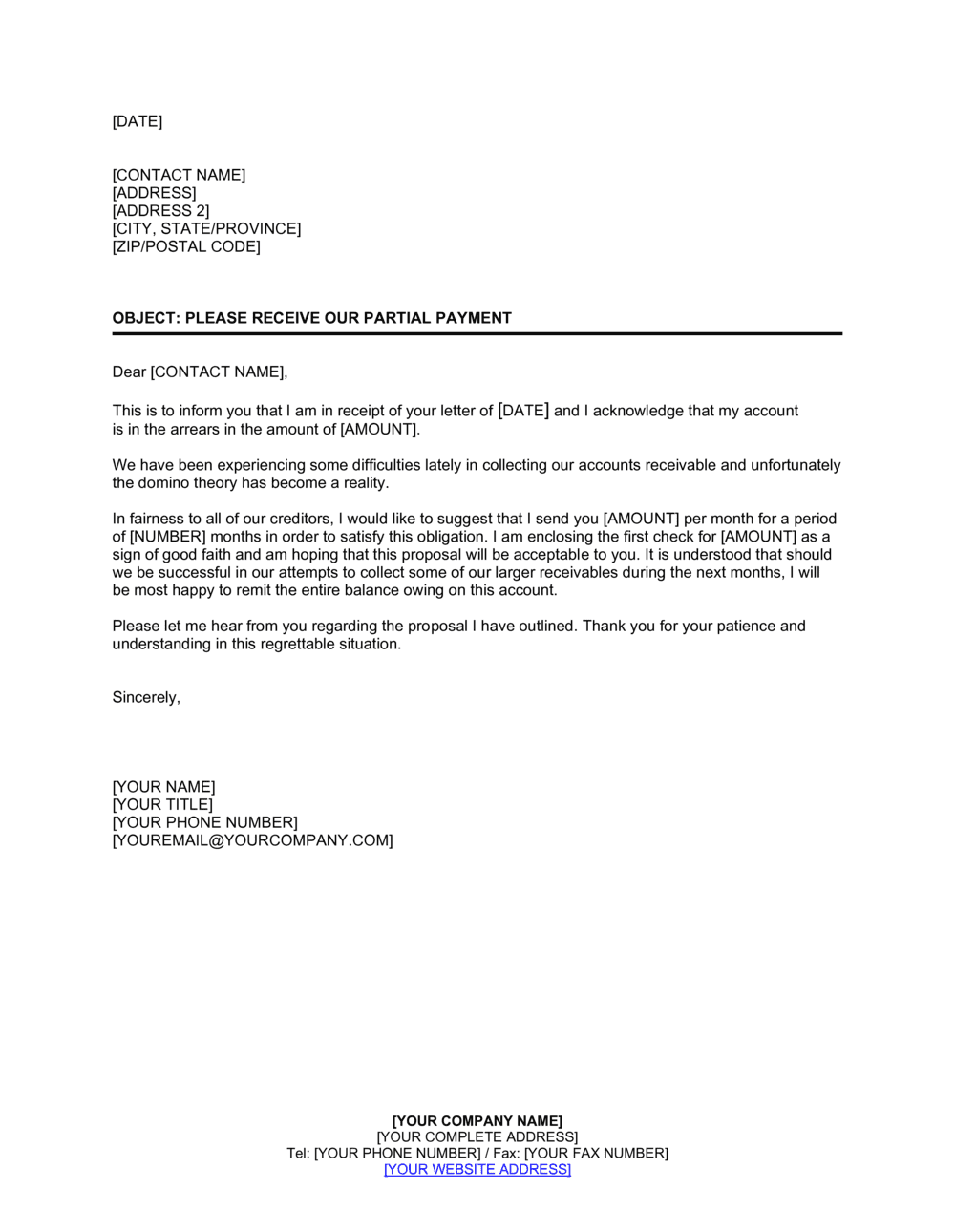
- Partial Payment
- A remittance of less than the full amount owed on an outstanding debt, typically accompanied by a written explanation and a commitment to pay the balance.
- Accord and Satisfaction
- A legal doctrine where a creditor accepts a lesser amount than owed as full settlement of the debt — relevant when a partial payment letter is marked 'payment in full.'
- Outstanding Balance
- The remaining unpaid portion of a debt after any prior payments or credits have been applied.
- Remittance
- The act of sending money to discharge a debt or obligation, often accompanied by a remittance advice identifying the invoice or account being paid.
- Statute of Limitations
- The maximum period after which a creditor may no longer bring a legal claim to recover a debt — making partial payments legally significant because they can reset this clock in some jurisdictions.
- Collections
- The process by which a creditor pursues recovery of an unpaid debt, either internally or through a third-party collections agency or legal action.
- Default
- Failure to meet the legal obligations of a debt agreement — including missing a payment deadline — which may trigger penalty interest, accelerated repayment, or legal action.
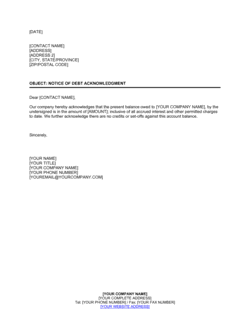
- Acknowledgment of Debt
- A written statement in which a debtor formally confirms that an amount is owed, which can have legal significance for the statute of limitations in many jurisdictions.