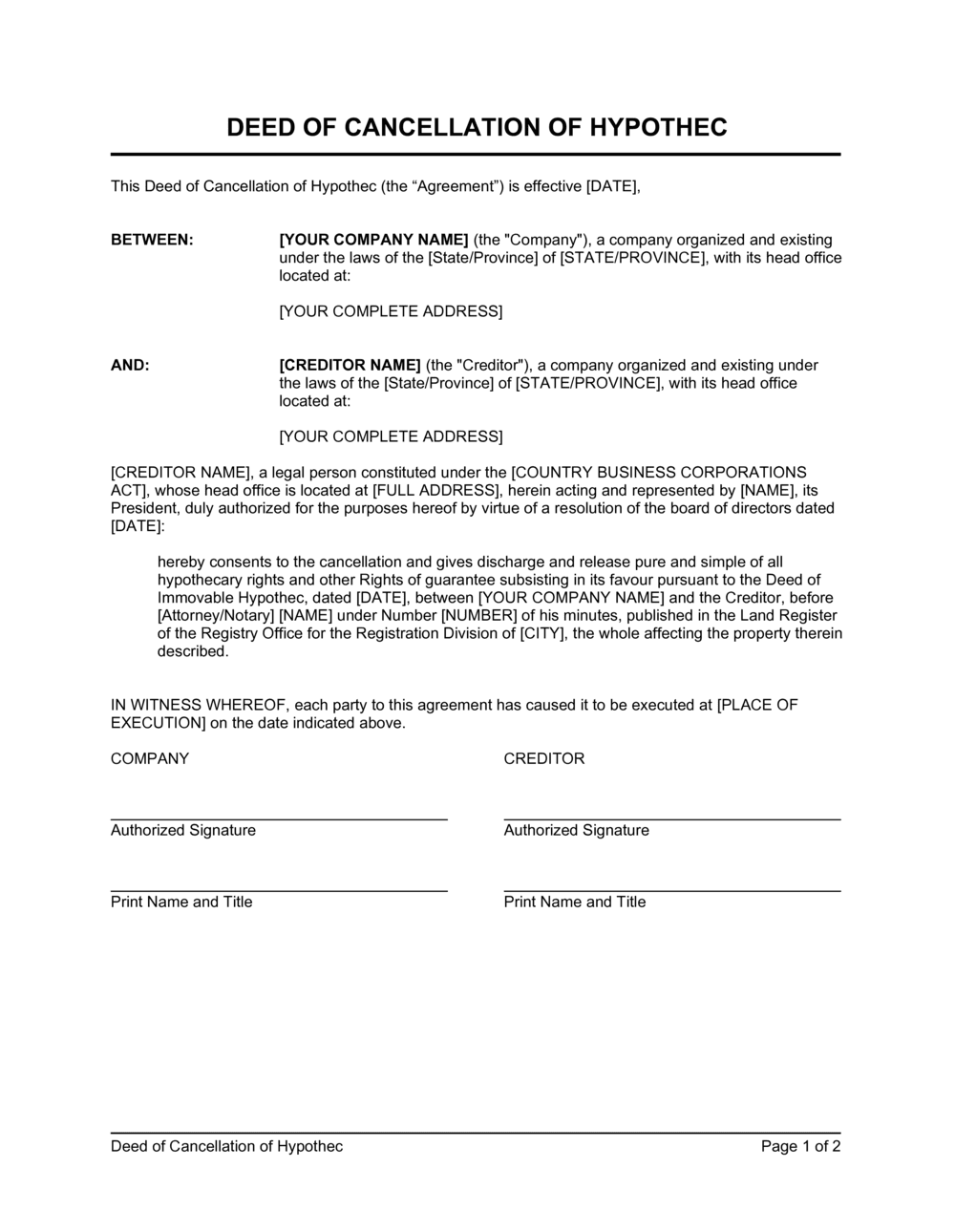
Deed of Cancellation of Hypothec Template

Free Word download • Edit online • Save & share with Drive • Export to PDF

2 pages20–30 min to fillDifficulty: StandardSignature requiredLegal review recommended
Learn more ↓
FreeDeed of Cancellation of Hypothec Template

At a glance

What it is
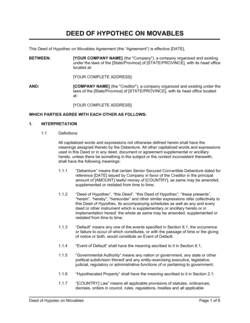
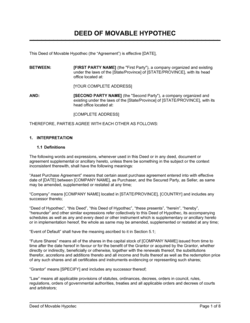
A Deed of Cancellation of Hypothec is a legally binding document executed by a creditor (hypothecary creditor) to formally discharge a hypothec — a security interest registered against an immovable or movable property — once the underlying secured debt has been fully repaid or otherwise extinguished. This free Word download gives you a structured, registrable starting point you can edit online and export as PDF for notarial or registry filing.
When you need it
Use it when a borrower has fully repaid a secured loan, mortgage, or line of credit and the creditor is obligated to release the registered hypothec from the title or security register. It is also required when a debt is forgiven, settled, or otherwise discharged by agreement.
What's inside
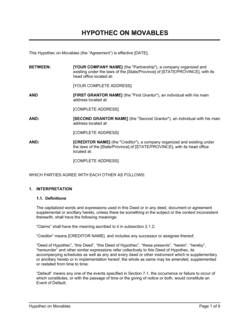
Identification of both parties, a precise description of the original hypothec and the property it encumbered, a declaration of full repayment or discharge, the operative release clause, registration instructions, and signature and notarial blocks required for title registry filing.

What is a Deed of Cancellation of Hypothec?

A Deed of Cancellation of Hypothec is a legally binding instrument executed by a hypothecary creditor — typically a bank, lender, or private financier — to formally discharge a hypothec registered against immovable or movable property once the underlying secured debt has been fully repaid or otherwise extinguished. A hypothec is a civil law security interest that encumbers property title and gives the creditor enforcement rights against the asset if the debtor defaults. Once the obligation is satisfied, the creditor is legally obligated to provide this deed, which must be filed at the applicable land or security registry to remove the encumbrance from the property's public record. Until the cancellation is registered, the hypothec continues to appear on title searches, blocking clean title transfer, refinancing, and in some jurisdictions triggering ongoing registry fees.

Why You Need This Document

A fully repaid debt does not automatically clear a hypothec from the property register — the encumbrance remains on title until a properly executed and registered deed of cancellation is filed. For a property owner, an unreleased hypothec is a concrete obstacle: purchasers and new lenders will not proceed until the title is clean, and every day of delay on a closing costs money. For creditors, failing to provide the cancellation deed after full repayment exposes the institution to liability for the debtor's resulting losses and, in Quebec and other civil law jurisdictions, to court-ordered discharge proceedings. Using this template ensures you capture every required element — registration number, legal property description, repayment declaration, operative release language, notarial execution block, and registry instructions — so the deed is accepted for filing on first submission rather than returned for correction when time is already short.

Which variant fits your situation?

If your situation is…Use this template
Cancelling a hypothec on immovable property (real estate)Deed of Cancellation of Hypothec (Immovable)
Releasing a floating charge over movable business assetsRelease of Security Interest (Movable)
Discharging a mortgage registered under common-law land titleDischarge of Mortgage
Releasing a pledge or lien on personal propertyRelease of Lien
Partial release of one property from a portfolio hypothecPartial Discharge of Hypothec
Confirming full settlement of debt and releasing all security simultaneouslyDebt Settlement and Security Release Agreement
Discharging a PPSA-registered security interest on equipment or inventoryPPSA Discharge of Security Interest

Common mistakes to avoid

❌ Misquoting the original registration number

Why it matters: The registry uses the registration number — not the property address or debtor name — to locate the entry to be struck. A single transposed digit causes outright rejection and can delay a pending property sale by days or weeks.

Fix: Pull the certified registry entry for the hypothec and copy the registration number directly from the official document rather than from internal loan files or correspondence.

❌ Creditor lacks authority to execute the cancellation

Why it matters: If the hypothec was assigned, securitized, or syndicated to a third party since registration, the original creditor no longer holds the security interest and cannot legally cancel it. Executing without standing is void and may expose the creditor to liability.

Fix: Confirm the current holder of the hypothec by reviewing the registry entry and any internal assignment records before drafting. If the hypothec was assigned, the current holder must execute the cancellation deed.

❌ Signing after debt settlement without confirming final interest and fees

Why it matters: Executing the deed while a small outstanding balance remains — accrued interest, administration fees, or discharge preparation costs — technically makes the repayment declaration false, creating a defective instrument.

Fix: Obtain a final payoff figure inclusive of all fees to the proposed execution date, collect that exact amount, and only then execute the deed with the correct repayment date and amount.

❌ Using only the postal address instead of the legal property description

Why it matters: Land registries in all major jurisdictions index entries by cadastral lot number or legal land description, not postal address. A deed citing only an address cannot be matched to the correct registry entry and will be rejected for filing.

Fix: Pull the full legal description from a current title search or certified registry extract and insert it verbatim into the property description clause of the deed.

❌ No notarial certification on a deed intended for real property registration

Why it matters: In civil law jurisdictions — Quebec, France, Belgium, and others — immovable property instruments that have not been certified before a notary are not accepted for registration at the land registry, leaving the hypothec on title regardless of the parties' intent.

Fix: Execute the deed before a notary public who is duly qualified in the jurisdiction where the property is located, and obtain the notarial act number and seal before submitting for registration.

❌ Not obtaining written confirmation that the registration has been struck

Why it matters: Filing the deed and receiving a filing receipt does not guarantee the registry has processed and struck the entry. If the registry rejects the filing on a technicality, the hypothec remains on title — unnoticed until the debtor attempts to sell or refinance.

Fix: After filing, request an updated title certificate or certified extract from the registry confirming the hypothec no longer appears. Provide the debtor with a copy as their definitive proof of clear title.

The 10 key clauses, explained

Identification of parties

In plain language: Identifies the hypothecary creditor executing the cancellation and the hypothecary debtor whose property is being released, using full legal names and addresses.

Sample language
[CREDITOR LEGAL NAME], a [ENTITY TYPE] duly incorporated under the laws of [JURISDICTION], with its registered office at [ADDRESS] ('Creditor'), hereby grants this deed in favour of [DEBTOR LEGAL NAME], residing at [ADDRESS] ('Debtor').

Common mistake: Using a trade name instead of the registered legal entity name. A mismatch between the original hypothec registration and the cancellation deed causes the land registry to reject the filing.

Description of the original hypothec

In plain language: Precisely identifies the hypothec being cancelled by registration number, registration date, and the registry office where it was recorded.

Sample language
This deed cancels the hypothec registered on [DATE] under registration number [REG NO.] at the [REGISTRY OFFICE NAME], [JURISDICTION], in the amount of $[ORIGINAL PRINCIPAL AMOUNT].

Common mistake: Citing an incorrect or outdated registration number. Even a single-digit transposition causes registry rejection and delays title clearance, potentially derailing a pending property sale.

Description of the encumbered property

In plain language: Provides the full legal description of the property over which the hypothec was registered, including cadastral or lot number, municipal address, and any applicable reference to the land plan.

Sample language
The hypothec encumbers the immovable property known and designated as Lot [LOT NUMBER] of the Cadastre of [MUNICIPALITY], [PROVINCE/STATE], bearing municipal address [FULL ADDRESS] ('Property').

Common mistake: Using only the municipal address instead of the full cadastral or legal land description. Registries use legal descriptions, not postal addresses, to identify property entries.

Declaration of repayment or discharge

In plain language: States that the debt secured by the hypothec has been fully repaid, forgiven, or otherwise extinguished, forming the operative basis for the cancellation.

Sample language
The Creditor hereby acknowledges and confirms that the debt secured by the said hypothec, in the total amount of $[AMOUNT], has been fully repaid and discharged by the Debtor as of [DATE OF FINAL PAYMENT], and that no further amounts remain outstanding thereunder.

Common mistake: Omitting the date of final payment or the amount confirmed as repaid. Without these specifics, the declaration is legally incomplete and may be challenged if a future dispute arises over whether the full debt was settled.

Operative cancellation and release clause

In plain language: The core discharge language — formally cancels the hypothec and releases the property from the security interest, effective as of execution.

Sample language
The Creditor hereby irrevocably cancels, releases, and discharges the said hypothec and all rights arising therefrom in respect of the Property, and consents to the striking of the said registration from the land register, effective as of [DATE].

Common mistake: Using permissive rather than operative language ('agrees to release' instead of 'hereby releases'). Courts and registries require present-tense operative words to treat the deed as a completed discharge, not a promise of future action.

Warranty of no further encumbrance

In plain language: The creditor represents that it has not assigned or transferred the hypothec to any third party and holds the full authority to grant the cancellation.

Sample language
The Creditor warrants that it is the sole registered holder of the said hypothec, that it has not assigned, transferred, or otherwise disposed of its rights thereunder to any third party, and that it has full authority to execute this deed of cancellation.

Common mistake: Omitting this warranty when the hypothec may have been syndicated or securitized. If the hypothec was sold to a third party, the original creditor lacks standing to cancel it — and the warranty exposes that gap before registration is attempted.

Registration instructions and authority

In plain language: Authorizes the notary, conveyancer, or debtor's attorney to present the deed for registration at the applicable land or security registry and directs which registration entry to strike.

Sample language
The Creditor hereby authorizes and directs [NAME OF NOTARY / ATTORNEY / REGISTRANT], or any other authorized representative, to present this deed for registration at the [REGISTRY OFFICE] and to take all steps necessary to effect the striking of registration number [REG NO.] from the land register.

Common mistake: Failing to name the authorized registrant or provide explicit registry instructions. Without this clause, the deed may be valid between the parties but cannot be acted upon at the registry, leaving the hypothec on title.

Costs and taxes

In plain language: Allocates responsibility for registration fees, notarial costs, and any applicable transfer taxes between the parties — typically borne by the debtor.

Sample language
All registration fees, notarial fees, land transfer taxes, and other costs incurred in connection with the registration of this deed of cancellation shall be borne exclusively by the Debtor, unless otherwise agreed in writing.

Common mistake: Not addressing costs at all. When no clause governs who pays, creditors sometimes refuse to cooperate until costs are resolved, stalling title clearance during time-sensitive transactions.

Governing law and jurisdiction

In plain language: Specifies the jurisdiction whose laws govern the interpretation and enforcement of the deed — typically the jurisdiction where the property is located.

Sample language
This deed of cancellation is governed by and construed in accordance with the laws of [PROVINCE/STATE/COUNTRY], and the parties submit to the exclusive jurisdiction of the courts of [JURISDICTION] for any dispute arising hereunder.

Common mistake: Choosing a governing law different from the property's location. Land law is territorial — most jurisdictions mandate that the law of the situs governs immovable property instruments, regardless of contractual choice.

Execution and notarial certification block

In plain language: Provides signature lines for the creditor (and authorized officer if an entity), witness attestation, and notarial certification required for registry filing.

Sample language
IN WITNESS WHEREOF, the Creditor has executed this deed on [DATE]. [CREDITOR SIGNATURE / AUTHORIZED SIGNATORY NAME / TITLE]. Certified before me on [DATE] by [NOTARY NAME], Notary Public for [JURISDICTION]. [NOTARY SEAL / SIGNATURE].

Common mistake: Having the deed signed by an employee without verifying they are an authorized signing officer under the creditor's constating documents. Registries can reject deeds signed by individuals who lack proven authority to bind the creditor entity.

How to fill it out

  1. 1

    Confirm the debt has been fully extinguished

    Before preparing the deed, obtain a final account statement confirming the outstanding balance is zero and all interest, fees, and penalties have been settled. The deed's declaration of repayment must match your internal records exactly.

    💡 Request a written payoff confirmation from your loan administration system dated the same day as final receipt — this protects the creditor if the debtor later disputes the discharge amount.

  2. 2

    Retrieve the original hypothec registration details

    Locate the original registration number, registration date, registry office name, and the registered amount from the land or security register. Pull the certified registry entry rather than relying on internal records alone.

    💡 Order a fresh title search on the property before drafting — confirm the hypothec still appears in its original form and has not been modified or partially assigned since registration.

  3. 3

    Enter the full legal names of both parties

    Use the creditor's exact registered corporate name as it appears on the original hypothec. Use the debtor's full legal name or the entity's registered name. Cross-reference both against the original registration to ensure they match character for character.

    💡 If the creditor has changed its name since registration (merger, rebranding), attach a certified copy of the name change resolution to the deed to bridge the naming gap.

  4. 4

    Complete the property description using the legal land description

    Enter the cadastral lot number, municipality, and province or state as they appear in the land register — not the postal address. Confirm the description matches the original hypothec instrument exactly.

    💡 In Quebec, cross-reference the property description against the current cadastral plan (Plan de cadastre) from the Registre foncier to catch any renumbering since the original registration.

  5. 5

    Complete the declaration of repayment with the final payment date and amount

    State the total principal and interest amount confirmed as repaid and the date the final payment was received. This clause is the operative legal basis for the discharge and must be accurate.

    💡 If the debt was discharged by forgiveness or settlement rather than full repayment, adapt the language to reflect the specific mechanism — forgiveness and repayment have different tax implications in some jurisdictions.

  6. 6

    Name the authorized registrant in the registration instructions clause

    Identify the notary, attorney, or conveyancer who will present the deed for registration. Include their full name and professional designation. Provide the exact registration number to be struck from the register.

    💡 In Quebec, only a notary may present an immovable property instrument for registration at the Registre foncier — confirm your named registrant holds this qualification before executing the deed.

  7. 7

    Execute before a notary and obtain certification

    Both parties (or at minimum the creditor as the granting party) must sign before a notary public. The notary certifies the execution and affixes their seal — this certification is a prerequisite for registry filing in most civil law jurisdictions.

    💡 Confirm the notary's commission is current for the jurisdiction where the property is located. An expired or out-of-jurisdiction notarial certificate will cause the registry to reject the filing.

  8. 8

    File at the land or security registry and obtain the struck registration confirmation

    Submit the notarially certified deed to the applicable registry with the correct filing fees. Obtain and retain the registry's written confirmation that registration number has been struck. Provide a copy to the debtor for their title records.

    💡 Do not rely on the filing receipt alone — request the updated title certificate showing the hypothec no longer appears. This is the document the debtor needs for a clean title search on resale or refinancing.

Frequently asked questions

What is a Deed of Cancellation of Hypothec?

A Deed of Cancellation of Hypothec is a legal instrument executed by a creditor to formally discharge a hypothec — a civil law security interest registered against a property — once the secured debt has been fully repaid or otherwise extinguished. It must be filed at the applicable land or security registry to remove the encumbrance from the property's title. Without this deed, the hypothec remains on the register and clouds the debtor's title even after full repayment.

What is the difference between a hypothec and a mortgage?

A hypothec is the civil law equivalent of a common-law mortgage — both are security interests registered against property to secure a debt. The key difference is legal tradition: hypothecs are used in civil law jurisdictions such as Quebec, France, Scotland, and South Africa, while mortgages are used in common-law jurisdictions such as most of the United States, English Canada, and England. The cancellation instrument follows the same distinction: deed of cancellation of hypothec in civil law systems, discharge of mortgage in common-law systems.

When is a Deed of Cancellation of Hypothec required?

It is required whenever a registered hypothec needs to be removed from title — most commonly when the underlying loan is fully repaid, but also when a debt is forgiven, settled at a reduced amount, or extinguished by operation of law. It is also needed when a property is being sold or refinanced and the purchaser or new lender requires clean title as a condition of closing.

Does a Deed of Cancellation of Hypothec need to be notarized?

In civil law jurisdictions — including Quebec, France, Belgium, and most of Latin America — yes, the deed typically must be executed before a notary public and certified as a notarial act before it will be accepted for registration at the land registry. In common-law jurisdictions that use equivalent instruments, notarization requirements vary but witnessing by a qualified person is generally required. Always confirm the formality requirements of the specific registry before execution.

What happens if the creditor refuses to execute the cancellation deed?

A creditor who refuses to provide a discharge after full repayment is in breach of their obligation and the debtor may apply to a court for a court-ordered discharge. In Quebec, Articles 2795–2800 of the Civil Code govern the creditor's obligation to cancel. In most jurisdictions, the debtor can also seek damages for any losses caused by the delay, including a failed property sale. Consider consulting a notary or lawyer immediately if a creditor is unresponsive after confirmed repayment.

Can a partial cancellation of a hypothec be registered?

Yes. A partial discharge or partial cancellation releases one property from a hypothec that covers multiple properties, or reduces the registered amount while leaving the security in place over remaining collateral. This is common in portfolio lending or staged development projects. A partial cancellation deed follows the same structure as a full cancellation but specifies which property or portion of the security is being released while confirming the hypothec continues over any remaining collateral.

Who pays the costs of registering the cancellation?

Registration fees, notarial costs, and any applicable taxes are typically borne by the debtor (the property owner seeking clear title), as the discharge primarily benefits them. However, parties may agree otherwise in the original loan agreement or at the time of repayment. In Quebec, it is standard practice for the debtor's notary to prepare the deed at the debtor's expense following a written undertaking from the creditor to sign.

How long does it take to register a Deed of Cancellation of Hypothec?

Processing times depend on the jurisdiction and registry. In Quebec, electronic registration at the Registre foncier is typically completed within 24 to 48 hours of submission by a notary with electronic access. Paper filings or registries with manual processing can take 5 to 20 business days. Factor this timeline into any property sale or refinancing closing date — registries cannot expedite processing simply because a transaction deadline is approaching.

Is a Deed of Cancellation of Hypothec the same as a release letter from the bank?

No. A release letter or payoff letter from a bank confirms the debt is repaid but has no legal effect on the registered hypothec — it does not remove the encumbrance from the title register. Only a properly executed and registered deed of cancellation, filed at the land registry, achieves a legal discharge. Relying on a bank letter without registering the formal cancellation leaves the hypothec on title, which will appear on any subsequent title search.

How this compares to alternatives

vs Discharge of Mortgage

A discharge of mortgage is the common-law equivalent, used in US states, English Canada, the UK, and Australia. A deed of cancellation of hypothec serves the same function but operates under civil law principles and must comply with civil law registry formalities — including notarial certification in most jurisdictions. The correct instrument depends entirely on the legal tradition of the property's jurisdiction.

vs Release of Lien

A release of lien discharges a statutory lien — such as a construction lien or tax lien — that arises by operation of law rather than by agreement. A deed of cancellation of hypothec discharges a consensual security interest created by contract. The two documents serve different encumbrance types and are filed at different registries in most jurisdictions.

vs Debt Settlement Agreement

A debt settlement agreement documents the terms on which a debt is reduced or forgiven between the parties — it is a contract, not a registry instrument. A deed of cancellation of hypothec is the formal discharge document that flows from repayment or settlement and must be registered to remove the encumbrance from title. Both documents are often executed together when a debt is settled at less than full value.

vs Partial Discharge of Hypothec

A partial discharge releases one specific property or a portion of the secured amount from a hypothec that covers multiple assets, while leaving the security intact over remaining collateral. A full deed of cancellation extinguishes the hypothec entirely. Use a partial discharge when releasing a property from a portfolio hypothec mid-term; use the full cancellation only when the entire secured obligation is extinguished.

Industry-specific considerations

Real estate and property development

Developers and property owners must register cancellations before closing any sale or refinancing — a hypothec on title is a standard condition precedent to clean title transfer.

Banking and financial services

Banks and credit unions process large volumes of hypothec cancellations as part of loan lifecycle management; errors in registration data trigger systemic title defects across lending portfolios.

Commercial lending and private equity

Syndicated loans secured by hypothecs require coordinated release instructions from all lender parties, making the warranty of authority clause and notarial certification especially critical.

Manufacturing and industrial

Industrial property owners use cancellation deeds to clear hypothecs on plant and equipment facilities, often in connection with asset sales, sale-leasebacks, or equipment refinancing transactions.

Jurisdictional notes

United States

Hypothecs are not used in the US common-law system — the equivalent instrument is a discharge or release of mortgage, deed of trust reconveyance, or UCC-3 termination statement for personal property security. Louisiana is the sole US state operating under a civil law tradition and uses hypothec terminology; all other states use common-law mortgage discharge instruments. Filing requirements and forms vary by county recorder's office.

Canada

Quebec is the only Canadian province governed by civil law, and the deed of cancellation of hypothec (acte de mainlevée) is the standard discharge instrument under Articles 2795–2800 of the Civil Code of Quebec. It must be notarized and registered at the Registre foncier du Québec. All other provinces use common-law mortgage discharge forms registered at provincial land title offices. In Ontario, a Discharge of Charge/Mortgage is registered through Teraview.

United Kingdom

Scotland operates under a civil law tradition and uses the standard security, which is discharged by a formal discharge deed (DS1) registered at the Registers of Scotland. In England and Wales, a common-law mortgage is discharged using Form DS1 at HM Land Registry. In Northern Ireland, discharge is registered at Land & Property Services. The term 'hypothec' is specifically a Scots law concept for certain statutory liens over moveables.

European Union

Most EU member states use civil law and recognize hypothecs over immovable property. Requirements for cancellation vary: France requires a mainlevée executed before a notaire and filed at the Service de Publicité Foncière; Belgium requires registration at the Bureau des Hypothèques; Germany uses a Löschungsbewilligung registered at the Grundbuchamt. Cross-border EU property transactions may involve multiple registry systems, and GDPR-compliant handling of debtor personal data in the deed is required in all member states.

Template vs lawyer — what fits your deal?

PathBest forCostTime
Use the templateStandard residential mortgage repayments where a notary or conveyancer will review and certify the deed before filingFree30–60 minutes to complete the template
Template + legal reviewCommercial property discharges, loans involving multiple parties, or jurisdictions with complex registry requirements$300–$800 (notary or real estate lawyer review and certification)2–5 business days
Custom draftedSyndicated loan releases, cross-border property portfolios, disputed discharges, or partial cancellations with complex collateral structures$1,500–$5,000+1–3 weeks

Glossary

Hypothec
A security interest granted over immovable or movable property in civil law jurisdictions, giving the creditor rights against the property if the debt is not repaid.
Hypothecary Creditor
The party (typically a lender or financier) who holds the hypothec as security for a debt obligation.
Hypothecary Debtor
The property owner who granted the hypothec as collateral security for a loan or other obligation.
Discharge
The formal release and extinguishment of a registered security interest, restoring unencumbered title to the property owner.
Immovable Property
Real estate and land, including buildings and fixtures permanently attached to land — the most common subject of a hypothec.
Land Registry
The government body responsible for recording ownership and security interests over immovable property; cancellation must be registered here to be effective against third parties.
Notarial Act
A document prepared and certified by a notary public, required in civil law jurisdictions for real property instruments to be valid for registration.
Encumbrance
Any registered charge, lien, hypothec, or security interest that limits the owner's free and unencumbered use or transfer of the property.
Quittance
A formal acknowledgment that a debt has been paid in full, often incorporated into a deed of cancellation as the operative discharge declaration.
Registration Number
The unique identifier assigned to the original hypothec upon registration, which must be cited in the cancellation deed so the registry can locate and discharge the correct entry.
Acte de mainlevée
The French civil law term for a deed of release or cancellation, used in Quebec and other francophone civil law jurisdictions to formally lift a registered security interest.

Part of your Business Operating System

This document is one of 3,000+ business & legal templates included in Business in a Box.

  • Fill-in-the-blanks — ready in minutes
  • 100% customizable Word document
  • Compatible with all office suites
  • Export to PDF and share electronically

Create your document in 3 simple steps.

From template to signed document — all inside one Business Operating System.
1
Download or open template

Access over 3,000+ business and legal templates for any business task, project or initiative.

2
Edit and fill in the blanks with AI

Customize your ready-made business document template and save it in the cloud.

3
Save, Share, Send, Sign

Share your files and folders with your team. Create a space of seamless collaboration.

Save time, save money, and create top-quality documents.

★★★★★

"Fantastic value! I'm not sure how I'd do without it. It's worth its weight in gold and paid back for itself many times."

Managing Director · Mall Farm
Robert Whalley
Managing Director, Mall Farm Proprietary Limited
★★★★★

"I have been using Business in a Box for years. It has been the most useful source of templates I have encountered. I recommend it to anyone."

Business Owner · 4+ years
Dr Michael John Freestone
Business Owner
★★★★★

"It has been a life saver so many times I have lost count. Business in a Box has saved me so much time and as you know, time is money."

Owner · Upstate Web
David G. Moore Jr.
Owner, Upstate Web

Run your business with a system — not scattered tools

Stop downloading documents. Start operating with clarity. Business in a Box gives you the Business Operating System used by over 250,000 companies worldwide to structure, run, and grow their business.

Free Forever Plan · No credit card required