1
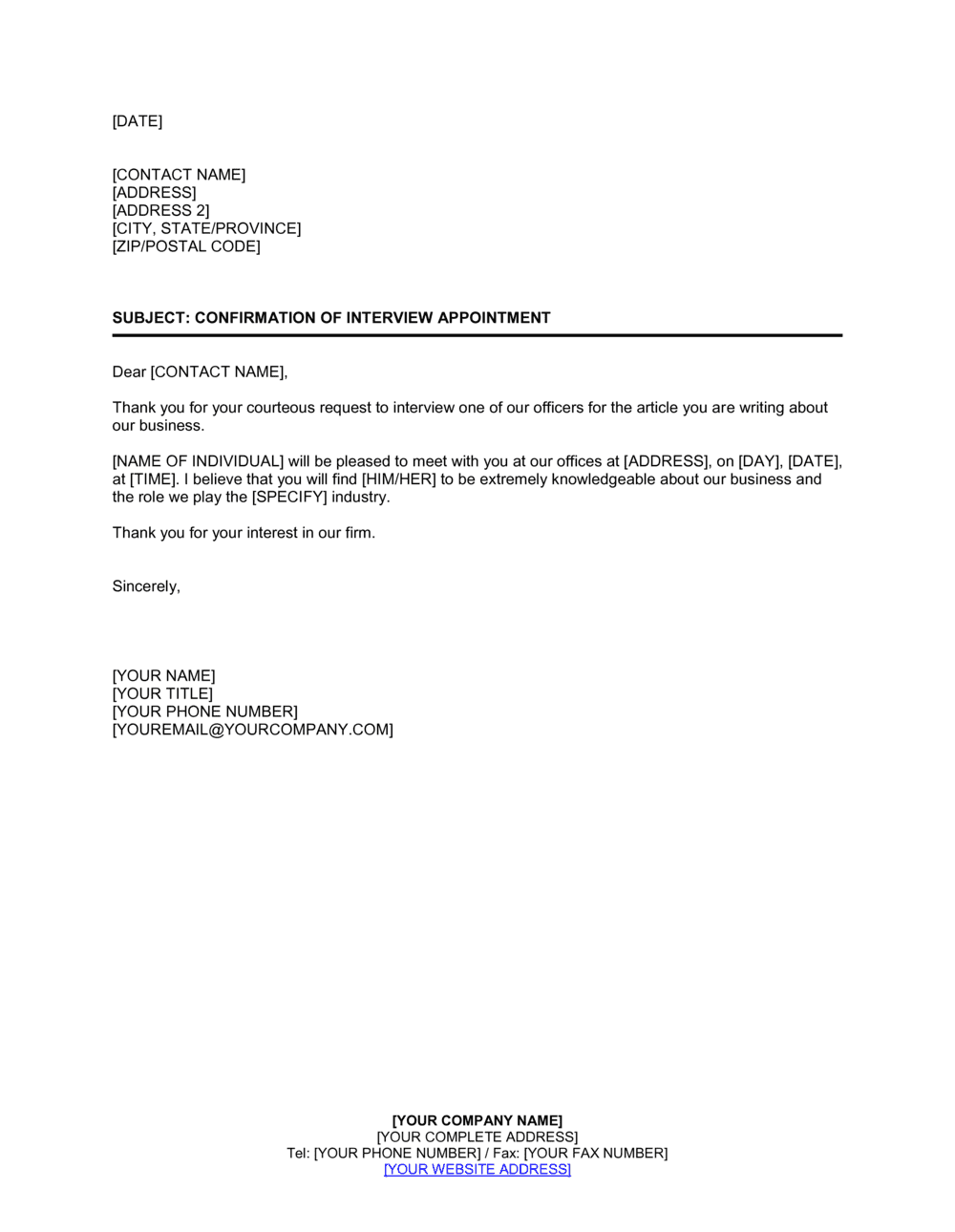
Enter the employer's legal name and contact representative
Replace the employer placeholder with the full registered legal name of the hiring entity, not a brand or trading name. Add the name and title of the HR contact or recruiter managing the process.
💡 Cross-reference the company's corporate registry entry to confirm the exact legal name before issuing the letter — mismatches create problems if subsequent employment documents are challenged.
2
Complete the candidate's full name and position details
Enter the candidate's legal name as provided on their application, the exact job title, department, and requisition or job reference number if your organization uses one.
💡 Use the job title from the approved job description, not an informal working title. Consistency across all recruitment documents reduces equal-opportunity audit risk.
3
Set the confirmed date, time, time zone, and duration
Enter the specific calendar date, start time with explicit time zone (e.g., EST, PST, GMT), and estimated duration. For multi-stage sessions, add a schedule block showing each component and its timing.
💡 For virtual interviews with candidates in different countries, convert the time to both the employer's local time and the candidate's time zone in the letter itself.
4
Provide complete location or virtual meeting details
For in-person interviews, include street address, building name, floor, room number, reception instructions, and parking or transit guidance. For virtual, include the platform name, direct meeting link, meeting ID, and passcode.
💡 Test the virtual meeting link yourself before sending — broken links are the single most common cause of delayed interview starts.
5
Describe the interview format and name the panel
Specify whether the interview is structured, competency-based, technical, or case-based. List each interviewer's name and title so the candidate can prepare informed questions.
💡 Disclosing the panel composition reduces candidate no-shows by 15–20% in most hiring contexts — candidates who know who they are meeting are better prepared and more likely to attend.
6
List preparation requirements and documents to bring
Itemize any pre-interview tasks (presentations, assessments, portfolio submissions), documents required for identity or right-to-work verification, and any dress code guidance.
💡 Give the candidate at least five business days' notice before any interview requiring a prepared presentation or case study — this is the minimum that produces quality submissions.
7
Confirm cancellation notice requirements and consequences
Enter the minimum notice period — typically 24–48 hours — and the name and contact details of the person to call or email. Specify what happens to the application if the candidate no-shows without notice.
💡 Phrase the no-show consequence factually ('your application may be withdrawn from the current process') rather than punitively — this language holds up better if a candidate later claims unfair treatment.
8
Send for candidate acknowledgment before the interview date
Issue the letter with enough lead time for the candidate to confirm, ask questions, and request any accommodations. Require a signed or emailed acknowledgment by a specific deadline — typically 48 hours after receipt.
💡 Store the signed acknowledgment in your ATS or recruitment file alongside the original letter — this is the document you reference if a dispute about interview conditions arises.