Clinic Business Plan Template

Free Word download β€’ Edit online β€’ Save & share with Drive β€’ Export to PDF

31 pagesβ€’2h 35m – 3h 30m to fillβ€’Difficulty: Expert
Learn more ↓
FreeClinic Business Plan Template

At a glance

What it is
A Clinic Business Plan is a structured planning document that maps a healthcare clinic's mission, target patient population, service offerings, staffing model, regulatory pathway, and 3–5 year financial projections into a single reference document. This free Word download gives you a professionally organized starting point you can edit online and export as PDF for lenders, investors, licensing bodies, or your management team.
When you need it
Use it when opening a new clinic, applying for a healthcare business loan, seeking investor funding, responding to a licensing or accreditation requirement, or rationalizing an expansion into a new location or service line.
What's inside
Executive summary, clinic overview and mission, market and patient population analysis, services and clinical offerings, staffing and credentialing plan, regulatory and compliance framework, marketing and patient acquisition strategy, operations and facility plan, and full financial projections including P&L, cash flow, and break-even analysis.

What is a Clinic Business Plan?

A Clinic Business Plan is a structured planning document that defines a healthcare clinic's mission, target patient population, clinical service offerings, provider and administrative staffing model, regulatory and licensure pathway, and 3–5 year financial projections β€” including payer mix analysis, net patient revenue modeling, and break-even visit volume. Unlike a generic business plan, it incorporates healthcare-specific components such as credentialing timelines, CPT-based service volumes, HIPAA compliance planning, and payer reimbursement assumptions that banks, state licensing bodies, and healthcare investors require before approving a loan, license, or funding round.

Why You Need This Document

Opening a clinic without a written business plan means making major capital commitments β€” signing a lease, purchasing equipment, hiring staff β€” without a validated financial model or a clear regulatory roadmap. The consequences are concrete: clinics that skip payer credentialing planning routinely run out of working capital during the 90–180 day gap between opening and first insurance reimbursement. State facility license applications are rejected for missing operational documentation. SBA and bank loan officers decline healthcare applications without a full three-statement financial model and a defined use of funds. A complete clinic business plan forces you to resolve payer mix assumptions, staffing costs, and regulatory timelines on paper before they become expensive operational problems β€” and gives every external stakeholder the documentation they need to say yes.

Which variant fits your situation?

If your situation is…Use this template
Opening a general medical or family practice clinicClinic Business Plan
Launching a dental practice or oral health clinicDental Clinic Business Plan
Starting a mental health or behavioral health practiceMental Health Practice Business Plan
Planning a physical therapy or rehabilitation centerPhysical Therapy Business Plan
Opening a medical spa or aesthetic clinicMedical Spa Business Plan
Establishing a nonprofit community health centerNonprofit Business Plan
Quick internal concept validation before a full planOne-Page Business Plan

Common mistakes to avoid

❌ Ignoring the credentialing and ramp-up period in financial projections

Why it matters: Payer credentialing takes 90–180 days after opening; a clinic projecting full reimbursement revenue from Month 1 will run out of working capital before its first check arrives.

Fix: Model zero insurance revenue for the first 60–90 days, then a gradual ramp over the following 3 months, and size working capital reserves accordingly.

❌ Using national healthcare statistics instead of local market data

Why it matters: A lender or licensing board evaluating community need will reject a plan built on national averages that do not reflect local demographics, competition, or payer mix.

Fix: Source all market data at the county or zip-code level using HRSA, state health department reports, and local insurer network directories.

❌ Omitting a payer mix assumption from revenue projections

Why it matters: A clinic with 40% Medicaid volume collects very different net revenue per visit than one with 70% commercial insurance β€” blending them without distinction produces a meaningless revenue forecast.

Fix: Model revenue separately for each payer category β€” Medicare, Medicaid, commercial insurance, and self-pay β€” using realistic reimbursement rates for each.

❌ Treating regulatory requirements as a checklist footnote

Why it matters: A missing state facility license or DEA registration on opening day halts operations entirely, and the costs of delay compound quickly against a fixed lease obligation.

Fix: Build every required license and certification into a sequenced pre-opening timeline with target completion dates and responsible parties assigned.

❌ Understating capital requirements by omitting working capital

Why it matters: Most new clinics plan for equipment and build-out but underestimate the 3–6 months of operating losses before collections stabilize β€” running out of cash after opening is the most common reason clinic startups fail.

Fix: Add a working capital line to the use-of-funds equal to at least 4–6 months of projected operating expenses, separate from facility and equipment costs.

❌ Planning only digital marketing channels for patient acquisition

Why it matters: Social media and SEO generate minimal new patients in the first 12 months for a local clinic; neglecting physician referral relationships and insurance directory listings leaves the primary acquisition channels empty.

Fix: Budget time and resources for direct outreach to 20–50 referring physicians and for in-network directory listing with each major payer before opening day.

The 9 key sections, explained

Executive Summary

Clinic Overview and Mission

Market and Patient Population Analysis

Services and Clinical Offerings

Staffing and Credentialing Plan

Regulatory and Compliance Framework

Marketing and Patient Acquisition Strategy

Operations and Facility Plan

Financial Projections

How to fill it out

  1. 1

    Define the clinic's legal entity and mission

    Confirm the legal entity type (LLC, PC, PLLC, nonprofit), the state of organization, and the target opening date. Write a one-sentence mission that names the patient population, service type, and community served.

    πŸ’‘ Healthcare entities in many states must be organized as professional corporations or PLLCs β€” confirm the required entity type with a healthcare attorney before filing.

  2. 2

    Research the local patient population and demand

    Pull demographic and health-needs data from county health department reports, HRSA Health Resources Files, and US Census estimates for your primary service area. Quantify the size of your target patient panel and identify any documented shortage or gap.

    πŸ’‘ HRSA's online data tools provide free Health Professional Shortage Area (HPSA) and Medically Underserved Area (MUA) designations that directly support loan and grant applications.

  3. 3

    Define your service menu and fee schedule

    List each service by CPT code category with an estimated monthly visit volume at steady state. Anchor your fee schedule to a percentage of Medicare rates (typically 120–150% for private pay, 100% for Medicare).

    πŸ’‘ Build two revenue scenarios β€” a conservative case at 70% of projected volume and a base case at 100% β€” and present both in the financial model.

  4. 4

    Map the regulatory and credentialing timeline

    List every required license, certification, and payer credentialing application with the lead time each requires. Build these into a Gantt-style pre-opening checklist so nothing delays the opening date.

    πŸ’‘ Start payer credentialing applications 6 months before your target opening date β€” some commercial payers take 90–180 days to complete the process.

  5. 5

    Build the staffing plan with FTE counts and hire dates

    Define each role, the number of FTEs, the start date relative to opening, and the fully-loaded compensation cost. Include clinical, administrative, and billing staff.

    πŸ’‘ Include a dedicated billing and coding FTE or outsourced billing service from day one β€” undercoded claims and denials are the single largest source of revenue leakage in new clinics.

  6. 6

    Describe the facility and technology stack

    Enter the square footage, lease terms, number of exam rooms, EHR and practice management system, and key capital equipment with costs. Confirm the facility layout supports your projected patient flow volume.

    πŸ’‘ A single exam room can support roughly 10–14 patient visits per day at standard appointment lengths β€” use this to sense-check your volume projections against your space.

  7. 7

    Build the three-statement financial model

    Model monthly P&L, cash flow, and balance sheet for Year 1 β€” starting from zero revenue in Month 1 and ramping based on credentialing completion and patient panel growth. Add annual summaries for Years 2–5.

    πŸ’‘ Show the month in which the clinic reaches cash-flow break-even explicitly β€” this is the single number lenders and investors focus on first.

  8. 8

    Write the executive summary last

    Pull the key facts from each completed section β€” patient population size, services, team, opening date, funding ask, and break-even month β€” into a 1–2 page summary. This is what a lender reads first.

    πŸ’‘ If the executive summary runs more than two pages, cut it. A busy loan officer or investor will not read past page two of a summary regardless of what follows.


Frequently asked questions

What is a clinic business plan?

A clinic business plan is a structured document that defines a healthcare clinic's mission, target patient population, clinical services, staffing model, regulatory pathway, and financial projections. It serves both as an internal operational roadmap and as the primary document presented to banks, investors, or licensing bodies when establishing or expanding a clinic.

Who needs a clinic business plan?

Independent physicians, nurse practitioners, and dentists opening private practices, healthcare entrepreneurs launching urgent care or specialty clinics, hospital administrators justifying satellite locations, and nonprofit health organizations seeking grant funding all need a formal clinic business plan. Most SBA healthcare loans and state facility licenses require one as part of the application.

What financial projections should a clinic business plan include?

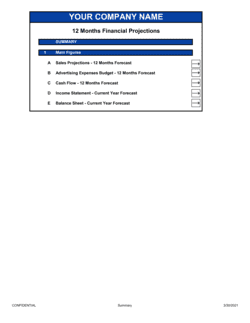
A complete financial section includes a monthly P&L for Year 1, annual P&L for Years 2–5, a cash flow statement on the same cadence, a projected balance sheet, and a break-even analysis showing the required monthly visit volume. It should also include a use-of-funds schedule allocating the capital raise across facility, equipment, and working capital. Payer mix assumptions and net revenue per visit by payer category are essential supporting inputs.

How long does it take to open a clinic after completing the business plan?

Lead times vary significantly by clinic type and jurisdiction. After completing the plan, state facility licensing typically takes 60–120 days, payer credentialing takes 90–180 days, and facility build-out takes 3–6 months depending on the scope of renovation. A realistic timeline from completed plan to first patient visit is typically 6–12 months for a new build and 3–6 months for an existing facility with minor modifications.

What is payer mix and why does it matter in a clinic business plan?

Payer mix is the breakdown of a clinic's expected revenue by payer type β€” Medicare, Medicaid, commercial insurance, and self-pay. It matters because reimbursement rates vary dramatically by payer: commercial insurance typically pays 120–160% of Medicare rates, while Medicaid pays 60–80%. A clinic with 50% Medicaid volume needs proportionally higher visit volume to cover the same fixed costs as one with primarily commercial payers.

Do I need a Certificate of Need to open a clinic?

Certificate of Need requirements apply in approximately 35 US states, but most apply only to hospitals, surgical centers, and long-term care facilities β€” not standard outpatient clinics. Check your state's CON program scope before assuming you need one. States that do require CON approval for outpatient services typically have a review process taking 6–18 months, which must be reflected in your opening timeline.

What is the difference between a clinic business plan and a standard business plan?

A clinic business plan includes all the sections of a standard business plan β€” market analysis, financial projections, and operations β€” but adds healthcare-specific components: payer mix and reimbursement modeling, provider credentialing timelines, clinical staffing by FTE and specialty, regulatory and licensure requirements, HIPAA compliance planning, and clinical quality metrics. These sections are not optional for healthcare lenders or licensing bodies.

Can I use this template for a dental or specialty clinic?

Yes. The core structure β€” market analysis, services, staffing, regulatory compliance, operations, and financial projections β€” applies to dental, physical therapy, mental health, dermatology, and other specialty clinics. You will need to adjust the services section to reflect your specialty's CPT codes and fee schedule, the staffing section to reflect the appropriate provider types, and the regulatory section to reflect specialty-specific licensure requirements.

How much capital does it typically take to open a clinic?

Startup costs vary widely by clinic type and location. A small primary care practice in a leased space typically requires $150,000–$400,000 covering build-out, equipment, EHR setup, initial staffing, and 3–6 months of working capital. A larger multi-specialty clinic or urgent care center can require $500,000–$1,500,000 or more. Equipment- heavy specialties β€” imaging, surgery, dental β€” sit at the higher end of these ranges.

How this compares to alternatives

vs Standard Business Plan

A standard business plan covers market, operations, team, and financials for any industry. A clinic business plan adds payer mix modeling, credentialing timelines, clinical staffing by FTE and specialty, regulatory licensure requirements, and HIPAA compliance planning. Healthcare lenders and licensing bodies require the clinic-specific version β€” a generic plan will not satisfy their documentation standards.

vs One-Page Business Plan

A one-page plan is useful for rapid internal alignment or early-stage concept testing. It lacks the financial depth, regulatory detail, and payer analysis that banks, investors, and state licensing bodies require. Use the one-page format to validate the concept, then build the full clinic business plan before any capital raise or license application.

vs Strategic Plan

A strategic plan focuses on multi-year goals, initiatives, and KPIs for an existing organization. A clinic business plan is a launch or expansion document that includes capital requirements, regulatory pathway, and startup financial modeling. Established clinics typically need both β€” the business plan to justify a new location or service line, and a strategic plan to govern ongoing operations.

vs Financial Projections Template

A standalone financial projections template covers the numbers alone β€” P&L, cash flow, and balance sheet. A clinic business plan contextualizes those numbers with market evidence, staffing rationale, regulatory timeline, and clinical strategy. Lenders and investors never evaluate a healthcare financial model in isolation from the operational and market assumptions that drive it.

Industry-specific considerations

Primary Care and Family Medicine

Panel size management, chronic disease management visit volumes, Medicare Annual Wellness Visit revenue, and value-based care contract readiness.

Dental and Oral Health

High equipment capital costs, fee-for-service and dental insurance payer mix, production-per-chair metrics, and hygiene revenue as a percentage of total practice revenue.

Mental Health and Behavioral Health

Session-based billing model, insurance parity compliance, telehealth revenue integration, and therapist-to-patient caseload ratios as the primary capacity driver.

Physical Therapy and Rehabilitation

Units-per-visit billing model, Medicare functional limitation reporting, physician referral pipeline as the dominant acquisition channel, and discharge planning metrics.

Template vs pro β€” what fits your needs?

PathBest forCostTime
Use the templateIndependent providers opening a first practice, small clinic startups seeking SBA loans under $500KFree3–5 weeks (50–80 hours)
Template + professional reviewMulti-provider clinics, specialty practices with complex payer mix, or first-time healthcare entrepreneurs$1,000–$3,000 for a healthcare consultant or financial advisor review4–6 weeks
Custom draftedHospital-affiliated clinics, large capital raises above $1M, regulated specialties, or multi-site expansion plans$5,000–$15,000 for a healthcare business plan writer or advisory firm6–10 weeks

Glossary

Payer Mix
The breakdown of a clinic's revenue sources by insurance type β€” Medicare, Medicaid, private insurance, and self-pay β€” which directly affects reimbursement rates and cash flow predictability.
Patient Panel
The total number of active patients assigned to or regularly seen by a provider or clinic, used to estimate capacity and revenue potential.
Credentialing
The formal process of verifying a provider's licenses, training, and certifications before they are authorized to treat patients and bill insurers.
Break-Even Volume
The number of patient visits per month at which total revenue equals total operating costs, with no profit or loss.
Fee Schedule
A published list of the charges a clinic sets for each service or procedure, before any insurance negotiation or adjustment.
Net Patient Revenue
Gross charges minus contractual adjustments, discounts, and write-offs β€” the actual revenue a clinic collects from services rendered.
FTE (Full-Time Equivalent)
A staffing unit equal to one employee working full-time hours; used to compare staffing levels across clinics of different sizes.
Certificate of Need (CON)
A regulatory approval required in some US states before a new healthcare facility or service can be established, based on demonstrated community need.
Capitation
A payment model in which a payer pays the clinic a fixed per-patient-per-month fee regardless of how many services that patient uses.
EBITDA
Earnings Before Interest, Taxes, Depreciation, and Amortization β€” a proxy for operating cash generation used when valuing or benchmarking a clinic.
Revenue Cycle
The end-to-end process from patient scheduling through insurance claims submission to payment collection, governing how quickly and completely a clinic gets paid.

Part of your Business Operating System

This document is one of 3,000+ business & legal templates included in Business in a Box.

  • Fill-in-the-blanks β€” ready in minutes
  • 100% customizable Word document
  • Compatible with all office suites
  • Export to PDF and share electronically

Create your document in 3 simple steps.

From template to signed document β€” all inside one Business Operating System.
1
Download or open template

Access over 3,000+ business and legal templates for any business task, project or initiative.

2
Edit and fill in the blanks with AI

Customize your ready-made business document template and save it in the cloud.

3
Save, Share, Send, Sign

Share your files and folders with your team. Create a space of seamless collaboration.

Save time, save money, and create top-quality documents.

β˜…β˜…β˜…β˜…β˜…

"Fantastic value! I'm not sure how I'd do without it. It's worth its weight in gold and paid back for itself many times."

Managing Director Β· Mall Farm
Robert Whalley
Managing Director, Mall Farm Proprietary Limited
β˜…β˜…β˜…β˜…β˜…

"I have been using Business in a Box for years. It has been the most useful source of templates I have encountered. I recommend it to anyone."

Business Owner Β· 4+ years
Dr Michael John Freestone
Business Owner
β˜…β˜…β˜…β˜…β˜…

"It has been a life saver so many times I have lost count. Business in a Box has saved me so much time and as you know, time is money."

Owner Β· Upstate Web
David G. Moore Jr.
Owner, Upstate Web

Run your business with a system β€” not scattered tools

Stop downloading documents. Start operating with clarity. Business in a Box gives you the Business Operating System used by over 250,000 companies worldwide to structure, run, and grow their business.

Free Forever PlanΒ Β·Β No credit card required