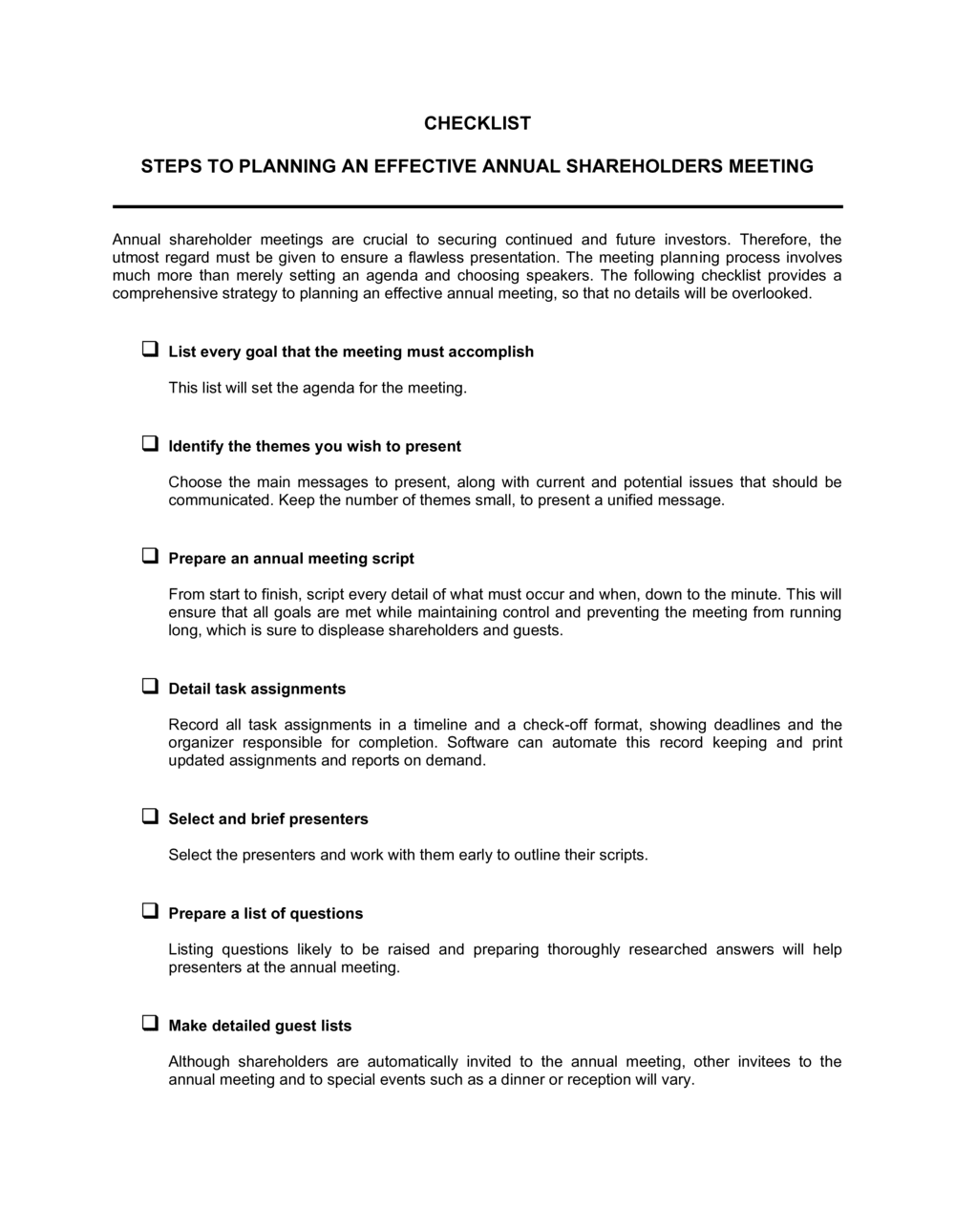
Checklist Steps to Planning an Annual Meeting

Free download • Use as a template • Print or share

3 pages20–25 min to useDifficulty: Standard
Learn more ↓
FreeChecklist Steps to Planning an Annual Meeting Template

At a glance

What it is
A Checklist Steps To Planning An Annual Meeting is a structured Word document that breaks the entire meeting planning process into sequential, trackable action items — from setting the date and booking a venue to distributing notices and capturing minutes. This free Word download gives you a ready-to-use checklist you can edit online and export as PDF for distribution to your planning team.
When you need it
Use it as soon as you set the target date for your annual meeting — typically 60 to 90 days out — so every task is assigned and accounted for before details slip through the cracks.
What's inside
Pre-meeting logistics, notice and agenda preparation, attendee and quorum tracking, materials assembly, day-of coordination tasks, and post-meeting follow-up actions including minutes distribution and action-item assignments.

What is a Checklist Steps To Planning An Annual Meeting?

A Checklist Steps To Planning An Annual Meeting is a structured operational form that breaks the full meeting planning process into sequential, assignable tasks — covering every phase from booking a venue and sending statutory notice to confirming quorum, coordinating day-of logistics, and distributing approved minutes after the meeting closes. Unlike a simple agenda, which governs the order of business on the day itself, this checklist spans the entire 60 to 90 day window surrounding the event, giving coordinators a single document to track progress, assign owners, and verify that every governance and logistical requirement is met before the meeting is called to order.

Why You Need This Document

Annual meetings carry real compliance stakes: notice sent a day too late, a quorum count that missed submitted proxies, or minutes that were never formally approved can all expose an organization to governance challenges — or force a costly re-run of the entire meeting. Without a structured checklist, critical tasks fall through the cracks when responsibility is split across an executive assistant, a corporate secretary, and an office manager who are all working from memory or a shared email thread. This template gives every stakeholder a single source of truth, with named owners and hard deadlines for each step, so nothing is discovered missing the morning of the meeting.

Which variant fits your situation?

If your situation is…Use this template
Planning a formal shareholder or member annual general meetingAnnual General Meeting Minutes
Capturing decisions and action items during the meeting itselfMeeting Minutes Template
Structuring the order of business for the dayAnnual Meeting Agenda
Tracking attendee sign-in and proxy submissionsMeeting Sign-In Sheet
Assigning and following up on action items after the meetingAction Items Log
Coordinating a board retreat rather than a formal annual meetingBoard Meeting Agenda

Common mistakes to avoid

❌ Sending notice too late

Why it matters: Meeting decisions made without compliant notice can be challenged or invalidated, exposing the organization to governance liability.

Fix: Calculate the notice deadline from your bylaws the day you set the meeting date and enter it in the checklist as the first hard deadline.

❌ No single owner per task

Why it matters: Shared responsibility for checklist items — 'the team will handle it' — consistently results in dropped tasks discovered at the last minute.

Fix: Assign one named individual to each checklist item before distributing the document. Follow up with owners weekly in the 30 days before the meeting.

❌ Skipping prior-year minutes from the materials package

Why it matters: Most bylaws and governance standards require formal adoption of the prior meeting's minutes as the first order of business — distributing them in advance is required for informed adoption.

Fix: Add 'attach approved prior-year minutes' as a required item in the materials assembly section of the checklist.

❌ Delaying minutes distribution beyond two weeks

Why it matters: Memories of specific votes, wording, and discussion points fade quickly — delayed minutes drafts generate more corrections and disputes, slowing formal approval.

Fix: Set a hard deadline of five business days for the minutes draft in the post-meeting section of the checklist, with a review and distribution target of ten business days.

The 10 key fields, explained

Meeting date, time, and location

Notice distribution checklist

Agenda preparation status

Materials and reports assembly

Quorum and proxy tracking

Venue and AV logistics

Day-of coordination tasks

Minutes preparation and approval

Action items log

Post-meeting distribution checklist

How to fill it out

  1. 1

    Set the meeting date and confirm the venue

    Enter the confirmed date, time, and location at the top of the checklist. Verify that the date satisfies any bylaw-mandated timing requirements — many require the annual meeting within 90 to 180 days of fiscal year-end.

    💡 Book the venue and virtual platform simultaneously so neither is confirmed without the other — hybrid meetings frequently run into last-minute platform conflicts.

  2. 2

    Calculate and record the notice deadline

    Check your bylaws for the minimum notice period, count back from the meeting date, and enter the notice send-by date. Record the delivery method required — email, mail, or both.

    💡 Add a two-day buffer before the minimum notice deadline to allow for postal delays or email bounces.

  3. 3

    Assign owners to each checklist section

    Enter a named individual next to every major task — agenda preparation, materials assembly, AV logistics, and minutes drafting. A checklist without owners is just a wish list.

    💡 Limit ownership of each task to one person. A backup can be noted separately, but a single primary owner is accountable.

  4. 4

    Track quorum and proxy submissions

    Enter the total eligible voter count and quorum threshold. As RSVPs and proxies arrive, update the running tally so you can confirm quorum before meeting day.

    💡 If you are tracking proxies, note the proxy deadline in the checklist — proxies received after the deadline may not be counted under your bylaws.

  5. 5

    Confirm AV and day-of logistics 24 hours out

    Run through the day-of section the afternoon before the meeting: confirm room access time, test AV and dial-in links, and verify that printed materials are ready.

    💡 Send a brief reminder email to all attendees the day before with the meeting link, parking details, and the agenda attached.

  6. 6

    Complete the action items log immediately after the meeting

    Before the meeting room clears, capture every action item with a named owner and a specific due date. Do not leave this to memory or rely solely on the minutes draft.

    💡 Distribute the action items log within 24 hours of the meeting — immediacy keeps momentum and gives owners time to plan before the first due date arrives.

Frequently asked questions

What is an annual meeting planning checklist?

An annual meeting planning checklist is a structured document that breaks the entire process of organizing an annual meeting into sequential, assignable tasks — from confirming the date and sending statutory notice to collecting proxies, coordinating logistics, and distributing approved minutes afterward. It ensures nothing is missed across what is typically a 60 to 90 day planning window.

Who is responsible for planning an annual meeting?

The corporate secretary or executive assistant typically owns the planning process, with the board chair or CEO responsible for the agenda and presiding over the meeting itself. For small businesses and nonprofits without dedicated staff, the business owner or executive director usually manages the checklist directly. Assigning each checklist task to a named individual is more important than who holds the overall role.

How far in advance should you start planning an annual meeting?

Start at least 60 days out for a standard corporate annual meeting, and 90 days out for larger or hybrid meetings with complex AV or travel requirements. The notice period alone — typically 10 to 30 days under most bylaws — requires you to have the date, location, and agenda confirmed well before the minimum deadline.

What documents need to be prepared before an annual meeting?

Standard pre-meeting documents include the notice of meeting, the agenda, prior-year approved minutes, financial statements, officer or director reports, any proposals or resolutions to be voted on, and proxy forms if applicable. The checklist should track each document's preparation status and the date it was distributed to attendees.

What is a quorum and why does it matter for annual meetings?

A quorum is the minimum number or percentage of eligible voting members who must be present or represented by proxy for the meeting's votes to be valid. If quorum is not reached, the meeting cannot conduct formal business and must be adjourned. Your checklist should track RSVPs and proxies in real time so you can confirm quorum before the meeting is called to order.

How soon after the annual meeting should minutes be distributed?

Draft minutes should be completed within five business days of the meeting while details are fresh. Reviewed and approved minutes are typically distributed within ten to fifteen business days. Many governance best practices require formal adoption of the previous year's minutes at the following annual meeting, so timely distribution and approval matter for continuity.

Can I use this checklist for a virtual or hybrid annual meeting?

Yes. The checklist covers both in-person and virtual logistics. For virtual or hybrid meetings, add your platform link and dial-in details to the venue section, include a technology test step 24 hours before the meeting, and note any bylaw provisions that specifically authorize remote participation and electronic voting in the notice section.

Does an annual meeting require a formal agenda?

In most cases, yes. Corporate bylaws and statutory requirements for annual general meetings typically mandate that an agenda covering the meeting's order of business be distributed with or as part of the notice. Even where not legally required, a distributed agenda allows attendees to prepare questions, submit proxies on specific items, and engage meaningfully in the meeting.

How this compares to alternatives

vs Annual Meeting Agenda

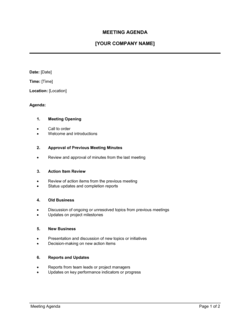
An annual meeting agenda lists the order of business for the meeting day itself. The planning checklist covers the entire 60 to 90 day process leading up to and following the meeting. Use the agenda inside the meeting room and the checklist to manage every task before and after it.

vs Meeting Minutes Template

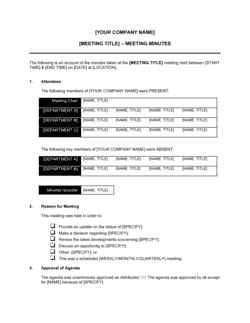
Meeting minutes are the official record of what was decided and by whom during the meeting. The planning checklist is a pre- and post-meeting coordination tool. Both are needed: the checklist ensures the meeting happens correctly; the minutes document what occurred.

vs Annual General Meeting Minutes

Annual general meeting minutes are the formal record of a specific AGM's proceedings, including resolutions and votes. The planning checklist is the operational tool that ensures all statutory and logistical requirements are met before those minutes can be validly created. One precedes the other.

vs Board Meeting Agenda

A board meeting agenda structures a regular board session and is typically prepared a few days in advance. The annual meeting planning checklist manages a much larger and more complex event with statutory notice requirements, quorum tracking, and post-meeting distribution obligations that span weeks.

Industry-specific considerations

Corporate / Legal

Compliance with state corporate statutes on notice periods, quorum thresholds, and director election procedures makes a structured checklist essential for avoiding governance challenges.

Nonprofit Organizations

Annual general meetings required by bylaws and grant funders involve member voting on board elections, budget approval, and program reports — each with its own notice and documentation requirement.

Real Estate / HOA

Homeowner association annual meetings carry statutory notice requirements, proxy rules, and quorum minimums set by state HOA law — missing any triggers invalid elections that must be re-run.

Professional Services

Partnership and professional corporation annual meetings address profit distributions, partner admissions, and strategic direction, requiring careful coordination of partner schedules and financial reporting.

Template vs pro — what fits your needs?

PathBest forCostTime
Use the templateSmall businesses, nonprofits, and HOAs planning a standard annual meeting with an internal coordinatorFree30 minutes to set up; ongoing task tracking over 60–90 days
Template + professional reviewOrganizations with complex bylaws, large membership, or statutory compliance requirements needing a governance advisor to confirm the checklist covers all legal obligations$150–$500 (corporate secretary or governance consultant review)1–2 days
Custom draftedPublicly traded companies or regulated entities where annual meeting compliance involves securities law, shareholder disclosure rules, or SEC filing requirements$1,000–$5,000+ (corporate counsel)1–3 weeks

Glossary

Annual Meeting
A yearly gathering of shareholders, members, or board directors required by corporate bylaws or statute to conduct formal business such as electing directors and approving financials.
Notice Period
The minimum number of days before a meeting that written notice must be sent to eligible attendees — typically 10 to 60 days depending on jurisdiction and bylaws.
Quorum
The minimum number or percentage of eligible voting members who must be present or represented by proxy for the meeting's decisions to be legally valid.
Proxy
Written authorization allowing one person to vote on behalf of another who cannot attend the meeting in person.
Agenda
The ordered list of topics and business items to be addressed during the meeting, distributed to attendees in advance.
Meeting Minutes
The official written record of motions made, votes taken, and decisions reached during the meeting.
Resolution
A formal decision adopted by vote during the meeting, recorded in the minutes and binding on the organization.
Action Item
A specific task assigned to a named individual with a due date, arising from a decision or discussion during the meeting.
Sign-In Sheet
A document collected at the meeting entrance recording the names and signatures of attendees, used to verify quorum.
Post-Meeting Report
A summary distributed to stakeholders after the meeting covering key decisions, resolutions passed, and action items with owners and deadlines.

Part of your Business Operating System

This document is one of 3,000+ business & legal templates included in Business in a Box.

  • Fill-in-the-blanks — ready in minutes
  • 100% customizable Word document
  • Compatible with all office suites
  • Export to PDF and share electronically

Create your document in 3 simple steps.

From template to signed document — all inside one Business Operating System.
1
Download or open template

Access over 3,000+ business and legal templates for any business task, project or initiative.

2
Edit and fill in the blanks with AI

Customize your ready-made business document template and save it in the cloud.

3
Save, Share, Send, Sign

Share your files and folders with your team. Create a space of seamless collaboration.

Save time, save money, and create top-quality documents.

★★★★★

"Fantastic value! I'm not sure how I'd do without it. It's worth its weight in gold and paid back for itself many times."

Managing Director · Mall Farm
Robert Whalley
Managing Director, Mall Farm Proprietary Limited
★★★★★

"I have been using Business in a Box for years. It has been the most useful source of templates I have encountered. I recommend it to anyone."

Business Owner · 4+ years
Dr Michael John Freestone
Business Owner
★★★★★

"It has been a life saver so many times I have lost count. Business in a Box has saved me so much time and as you know, time is money."

Owner · Upstate Web
David G. Moore Jr.
Owner, Upstate Web

Run your business with a system — not scattered tools

Stop downloading documents. Start operating with clarity. Business in a Box gives you the Business Operating System used by over 250,000 companies worldwide to structure, run, and grow their business.

Free Forever Plan · No credit card required