- Inspiring Leader
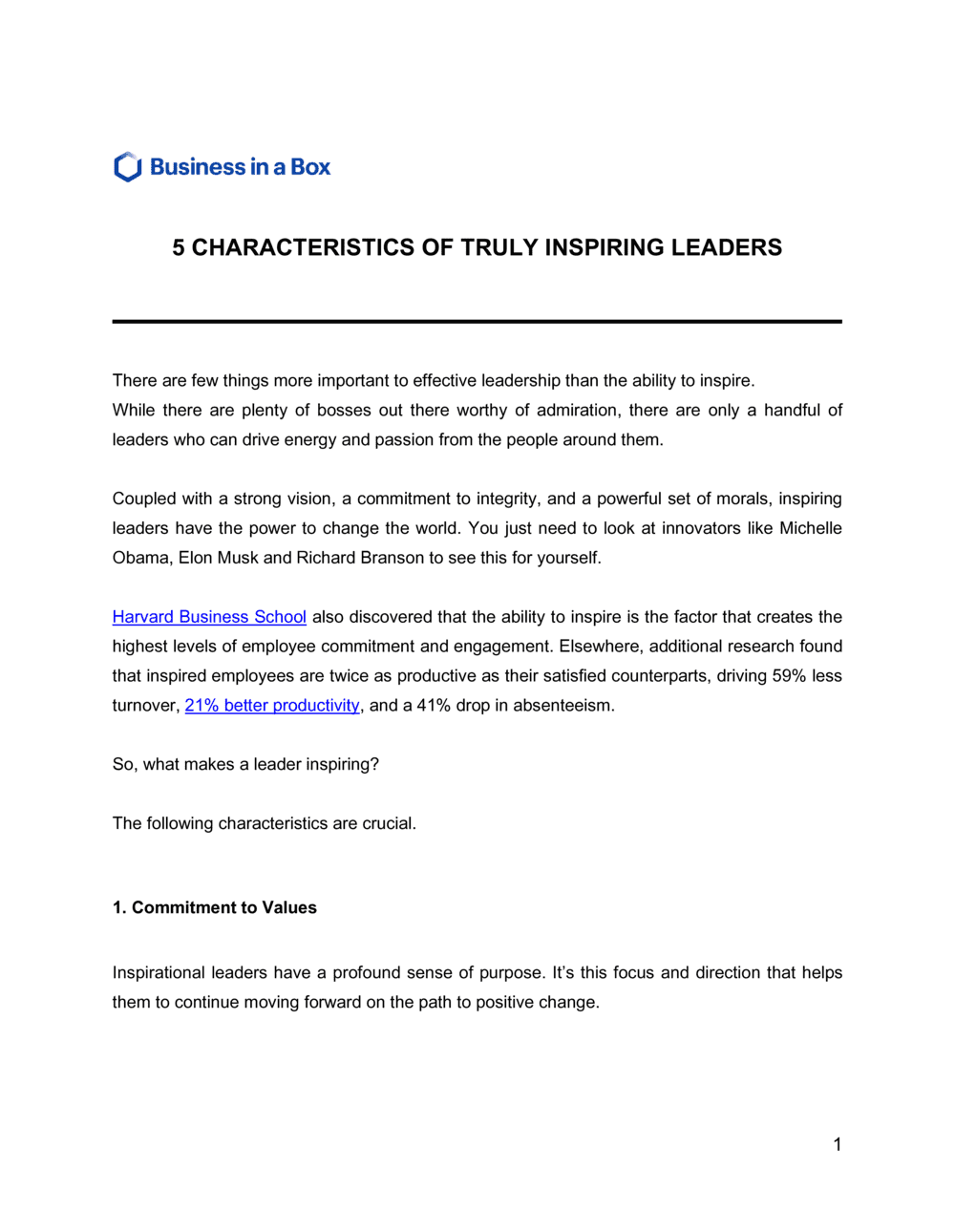
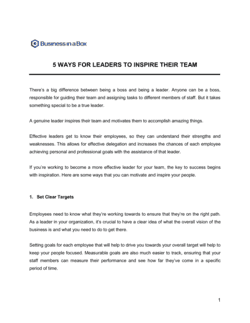
- A manager or executive who motivates others to exceed baseline expectations by connecting work to meaning, modeling desired behavior, and building genuine trust.
- Psychological Safety
- A team environment in which members feel confident they can speak up, disagree, or admit mistakes without fear of punishment or humiliation.
- Growth Mindset
- The belief, defined by Carol Dweck, that abilities can be developed through effort and learning — contrasted with a fixed mindset that treats talent as innate and static.
- Authentic Communication
- Leadership communication that is honest, consistent, and transparent — aligning what a leader says publicly with what they do and believe privately.
- Vision-Setting
- The leadership practice of defining a clear, compelling picture of a desired future state and connecting daily work to that larger purpose.
- Accountability
- In a leadership context, taking personal ownership of outcomes — both successes and failures — rather than deflecting responsibility to circumstances or team members.
- Behavioral Indicator
- A specific, observable action or habit that signals the presence or absence of a given leadership characteristic — used to make abstract traits measurable.
- Leadership Competency
- A cluster of related knowledge, skills, and behaviors that defines effective performance in a leadership role within a specific organizational context.
- Empathy
- The capacity to understand and share the feelings and perspectives of others — in a leadership context, used to make decisions that account for team members' lived experiences.
- Self-Assessment
- A structured process by which an individual evaluates their own performance, skills, or behaviors against a defined standard or rubric.