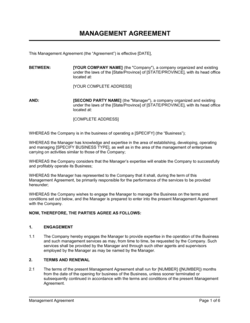
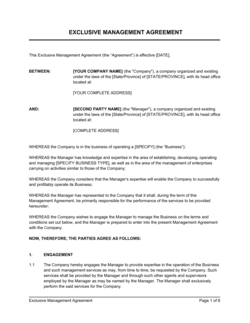
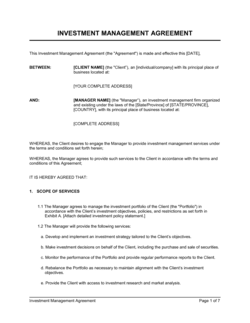
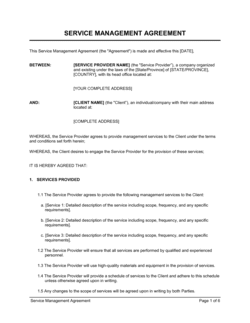
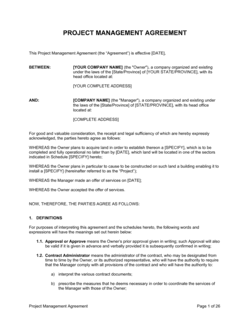
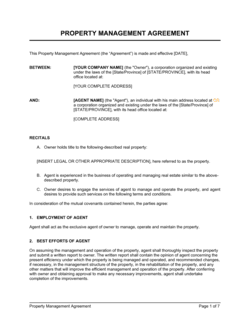
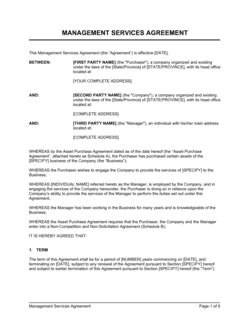
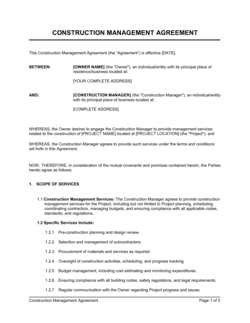
Branch Management Agreement (to Establish & Manage) Template

Free Word download • Edit online • Save & share with Drive • Export to PDF

4 pages25–35 min to fillDifficulty: ComplexSignature requiredLegal review recommended
Learn more ↓
FreeBranch Management Agreement (to Establish & Manage) Template

At a glance

What it is
A Branch Management Agreement is a legally binding contract between a parent company and the individual or entity designated to establish and manage a branch office on its behalf. This free Word download defines the branch manager's authority, operational responsibilities, financial controls, reporting obligations, and the conditions under which the arrangement can be terminated — all in a single editable document you can export as PDF and execute with countersignatures.
When you need it
Use it when opening a new branch office, appointing a branch manager with defined operational authority, or formalizing an existing arrangement where a manager runs a location with some degree of financial and operational autonomy. It is particularly important when the branch will enter contracts, hire staff, or hold assets on behalf of the parent company.
What's inside
The agreement covers the establishment of the branch, the manager's scope of authority and daily responsibilities, financial reporting and budget controls, staffing powers, intellectual property and confidentiality obligations, liability and indemnification provisions, and termination procedures including handover requirements.

What is a Branch Management Agreement?

A Branch Management Agreement is a legally binding contract between a parent company and the individual or entity it appoints to establish and operate a branch office on its behalf. Unlike a general employment contract, it specifically governs the operational and financial parameters of the branch relationship — defining the manager's scope of authority, spending and hiring limits, financial reporting obligations, IP and brand usage rights, confidentiality duties, and the conditions under which the arrangement ends and how operations transfer back to the parent. Because a branch is not a separate legal entity, the parent company is directly liable for everything the manager does within the scope of the agreement — making precise, enforceable drafting essential.

Why You Need This Document

Without a written branch management agreement, the scope of the manager's authority is legally undefined — and in most jurisdictions, a branch manager acting with apparent authority can bind the parent company to contracts, leases, and financial commitments of any size. The cost of that ambiguity is concrete: unauthorized hiring decisions, overspent budgets, misused trademarks, and disputed records on exit. When a manager departs without a handover clause in place, the parent company can find itself locked out of branch accounts, unable to access client files, and scrambling to reconstruct months of financial data. A properly executed branch management agreement prevents all of these scenarios by establishing clear authority limits before operations begin — protecting the parent company's assets, brand, and financial exposure from day one.

Which variant fits your situation?

If your situation is…Use this template
Appointing a branch manager as an employee of the parent companyBranch Management Agreement (Employee Manager)
Engaging an independent operator to run the branch on a contracted basisIndependent Contractor Agreement
Granting a third party the right to operate under your brand in a territoryFranchise Agreement
Opening a branch in a foreign country requiring local representationAgency Agreement (Foreign Representative)
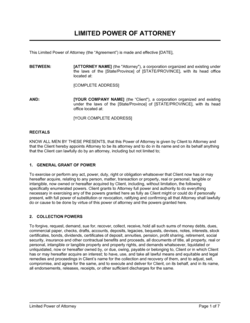
Delegating authority to a manager without establishing a separate branch locationLimited Power of Attorney
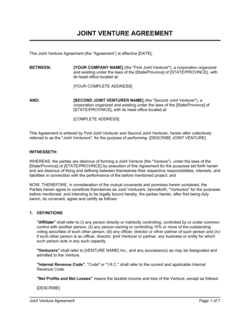
Creating a joint venture to operate a shared branch locationJoint Venture Agreement
Establishing a management services arrangement between two affiliated entitiesManagement Services Agreement

Common mistakes to avoid

❌ Undefined or missing spending authority limits

Why it matters: Without a defined threshold, the branch manager may legally bind the parent company to contracts and liabilities of any size, creating financial exposure the parent cannot easily unwind.

Fix: Set a specific dollar limit in the clause and attach a delegation of authority schedule listing categories that always require escalation, regardless of amount.

❌ No handover clause on termination

Why it matters: A branch manager who exits without a contractual handover obligation can withhold records, client files, and access credentials, leaving the parent company unable to operate the branch for days or weeks.

Fix: Include a detailed handover clause with a specific timeline (e.g., five business days) and attach a handover checklist as a schedule itemizing every asset and record to be returned.

❌ Ambiguous employment status for branch staff

Why it matters: If the agreement is silent on who employs branch staff, a dispute over payroll taxes, benefits liability, or wrongful dismissal may result in both the parent and manager being named as employers — with potentially overlapping liability.

Fix: State explicitly in the staffing clause that all branch employees are employed by the parent company, and confirm the parent runs payroll and maintains all statutory employer obligations.

❌ Choosing the wrong governing jurisdiction

Why it matters: Selecting the parent company's home-state law when the branch operates in a different jurisdiction may be overridden by local mandatory employment, labor, or commercial law — making the governing-law clause partially or wholly unenforceable.

Fix: Identify which jurisdiction's mandatory rules apply to the branch's location and either adopt that law as the governing law or include a clause acknowledging local mandatory provisions supersede the agreement where required.

❌ Auto-renewal with insufficient notice window

Why it matters: A 15- or 30-day non-renewal notice window gives the parent company almost no time to recruit a replacement manager before the next term locks in, particularly in markets where notice periods for senior managers run 60 to 90 days.

Fix: Set the auto-renewal notice window to at least 90 days before the end of the current term, and calendar the deadline internally at the time of signing.

❌ No audit rights in the financial reporting clause

Why it matters: Without an explicit right to audit branch accounts, the parent company has no contractual basis to demand access to the branch's books — and a reluctant manager can delay or refuse inspection until a dispute escalates.

Fix: Include a clause granting the parent the right to audit branch financial records at any time on reasonable notice (three to five business days is typical) at the parent's cost unless the audit reveals a material discrepancy.

The 10 key clauses, explained

Parties, Recitals, and Branch Establishment

In plain language: Identifies the parent company and branch manager as contracting parties, states the purpose of the agreement, and formally establishes the branch office including its location and operating name.

Sample language
This Branch Management Agreement is entered into as of [DATE] between [PARENT COMPANY LEGAL NAME], a [STATE/COUNTRY] [ENTITY TYPE] ('Company'), and [BRANCH MANAGER NAME / ENTITY] ('Manager'). The Company hereby establishes a branch office located at [BRANCH ADDRESS] to operate under the name [BRANCH NAME] ('Branch').

Common mistake: Using the branch's trade name instead of the parent company's registered legal entity name. Enforcement of indemnification and IP clauses requires the correct legal party to be named.

Scope of Authority and Responsibilities

In plain language: Defines exactly what the branch manager is and is not authorized to do — including entering contracts, hiring staff, opening accounts, and committing the parent company's funds.

Sample language
Manager is authorized to: (a) enter into contracts up to $[AMOUNT] on behalf of the Company; (b) hire and terminate Branch employees within the approved headcount; (c) manage day-to-day operations of the Branch. Manager may not: (a) incur liabilities exceeding $[THRESHOLD] without prior written approval; (b) pledge Company assets as security.

Common mistake: Leaving the spending threshold blank or setting it too high. An undefined or excessive spending authority exposes the parent company to unauthorized financial commitments the branch manager can legally bind it to.

Financial Controls and Reporting

In plain language: Sets out the branch's budget approval process, the manager's obligations to maintain accurate accounts, and the schedule and format of financial reports to the parent company.

Sample language
Manager shall prepare and submit monthly profit and loss statements and cash flow reports to the Company no later than the [X]th business day of the following month. All expenditures exceeding $[AMOUNT] require prior written approval. The Company shall have the right to audit Branch accounts at any time on [X] business days' notice.

Common mistake: Specifying reporting frequency without specifying the format or system. Managers submit whatever they find convenient, making consolidated reporting at the parent level inconsistent and time-consuming.

Staffing and Human Resources

In plain language: Defines the branch manager's authority to hire, manage, discipline, and terminate branch employees, including any headcount or salary limits that require parent approval.

Sample language
Manager may hire up to [NUMBER] full-time employees and [NUMBER] part-time employees within the approved Branch budget. Any hire with annual compensation exceeding $[AMOUNT] requires prior written approval from the Company. All Branch employees are employees of the Company and subject to Company HR policies.

Common mistake: Failing to clarify that branch employees are employed by the parent company, not the manager. This creates ambiguity over who bears payroll tax, benefits liability, and wrongful dismissal exposure.

Intellectual Property and Brand Use

In plain language: Grants the branch manager a limited, non-transferable license to use the parent company's trademarks, branding, and proprietary materials solely for operating the branch, and restricts all other uses.

Sample language
The Company grants Manager a limited, non-exclusive, revocable license to use the Company's trademarks, logos, and brand materials solely for operating the Branch during the term of this Agreement. All goodwill generated through such use inures to the Company. Manager shall not modify or sublicense the Company's IP without prior written consent.

Common mistake: No IP license clause at all, or one that does not restrict sublicensing. Without it, the branch manager may permit subcontractors or partners to use the parent's brand without authorization.

Confidentiality and Non-Disclosure

In plain language: Prohibits the branch manager from disclosing or misusing the parent company's confidential information — including financial data, customer lists, pricing, and operational processes — during and after the agreement.

Sample language
Manager shall hold all Confidential Information of the Company in strict confidence and shall not disclose it to any third party without prior written consent. 'Confidential Information' means any non-public information relating to the Company's business, finances, customers, technology, or operations. This obligation survives termination for [X] years.

Common mistake: Not specifying the post-termination confidentiality period. Without a defined survival period, courts in some jurisdictions treat the obligation as expiring with the agreement.

Liability, Indemnification, and Insurance

In plain language: Allocates risk between the parent and the branch manager, specifying who is liable for which losses and requiring the manager to maintain appropriate insurance coverage.

Sample language
Manager shall indemnify and hold harmless the Company from any claims, losses, or liabilities arising from Manager's gross negligence, fraud, or willful misconduct. Manager shall maintain commercial general liability insurance of not less than $[AMOUNT] per occurrence and name the Company as an additional insured.

Common mistake: Requiring insurance without specifying the coverage minimum or requiring evidence of coverage. The parent company has no way to verify compliance and may be exposed to uninsured losses.

Term and Renewal

In plain language: States the initial duration of the agreement and whether it renews automatically or requires affirmative action, including advance notice of non-renewal.

Sample language
This Agreement commences on [START DATE] and continues for an initial term of [X] years ('Initial Term'). Unless either party provides written notice of non-renewal at least [X] days before the end of the Initial Term, the Agreement shall automatically renew for successive [X]-year periods.

Common mistake: Auto-renewal clauses with no notice period or a notice period shorter than the time needed to find a replacement manager. The parent company can be locked in for another full term before it realizes the renewal has triggered.

Termination, Notice, and Handover

In plain language: Defines the grounds and process for ending the agreement — for cause immediately, without cause on notice — and the manager's obligations to hand over assets, records, and operations upon exit.

Sample language
Either party may terminate this Agreement without cause on [X] days' written notice. The Company may terminate immediately for Cause. Upon termination, Manager shall: (a) deliver all Branch records, assets, and keys to the Company within [X] business days; (b) cooperate fully with the transition; (c) execute any documents required to transfer Branch authority.

Common mistake: No handover clause at all. Without it, a departing manager has no contractual obligation to facilitate an orderly transition, and the parent company may face weeks of operational disruption and records disputes.

Governing Law and Dispute Resolution

In plain language: Specifies which jurisdiction's law governs the agreement and how disputes are resolved — arbitration, mediation, or courts — and where proceedings must take place.

Sample language
This Agreement is governed by the laws of [STATE / PROVINCE / COUNTRY]. Any dispute arising out of or relating to this Agreement shall be resolved by binding arbitration administered by [AAA / JAMS / applicable institution] in [CITY / JURISDICTION], except that either party may seek injunctive relief in any court of competent jurisdiction.

Common mistake: Choosing the parent company's home jurisdiction when the branch operates in a different state or country. Some jurisdictions impose mandatory local law regardless of the governing-law clause, creating a conflict that voids the chosen forum.

How to fill it out

  1. 1

    Identify the parties using full legal entity names

    Enter the parent company's registered legal name, jurisdiction of incorporation, and principal office address. Enter the branch manager's full legal name or, if an entity, its registered name and jurisdiction.

    💡 Cross-check the parent company name against your corporate registry certificate — a mismatch between the agreement and your registration documents can complicate enforcement.

  2. 2

    Define the branch location and operating name

    State the branch's full street address and the trading or operating name it will use. If the location is not yet finalized, describe it by city and region and amend by schedule once the lease is signed.

    💡 Attach a copy of the branch's lease or premises agreement as Schedule A to anchor the location formally.

  3. 3

    Set the scope of authority with specific spending and hiring limits

    Enter the exact dollar threshold below which the manager may commit funds without approval, the headcount ceiling, and the maximum individual salary the manager may offer without escalating. List any categories of decision that always require parent approval regardless of dollar amount.

    💡 Err on the side of tighter limits for the first year — you can amend upward once trust and controls are established, but unwinding unauthorized commitments is expensive.

  4. 4

    Specify financial reporting format and cadence

    State the reporting period (monthly is standard), the specific reports required (P&L, cash flow, receivables aging), the submission deadline, and the accounting system the branch must use.

    💡 Name the accounting software (e.g., QuickBooks, Xero) and file format explicitly — this prevents the manager from submitting handwritten summaries or incompatible spreadsheets.

  5. 5

    Clarify the employment relationship for branch staff

    State explicitly whether branch employees are employed by the parent company or the branch manager, which entity runs payroll, and whether the manager must follow the parent's HR policies and employee handbook.

    💡 In most multi-location structures, the parent company should be the employer of record to maintain consistent benefits, insurance, and termination procedures.

  6. 6

    Complete the IP license and confidentiality terms

    List the specific trademarks, brand assets, and proprietary materials the manager is licensed to use. Set the post-termination confidentiality period — two to five years is typical for a branch management context.

    💡 Attach a brand usage guide as a schedule rather than describing every asset in the body — it keeps the agreement concise and lets you update the guide without amending the contract.

  7. 7

    Set the term, notice periods, and handover requirements

    Choose an initial term (one to three years is common), set the auto-renewal notice window (60 to 90 days before expiry), and list the specific handover deliverables — keys, records, login credentials, client files — the manager must return on exit.

    💡 Include a checklist of handover items as a schedule so there is no ambiguity about what 'full handover' means on termination day.

  8. 8

    Execute before the branch opens or the manager takes any action

    Both parties must sign the agreement — and the manager must not take any action on behalf of the branch — before execution. Post-commencement signatures may raise fresh-consideration issues in common-law jurisdictions for key restrictive obligations.

    💡 Use a timestamped eSign platform and store the fully-executed copy in a secure document management system accessible to both parties.

Frequently asked questions

What is a branch management agreement?

A branch management agreement is a legally binding contract between a parent company and the individual or entity appointed to establish and run a branch office on its behalf. It defines the manager's scope of authority, financial controls, reporting obligations, staffing powers, IP rights, and termination procedures. Unlike a standalone employment contract, it specifically addresses the operational and financial governance of a branch location as an extension of the parent business.

When do I need a branch management agreement?

You need one whenever you are opening a new branch office, appointing a manager with authority to enter contracts, hire staff, or commit funds on behalf of the parent company, or formalizing an existing informal arrangement. It is especially important when the branch will operate with day-to-day autonomy — without one, the scope of the manager's authority is undefined and the parent company may be bound by commitments it never approved.

Is a branch management agreement the same as an employment contract?

No. An employment contract governs the terms of the individual's work — compensation, benefits, non-compete, and IP. A branch management agreement governs the operational and financial parameters of running the branch — spending authority, reporting, staffing limits, and handover obligations. In practice, a branch manager often has both: an employment contract setting personal terms and a branch management agreement setting operational authority. The two documents should be consistent and cross-referenced.

What authority can a branch management agreement grant a manager?

The agreement can authorize the manager to enter contracts up to a defined spending limit, hire and terminate branch employees within an approved headcount, manage day-to-day operations, open and operate branch bank accounts, and use the parent company's brand and IP for branch purposes. Any authority not expressly granted is typically reserved for the parent company, so specificity matters — vague language defaults to narrower authority in most jurisdictions.

Does a branch management agreement need to be notarized?

Notarization is not generally required for a branch management agreement to be enforceable in most common-law jurisdictions, including the US, Canada, and the UK. However, if the agreement grants the manager a power of attorney to sign deeds, register property, or act on behalf of the company in certain formal capacities, the power of attorney component may require notarization or authentication depending on the jurisdiction. Consult a local attorney if the manager will be executing real estate or government-regulated transactions.

What happens if there is no branch management agreement in place?

Without a written agreement, the branch manager's authority is undefined, and the parent company may be bound by any commitment the manager makes — regardless of size or type. There is no contractual basis to require financial reporting, restrict use of IP, or enforce a handover on departure. Disputes about what the manager was authorized to do become credibility contests rather than contract-interpretation questions, which significantly increases litigation cost and risk.

How is a branch different from a subsidiary?

A branch is not a separate legal entity — it operates under the parent company's legal identity, meaning the parent is directly liable for all branch obligations. A subsidiary is a separate legal entity that the parent owns (fully or partially) but that has its own legal personality, limiting the parent's liability to its investment. Branch management agreements are used for branches; inter-company service agreements or shareholder agreements are typically used to govern relationships with subsidiaries.

Can a branch management agreement restrict the manager from competing after termination?

Yes, but enforceability depends on jurisdiction and the reasonableness of the restriction. In the US, non-competes are enforceable in most states if limited in duration (typically 6–12 months), geographic scope, and breadth of restricted activity — California, Minnesota, and a growing number of states ban them outright. In Canada, the UK, and EU member states, courts apply a reasonableness test and generally require proportionality to the manager's actual competitive knowledge. A legal review of post-termination restrictions is strongly recommended before finalizing the agreement.

What should the financial reporting clause include?

At minimum: the reporting period (monthly is standard), the specific statements required (profit and loss, cash flow, accounts receivable aging), the submission deadline after period end, the accounting system the branch must use, and the parent's right to audit branch records on reasonable notice. Specifying the software and file format avoids inconsistent submissions and makes consolidated reporting at the parent level significantly easier.

Do I need a lawyer to draft a branch management agreement?

For a straightforward domestic branch appointment, a high-quality template is a practical starting point. Legal review is strongly recommended when the branch operates in a regulated industry (financial services, healthcare), when the manager will have authority to execute contracts above a material threshold, when cross-border operations introduce multi-jurisdictional employment or commercial law, or when post-termination restrictions are critical to the business. A one- to two-hour attorney review typically costs $400–$800 and is worth it for any branch with meaningful financial or operational authority.

How this compares to alternatives

vs Management Services Agreement

A management services agreement governs a third-party service provider that manages operations for a fee, typically between two distinct legal entities with arm's-length commercial terms. A branch management agreement governs an internal appointee running a branch that is a legal extension of the parent company — not a separate entity. The branch manager acts as the parent's agent; a management services provider acts as an independent contractor.

vs Franchise Agreement

A franchise agreement grants a franchisee the right to operate an independent business under the franchisor's brand, with the franchisee bearing its own legal and financial liability. A branch management agreement appoints a manager to run a branch that remains fully owned and liable as part of the parent company. Franchise agreements involve a separate legal entity; branch management agreements do not.

vs Power of Attorney

A power of attorney grants an individual the legal authority to act on another party's behalf for specific transactions — signing contracts, registering property, or executing documents. A branch management agreement covers the full operational framework of running a branch, including financial controls, staffing, reporting, and IP. A power of attorney may be attached as a schedule to the branch management agreement to formalize specific signing authority.

vs Employment Contract

An employment contract governs the personal terms of the branch manager's engagement — salary, benefits, non-compete, and IP assignment. A branch management agreement governs the operational authority and accountability framework for running the branch itself. For senior branch managers, both documents are typically executed at the same time and should be cross-referenced to avoid inconsistency on matters like IP ownership and post-termination restrictions.

Industry-specific considerations

Financial Services

Regulatory licensing conditions, FCA or SEC-mandated supervision requirements, and enhanced audit rights are essential additions for branch managers in banking, insurance, or investment advisory contexts.

Retail and Franchise

Brand compliance obligations, approved supplier requirements, standardized operating procedures, and customer data handling are critical for multi-location retailers and franchise-adjacent branch structures.

Professional Services

Client non-solicitation provisions, billing authority limits, professional indemnity insurance requirements, and conflicts-of-interest policies are standard additions for law firms, accounting practices, and consulting branches.

Healthcare and Life Sciences

HIPAA confidentiality obligations, credentialing conditions precedent to branch opening, regulatory inspection cooperation clauses, and controlled-substance handling protocols require industry-specific additions to the base agreement.

Jurisdictional notes

United States

Branch managers acting as agents of the parent company can bind the company to contracts under apparent authority doctrine — making the scope-of-authority clause critical. Non-compete enforceability varies significantly by state; California, Minnesota, and Oklahoma ban most post-appointment restrictions. Regulated industries (banking, insurance, securities) require branch managers to hold specific FINRA, state, or federal licenses before operating.

Canada

If branch employees are employed by the parent company, provincial Employment Standards Acts set mandatory minimum notice, severance, and termination obligations that the agreement cannot contract below. Quebec requires French-language agreements for provincially regulated employers. Non-compete clauses must be reasonable in duration and scope to be enforceable; courts scrutinize them closely and will not blue-pencil an unreasonable clause — they void it entirely.

United Kingdom

Branch managers acting as agents are subject to the Commercial Agents (Council Directive) Regulations 1993 if they are independent agents rather than employees — triggering mandatory compensation or indemnity on termination. Post-termination restrictions require a legitimate business interest and must be no wider than reasonably necessary. GDPR obligations attach to any branch processing personal data of UK or EU residents, requiring data processing addenda and appropriate safeguards.

European Union

The EU Commercial Agents Directive mandates compensation or indemnity for commercial agents on termination regardless of contractual terms — this cannot be waived in advance. GDPR requires branch operations to appoint a data controller and implement documented processing activities. Post-termination non-competes typically require financial compensation to the manager during the restricted period; requirements vary by member state, with Germany, France, and the Netherlands having the most prescriptive rules.

Template vs lawyer — what fits your deal?

PathBest forCostTime
Use the templateDomestic branch appointments in non-regulated industries where the manager's authority is straightforward and spending limits are modestFree30–60 minutes
Template + legal reviewBranches with material spending authority, cross-state operations, senior managers, or regulated industry contexts$400–$8002–5 days
Custom draftedCross-border branch appointments, regulated financial services or healthcare branches, or managers with authority to execute material contracts or hold assets$1,500–$5,000+1–3 weeks

Glossary

Branch Office
A physical or operational location that is an extension of the parent company's business, sharing its legal identity rather than operating as a separate entity.
Branch Manager
The individual or entity appointed by the parent company to establish, operate, and oversee the branch office on its behalf within defined limits.
Scope of Authority
The specific actions, decisions, and transactions the branch manager is authorized to take without requiring prior approval from the parent company.
Spending Limit
A defined monetary threshold above which the branch manager must obtain parent-company approval before committing to an expense or contract.
Indemnification
A contractual obligation by one party to cover the losses, liabilities, or legal costs incurred by the other as a result of specified acts or omissions.
Fiduciary Duty
A legal obligation to act in the best interest of another party — here, the branch manager's duty to act in the parent company's best interests at all times.
Reporting Period
The defined interval — weekly, monthly, or quarterly — at which the branch manager must submit financial and operational reports to the parent company.
Termination for Cause
Ending the agreement immediately due to a specific, documented breach — such as fraud, gross negligence, or material violation of the agreement's terms.
Handover Obligations
The branch manager's duties upon termination to return assets, transfer records, and facilitate an orderly transition of branch operations to the parent company.
Delegation of Authority
A formal record, sometimes separate from the main agreement, listing the specific powers granted to the branch manager, often attached as a schedule.

Part of your Business Operating System

This document is one of 3,000+ business & legal templates included in Business in a Box.

  • Fill-in-the-blanks — ready in minutes
  • 100% customizable Word document
  • Compatible with all office suites
  • Export to PDF and share electronically

Create your document in 3 simple steps.

From template to signed document — all inside one Business Operating System.
1
Download or open template

Access over 3,000+ business and legal templates for any business task, project or initiative.

2
Edit and fill in the blanks with AI

Customize your ready-made business document template and save it in the cloud.

3
Save, Share, Send, Sign

Share your files and folders with your team. Create a space of seamless collaboration.

Save time, save money, and create top-quality documents.

★★★★★

"Fantastic value! I'm not sure how I'd do without it. It's worth its weight in gold and paid back for itself many times."

Managing Director · Mall Farm
Robert Whalley
Managing Director, Mall Farm Proprietary Limited
★★★★★

"I have been using Business in a Box for years. It has been the most useful source of templates I have encountered. I recommend it to anyone."

Business Owner · 4+ years
Dr Michael John Freestone
Business Owner
★★★★★

"It has been a life saver so many times I have lost count. Business in a Box has saved me so much time and as you know, time is money."

Owner · Upstate Web
David G. Moore Jr.
Owner, Upstate Web

Run your business with a system — not scattered tools

Stop downloading documents. Start operating with clarity. Business in a Box gives you the Business Operating System used by over 250,000 companies worldwide to structure, run, and grow their business.

Free Forever Plan · No credit card required