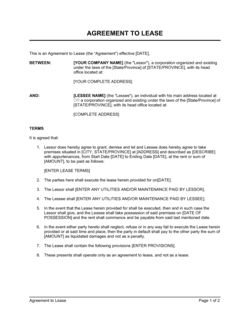
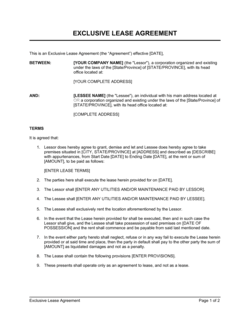
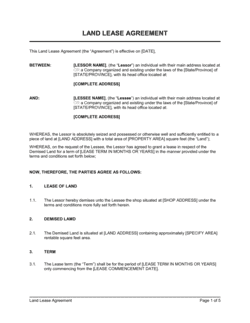
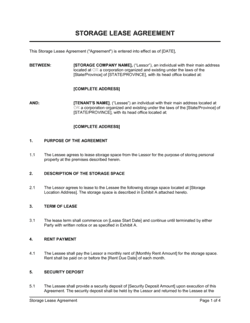
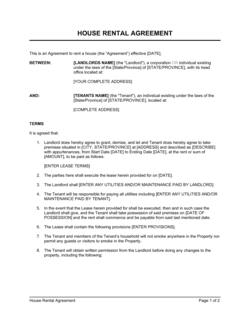
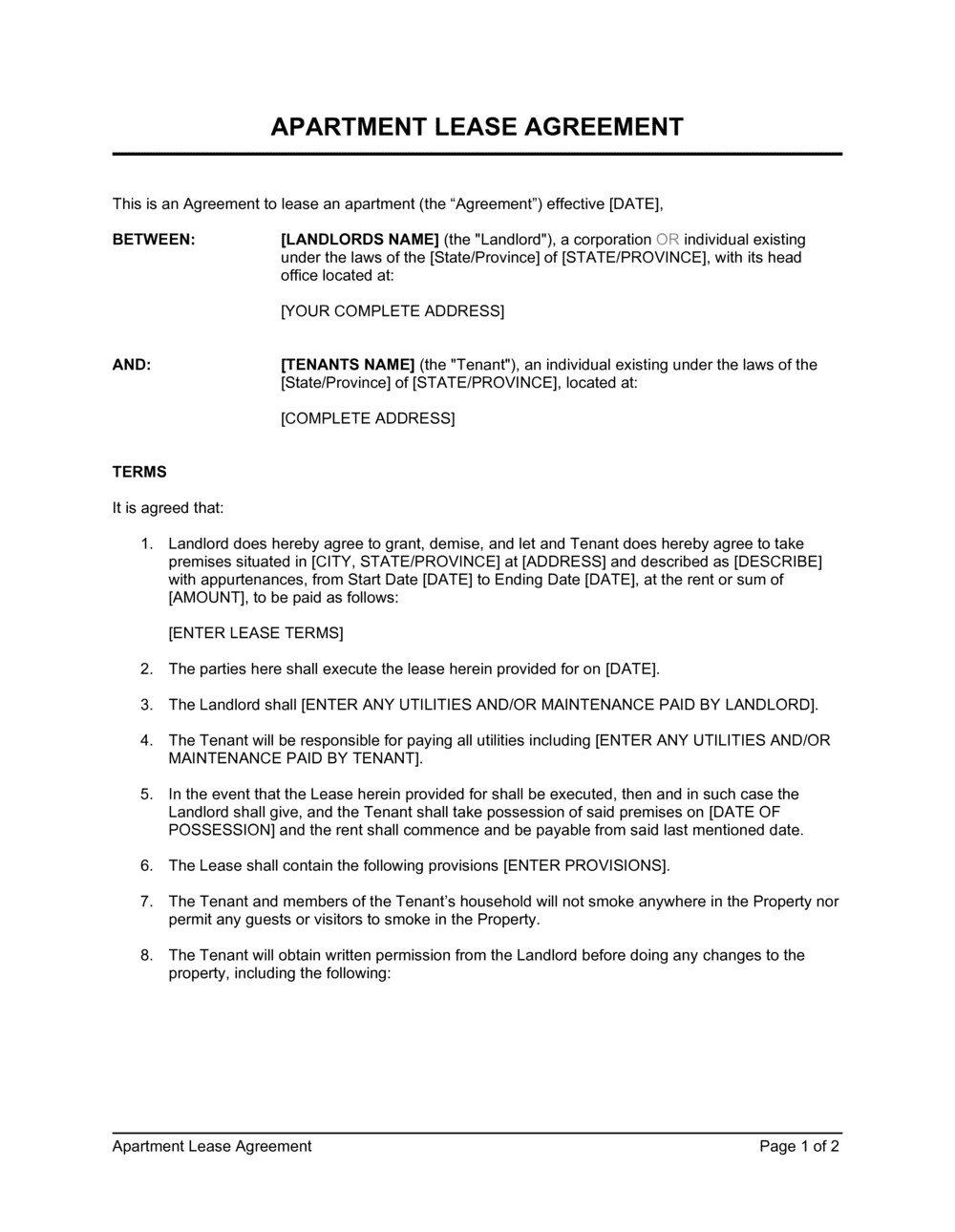
Apartment Lease Agreement Template

Free Word download • Edit online • Save & share with Drive • Export to PDF

2 pages25–30 min to fillDifficulty: StandardSignature requiredLegal review recommended
Learn more ↓
FreeApartment Lease Agreement Template

At a glance

What it is
An Apartment Lease Agreement is a legally binding contract between a landlord and a tenant that sets out the terms governing the rental of a residential apartment unit. This free Word download covers rent amount, payment schedule, security deposit, permitted occupants, maintenance obligations, and termination conditions — everything needed to protect both parties for the duration of the tenancy. Edit it online and export as PDF for signing.
When you need it
Use it any time you rent out or move into an apartment on a fixed-term or month-to-month basis. It should be signed before the tenant takes possession of the unit — typically at lease signing, one to two weeks before the move-in date.
What's inside
The agreement includes identifying information for both parties and the property, lease term and renewal conditions, rent and payment terms, security deposit handling, rules on occupants and pets, maintenance responsibilities, entry notice requirements, and termination and early-exit procedures.

What is an Apartment Lease Agreement?

An Apartment Lease Agreement is a legally binding contract between a landlord and one or more tenants that establishes the full terms and conditions governing the rental of a residential apartment unit. It identifies both parties by legal name, describes the specific unit being rented, sets the lease term, defines the rent amount and payment schedule, and creates enforceable obligations covering security deposits, maintenance, permitted occupants, and the process for ending the tenancy. Unlike an informal rental arrangement, a signed apartment lease gives each party clear legal rights and remedies — protecting the landlord's income and property and protecting the tenant's right to quiet enjoyment of their home.

Why You Need This Document

Renting an apartment without a signed written lease exposes both parties to serious legal and financial risk. Without documented rent terms, a landlord cannot legally enforce a specific payment date or late fee. Without a written security deposit clause, the landlord may lose the right to deduct for damages in a dispute. For tenants, the absence of a written lease means there is no documented record of what was promised — verbal assurances about included utilities, permitted pets, or maintenance responsibilities become unenforceable the moment a dispute arises. Courts across every major jurisdiction apply jurisdiction-specific landlord-tenant law to fill the gaps left by missing or vague lease terms — and those defaults almost always favor the tenant. A properly drafted, jurisdiction-compliant apartment lease agreement, signed before the tenant takes possession, eliminates these gaps, gives both parties a clear framework for resolving disagreements, and is the single most important document in any residential rental relationship.

Which variant fits your situation?

If your situation is…Use this template
Renting a standalone house rather than an apartmentResidential Lease Agreement
Short-term stay of 30 days or fewer, such as vacation rentalShort-Term Rental Agreement
Renting a single room within a shared apartmentRoom Rental Agreement
Month-to-month tenancy with no fixed end dateMonth-to-Month Lease Agreement
Subletting the apartment to a third partySublease Agreement
Commercial unit such as a live-work loft or artist studioCommercial Lease Agreement
Renting furnished accommodation for a corporate employeeCorporate Housing Lease Agreement

Common mistakes to avoid

❌ Skipping the move-in inspection checklist

Why it matters: Without a documented baseline of the unit's condition at move-in, any deduction from the security deposit becomes a word-against-word dispute. Courts consistently rule in the tenant's favor when no baseline documentation exists.

Fix: Complete a signed move-in checklist with the tenant on the day of key handover. Take timestamped photos of every room and any existing damage, and attach copies to the signed lease.

❌ Setting a security deposit above the statutory cap

Why it matters: Most US states and Canadian provinces cap security deposits at one or two months' rent. Collecting above the cap exposes the landlord to statutory penalties — sometimes double or triple the excess amount — and forces a refund regardless of actual damages.

Fix: Look up the deposit cap for the specific state or province before drafting the lease, and confirm it annually, as caps change with legislation.

❌ Omitting all adult occupants from the lease

Why it matters: An adult living in the unit who is not named on the lease has no contractual obligations — they cannot be held liable for rent and cannot be named in a standard eviction action, significantly complicating removal.

Fix: Require every adult who will reside in the unit to sign the lease as a tenant before handing over keys. Run credit and background checks on each one.

❌ No written notice requirement for repairs

Why it matters: Without a clause requiring tenants to report damage in writing, landlords cannot establish the timeline of a problem — critical when disputing who caused damage or whether a habitability issue was reported and ignored.

Fix: Add a clause requiring the tenant to notify the landlord in writing within 48 hours of any damage, malfunction, or habitability issue, and retain all repair-request communications.

❌ Using a generic lease that ignores local landlord-tenant law

Why it matters: Landlord-tenant law is among the most jurisdiction-specific areas of law in North America and Europe. A clause that is enforceable in Texas may be void and penalized in California, Ontario, or England.

Fix: Review the completed template against the applicable Residential Tenancies Act or equivalent statute before execution. For multi-unit portfolios, have a local attorney conduct an annual compliance review.

❌ No entire-agreement clause

Why it matters: Without a merger clause, verbal promises made during lease negotiation — discounted first month's rent, the landlord's agreement to repaint before move-in — can be introduced as binding obligations in a dispute, overriding or supplementing the written lease.

Fix: Include a standard entire-agreement clause stating the written lease supersedes all prior representations and that modifications require a signed written addendum.

The 10 key clauses, explained

Parties, property description, and lease term

In plain language: Identifies the landlord and all tenants by full legal name, describes the unit address and any included parking or storage, and sets the exact start and end dates of the lease.

Sample language
This Apartment Lease Agreement is entered into on [DATE] between [LANDLORD FULL NAME] ('Landlord') and [TENANT FULL NAME(S)] ('Tenant'). Landlord hereby leases to Tenant the apartment located at [UNIT ADDRESS, CITY, STATE/PROVINCE, ZIP/POSTAL CODE], including [PARKING SPACE / STORAGE UNIT, if applicable], for the term commencing [START DATE] and ending [END DATE].

Common mistake: Listing only one tenant when multiple adults will occupy the unit. Every adult occupant should be named as a tenant so that each is jointly and severally liable for rent and can be named in eviction proceedings if necessary.

Rent amount, due date, and accepted payment methods

In plain language: States the monthly rent in figures and words, the day of the month it is due, the grace period if any, accepted payment methods, and where or how rent must be delivered.

Sample language
Tenant agrees to pay monthly rent of $[AMOUNT] ([WRITTEN AMOUNT] DOLLARS), due on the [1st] day of each month. Rent shall be paid by [CHECK / ELECTRONIC TRANSFER / ONLINE PORTAL] to [LANDLORD NAME / PROPERTY MANAGEMENT COMPANY] at [ADDRESS / PORTAL URL]. A grace period of [X] days applies before a late fee is assessed.

Common mistake: Omitting the grace period and late-fee amount. Without both stated in writing, enforcing a late fee is difficult — and several jurisdictions cap or prohibit fees that exceed a statutory maximum.

Late fees and returned payment charges

In plain language: Specifies the dollar amount or percentage charged when rent is paid after the grace period, and the fee for a returned or dishonored payment such as a bounced check.

Sample language
If rent is not received within [X] days of the due date, Tenant shall pay a late fee of $[AMOUNT] or [X]% of monthly rent, whichever is greater. A returned-payment fee of $[AMOUNT] applies to any dishonored check or failed electronic transfer.

Common mistake: Setting a late fee that exceeds the statutory cap for the jurisdiction. Many US states and Canadian provinces limit late fees — a fee above the cap is unenforceable and may expose the landlord to penalties.

Security deposit — amount, conditions, and return timeline

In plain language: States the deposit amount, the account or escrow in which it will be held, the conditions under which deductions may be made, and the deadline by which it must be returned after move-out.

Sample language
Tenant shall pay a security deposit of $[AMOUNT] prior to occupancy. The deposit will be held in [ESCROW ACCOUNT / TRUST ACCOUNT] at [BANK NAME]. Landlord will return the deposit within [X] days of Tenant vacating, less any deductions for unpaid rent or damage beyond normal wear and tear, with an itemized written statement.

Common mistake: Failing to document the unit's condition at move-in with a signed move-in checklist and photographs. Without this baseline, any deduction from the security deposit is nearly impossible to defend in a dispute.

Permitted occupants and guest policy

In plain language: Names who is authorized to live in the unit, distinguishes between occupants and guests, and sets a time limit after which a long-term guest must be added to the lease.

Sample language
The unit shall be occupied only by the Tenant(s) named above and [NAMES OF ADDITIONAL AUTHORIZED OCCUPANTS]. Guests staying longer than [14] consecutive days or [30] cumulative days in any calendar year must receive Landlord's prior written approval and may be required to execute a lease addendum.

Common mistake: No guest-duration limit. An unauthorized long-term occupant is effectively an unlisted tenant — this can void the lease, create insurance problems, and complicate eviction if the tenancy ends badly.

Maintenance and repair responsibilities

In plain language: Divides responsibility for upkeep between landlord and tenant — the landlord maintains structural elements and major systems; the tenant keeps the unit clean and promptly reports problems.

Sample language
Landlord shall maintain the unit in a habitable condition, including functioning heating, plumbing, and electrical systems. Tenant shall keep the unit clean, dispose of waste properly, and notify Landlord in writing within [48] hours of any damage or malfunction. Tenant is responsible for minor repairs up to $[AMOUNT] per incident.

Common mistake: No written repair-request requirement. Without a paper trail, landlords cannot establish that a tenant failed to report damage, and tenants cannot prove the landlord ignored a habitability problem — both positions become he-said-she-said disputes.

Landlord entry and notice requirements

In plain language: Establishes how much advance notice the landlord must give before entering the unit for inspections, repairs, or showings, and specifies what constitutes an emergency exception.

Sample language
Landlord shall provide Tenant with at least [24 / 48] hours' written notice before entering the unit for non-emergency purposes. Entry shall occur during reasonable hours, [8:00 AM – 6:00 PM], unless Tenant consents to a different time. Emergency entry is permitted without notice when there is an immediate risk to life or property.

Common mistake: Using a notice period shorter than the statutory minimum for the jurisdiction. Most US states require 24 hours; some require 48. Entry without adequate notice can be treated as harassment or constructive eviction.

Pet policy

In plain language: States whether pets are permitted, which types and sizes are allowed, any additional pet deposit or monthly pet fee, and the tenant's liability for pet-caused damage.

Sample language
Pets are [PERMITTED / NOT PERMITTED] in the unit. If permitted: Tenant may keep [MAXIMUM NUMBER] pet(s) of type [DOG / CAT / OTHER], not to exceed [WEIGHT LIMIT] lbs. A non-refundable pet fee of $[AMOUNT] and/or a refundable pet deposit of $[AMOUNT] is due prior to move-in. Tenant is fully liable for all damage caused by pets.

Common mistake: Treating a pet deposit as non-refundable in jurisdictions where all tenant deposits must be refundable. Mislabeling the deposit type can render the entire deposit clause unenforceable.

Lease renewal, termination, and notice to vacate

In plain language: Describes what happens at the end of the lease term — automatic renewal, conversion to month-to-month, or termination — and the notice period each party must give before vacating or non-renewing.

Sample language
At least [30 / 60] days before the lease end date, Tenant must provide written notice of intent to vacate. If no such notice is given, the lease shall convert to a month-to-month tenancy at the same rent, terminable by either party with [30] days' written notice. Early termination by Tenant requires [X] months' rent as a termination fee, subject to Landlord's duty to mitigate.

Common mistake: No mitigation-of-damages language on early termination. In most jurisdictions, landlords are legally required to make reasonable efforts to re-rent the unit — without this clause, tenants may dispute owing the full remaining balance.

Governing law, entire agreement, and signatures

In plain language: Specifies which jurisdiction's landlord-tenant law governs the agreement, confirms the written lease supersedes any prior oral agreements, and provides signature blocks for all parties.

Sample language
This Agreement is governed by the laws of [STATE / PROVINCE / COUNTRY]. It constitutes the entire agreement between the parties and supersedes all prior discussions, representations, and agreements. Any modification must be in writing and signed by both parties. Signed by: [LANDLORD SIGNATURE / DATE] and [TENANT SIGNATURE(S) / DATE].

Common mistake: Relying on verbal side agreements made during lease negotiation. Without a merger clause and a written addendum, verbal promises — discounted rent, included utilities, permitted renovations — are nearly impossible to enforce and frequently cause disputes at move-out.

How to fill it out

  1. 1

    Enter the parties' full legal names and the property address

    Use the landlord's registered legal name — or the property management company's legal name if applicable — and every adult tenant's full legal name. Include the complete unit address with unit number, city, state or province, and postal code.

    💡 If the landlord is an LLC or corporation, use the entity name exactly as it appears in your state or provincial registry — signing as an individual when you own property through an entity can pierce the corporate veil.

  2. 2

    Set the lease term start and end dates

    Enter the exact move-in date and the lease expiration date. For fixed-term leases, a 12-month term is standard. If you intend a month-to-month arrangement from the outset, select that variant or mark the end date as rolling.

    💡 Align the lease end date with seasonal demand in your market. Leases expiring in spring or early summer are easier to fill than those expiring in winter.

  3. 3

    Complete the rent and payment terms

    Enter the monthly rent amount in both numerals and written words to prevent disputes. Specify the due date (typically the 1st), the grace period in days, the accepted payment methods, and where payment must be sent or submitted.

    💡 Requiring electronic payment through a property management platform creates a timestamped payment record — eliminating 'the check was in the mail' disputes.

  4. 4

    Set the security deposit amount and return conditions

    Enter the deposit amount — typically one to two months' rent, subject to local statutory caps — and the number of days after move-out within which you must return it. Check your jurisdiction's maximum deposit cap before filling this in.

    💡 Conduct and document a move-in inspection with the tenant present, using a signed checklist and dated photographs. This single step prevents the majority of deposit disputes.

  5. 5

    List all permitted occupants and set the guest policy

    Name every adult who will live in the unit and specify the maximum number of occupants. Set a consecutive-day limit and a cumulative-day limit for guests before written approval is required.

    💡 Include a clause requiring the tenant to notify you before any guest stays more than 14 consecutive days. This gives you a legal basis to address unauthorized occupancy before it becomes entrenched.

  6. 6

    Define the pet policy and associated fees

    Clearly state whether pets are allowed, the permitted types and weight limits, and any pet deposit or monthly pet fee. If pets are not permitted, state this explicitly rather than leaving it silent.

    💡 Note that service animals and emotional support animals are not legally 'pets' in most jurisdictions and cannot be prohibited or subjected to pet fees — leave a carve-out for accommodation requests.

  7. 7

    Set notice periods for renewal, non-renewal, and early termination

    Enter the required notice period for each scenario — typically 30 days for month-to-month and 60 days for fixed-term leases. Specify the early-termination fee formula and confirm the landlord's duty to mitigate by re-renting.

    💡 Check your jurisdiction's statutory minimum notice period before choosing a number — several US states require 60 days for non-renewal of leases of 12 months or longer.

  8. 8

    Sign before the tenant takes possession

    Both the landlord and all named tenants must sign and date the agreement before the tenant receives the keys. Provide each party with a fully executed copy at the time of signing.

    💡 Use a timestamped e-signature platform to create an irrefutable record of when and by whom the agreement was executed — particularly important if the tenant later claims they were unaware of a specific clause.

Frequently asked questions

What is an apartment lease agreement?

An apartment lease agreement is a legally binding contract between a landlord and one or more tenants that governs the rental of a residential apartment unit. It specifies the rent amount and due date, security deposit terms, permitted occupants, maintenance responsibilities, entry notice requirements, and the conditions under which either party may end the tenancy. A signed lease creates enforceable obligations on both sides for the duration of the term.

What should an apartment lease agreement include?

At minimum, a residential lease should cover: the full legal names of all parties and the complete property address; the lease start and end dates; monthly rent, due date, grace period, and late fee; security deposit amount and return conditions; a list of permitted occupants and a guest policy; maintenance and repair responsibilities; the landlord's entry notice requirement; pet policy; renewal and termination notice periods; and an entire-agreement clause with signature blocks. Missing any of these creates gaps that jurisdiction-specific defaults fill — often in the tenant's favor.

How is an apartment lease different from a month-to-month rental agreement?

A fixed-term apartment lease runs for a set period — most commonly 12 months — and neither party can end it early without penalty unless the lease provides an early-termination clause. A month-to-month rental agreement has no defined end date and can be terminated by either party with the required notice period, typically 30 days. Fixed-term leases give landlords income certainty; month-to-month agreements offer tenants more flexibility but expose landlords to higher vacancy risk.

Is a verbal lease agreement enforceable?

In most jurisdictions, a verbal lease agreement is technically enforceable for terms of one year or less, but proving its terms in court is extremely difficult without a written record. Most landlord-tenant statutes require written leases for terms exceeding 12 months. Even where verbal leases are allowed, the absence of written documentation routinely leads to costly disputes over rent amounts, deposit conditions, and maintenance obligations. A written, signed lease is always the recommended standard.

How much can a landlord charge for a security deposit?

Security deposit limits vary by jurisdiction. In the United States, most states cap deposits at one to two months' rent, though some states — including California — impose a strict two-month limit for unfurnished units. In Canada, most provinces cap the deposit at one month's rent, and several prohibit last-month's-rent deposits on top. In England, deposits are capped at five weeks' rent under the Tenant Fees Act 2019. Always verify the cap in the applicable jurisdiction before collecting a deposit.

Can a landlord enter an apartment without notice?

In most jurisdictions, landlords must provide advance written notice before entering — typically 24 hours in the US and Canada, and 24 hours in England. Emergency situations — a burst pipe, fire, or gas leak — generally permit immediate entry without notice. Entering without adequate notice in non-emergency situations can constitute harassment or constructive eviction, exposing the landlord to statutory penalties and giving the tenant grounds to terminate the lease early.

What happens if a tenant breaks the lease early?

Most leases include an early-termination clause requiring the tenant to pay a specified fee — commonly one to two months' rent — or to continue paying rent until the unit is re-rented. In most jurisdictions, landlords have a legal duty to mitigate damages by making reasonable efforts to find a replacement tenant rather than simply collecting rent from the departing tenant for the remainder of the term. Some states, including California, codify this duty explicitly. Lease language should reflect the applicable mitigation requirement.

Do I need a lawyer to draft an apartment lease agreement?

For standard fixed-term residential leases in a single jurisdiction, a well-drafted template is generally sufficient. Consider engaging a local attorney when: you own properties in multiple states or provinces with different statutory requirements; you are dealing with a complex arrangement such as a rent-to-own or mixed-use unit; the property is subject to rent control or rent stabilization regulations; or you have had prior disputes that revealed gaps in your existing lease. A one-hour attorney review typically costs $150–$400 and is worthwhile for multi-unit portfolios.

What is the difference between a lease and a rental agreement?

The terms are often used interchangeably, but in practice a lease refers to a fixed-term agreement — usually 12 months — while a rental agreement typically refers to a month-to-month arrangement. Both are legally binding contracts. The key practical difference is that a lease locks in rent and occupancy terms for the full term, whereas a rental agreement can be modified or terminated by either party with the required notice period.

What disclosures must a landlord provide with a lease?

Required disclosures vary by jurisdiction but commonly include: a lead-paint disclosure for units built before 1978 (federal requirement in the US); mold disclosure where state law requires it; bedbug infestation history in several US states; move-in inspection reports in many Canadian provinces; and Energy Performance Certificates in England. Failure to provide required disclosures can void specific lease clauses, result in statutory penalties, or give the tenant grounds to terminate without penalty.

How this compares to alternatives

vs Residential Lease Agreement

A residential lease agreement is a broader template covering any type of residential dwelling — house, condo, duplex, or apartment. An apartment lease agreement is specifically tailored to multi-unit residential buildings and typically addresses building-specific rules, shared amenities, parking, and storage in more detail. Use the residential lease for standalone houses and the apartment lease for units within a larger building.

vs Month-to-Month Rental Agreement

A month-to-month rental agreement has no fixed end date and can be terminated by either party with a short notice period — typically 30 days. An apartment lease commits both parties to a defined term, usually 12 months, with early-termination consequences. Fixed-term leases suit landlords who want rental income certainty; month-to-month agreements suit tenants who need flexibility.

vs Room Rental Agreement

A room rental agreement governs the rental of a single room within a shared residence, where the landlord or another tenant occupies the same unit. An apartment lease grants exclusive possession of an entire unit. Room rentals require additional provisions for shared spaces, house rules, and co-tenant conduct that are unnecessary in a whole-unit apartment lease.

vs Sublease Agreement

A sublease agreement is used when the original tenant re-rents all or part of their apartment to a third party. The original lease remains in effect between the landlord and the primary tenant, who retains liability for rent and damages. A sublease creates a secondary landlord-tenant relationship and requires specific provisions not found in a standard apartment lease — most importantly, the original landlord's written consent.

Industry-specific considerations

Residential real estate

Standard fixed-term leases with security deposit, move-in inspection, and local rent-control compliance are the primary documents in single-family and multi-unit residential portfolios.

Property management

Property managers use standardized lease templates across entire portfolios, incorporating jurisdiction-specific addenda for each state or province to maintain statutory compliance at scale.

Corporate relocation and housing

Corporate housing leases for relocated employees often include furnished-unit addenda, accelerated termination rights tied to employment status, and utility-inclusive rent structures.

Student housing

Student leases typically align with academic calendars rather than calendar years, include guarantor or co-signer requirements for tenants without credit histories, and address higher-than-average occupant turnover.

Jurisdictional notes

United States

Landlord-tenant law is governed primarily at the state level, with significant variation in security deposit caps (one to three months' rent depending on the state), required notice periods for entry (typically 24 hours), and tenant remedies for habitability failures. California, New York, Oregon, and several municipalities impose rent control or rent stabilization that overrides lease terms on allowable increases. The federal Fair Housing Act prohibits discrimination based on race, color, national origin, religion, sex, familial status, and disability in all residential leases.

Canada

Each province administers its own Residential Tenancies Act or equivalent, creating materially different rules on deposit caps (most provinces limit deposits to one month's rent), notice periods, rent increase frequency, and eviction procedures. Ontario prohibits last-month's-rent deposits in addition to security deposits for most residential units. Quebec leases must be in French for provincially regulated residential properties, and the Tribunal administratif du logement (TAL) governs all disputes. British Columbia requires landlords to use the province's standard-form lease for most residential tenancies.

United Kingdom

In England, the Tenant Fees Act 2019 caps security deposits at five weeks' rent (six weeks for rents over £50,000 per year) and prohibits most other fees. Deposits must be registered in a government-approved tenancy deposit protection scheme within 30 days of receipt or the landlord faces a penalty of one to three times the deposit amount. The Renters (Reform) Act, progressing through Parliament as of 2025, proposes to abolish fixed-term assured shorthold tenancies in favor of periodic tenancies — landlords should monitor its final form. Scotland and Wales have separate tenancy legislation with distinct requirements.

European Union

There is no unified EU residential tenancy framework — each member state regulates landlord-tenant relationships independently. Germany's Mietrecht provides strong tenant protections including strict limits on rent increases (Mietpreisbremse) in high-demand areas and a requirement to provide a detailed rental agreement in German. France requires the use of a mandatory standard-form lease (contrat de location) for unfurnished residential units under the Loi Alur. The Netherlands caps deposits at three months' rent and requires landlords to return the deposit within 14 days of move-out. GDPR applies to any personal data collected from tenants during the application and tenancy process.

Template vs lawyer — what fits your deal?

PathBest forCostTime
Use the templateIndividual landlords renting a single apartment unit in a single jurisdiction with standard fixed-term termsFree20–30 minutes
Template + legal reviewLandlords with 2–10 units, properties in rent-controlled cities, or leases with non-standard terms such as furnished units or utility inclusions$150–$400 for a local attorney review2–5 days
Custom draftedMulti-unit portfolios spanning multiple jurisdictions, rent-stabilized buildings, or properties subject to complex local housing codes$500–$2,000+ depending on jurisdiction and complexity1–3 weeks

Glossary

Lessor
The property owner or authorized agent who grants the right to occupy the apartment in exchange for rent — also called the landlord.
Lessee
The individual or individuals who pay rent and occupy the apartment under the terms of the lease — also called the tenant.
Security Deposit
A sum of money held by the landlord to cover unpaid rent, damage beyond normal wear and tear, or lease violations, typically returned within a specified number of days after move-out.
Habitable Condition
A legal standard requiring the landlord to maintain the unit in a condition fit for human occupation — functioning heat, plumbing, structural integrity, and freedom from pest infestation.
Normal Wear and Tear
Minor deterioration from ordinary everyday use — scuff marks, small nail holes, faded paint — which cannot be charged against the tenant's security deposit.
Holdover Tenant
A tenant who remains in possession of the unit after the lease term expires without signing a renewal — typically converted to a month-to-month tenancy at the landlord's discretion.
Notice to Quit
A formal written notice from the landlord requiring the tenant to vacate the premises within a specified period, often the first step in the eviction process.
Subletting
An arrangement where the original tenant rents all or part of the apartment to a third party, usually requiring the landlord's prior written consent.
Rent Escalation Clause
A lease provision that allows the landlord to increase rent by a fixed amount or percentage at specified intervals, typically annually upon renewal.
Joint and Several Liability
A legal concept in co-tenant arrangements where each tenant is individually responsible for the full rent amount — the landlord can pursue any one tenant for the entire balance.
Constructive Eviction
When a landlord's failure to maintain habitable conditions effectively forces a tenant to vacate — courts may treat this as an eviction even without formal proceedings.
Quiet Enjoyment
A tenant's right to occupy the unit without unreasonable interference from the landlord, including unlawful entry or harassment.

Part of your Business Operating System

This document is one of 3,000+ business & legal templates included in Business in a Box.

  • Fill-in-the-blanks — ready in minutes
  • 100% customizable Word document
  • Compatible with all office suites
  • Export to PDF and share electronically

Create your document in 3 simple steps.

From template to signed document — all inside one Business Operating System.
1
Download or open template

Access over 3,000+ business and legal templates for any business task, project or initiative.

2
Edit and fill in the blanks with AI

Customize your ready-made business document template and save it in the cloud.

3
Save, Share, Send, Sign

Share your files and folders with your team. Create a space of seamless collaboration.

Save time, save money, and create top-quality documents.

★★★★★

"Fantastic value! I'm not sure how I'd do without it. It's worth its weight in gold and paid back for itself many times."

Managing Director · Mall Farm
Robert Whalley
Managing Director, Mall Farm Proprietary Limited
★★★★★

"I have been using Business in a Box for years. It has been the most useful source of templates I have encountered. I recommend it to anyone."

Business Owner · 4+ years
Dr Michael John Freestone
Business Owner
★★★★★

"It has been a life saver so many times I have lost count. Business in a Box has saved me so much time and as you know, time is money."

Owner · Upstate Web
David G. Moore Jr.
Owner, Upstate Web

Run your business with a system — not scattered tools

Stop downloading documents. Start operating with clarity. Business in a Box gives you the Business Operating System used by over 250,000 companies worldwide to structure, run, and grow their business.

Free Forever Plan · No credit card required