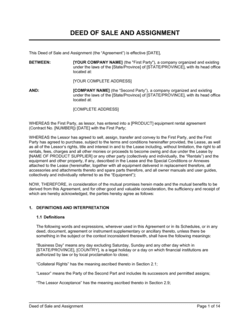
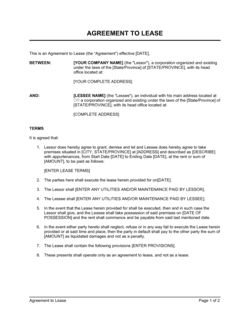
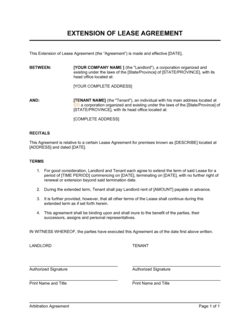
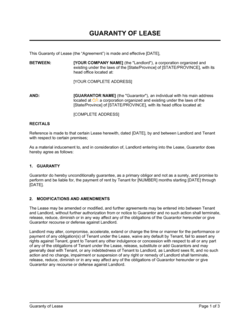
Acknowledgment of Notification of Lease Transfer Template

Free Word download β€’ Edit online β€’ Save & share with Drive β€’ Export to PDF

1 pageβ€’15–25 min to fillβ€’Difficulty: Standard
Learn more ↓
FreeAcknowledgment of Notification of Lease Transfer Template

At a glance

What it is
An Acknowledgment of Notification of Lease Transfer is a formal business letter confirming that a party β€” typically a landlord, tenant, or property manager β€” has received written notice that a lease has been or will be transferred to a new party. This free Word download gives you a ready-to-use template you can edit online and export as PDF in under ten minutes.
When you need it
Use it as soon as you receive a formal notice of lease assignment or transfer and need to confirm receipt in writing. It is particularly important when the original lease requires written acknowledgment as a condition of the transfer becoming effective.
What's inside
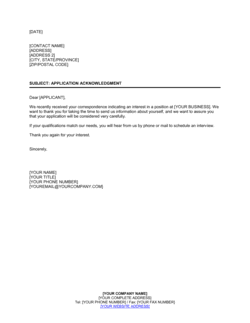
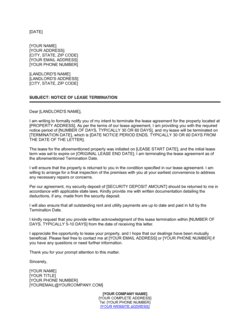
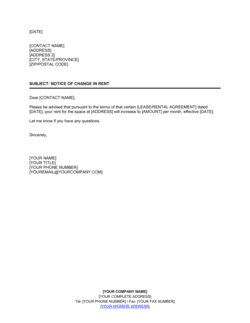
Sender and recipient details, a clear acknowledgment statement, reference to the original lease and the transfer notice, identification of the incoming and outgoing parties, any conditions or reservations noted by the acknowledging party, and a professional closing.

What is an Acknowledgment of Notification of Lease Transfer?

An Acknowledgment of Notification of Lease Transfer is a formal business letter sent by a landlord, tenant, or property manager to confirm in writing that they have received notice of a lease assignment or transfer to a new party. It records the date the notice was received, identifies the outgoing party (the assignor), the incoming party (the assignee), and the effective date of the transfer, and confirms that the original lease terms continue in force. The letter does not itself approve or block the transfer β€” it creates a clean documentary record that the relevant party was properly notified, satisfying the notice requirements commonly found in commercial lease agreements.

Why You Need This Document

Without a written acknowledgment, disputes about whether notice was properly given β€” and when β€” can stall a business sale, delay a property transaction, or leave ambiguity about who is responsible for rent, repairs, and compliance obligations during the transfer window. Many commercial leases explicitly require the receiving party to acknowledge a transfer notice within a fixed number of days; failing to do so on time can give the other party grounds to challenge the transfer's effective date. An acknowledgment letter also protects you if pre-existing claims β€” unpaid rent, outstanding maintenance, or unresolved disputes β€” need to be preserved against the outgoing party after the transfer occurs. This template gives you a professionally structured letter you can complete in under 15 minutes, creating the paper trail that keeps a lease transfer clean, documented, and enforceable for all parties involved.

Which variant fits your situation?

If your situation is…Use this template
Landlord acknowledging a commercial tenant's assignment to a new businessAcknowledgment Of Notification Of Lease Transfer
Tenant notifying a landlord of intent to assign the leaseLease Assignment Agreement
Landlord formally consenting to a lease assignmentLandlord Consent To Assignment
Both parties formalizing the transfer with a new partyLease Assignment And Assumption Agreement
Terminating rather than transferring an existing leaseLease Termination Agreement
Notifying a tenant of a change in property ownershipChange Of Ownership Notice To Tenant
Extending or modifying the lease at the time of transferLease Amendment Agreement

Common mistakes to avoid

❌ Using informal entity names

Why it matters: If the letter names 'ABC Coffee' but the lease says 'ABC Coffee Enterprises LLC,' the acknowledgment may not be accepted as relating to the correct party, causing processing delays or disputes.

Fix: Pull the exact legal entity names from the original lease agreement and paste them verbatim into every name field in the letter.
❌ Omitting the effective date of transfer

Why it matters: Without a stated effective date, it is unclear when the assignee's obligations begin and when the assignor's end β€” creating potential liability gaps on both sides.

Fix: State the effective date explicitly in both the opening acknowledgment paragraph and the clause confirming the assignee's obligations.

❌ Skipping the reservation of rights clause

Why it matters: An acknowledgment without this clause can be interpreted as an implicit waiver of pre-existing claims β€” such as unpaid rent or unresolved damage β€” against the assignor.

Fix: Include a one-sentence reservation clause in every acknowledgment letter, regardless of how straightforward the transfer appears.

❌ Sending the letter without a delivery record

Why it matters: If the recipient later claims they never received the acknowledgment, a letter sent by regular mail with no confirmation gives you no proof of dispatch or receipt.

Fix: Send by email with read-receipt or by certified mail with return receipt, and retain both the sent copy and the delivery confirmation in the lease file.

The 9 key clauses, explained

Date, sender, and recipient block

In plain language: Identifies the date the letter is issued, the full name and address of the sender, and the full name and address of the recipient.

Sample language
[DATE] | [SENDER FULL NAME / COMPANY], [ADDRESS] | To: [RECIPIENT FULL NAME / COMPANY], [ADDRESS]

Common mistake: Using a trade name instead of the registered legal entity for either party β€” this creates a mismatch with the original lease document and can complicate future enforcement.

Subject line

In plain language: A single-line reference identifying the original lease, the property address, and the nature of the letter.

Sample language
Re: Acknowledgment of Notification of Lease Transfer β€” [PROPERTY ADDRESS], Lease Dated [ORIGINAL LEASE DATE]

Common mistake: Omitting the original lease date from the subject line, making it impossible to match the letter to the correct lease when multiple agreements exist for the same property.

Opening acknowledgment statement

In plain language: Confirms that the sender has received the written notice of lease transfer as of a specified date.

Sample language
We acknowledge receipt of your written notification, dated [NOTICE DATE], advising that the lease for the premises at [PROPERTY ADDRESS] has been transferred from [ASSIGNOR NAME] to [ASSIGNEE NAME], effective [EFFECTIVE DATE].

Common mistake: Writing a vague opener such as 'We are writing regarding the lease' without explicitly stating that a specific notice has been received β€” leaving room for dispute about whether acknowledgment was given at all.

Reference to the original lease

In plain language: Cites the original lease agreement by date and parties to anchor the acknowledgment to a specific binding document.

Sample language
This acknowledgment relates to the Lease Agreement dated [ORIGINAL LEASE DATE] between [ORIGINAL LANDLORD NAME] and [ORIGINAL TENANT NAME] for the premises located at [PROPERTY ADDRESS].

Common mistake: Referencing only the property address without citing the lease date and original parties β€” insufficient when multiple leases or amendments exist for the same address.

Identification of assignor and assignee

In plain language: Names the outgoing party (assignor) and the incoming party (assignee) as notified, confirming the sender has noted who the new lease holder is.

Sample language
We note that [ASSIGNOR FULL LEGAL NAME] has transferred and assigned all rights and obligations under the above-referenced Lease to [ASSIGNEE FULL LEGAL NAME], with an effective date of [EFFECTIVE DATE].

Common mistake: Using informal names or nicknames rather than the full legal entity names of the assignor and assignee, creating ambiguity if the transfer is later disputed.

Confirmation of continued lease obligations

In plain language: States that the terms of the original lease remain in effect and that the assignee is expected to comply with all existing obligations from the effective date of transfer.

Sample language
We confirm that the terms and conditions of the original Lease Agreement remain in full force and effect, and [ASSIGNEE FULL LEGAL NAME] is hereby expected to fulfill all obligations thereunder from [EFFECTIVE DATE] onward.

Common mistake: Failing to include this clause, leaving it unclear whether the acknowledging party expects the original terms to bind the assignee β€” which can complicate rent collection or enforcement of covenants.

Reservation of rights

In plain language: States that acknowledgment of the notice does not constitute a waiver of any existing rights, claims, or remedies the sender holds under the lease.

Sample language
Nothing in this acknowledgment shall be construed as a waiver of any rights, remedies, or claims [SENDER NAME] may have under the Lease Agreement or applicable law.

Common mistake: Omitting this clause entirely β€” without it, the acknowledgment could later be argued as implied consent to forgive outstanding obligations or breaches that predate the transfer.

Request for additional information (optional)

In plain language: Invites the recipient to provide any additional documentation required to complete the acknowledgment process, such as an executed assignment agreement or proof of the assignee's identity.

Sample language
Please provide a copy of the executed Lease Assignment Agreement and any supporting identification for [ASSIGNEE NAME] at your earliest convenience.

Common mistake: Making this request mandatory rather than optional, which can create an implied condition that delays the transfer's effective date if documentation is not immediately available.

Professional closing and signature block

In plain language: Closes the letter formally, includes the sender's name, title, and contact details for follow-up questions.

Sample language
Should you have any questions regarding this acknowledgment, please contact us at [PHONE] or [EMAIL]. Sincerely, [SENDER NAME], [TITLE], [COMPANY NAME]

Common mistake: Closing without providing a direct contact name and phone number β€” recipients have no way to follow up, which prolongs the transaction and creates delays in transferring keys, access codes, or utility accounts.

How to fill it out

  1. 1

    Enter the date and both parties' full legal details

    Fill in the current date at the top of the letter, then enter the full registered legal name and mailing address of both the sender and the recipient. Match the entity names exactly as they appear on the original lease.

    πŸ’‘ Check the original lease document for the exact legal entity names before completing this step β€” mismatches are the most common cause of processing delays.

  2. 2

    Complete the subject line with lease reference details

    Include the full property address, the original lease date, and the word 'Acknowledgment' so the letter is immediately identifiable when filed or forwarded to accounts payable or legal.

    πŸ’‘ If the lease has been amended, reference both the original lease date and the most recent amendment date to avoid any ambiguity.

  3. 3

    Write the opening acknowledgment with notice date and effective date

    State explicitly that you have received the notice, the date you received it, and the effective date of the transfer as stated in the notice. These three data points are the core of the letter.

    πŸ’‘ If the notice date and the effective date of transfer differ, distinguish them clearly β€” conflating the two is a frequent error that creates confusion about when obligations shift.

  4. 4

    Identify the assignor and assignee by full legal name

    Name both the outgoing and incoming parties exactly as they are identified in the assignment documents you received. Avoid abbreviations unless they are the registered trade name.

    πŸ’‘ For corporate entities, include the state or province of incorporation in parentheses β€” e.g., '[COMPANY NAME] (a Delaware corporation)' β€” to avoid confusion with similarly named businesses.

  5. 5

    Confirm the lease terms remain in effect

    Include a sentence confirming that the original lease terms are unchanged and that the assignee is bound by them from the effective date. Do not modify or summarize the original terms β€” simply confirm their continuity.

    πŸ’‘ If you have outstanding concerns about the assignee's ability to fulfill lease obligations, note them separately in a follow-up letter rather than embedding conditions in the acknowledgment itself.

  6. 6

    Add the reservation of rights clause

    Insert the standard reservation language confirming that this acknowledgment does not waive any existing rights. This is especially important if there are open maintenance issues, unpaid rent, or pending disputes that predate the transfer.

    πŸ’‘ Even when the transfer is entirely amicable, always include this clause β€” its absence is harder to explain retroactively than its presence is to justify.

  7. 7

    Review, sign, and send via tracked delivery

    Proofread for correct names, dates, and property address. Sign and send via email with read-receipt enabled, or via certified mail, to create a delivery record.

    πŸ’‘ Keep the sent letter and any delivery confirmation in the same file as the original lease and the transfer notice β€” auditors and courts look for a complete chain of documentation.

Frequently asked questions

What is an acknowledgment of notification of lease transfer?

An acknowledgment of notification of lease transfer is a formal letter confirming that a party β€” typically a landlord, tenant, or property manager β€” has received written notice that a lease has been assigned or transferred to a new party. It records the date of receipt, identifies the incoming and outgoing parties, and confirms that the original lease terms remain in effect. It does not by itself consent to or approve the transfer; it simply documents that the relevant party has been informed.

Is this letter legally required for a lease transfer to be valid?

Whether acknowledgment is required depends on the wording of the original lease agreement. Many commercial leases include a clause requiring the landlord or other party to acknowledge receipt of a transfer notice within a specified number of days. Where required, failure to send an acknowledgment can delay or complicate the effective date of the transfer. Even when not contractually required, sending one creates a clear paper trail and reduces the risk of future disputes.

What is the difference between an acknowledgment of lease transfer and a consent to assignment?

An acknowledgment confirms that notice of a transfer has been received β€” it is a record-keeping document. A consent to assignment is a substantive approval by the landlord permitting the tenant to assign the lease to a third party. Most leases require both: the tenant requests consent, the landlord provides it, and the acknowledgment letter records that the process has been completed. Sending only an acknowledgment does not substitute for formal consent if the lease requires it.

Does the acknowledgment letter need to be signed?

A signature is not legally required for the letter to be effective as a written acknowledgment in most jurisdictions, but including a signature block with the sender's name and title adds credibility and makes the document easier to authenticate if it is ever needed as evidence. Most professional practice treats a signed acknowledgment as standard.

Who should send the acknowledgment letter?

Typically, the party who receives the notice of transfer sends the acknowledgment. In most commercial lease scenarios, that is the landlord or property manager acknowledging a tenant's assignment notice. However, a tenant may also send an acknowledgment if the landlord has notified them of a transfer of the property β€” and therefore the lease β€” to a new owner.

How quickly should the acknowledgment letter be sent?

Send it within the timeframe specified in the original lease agreement β€” commonly 5 to 15 business days after receiving the transfer notice. If the lease sets no timeframe, best practice is to send it within 5 business days to avoid any implication that receipt was delayed or disputed. Prompt acknowledgment also keeps the transfer transaction moving forward without unnecessary delays for the assignee.

Can the acknowledgment include conditions or objections?

An acknowledgment is not the appropriate vehicle for raising substantive objections to a transfer β€” those should be communicated in a separate letter. However, it is appropriate to include a reservation of rights clause confirming that acknowledgment does not waive any pre-existing claims, and to request outstanding documentation such as a copy of the executed assignment agreement. Embedding conditions that could be read as blocking the transfer in an acknowledgment letter creates legal ambiguity and is generally not recommended.

Should I keep a copy of the acknowledgment letter?

Yes. File the acknowledgment letter alongside the original lease agreement, the transfer notice, and any consent to assignment documents. This complete chain of documentation is essential if there is ever a dispute about when the transfer became effective, who is responsible for obligations that arose around the transfer date, or whether proper notice procedures were followed.

How this compares to alternatives

vs Consent to Assignment Letter

A consent to assignment is a substantive approval by a landlord permitting a tenant to transfer the lease β€” it is a decision document. An acknowledgment of notification simply records that transfer notice has been received. Many lease transactions require both: consent first, then acknowledgment to close the paper trail. Sending only one without the other leaves the transaction incomplete.

vs Lease Assignment Agreement

A lease assignment agreement is the binding contract that actually transfers the lease from assignor to assignee, typically signed by all three parties. The acknowledgment letter is a short confirmatory notice sent by the non-transferring party after receiving notice of that agreement. The assignment agreement creates the transfer; the acknowledgment documents that the relevant party knows about it.

vs Lease Termination Agreement

A lease termination agreement ends the lease entirely and releases all parties from future obligations. A lease transfer acknowledgment confirms the lease continues under a new party. Use a termination agreement when the business relationship is ending; use a transfer acknowledgment when it is continuing under new ownership.

vs Change of Ownership Notice to Tenant

A change of ownership notice is sent by a landlord to a tenant informing them that the property has been sold and the lease transferred to a new owner. An acknowledgment of notification of lease transfer is the tenant's or other party's written reply confirming receipt of that notice. One is the outgoing communication; the other is the confirmatory response.

Industry-specific considerations

Commercial Real Estate

Landlords issue acknowledgments when a business tenant assigns its lease to a buyer as part of a business sale, ensuring the new occupant is formally on record.

Retail and Franchising

Franchise operators and franchisors use these letters when a franchise location changes hands, confirming the incoming franchisee is recognized as the new lease holder.

Professional Services

Law and accounting firms use acknowledgment letters when merging with or acquiring another practice and transferring the acquired firm's office lease.

Healthcare

Medical and dental practices use these letters when a retiring practitioner sells a practice and the office lease must be formally transferred to the buyer.

Template vs pro β€” what fits your needs?

PathBest forCostTime
Use the templateLandlords, tenants, and property managers sending a straightforward acknowledgment for a standard commercial or residential lease transferFree10–15 minutes
Template + professional reviewHigh-value commercial leases, transfers involving disputed pre-existing claims, or leases with complex assignment notice requirements$150–$400 (one-hour attorney review)1–2 business days
Custom draftedInstitutional landlords managing portfolio transfers, multi-party lease arrangements, or cross-border commercial property transactions$500–$1,500+3–5 business days

Glossary

Lease Transfer
The process by which rights and obligations under an existing lease are moved from one party (the assignor) to another (the assignee).
Lease Assignment
A formal legal mechanism through which an original tenant transfers all remaining lease rights and duties to a new tenant for the remainder of the lease term.
Acknowledgment
A written confirmation that a specific document, notice, or event has been received and noted by the acknowledging party.
Assignor
The original party to the lease β€” typically the outgoing tenant or seller β€” who transfers their lease interest to a new party.
Assignee
The incoming party who receives the transferred lease rights and assumes the obligations of the original tenant.
Notice of Transfer
A formal written communication informing the relevant party that a lease has been, or will be, assigned to a new holder.
Effective Date
The specific calendar date on which the lease transfer takes legal effect and the assignee assumes responsibility under the lease.
Consent to Assignment
Written permission from a landlord allowing a tenant to transfer the lease to a third party, often required by the original lease agreement.
Privity of Contract
The direct contractual relationship between two parties; in lease transfers, acknowledgment helps clarify which parties remain in privity after the assignment.
Reservation of Rights
A statement in the acknowledgment letter that the acknowledging party preserves all existing contractual rights and does not waive any claims by confirming receipt.

Part of your Business Operating System

This document is one of 3,000+ business & legal templates included in Business in a Box.

  • Fill-in-the-blanks β€” ready in minutes
  • 100% customizable Word document
  • Compatible with all office suites
  • Export to PDF and share electronically

Create your document in 3 simple steps.

From template to signed document β€” all inside one Business Operating System.
1
Download or open template

Access over 3,000+ business and legal templates for any business task, project or initiative.

2
Edit and fill in the blanks with AI

Customize your ready-made business document template and save it in the cloud.

3
Save, Share, Send, Sign

Share your files and folders with your team. Create a space of seamless collaboration.

Save time, save money, and create top-quality documents.

β˜…β˜…β˜…β˜…β˜…

"Fantastic value! I'm not sure how I'd do without it. It's worth its weight in gold and paid back for itself many times."

Managing Director Β· Mall Farm
Robert Whalley
Managing Director, Mall Farm Proprietary Limited
β˜…β˜…β˜…β˜…β˜…

"I have been using Business in a Box for years. It has been the most useful source of templates I have encountered. I recommend it to anyone."

Business Owner Β· 4+ years
Dr Michael John Freestone
Business Owner
β˜…β˜…β˜…β˜…β˜…

"It has been a life saver so many times I have lost count. Business in a Box has saved me so much time and as you know, time is money."

Owner Β· Upstate Web
David G. Moore Jr.
Owner, Upstate Web

Run your business with a system β€” not scattered tools

Stop downloading documents. Start operating with clarity. Business in a Box gives you the Business Operating System used by over 250,000 companies worldwide to structure, run, and grow their business.

Free Forever PlanΒ Β·Β No credit card required