1
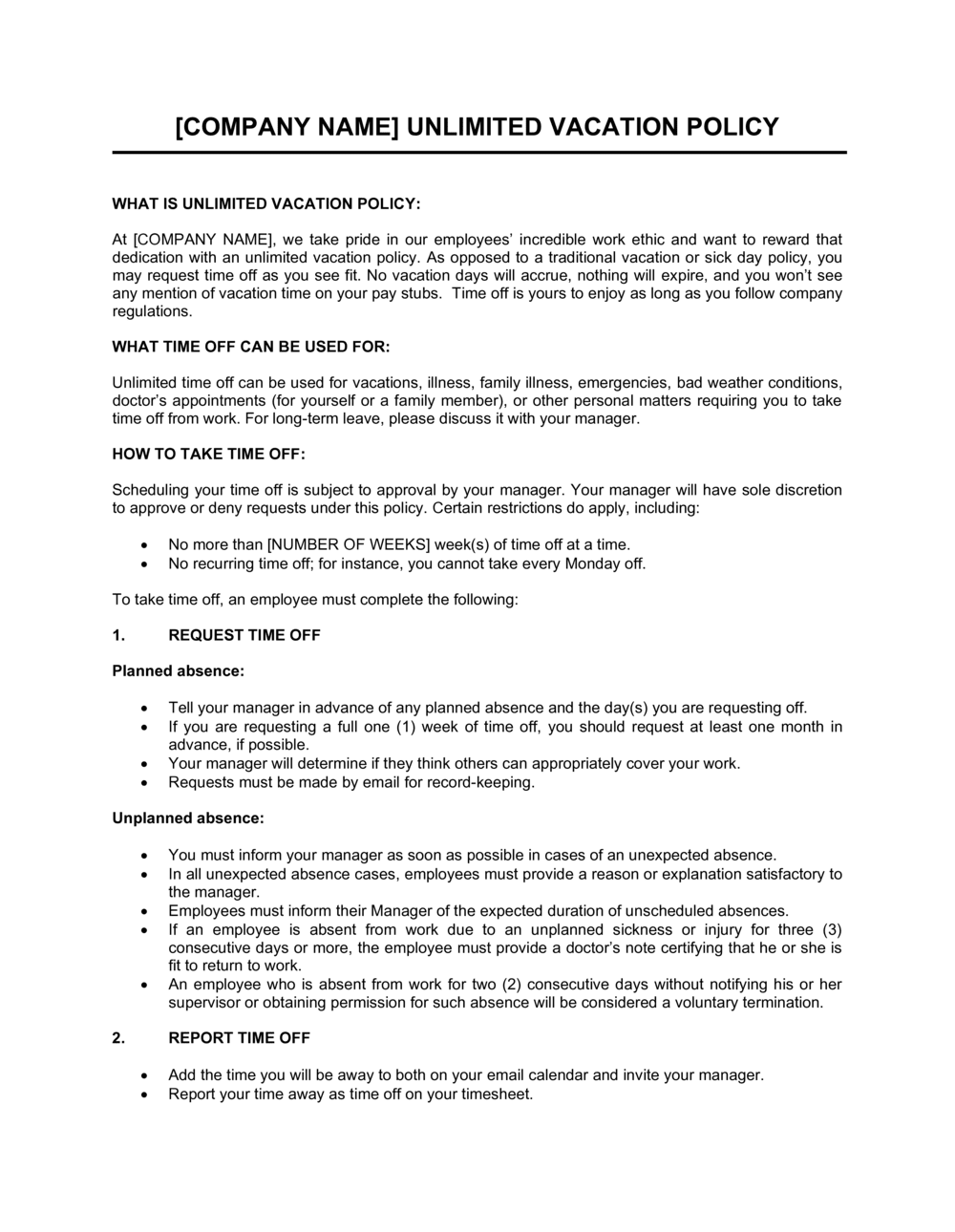
Define which employees the policy covers
Identify the exact employment classifications included — typically full-time, exempt, salaried employees. Explicitly exclude part-time, hourly, and contract workers to avoid FLSA complications.
💡 Cross-reference your current payroll classifications before finalizing to ensure every affected employee is correctly categorized.
2
Set the eligibility waiting period
Choose a start date for eligibility — 30, 60, or 90 days post-hire is typical. Enter this in the eligibility section and confirm it is reflected in your HRIS system.
💡 Align the waiting period with your standard benefits eligibility date so new hires receive one consistent onboarding message.
3
Specify advance notice requirements by absence length
Set different notice windows for short absences (1–3 days) and longer ones (4+ days). Enter the specific number of business days required and the system employees use to submit requests.
💡 Two business days for short absences and two weeks for anything over three days works well for most teams. Adjust upward for roles with hard-to-cover responsibilities.
4
Document blackout periods
List any recurring high-demand dates — fiscal year-end, annual conference, peak retail periods — where leave requests will be restricted. Enter them as specific date ranges rather than vague descriptions.
💡 Publish blackout dates at the start of each calendar year so employees can plan personal travel around them well in advance.
5
Write manager approval criteria
Draft a short, objective list of conditions under which a manager should approve or deny a request. Tie denials to business need, team coverage ratios, or documented performance concerns — not personal preference.
💡 Train managers on these criteria before the policy goes live. Inconsistent application is the most common source of employee complaints about unlimited PTO.
6
Set a minimum usage expectation
Enter the minimum number of days per year the company expects employees to take. State that managers will discuss leave planning at regular check-ins.
💡 Ten days is the most common floor. Frame it positively: the policy is designed to be used, and taking time off is an expectation, not an exception.
7
Add the termination payout language
Confirm that the policy is non-accrual and state that no payout is owed on separation. Add a note flagging states — California, Colorado, Nebraska — where legal counsel should confirm the approach.
💡 Have an employment attorney in your primary operating state review this section before the policy is distributed. The cost of a one-hour review is small compared to a wage-claim dispute.
8
Collect employee acknowledgments
Add a signature block or electronic acknowledgment prompt and collect signed copies from every employee before the policy effective date.
💡 Store signed acknowledgments in each employee's file or your HRIS — they are your primary defense if an employee later claims the policy was not communicated.