Transmittal of Account to Collection Agency Template

Free Word download β€’ Edit online β€’ Save & share with Drive β€’ Export to PDF

1 pageβ€’15–20 min to fillβ€’Difficulty: Standard
Learn more ↓
FreeTransmittal of Account to Collection Agency Template

At a glance

What it is
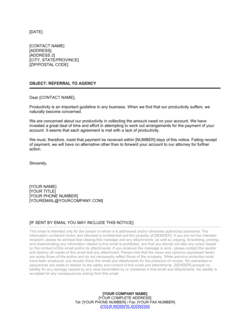
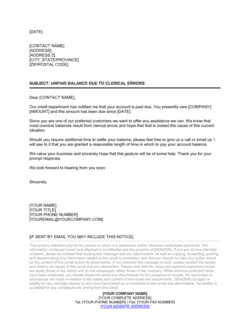
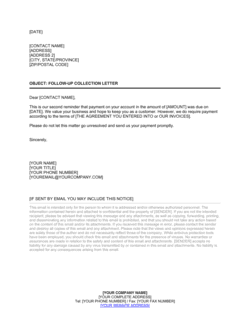
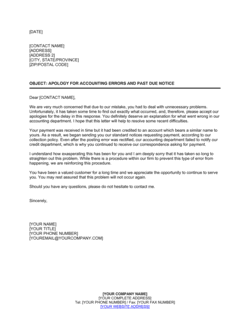
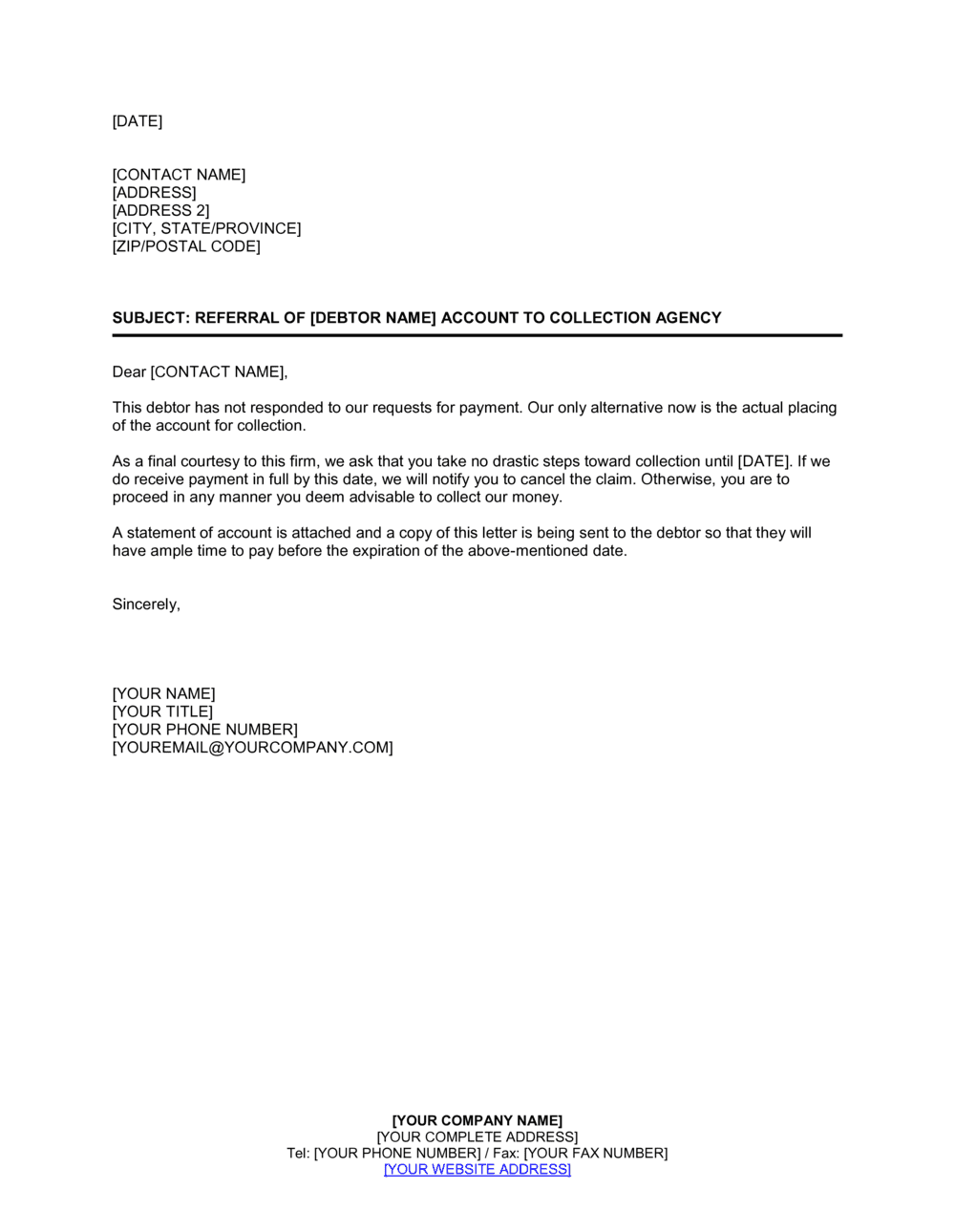
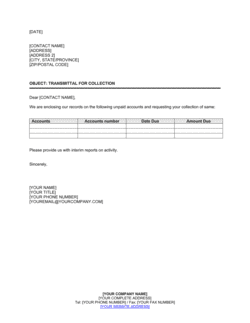
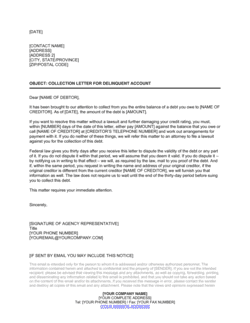
A Transmittal of Account to Collection Agency is a formal business letter a creditor sends to a third-party collection agency to officially hand off a delinquent customer account for collection. This free Word download gives you a structured, ready-to-complete letter you can edit online and export as PDF in under ten minutes.
When you need it
Use it when an overdue account has exhausted your internal collection efforts β€” typically after 60 to 120 days past due β€” and you are formally transferring responsibility for recovery to a licensed collection agency.
What's inside
Creditor and agency identification, debtor details, the outstanding balance with aging breakdown, a summary of prior collection attempts, supporting documentation list, and authorization language directing the agency to proceed with collection.

What is a Transmittal of Account to Collection Agency?

A Transmittal of Account to Collection Agency is a formal business letter a creditor sends to a licensed third-party collection agency to officially hand off a delinquent customer account for recovery. It serves as the written authorization and information package that launches external collection activity β€” identifying the debtor, stating the exact balance owed with an aging breakdown, summarizing the prior collection attempts already made, and listing all supporting documentation enclosed. Without it, a collection agency has no formal basis to begin contacting the debtor or pursuing recovery on the creditor's behalf.

Why You Need This Document

Relying on a phone call or email to hand off a delinquent account leaves you exposed on multiple fronts. A written transmittal creates a clear, dated record of exactly what balance was referred, what authority the agency was granted, and which supporting documents were provided β€” details that matter immediately if the debtor disputes the amount or if a disagreement arises later over settlement terms. It also protects you if the agency collects and you need to confirm the referral date for fee calculation or tax write-off purposes. For healthcare and other regulated industries, a written transmittal with a defined documentation package is effectively required to demonstrate that only minimum-necessary information was shared. This template gives you a complete, professional transmittal you can fill in and send in under ten minutes, with the authorization language and settlement floor clause that prevent the most common and costly handoff mistakes.

Which variant fits your situation?

If your situation is…Use this template
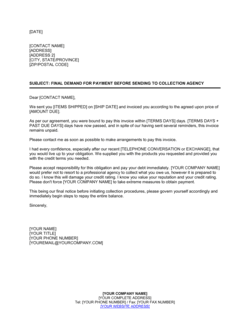
Notifying the debtor directly before agency involvementFinal Demand Letter Before Collections
Disputing a debt on behalf of a customerDebt Dispute Letter
Settling an outstanding balance for less than the full amountDebt Settlement Agreement
Documenting the original credit terms that created the debtCredit Application
Hiring a collection agency under a formal engagementCollection Agency Agreement
Writing off the uncollected balance on your booksBad Debt Write-Off Memo
Sending an internal past-due notice before escalating externallyPast Due Notice Letter

Common mistakes to avoid

❌ Transmitting before exhausting internal collection steps

Why it matters: Collection agencies charge 25–50% of recovered amounts. Sending an account too early means paying a contingency fee on money you could have collected at no cost.

Fix: Establish a written policy β€” for example, escalate to an agency only after three statements, two phone attempts, and one certified demand letter with no response.
❌ Providing an estimated rather than ledger-exact balance

Why it matters: A balance discrepancy gives the debtor grounds to dispute the debt, which triggers a mandatory 30-day validation hold that pauses all collection activity.

Fix: Pull the balance directly from your accounts-receivable system on the day of transmittal and attach the corresponding aging report as a supporting document.

❌ Omitting the history of prior collection attempts

Why it matters: Without this context, the agency may repeat outreach steps that already failed, wasting time and potentially antagonizing a debtor who might otherwise settle.

Fix: Document every contact attempt with a date and outcome β€” even a one-line summary per attempt is enough to orient the agency's collector.

❌ Granting unlimited settlement authority

Why it matters: An agency with no floor may settle a $10,000 balance for $2,000 without consulting you, and you have no written basis to reject or renegotiate the outcome.

Fix: State a minimum settlement percentage explicitly in the authorization clause and require the agency to obtain written approval before accepting any offer below that threshold.

The 8 key clauses, explained

Creditor and agency identification

In plain language: Opens the letter by naming the sending business and the collection agency receiving the account, including contact details for both.

Sample language
[CREDITOR COMPANY NAME] | [ADDRESS] | [PHONE] | [EMAIL] β€” To: [COLLECTION AGENCY NAME] | Attn: [CONTACT NAME] | [AGENCY ADDRESS]

Common mistake: Using a trade name for the creditor instead of the registered legal entity name β€” this can complicate the agency's legal standing to collect on your behalf.

Date and reference line

In plain language: States the date of transmittal and a unique reference number that links this letter to the internal account file.

Sample language
Date: [DATE] | Re: Account Transmittal β€” [DEBTOR NAME] | Internal Account No.: [ACCOUNT NUMBER]

Common mistake: Omitting a reference number, which makes it difficult to match the transmittal to the correct account file when the agency follows up.

Debtor identification

In plain language: Provides the full legal name, last known address, phone number, and any known employer or secondary contact information for the debtor.

Sample language
Debtor: [DEBTOR FULL NAME / ENTITY NAME] | Address: [LAST KNOWN ADDRESS] | Phone: [PHONE] | Employer (if known): [EMPLOYER NAME AND ADDRESS]

Common mistake: Providing only a name and address without any supplemental contact details β€” the agency has fewer avenues to locate and contact the debtor, reducing recovery odds.

Balance summary and aging detail

In plain language: States the total amount owed, broken down by original principal, accrued interest or fees, and how long the balance has been outstanding.

Sample language
Original Principal: $[AMOUNT] | Accrued Interest (at [X]% per month): $[AMOUNT] | Other Fees: $[AMOUNT] | Total Balance Referred: $[TOTAL] | Days Past Due: [NUMBER]

Common mistake: Transmitting a round-number estimate rather than the exact balance from the accounts-receivable ledger β€” discrepancies create disputes that slow or derail collection.

Summary of prior collection attempts

In plain language: Briefly documents the internal efforts already made to collect, including dates of invoices sent, follow-up calls, and demand letters.

Sample language
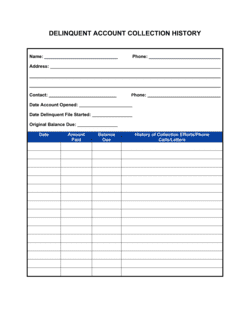
Original invoice dated [DATE]. Statements mailed on [DATE], [DATE], and [DATE]. Phone follow-up on [DATE] β€” no response. Final demand letter sent [DATE] via certified mail β€” no payment received.

Common mistake: Leaving this section blank. Agencies use this history to calibrate their approach; without it, they may repeat steps already taken or misjudge the debtor's responsiveness.

Supporting documentation list

In plain language: Itemizes the documents enclosed with the letter β€” invoices, signed contracts, account statements β€” that substantiate the debt.

Sample language
Enclosed: (1) Copies of unpaid invoices #[NUMBERS]; (2) Signed credit application dated [DATE]; (3) Account statement as of [DATE]; (4) Copies of demand letters dated [DATES].

Common mistake: Referencing attachments that are not actually enclosed β€” missing documents force the agency to request them later, adding days or weeks to the timeline.

Authorization and instruction to collect

In plain language: Formally authorizes the agency to contact the debtor and pursue collection, and states any parameters β€” such as settlement authority or prohibited contact methods.

Sample language
[CREDITOR COMPANY NAME] hereby authorizes [COLLECTION AGENCY NAME] to pursue collection of the above-referenced balance on our behalf. [CREDITOR] reserves the right to approve any settlement below [X]% of the outstanding balance.

Common mistake: Granting unlimited settlement authority without a floor β€” agencies may settle for far less than you would accept, and without a written limit you have little recourse.

Creditor signature and contact block

In plain language: Closes the letter with the name, title, and contact information of the authorized representative at the creditor company signing off on the transmittal.

Sample language
Sincerely, [AUTHORIZED REPRESENTATIVE NAME] | [TITLE] | [COMPANY NAME] | [DIRECT PHONE] | [EMAIL]

Common mistake: Signing with a generic company stamp or no identified individual β€” the agency needs a named contact for questions and settlement approvals.

How to fill it out

  1. 1

    Enter your company's legal name and contact details

    Fill in your registered business name, mailing address, phone number, and email in the sender block at the top of the letter.

    πŸ’‘ Use your registered legal entity name exactly as it appears in state filings β€” this is the name the agency will reference in any collection action.

  2. 2

    Address the letter to the correct agency contact

    Enter the collection agency's name, the specific contact person (usually your assigned account representative), and the agency's mailing address.

    πŸ’‘ Confirm the agency's preferred receiving address for new account transmittals β€” some agencies use a dedicated intake department address that differs from their main office.

  3. 3

    Complete the debtor identification block

    Enter the debtor's full legal name or entity name, last known address, phone number, and any employer or secondary contact information you have on file.

    πŸ’‘ Include the debtor's date of birth for consumer accounts if you have it β€” this significantly speeds up the agency's skip-tracing process.

  4. 4

    Pull the exact balance from your AR ledger

    Enter the principal balance, any accrued interest calculated at the rate stated in your credit agreement, and any applicable fees. Sum them to the total referred balance.

    πŸ’‘ Attach the AR aging report page for this account so the agency has the same ledger view you do β€” it eliminates the most common source of balance disputes.

  5. 5

    Summarize prior collection attempts with dates

    List every contact made β€” invoice dates, statement mailings, phone calls, and demand letters β€” in chronological order with specific dates.

    πŸ’‘ Reference certified mail tracking numbers for any demand letters sent β€” proof of delivery strengthens the agency's opening position with the debtor.

  6. 6

    List and attach all supporting documents

    Itemize every document you are enclosing β€” invoices, the signed contract or credit application, account statements, and prior correspondence β€” and physically attach copies.

    πŸ’‘ Send originals only if the agency explicitly requires them; retain originals in your own file and send certified copies.

  7. 7

    Set your settlement authorization floor and sign

    State the minimum settlement percentage you will accept without additional approval, then sign with your name, title, and direct contact information.

    πŸ’‘ A floor of 75–80% of the outstanding balance is a common starting point for accounts under 90 days old; lower it to 50–60% for accounts over 180 days.

Frequently asked questions

What is a transmittal of account to a collection agency?

It is a formal business letter a creditor sends to a licensed collection agency to officially hand off a delinquent customer account for recovery. The letter identifies the debtor, states the exact balance owed, summarizes prior collection efforts, lists supporting documents, and authorizes the agency to contact the debtor and pursue payment on the creditor's behalf.

When should I send an account to a collection agency?

Most businesses escalate accounts after 60 to 120 days past due, once internal follow-up β€” statements, phone calls, and at least one formal demand letter β€” has produced no payment or payment arrangement. Some industries, such as healthcare and utilities, have sector-specific timelines. Sending too early costs you a contingency fee; waiting too long reduces the odds of recovery.

Does a transmittal letter notify the debtor?

No. The transmittal letter is an internal communication from you to the collection agency. The agency is responsible for sending the debtor the legally required validation notice β€” typically within five days of first contact under the FDCPA for consumer accounts. You should not send the transmittal letter to the debtor.

What documents should I include with the transmittal?

At minimum: copies of all unpaid invoices, the signed credit application or contract establishing the debt, a current account statement showing the aging detail, and copies of any demand letters previously sent. The more complete the documentation, the less time the agency spends requesting records and the faster collection begins.

How much does a collection agency charge to collect a debt?

Most agencies work on contingency β€” they keep 25–50% of whatever they recover. The rate depends on account age, balance size, and debt type. Consumer debts and older accounts typically carry higher rates. Some agencies charge a flat fee for forwarding to an attorney for litigation. Confirm the fee structure in your collection agency agreement before transmitting any accounts.

Does sending an account to collections affect my relationship with the customer?

It typically does. Once an account is placed with an agency, the debtor receives formal collection notices that can damage the business relationship. For customers with otherwise strong histories or disputed invoices, consider a direct settlement conversation first. The transmittal is best reserved for accounts where the relationship is already broken and recovery is the priority.

Is this letter legally required to place an account with a collection agency?

No specific legal format is mandated, but a written transmittal is standard practice and protects both parties. It creates a clear record of what balance was referred, what authority was granted, and when the handoff occurred β€” all of which matter if the debtor disputes the debt or if a disagreement arises between you and the agency over settlement terms.

Can I recall an account after transmitting it to the agency?

Yes, in most cases β€” but check the terms of your collection agency agreement. Many agreements allow recall within a specific window (often 30–90 days) without a fee, but charge a partial contingency if the account is recalled after active collection work has begun. Notify the agency in writing immediately if you receive direct payment from the debtor after transmittal, as the agency may be entitled to a fee on any recovery during the placement period.

How this compares to alternatives

vs Past Due Notice Letter

A past due notice is sent directly to the debtor to request payment before any third party is involved. A transmittal letter is sent to the collection agency after direct outreach has failed. Use the past due notice first; use the transmittal when that step produces no result.

vs Debt Settlement Agreement

A debt settlement agreement documents a negotiated resolution between creditor and debtor β€” typically for less than the full balance. A transmittal letter initiates third-party collection without any settlement yet agreed. The transmittal comes before a settlement; the settlement agreement closes the matter if the agency negotiates a resolution.

vs Demand Letter

A demand letter goes directly to the debtor with a final payment ultimatum and is one of the last steps before escalation. A transmittal letter goes to the collection agency and is the formal escalation step itself. Sending a demand letter first is best practice and is typically referenced in the transmittal's prior-attempts summary.

vs Collection Agency Agreement

A collection agency agreement is the ongoing contract that governs the entire relationship between creditor and agency β€” fees, authority, reporting, and recall rights. A transmittal letter is the individual account-level document used each time a specific delinquent account is handed off under that agreement. You need the agreement in place before you can send the transmittal.

Industry-specific considerations

Healthcare and Medical Billing

Patient balance transmittals must reference HIPAA compliance obligations and confirm only the minimum necessary information is shared with the agency.

Retail and Wholesale Distribution

Trade credit accounts with signed credit applications provide strong documentation; aging schedules with SKU-level invoice detail strengthen the agency's position.

Professional Services

Law firms and consultancies must confirm no privileged or confidential client information is included in the documentation package sent to the agency.

Property Management

Former-tenant transmittals typically include the unpaid rent ledger, move-out statement, and any security deposit offset calculation alongside the collection letter.

Template vs pro β€” what fits your needs?

PathBest forCostTime
Use the templateAny business transmitting a standard delinquent trade or consumer account to a licensed collection agencyFree10 minutes per account
Template + professional reviewHigh-balance accounts, healthcare transmittals with HIPAA considerations, or first-time agency placements where you want to confirm your documentation package is complete$100–$300 for an AR consultant or attorney review1–2 business days
Custom draftedComplex commercial debt with disputed invoices, cross-border collection, or accounts being referred for litigation rather than standard collection$300–$1,000+ (attorney)3–7 business days

Glossary

Transmittal Letter
A formal cover document that accompanies a package of records and instructs the recipient on what to do with them.
Delinquent Account
A customer account with an outstanding balance that has not been paid by the agreed due date.
Aging Schedule
A breakdown of outstanding balances grouped by how long they have been overdue β€” typically 30, 60, 90, and 120+ days past due.
Charge-Off
An accounting entry a creditor makes when a debt is deemed unlikely to be collected, removing it from active receivables β€” distinct from forgiveness of the debt.
Third-Party Collector
A collection agency or debt buyer that is not the original creditor and is engaged to recover a delinquent balance on the creditor's behalf.
Contingency Fee
The percentage of any recovered amount the collection agency keeps as its fee β€” typically 25–50% depending on account age and balance.
FDCPA
The Fair Debt Collection Practices Act, the US federal law that governs how third-party debt collectors may contact and communicate with consumers.
Supporting Documentation
Copies of invoices, contracts, statements, and prior collection correspondence attached to the transmittal letter as evidence of the debt.
Authorization Language
Wording in the letter that explicitly grants the collection agency permission to contact the debtor and pursue collection on the creditor's behalf.
Cease-and-Desist
A written demand by a debtor directing a collector to stop all contact β€” a right consumers hold under the FDCPA that the agency must honor.

Part of your Business Operating System

This document is one of 3,000+ business & legal templates included in Business in a Box.

  • Fill-in-the-blanks β€” ready in minutes
  • 100% customizable Word document
  • Compatible with all office suites
  • Export to PDF and share electronically

Create your document in 3 simple steps.

From template to signed document β€” all inside one Business Operating System.
1
Download or open template

Access over 3,000+ business and legal templates for any business task, project or initiative.

2
Edit and fill in the blanks with AI

Customize your ready-made business document template and save it in the cloud.

3
Save, Share, Send, Sign

Share your files and folders with your team. Create a space of seamless collaboration.

Save time, save money, and create top-quality documents.

β˜…β˜…β˜…β˜…β˜…

"Fantastic value! I'm not sure how I'd do without it. It's worth its weight in gold and paid back for itself many times."

Managing Director Β· Mall Farm
Robert Whalley
Managing Director, Mall Farm Proprietary Limited
β˜…β˜…β˜…β˜…β˜…

"I have been using Business in a Box for years. It has been the most useful source of templates I have encountered. I recommend it to anyone."

Business Owner Β· 4+ years
Dr Michael John Freestone
Business Owner
β˜…β˜…β˜…β˜…β˜…

"It has been a life saver so many times I have lost count. Business in a Box has saved me so much time and as you know, time is money."

Owner Β· Upstate Web
David G. Moore Jr.
Owner, Upstate Web

Run your business with a system β€” not scattered tools

Stop downloading documents. Start operating with clarity. Business in a Box gives you the Business Operating System used by over 250,000 companies worldwide to structure, run, and grow their business.

Free Forever PlanΒ Β·Β No credit card required