1
Enter the agency's full legal name, license number, and contact details
Add the collection agency's registered business name, its collection license number for the relevant state or province, mailing address, phone number, and email. Confirm the license is current and valid in the debtor's jurisdiction before sending.
💡 Many states require the agency's license number to appear on the letter itself — verify requirements for every state in which you send letters before batch-mailing.
2
Identify the original creditor and account details
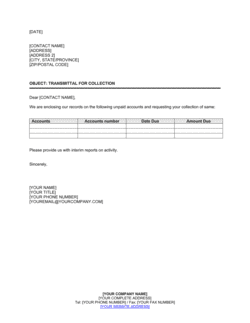
Enter the original creditor's full legal name and the debtor's original account number. Add your agency's internal reference number so the debtor can use either when contacting you.
💡 If the debt was purchased rather than placed on contingency, name both the prior owner and the original creditor — omitting the chain of title is a common dispute trigger.
3
State the total amount owed with an itemized breakdown
Enter the principal balance, accrued interest calculated to the letter date, and any permitted fees (e.g., returned-check fees). State explicitly that the balance may increase if interest continues to accrue.
💡 Double-check that your interest rate is authorized by the original contract or applicable state law — charging an unauthorized rate is an FDCPA violation regardless of what the original creditor charged.
4
Insert the mini-Miranda warning in a conspicuous position
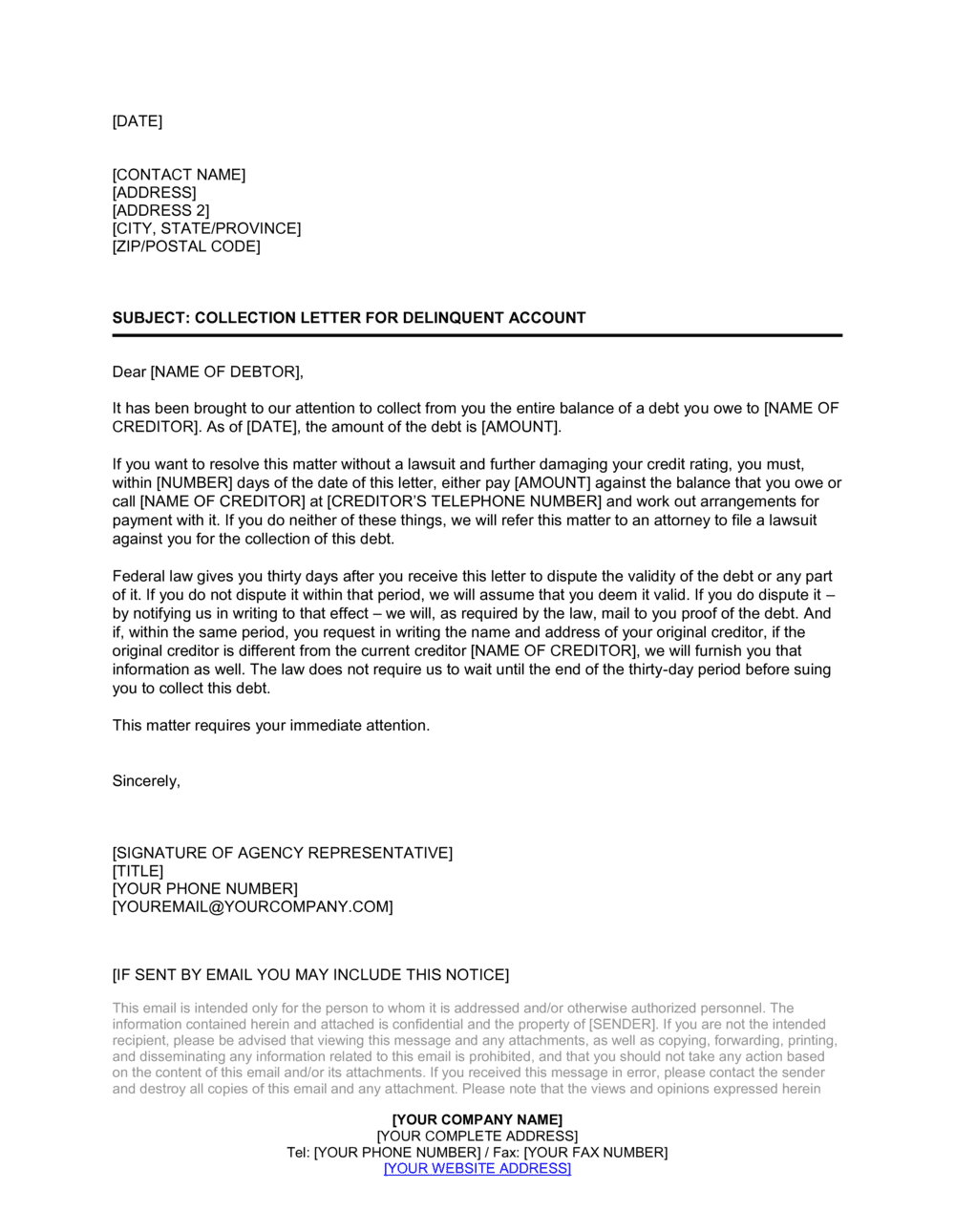
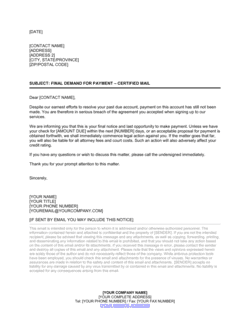
Place the required FDCPA mini-Miranda disclosure — 'This is an attempt to collect a debt. Any information obtained will be used for that purpose.' — in a visible location, typically at the top or bottom of the letter in bold or uppercase.
💡 Courts apply a 'least sophisticated consumer' standard when evaluating whether a disclosure is conspicuous. If a confused first-time reader could miss it, reposition it.
5
Include the full verbatim validation notice
Copy the statutory 30-day validation and dispute language from FDCPA §809(a) without paraphrasing. The notice must inform the debtor of their right to dispute within 30 days and their right to request the original creditor's name and address.
💡 Use the exact statutory text — courts have found even minor rewording deceptive under the FDCPA. When in doubt, reproduce the language verbatim.
6
Provide clear, separate addresses for payment and disputes
List the payment remittance address, online portal URL, and phone payment line. On a separate line, list the dedicated disputes mailing address. Label both clearly.
💡 A dedicated P.O. box for disputes, checked daily, reduces the risk of a written dispute being misrouted and triggering a validation-failure claim.
7
Add the credit reporting disclosure
Include a statement that non-payment may result in reporting to consumer credit bureaus. Do not state a specific reporting deadline unless you will reliably honor it.
💡 Avoid language like 'will be reported within 30 days' unless your process guarantees that timeline — a broken promise is an FDCPA §807 false-representation violation.
8
Sign with a named authorized representative and send via trackable method
Have an authorized representative sign the letter with their name and title. Send via first-class mail with a certificate of mailing, or certified mail for high-balance accounts, and retain proof of delivery in the account file.
💡 Courts presume delivery five days after first-class mailing under FDCPA rules — document the mail date in your system immediately to accurately calculate the 30-day validation window.