1
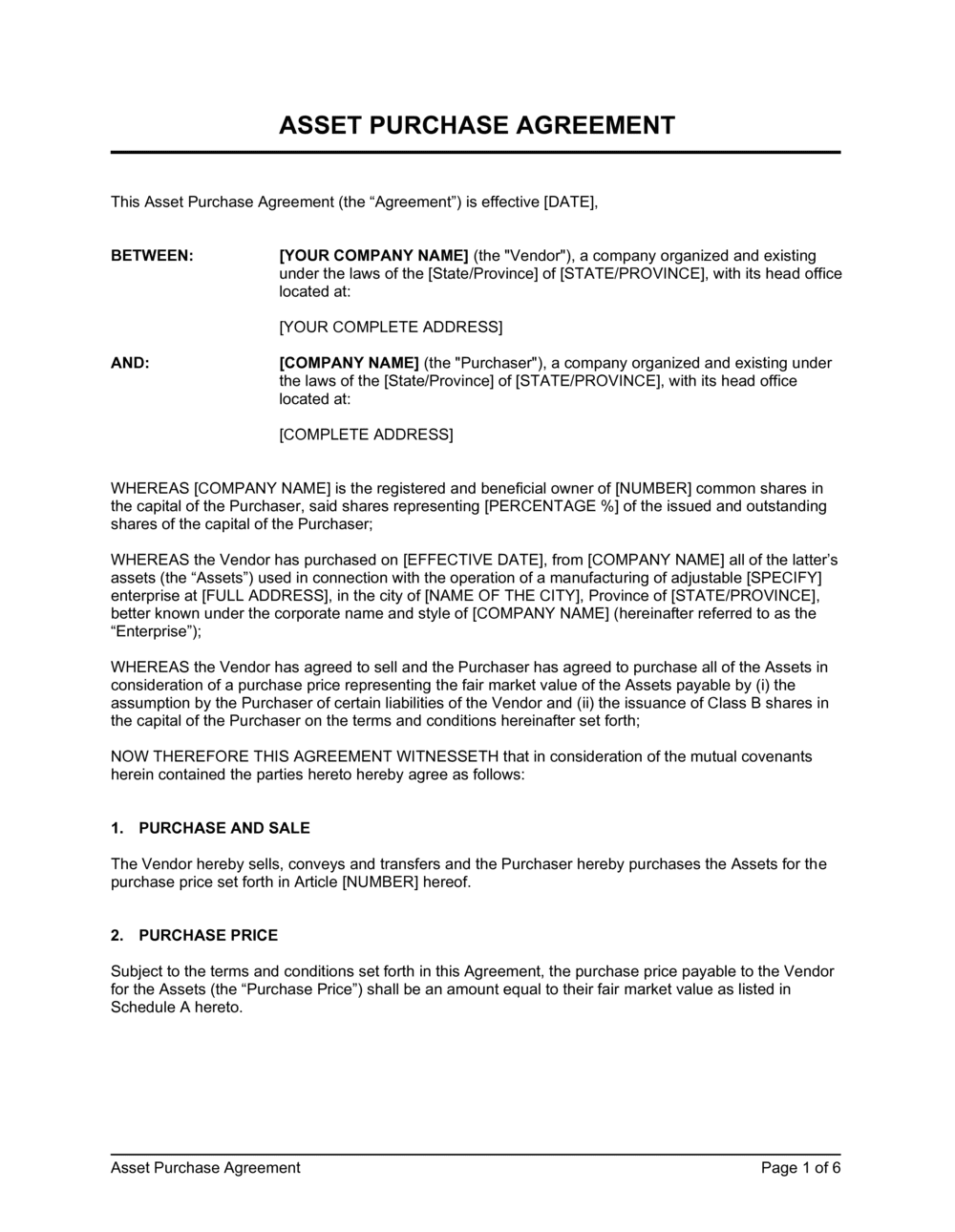
Identify and name all parties with their full legal entity names
Enter the full registered name and jurisdiction of organization for each party — contributor, acquiror, and any intermediate holding entity. Do not use trade names or DBAs.
💡 Pull entity names directly from the relevant secretary of state or corporate registry filing to avoid mismatches that can affect title transfer.
2
Prepare and attach Schedule A — the contributed asset list
List every asset being rolled over with a specific description, unique identifier (serial number, registration, or account number), and agreed fair market value. For intangible assets, include the jurisdiction of registration and registration number.
💡 For software and IP assets, confirm in advance whether the underlying license or registration is transferable — many require third-party consent before they can be contributed.
3
Document the valuation methodology
State whether values in Schedule A were determined by independent appraisal, agreed formula, or mutual consent, and attach the supporting appraisal report or valuation memorandum.
💡 For tax-deferred rollovers, the IRS and CRA scrutinize asset valuations closely. An independent appraisal is worthwhile for any asset contribution exceeding $250,000.
4
Specify the rollover equity consideration
Enter the exact class, number of units or shares, and fully diluted ownership percentage the contributor will receive. Reference the governing equity document (operating agreement or shareholder agreement) by name and date.
💡 Confirm with the acquiror's cap table manager that the equity issuance is authorized and that the post-rollover ownership percentages are reflected accurately before signing.
5
Complete the representations and warranties sections
Review each representation carefully and prepare Schedule B listing any exceptions — third-party consents required, known encumbrances, or pending litigation affecting any contributed asset.
💡 An accurate and complete Schedule B of exceptions is more valuable than clean reps. Undisclosed issues discovered post-closing trigger indemnification claims that could exceed the value of the rollover equity.
6
Set the conditions to closing
List all regulatory filings, third-party consents, and board approvals that must be obtained before the transfer is effective. Set a long-stop date by which all conditions must be satisfied or waived.
💡 Build in at least 30 days of buffer between the expected closing date and the long-stop date to accommodate regulatory or consent delays.
7
Insert the intended tax characterization
State the specific IRC or equivalent code section under which the parties intend the rollover to be treated as tax-deferred. Attach any tax opinion or advisor acknowledgment.
💡 Have a qualified tax advisor review this clause before execution — a single word change can shift the transaction from tax-deferred to fully taxable.
8
Execute before the effective closing date
Both parties must sign and date the agreement before the assets are transferred. Countersign any equity documents simultaneously so the contribution and issuance are contemporaneous.
💡 Use a signing order that ensures the equity issuance document and the asset contribution are executed at the same moment. Sequential signing with a gap creates risk that the contribution occurs without valid equity consideration.