Request for Payment of Unearned Discounts Template

Free Word download β€’ Edit online β€’ Save & share with Drive β€’ Export to PDF

1 pageβ€’15–25 min to fillβ€’Difficulty: Standard
Learn more ↓
FreeRequest for Payment of Unearned Discounts Template

At a glance

What it is
A Request For Payment Of Unearned Discounts is a formal business letter a seller or supplier sends to a buyer who deducted a discount from a payment without meeting the conditions that entitled them to it β€” most commonly, a 2/10 Net 30 early-payment discount taken after the 10-day window had expired. This free Word download gives you a ready-to-edit letter you can send in minutes to recover the improperly withheld amount.
When you need it
Send it when a customer remits less than the full invoice amount by claiming a discount they were not entitled to β€” because the payment arrived late, the invoice terms did not offer a discount, or no prior agreement authorized the deduction.
What's inside
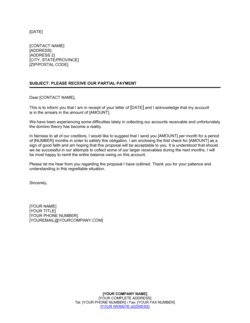
The letter identifies the original invoice and payment details, states the specific discount terms and why they were not met, calculates the outstanding balance owed, and requests payment by a defined date with instructions on how to remit.

What is a Request For Payment Of Unearned Discounts?

A Request For Payment Of Unearned Discounts is a formal business letter a seller sends to a buyer who deducted a discount from a payment without satisfying the conditions that entitled them to it. In practice, this most often occurs when a buyer takes a 2/10 Net 30 early-payment discount β€” a 2% reduction offered for paying within 10 days β€” but remits payment 20, 30, or more days after the invoice date. Because the discount window had already closed, the buyer did not earn the reduction, and the seller is entitled to collect the withheld amount. This template provides a professional, factual letter structure that identifies the invoice, documents the shortfall, and requests the balance by a specific date.

Why You Need This Document

Unauthorized discount deductions are one of the most common sources of accounts receivable leakage, and they tend to repeat: buyers who take unearned discounts without consequence simply continue doing it. Without a formal written request, the short-paid amount typically ages on the AR ledger until it is written off as a minor adjustment β€” eroding margins on every affected invoice. A documented letter creates a clear record of the demand, establishes the repayment deadline, and signals to the buyer that your business tracks and enforces its payment terms. For businesses with high transaction volumes, that signal alone is often enough to stop the pattern. This template lets you send a professional, complete recovery letter in under ten minutes β€” without sacrificing the tone or accuracy that keeps the customer relationship intact.

Which variant fits your situation?

If your situation is…Use this template
Customer took an early-payment discount but paid after the discount windowRequest For Payment Of Unearned Discounts
Customer deducted an amount with no explanation or supporting reasonRequest For Payment Of Unauthorized Deductions
Customer has not paid any portion of the invoice by the due datePast Due Payment Notice
Multiple unpaid invoices from the same customer requiring escalationCollections Demand Letter
Customer returned goods and deducted more than the agreed return creditDebit Memo Dispute Letter
Formal notice before referring the balance to a collections agencyFinal Notice Before Collections

Common mistakes to avoid

❌ Sending the letter to the wrong contact

Why it matters: A letter routed to a sales contact or project manager instead of accounts payable can sit unread for weeks while your due date passes.

Fix: Confirm the buyer's AP department contact before sending and address the letter directly to that person by name.
❌ Omitting the original invoice as an attachment

Why it matters: Buyers frequently cite 'missing documentation' as a reason to delay payment β€” even when the invoice was already sent. Without it attached, you add at least one round-trip delay.

Fix: Always attach a copy of the original invoice and the buyer's remittance advice to the letter so the AP team has everything needed to process the payment immediately.

❌ Using vague payment deadline language

Why it matters: Phrases like 'please remit promptly' or 'at your earliest convenience' give the buyer no accountability date and typically result in no action.

Fix: State a specific calendar date β€” 'payment is due no later than [DATE]' β€” and follow up by phone or email on that date if payment has not been received.

❌ Leading with a threatening or accusatory tone

Why it matters: An aggressive opening on a first-contact letter often triggers a defensive response from the buyer, escalating a simple billing correction into a relationship dispute.

Fix: Open by acknowledging the payment received, state the facts neutrally, and reserve any escalation language for the closing paragraph β€” and only after other approaches have failed.

The 9 key clauses, explained

Sender and recipient identification

In plain language: Opens the letter with the sender's company name, address, and contact details, as well as the recipient's full legal name, company, and billing address.

Sample language
[SENDER COMPANY NAME] | [ADDRESS] | [CITY, STATE, ZIP] | [DATE] | Attn: Accounts Payable | [RECIPIENT COMPANY NAME] | [RECIPIENT ADDRESS]

Common mistake: Addressing the letter to the general customer contact rather than the accounts payable department β€” the AR team's counterpart is AP, and routing to the wrong person delays resolution by days.

Subject line and invoice reference

In plain language: States the specific invoice number, original invoice amount, and payment date so the recipient can locate the transaction immediately.

Sample language
Re: Unearned Discount β€” Invoice #[INVOICE NUMBER] dated [INVOICE DATE] | Original Invoice Amount: $[AMOUNT]

Common mistake: Omitting the invoice number and relying on dates alone. Buyers with high transaction volume cannot match a letter to a specific payment without the invoice number.

Statement of payment received

In plain language: Acknowledges that a payment was received but notes the amount remitted and the discount the buyer deducted.

Sample language
We acknowledge receipt of your payment of $[AMOUNT RECEIVED] on [PAYMENT DATE], reflecting a deduction of $[DISCOUNT AMOUNT] from Invoice #[INVOICE NUMBER].

Common mistake: Skipping acknowledgment of the payment and leading with a demand β€” this tone escalates unnecessarily and can damage the customer relationship before the facts are even stated.

Statement of discount terms

In plain language: Quotes the exact payment terms from the original invoice and explains the condition β€” typically a payment deadline β€” that must be met to earn the discount.

Sample language
Invoice #[INVOICE NUMBER] offered a [X]% early-payment discount if payment was received on or before [DISCOUNT DEADLINE DATE], per the terms [X/10 NET 30] stated on the invoice.

Common mistake: Paraphrasing the terms loosely instead of quoting them verbatim. If the matter escalates, the letter becomes evidence β€” imprecise language undermines your position.

Explanation of why the discount was not earned

In plain language: Clearly states the reason the buyer was not entitled to the discount β€” most commonly that payment arrived after the discount window closed.

Sample language
Your payment was received on [ACTUAL PAYMENT DATE], which is [X] days after the [DISCOUNT DEADLINE DATE] discount deadline. As a result, the [X]% discount of $[DISCOUNT AMOUNT] was not earned under the terms of this invoice.

Common mistake: Being vague about the number of days late. Stating exactly how many days past the discount window the payment arrived removes ambiguity and makes the claim harder to dispute.

Outstanding balance calculation

In plain language: Presents a clear, itemized calculation showing the original invoice amount, the payment received, and the balance still owed.

Sample language
Original Invoice Amount: $[AMOUNT] | Payment Received: $[AMOUNT RECEIVED] | Balance Outstanding: $[BALANCE DUE]

Common mistake: Stating only the balance due without showing the arithmetic. Buyers who disagree need to see the math β€” if it is not in the letter, they will request it, adding a round-trip delay.

Request for payment and due date

In plain language: Formally requests that the buyer remit the outstanding balance by a specific date, typically 10–15 days from the letter date.

Sample language
We respectfully request that you remit the outstanding balance of $[BALANCE DUE] no later than [DUE DATE], which is [X] days from the date of this letter.

Common mistake: Using language like 'at your earliest convenience' instead of a specific date. An open-ended request produces an open-ended response.

Payment instructions

In plain language: Provides the exact method and details for remitting the balance β€” bank transfer, check payable to, ACH, or online portal β€” so the buyer can act immediately.

Sample language
Please remit payment by check payable to [COMPANY NAME] at the address above, or via ACH to [BANK NAME], Routing: [ROUTING NUMBER], Account: [ACCOUNT NUMBER]. Reference Invoice #[INVOICE NUMBER] on your remittance.

Common mistake: Omitting payment instructions from the letter itself. If the letter is forwarded to AP without the original invoice, the payer has no way to act.

Closing and escalation notice

In plain language: Closes professionally, invites the recipient to contact the sender with questions, and notes β€” without threatening β€” that unresolved balances may be subject to further action.

Sample language
If you have questions regarding this matter, please contact [NAME] at [PHONE / EMAIL]. Should we not receive payment by [DUE DATE], we may pursue additional remedies to recover the outstanding amount.

Common mistake: Including aggressive legal threats in a first-contact letter. A measured escalation notice preserves the customer relationship while still signaling consequences.

How to fill it out

  1. 1

    Enter your company and recipient details

    Fill in your company's full legal name, mailing address, and contact information at the top of the letter. Address the letter to the buyer's accounts payable department with the correct contact name if known.

    πŸ’‘ Call the buyer's main line before sending to confirm the correct AP contact name and email β€” letters addressed to a named individual are processed faster than those addressed to a department.

  2. 2

    Reference the specific invoice

    Enter the invoice number, original invoice date, and the full invoice amount in the subject line and opening paragraph. This lets the buyer's AP team locate the transaction without any back-and-forth.

    πŸ’‘ Attach a copy of the original invoice to the letter β€” it eliminates the most common delay tactic, which is requesting documentation.

  3. 3

    Document the payment received

    State the date you received the payment, the amount remitted, and the discount amount the buyer deducted. Keep this factual and neutral in tone.

    πŸ’‘ Reference the buyer's own check number or ACH trace ID if available β€” it demonstrates you have the transaction details and discourages a 'we never took a discount' response.

  4. 4

    Quote the invoice discount terms verbatim

    Copy the exact payment terms from the original invoice β€” including the discount percentage, discount window in days, and net due date. Do not paraphrase.

    πŸ’‘ If your invoice terms are printed in small print or encoded as shorthand (e.g., 2/10 N30), spell them out in plain English in the letter to remove any ambiguity.

  5. 5

    Calculate and state the outstanding balance

    Show the arithmetic: original invoice amount minus payment received equals balance due. Present this as a simple three-line table so the buyer's AP team can verify it at a glance.

    πŸ’‘ Double-check the math before sending β€” a calculation error in a payment demand letter undermines your credibility and gives the buyer grounds to dispute the whole claim.

  6. 6

    Set a specific payment due date and include remittance instructions

    Give the buyer 10–15 days from the letter date to remit the balance. Include your full bank transfer details, ACH information, or check payable-to instructions directly in the letter body.

    πŸ’‘ 10 days is standard for an unearned discount recovery; 15 days is appropriate for long-standing customers or large balances where relationship preservation matters.

Frequently asked questions

What is an unearned discount?

An unearned discount is a price reduction a buyer deducts from an invoice payment without meeting the conditions required to qualify for it. The most common example is a 2/10 Net 30 early-payment discount taken after the 10-day discount window has already closed. Because the condition was not met, the seller is entitled to recover the deducted amount.

When should I send a request for payment of unearned discounts?

Send the letter as soon as you post the short payment to your accounts receivable ledger and confirm the payment date falls outside the discount window. Acting promptly β€” within 5 to 7 business days of receiving the short payment β€” signals to the buyer that you track these deductions closely and reduces the risk that the amount gets written off as a minor billing adjustment.

Is a buyer legally obligated to repay an unearned discount?

In most jurisdictions, yes β€” if the invoice terms clearly state the conditions for the discount and those conditions were not met, the buyer has not fulfilled the payment obligation and owes the balance. The invoice terms form part of the commercial agreement between the parties. If the amount is disputed, a formal demand letter is typically the first step before escalating to a collections process or small claims action.

What if the buyer claims they mailed the payment on time?

Most invoice terms specify that the discount applies when payment is received by the seller, not when it is mailed or initiated. If your terms use a receipt standard, the postmark date is not relevant. Reply to the buyer's claim in writing, referencing the specific receipt date from your bank or payment records, and restate that receipt β€” not initiation β€” triggers the discount eligibility.

How many times should I send this letter before escalating?

Send the initial request and follow up once by phone or email if no response is received by the due date. If the balance remains unpaid after a second written notice, consider escalating to a formal collections demand letter, placing the account on credit hold, or referring the balance to a collections agency, depending on the dollar amount and customer relationship.

Can I charge a late fee on top of the unearned discount balance?

You can if your invoice terms include a late-fee provision β€” typically stated as a monthly percentage (e.g., 1.5% per month) on overdue balances. However, for a first-contact recovery letter on an unearned discount, most businesses limit the demand to the discount amount itself to keep the request simple and the tone professional. Reserve late fees for a second notice if the initial request is ignored.

What records should I keep after sending this letter?

Retain a copy of the letter, proof of delivery (email read receipt, certified mail tracking number, or courier confirmation), the original invoice, the buyer's remittance advice showing the deduction, and your bank record showing the short-payment receipt date. These documents support escalation to collections or small claims if the buyer refuses to pay.

Should this letter be sent by email or postal mail?

Email with a PDF attachment is the standard for most B2B billing correspondence β€” it reaches the AP team fastest, creates a timestamped record, and allows the buyer to forward the letter and attachments directly within their approval workflow. For larger balances or disputes where you anticipate the need for legal evidence, follow up with a certified mail copy to establish a formal delivery record.

How this compares to alternatives

vs Past Due Payment Notice

A past due notice addresses invoices where no payment has been received by the due date. A request for payment of unearned discounts addresses invoices that were paid β€” but short by the unauthorized discount amount. The underlying situation, tone, and resolution path differ significantly between the two.

vs Collections Demand Letter

A collections demand letter is a formal final notice typically sent before legal action or referral to a collections agency, often for larger or older balances. A request for unearned discounts is a first-contact professional letter for a specific, calculable short-payment. Start with the recovery letter; escalate to a demand letter only if the buyer does not respond.

vs Debit Memo

A debit memo is an internal accounting document that records a charge to a customer's account β€” it adjusts the balance in your AR system but is not a formal communication to the buyer. A request for payment of unearned discounts is the external letter you send to notify the buyer and request the funds. Both are typically prepared together.

vs Credit Note

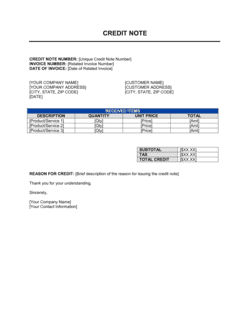
A credit note reduces an amount a buyer owes β€” issued by the seller to correct an overcharge or accept a return. A request for payment of unearned discounts does the opposite: it reasserts the full amount owed by canceling a deduction the buyer was not entitled to take. These documents serve opposite purposes in the billing cycle.

Industry-specific considerations

Wholesale Distribution

High transaction volumes and slim margins make unauthorized early-payment deductions a material revenue leak β€” recovery letters are a routine part of AR operations.

Manufacturing and Suppliers

Large retail and industrial buyers routinely take unapproved discounts; suppliers use formal demand letters to enforce payment terms without damaging long-term supply relationships.

Professional Services

Service firms that offer early-payment incentives on retainer or project invoices must recover deductions taken outside the agreed window to protect cash flow.

Food and Beverage

Fast-moving consumer goods suppliers dealing with grocery chains frequently encounter unauthorized deductions and use formal letters as the first step in a structured deduction management process.

Template vs pro β€” what fits your needs?

PathBest forCostTime
Use the templateAny business recovering unearned discounts from customers as part of standard AR managementFree5–10 minutes per letter
Template + professional reviewBusinesses with recurring deduction disputes from a single high-value customer, or where the balance exceeds $5,000$50–$150 (AR consultant or attorney review)1–2 days
Custom draftedEscalated disputes involving disputed contract terms, multiple invoices, or potential litigation$300–$800 (attorney-drafted demand letter)3–7 days

Glossary

Unearned Discount
A price reduction deducted by a buyer who did not satisfy the conditions β€” typically a payment deadline β€” required to be entitled to that reduction.
Early-Payment Discount
A percentage reduction offered by a seller to incentivize faster payment, expressed as terms like 2/10 Net 30 β€” meaning 2% off if paid within 10 days.
2/10 Net 30
Standard invoice terms offering a 2% discount if the invoice is paid within 10 days; the full amount is due within 30 days if the discount is not taken.
Short Payment
When a buyer remits less than the full invoice amount, leaving an open balance that the seller must pursue separately.
Deduction
An amount a buyer unilaterally subtracts from an invoice payment, which may or may not be authorized by the seller's terms.
Remittance Advice
A document or note from the buyer accompanying a payment that explains which invoices are being paid and any deductions taken.
Accounts Receivable (AR)
Money owed to a business by its customers for goods or services already delivered but not yet paid in full.
Invoice Terms
The agreed payment conditions printed on an invoice β€” including the discount window, net due date, and any late-fee provisions.
Chargeback
In trade and wholesale contexts, a deduction a buyer takes against a future payment to offset a claimed overpayment, error, or shortfall from a prior transaction.

Part of your Business Operating System

This document is one of 3,000+ business & legal templates included in Business in a Box.

  • Fill-in-the-blanks β€” ready in minutes
  • 100% customizable Word document
  • Compatible with all office suites
  • Export to PDF and share electronically

Create your document in 3 simple steps.

From template to signed document β€” all inside one Business Operating System.
1
Download or open template

Access over 3,000+ business and legal templates for any business task, project or initiative.

2
Edit and fill in the blanks with AI

Customize your ready-made business document template and save it in the cloud.

3
Save, Share, Send, Sign

Share your files and folders with your team. Create a space of seamless collaboration.

Save time, save money, and create top-quality documents.

β˜…β˜…β˜…β˜…β˜…

"Fantastic value! I'm not sure how I'd do without it. It's worth its weight in gold and paid back for itself many times."

Managing Director Β· Mall Farm
Robert Whalley
Managing Director, Mall Farm Proprietary Limited
β˜…β˜…β˜…β˜…β˜…

"I have been using Business in a Box for years. It has been the most useful source of templates I have encountered. I recommend it to anyone."

Business Owner Β· 4+ years
Dr Michael John Freestone
Business Owner
β˜…β˜…β˜…β˜…β˜…

"It has been a life saver so many times I have lost count. Business in a Box has saved me so much time and as you know, time is money."

Owner Β· Upstate Web
David G. Moore Jr.
Owner, Upstate Web

Run your business with a system β€” not scattered tools

Stop downloading documents. Start operating with clarity. Business in a Box gives you the Business Operating System used by over 250,000 companies worldwide to structure, run, and grow their business.

Start freeΒ Β·Β No credit card required