Letter of Reference_Long Template

Free Word download β€’ Edit online β€’ Save & share with Drive β€’ Export to PDF

1 pageβ€’15–25 min to fillβ€’Difficulty: Standard
Learn more ↓
FreeLetter of Reference_Long Template

At a glance

What it is
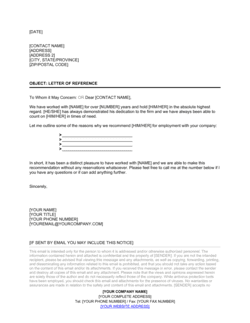
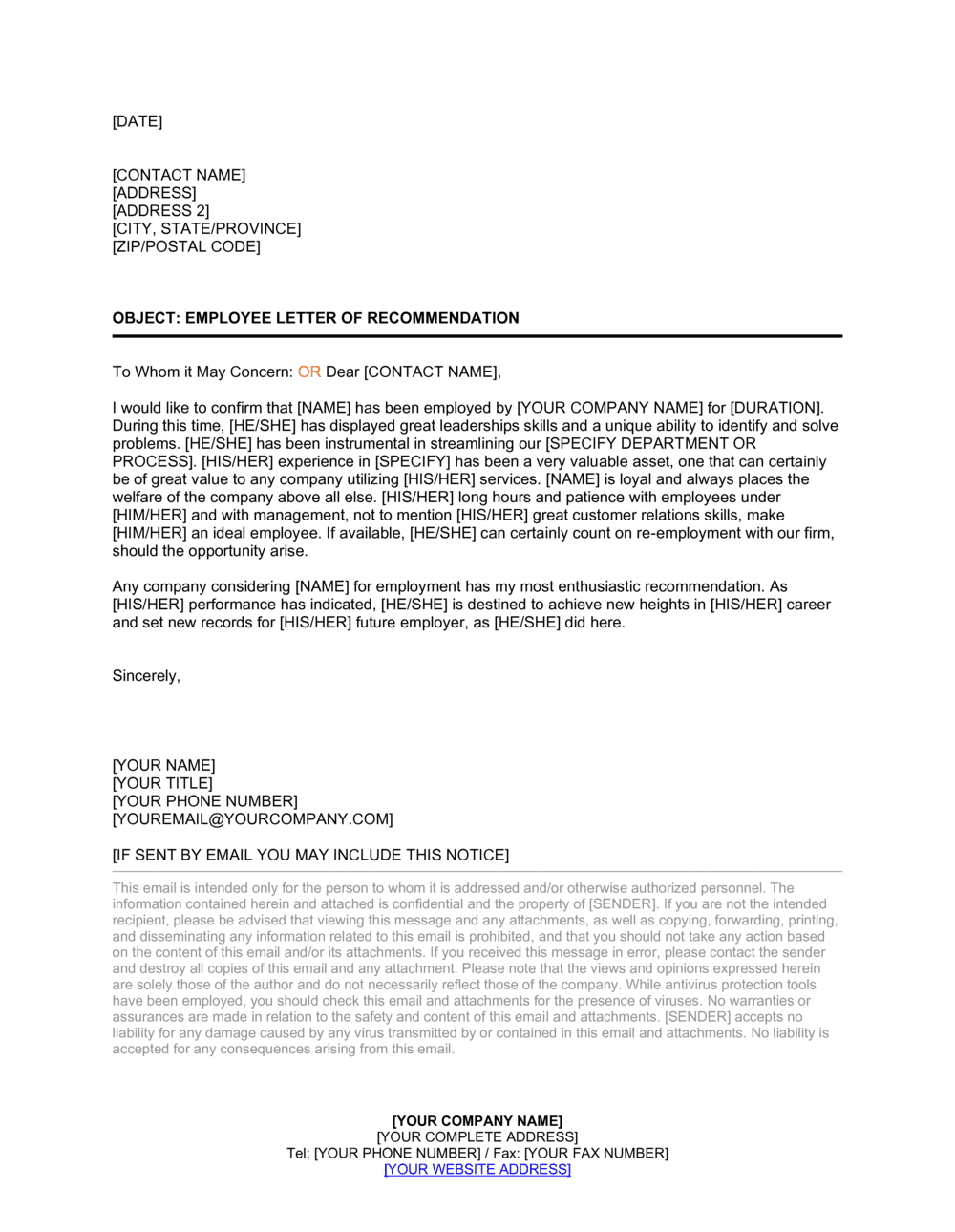
A Letter of Reference (Long) is a formal written endorsement from a manager, supervisor, colleague, or client that attests to a person's professional character, skills, and specific achievements in detail. This free Word download provides a structured, multi-paragraph template you can edit online and export as PDF β€” covering the writer's relationship with the subject, concrete performance examples, and a strong closing recommendation.
When you need it
Use it when a candidate, employee, or vendor asks you for a written reference to support a job application, professional licensing request, graduate school admission, or business proposal. It is also appropriate when a colleague needs a detailed endorsement beyond a brief LinkedIn recommendation.
What's inside
Letterhead and date, salutation, writer's relationship to the subject, performance and character assessment with specific examples, a skills summary, and a definitive closing recommendation with the writer's contact details.

What is a Letter of Reference (Long)?

A Letter of Reference (Long) is a formal written endorsement in which a manager, supervisor, client, or colleague provides a detailed account of a person's professional skills, character, and specific workplace achievements to support a job application, licensing request, academic admission, or business opportunity. Unlike a brief one-paragraph note, this long-form version includes two concrete achievement examples with measurable outcomes, a targeted skills summary, and a definitive closing recommendation β€” giving the reader enough substance to make an informed decision about the subject.

Why You Need This Document

A generic reference letter with nothing but vague praise actively hurts the person it is meant to help β€” experienced hiring managers and admissions committees discount adjective-heavy letters that offer no supporting evidence. A well-structured, detailed reference letter with specific examples and quantified results signals that the writer genuinely observed the subject's work and is willing to stake their professional credibility on the endorsement. Without this level of detail, candidates lose ground to peers whose references cite real achievements. This template gives every writer β€” regardless of how often they write reference letters β€” a clear structure that produces a credible, readable endorsement in under 30 minutes, with nothing important left out.

Which variant fits your situation?

If your situation is…Use this template
Brief one-paragraph endorsement for a casual or informal requestLetter of Reference (Short)
Character reference for a legal, court, or immigration proceedingCharacter Reference Letter
Formal recommendation for an academic program or scholarshipAcademic Recommendation Letter
Employment verification confirming job title and dates onlyEmployment Verification Letter
Introducing a candidate to a specific employer or contactLetter of Introduction
Endorsing a business partner's capabilities for a contract bidBusiness Reference Letter

Common mistakes to avoid

❌ Generic praise with no supporting evidence

Why it matters: Readers discount adjectives like 'outstanding' or 'dedicated' when they appear without examples. A letter full of praise but empty of specifics reads as a form letter, not a genuine endorsement.

Fix: Replace every unsubstantiated adjective with a one-sentence example that demonstrates the quality. If you cannot think of an example, remove the claim.
❌ Hedging the closing recommendation

Why it matters: A closing that says 'I think they would probably do well' signals doubt β€” readers interpret qualified closings as polite rejections, and the subject is worse off than if no letter existed.

Fix: If you can recommend the person, do so without qualification. If you cannot, decline to write the letter or limit its scope to verifiable facts only.

❌ Omitting the writer's professional context

Why it matters: A letter signed 'John' with no title or organization gives the reader no basis to evaluate the endorsement's weight β€” a reference from a direct supervisor carries far more value than one from an unidentified acquaintance.

Fix: Always include your full name, title, organization, and contact details in both the letterhead and the signature block.

❌ Writing both achievement examples about the same skill

Why it matters: Repeating the same strength twice reads as filler and fails to demonstrate range, leaving the reader with a one-dimensional picture of the subject.

Fix: Use the second example to showcase a complementary skill β€” for instance, if the first example covers technical output, the second should address leadership, communication, or problem-solving.

The 9 key clauses, explained

Letterhead and date

In plain language: Identifies the writer and establishes the letter's official context β€” name, title, organization, address, phone, email, and the date of writing.

Sample language
[WRITER NAME] | [TITLE] | [ORGANIZATION] | [ADDRESS] | [PHONE] | [EMAIL] | [DATE]

Common mistake: Using personal contact details instead of a professional email and work address when writing on behalf of a company β€” the letter loses credibility without an organizational affiliation.

Recipient salutation

In plain language: Addresses the recipient by name when known, or uses a professional generic opening when the recipient is unknown.

Sample language
Dear [RECIPIENT NAME], / To Whom It May Concern,

Common mistake: Defaulting to 'To Whom It May Concern' when the recipient is known. Addressing the hiring manager or admissions officer by name increases the letter's perceived effort and personalization.

Writer's relationship to the subject

In plain language: Establishes the writer's credibility and context by explaining how, where, and for how long they have known or worked with the subject.

Sample language
I have had the pleasure of working with [SUBJECT NAME] for [X] years in my capacity as [YOUR TITLE] at [ORGANIZATION], where [SUBJECT NAME] served as [THEIR TITLE].

Common mistake: Vague relationship descriptions like 'I know this person well.' Readers need the professional context β€” title, organization, and duration β€” to weight the endorsement properly.

Overall performance and character assessment

In plain language: Delivers a high-level endorsement of the subject's work quality, professional conduct, and key character traits.

Sample language
[SUBJECT NAME] consistently demonstrated exceptional [SKILL/QUALITY] and brought [SPECIFIC ATTRIBUTE] to every project. Their work ethic and [TRAIT] set them apart from peers at the same level.

Common mistake: Generic praise with no specifics β€” phrases like 'excellent employee' or 'great team player' add no value. Concrete traits tied to observed behavior are what readers remember.

Specific achievement example 1

In plain language: Illustrates the endorsement with a concrete story: the situation, the subject's action, and the measurable result.

Sample language
In [YEAR], [SUBJECT NAME] led [PROJECT/INITIATIVE], which resulted in [QUANTIFIED OUTCOME β€” e.g., a 20% reduction in processing time / $150K in new revenue / a 95% client retention rate].

Common mistake: Describing what the subject was responsible for rather than what they actually achieved. Responsibility is a job description; achievement is what makes the reference memorable.

Specific achievement example 2

In plain language: A second concrete example that highlights a different skill or context, showing range rather than repeating the first example.

Sample language
Beyond [FIRST SKILL], [SUBJECT NAME] also demonstrated strong [SECOND SKILL] when [SITUATION]. The outcome was [RESULT], which [IMPACT ON TEAM/ORGANIZATION].

Common mistake: Making both achievement examples about the same skill set. Two examples covering the same strength read as padding; the second example should reveal a complementary capability.

Skills and attributes summary

In plain language: A concise inventory of the subject's standout professional skills and personal qualities relevant to the role or purpose they are pursuing.

Sample language
Among [SUBJECT NAME]'s strongest attributes are [SKILL 1], [SKILL 2], and [SKILL 3]. I have observed these qualities directly in [CONTEXT] and am confident they will transfer to any [ROLE/ENVIRONMENT].

Common mistake: Listing every possible skill in an attempt to be comprehensive. A focused list of three to five genuinely observed strengths is more convincing than an exhaustive catalog.

Closing recommendation

In plain language: The definitive endorsement statement β€” explicitly recommends the subject without reservation and invites the reader to contact the writer for further discussion.

Sample language
I recommend [SUBJECT NAME] without reservation for [ROLE/PROGRAM/PURPOSE]. Please feel free to contact me at [EMAIL] or [PHONE] if I can provide any further information.

Common mistake: Hedging the closing statement with qualifications like 'I believe they would likely do well.' Qualified closings undermine the entire letter β€” if you cannot recommend without reservation, decline to write the letter.

Writer's signature block

In plain language: Closes the letter formally with the writer's name, title, organization, and signature β€” confirming authorship and accountability.

Sample language
Sincerely, [WRITER NAME] | [TITLE] | [ORGANIZATION]

Common mistake: Omitting the writer's title and organization from the signature block. A first name alone provides no context for the reader to evaluate the weight of the endorsement.

How to fill it out

  1. 1

    Gather details from the person requesting the reference

    Ask the subject for their current resume, the job description or program they are applying to, and two or three achievements they would like highlighted. This ensures the letter addresses what the reader is looking for.

    πŸ’‘ Request a deadline at least one week before the actual submission date β€” rushed letters show.

  2. 2

    Fill in the letterhead and date

    Enter your name, professional title, organization, mailing address, phone, and work email in the header. Set the date to the day you will send or hand over the letter.

    πŸ’‘ Use your organization's official letterhead template if available β€” institutional affiliation adds weight.

  3. 3

    Address the recipient by name when possible

    Use a named salutation if the subject can provide the hiring manager's or admissions officer's name. Verify spelling before finalizing.

    πŸ’‘ If the letter will be used for multiple applications, use 'Dear Hiring Manager' rather than 'To Whom It May Concern' β€” it reads as slightly more directed.

  4. 4

    Establish your relationship and context in the opening paragraph

    State your title, the subject's title, your organization, and how long you worked together. One to two sentences is enough β€” readers want context, not biography.

    πŸ’‘ Mention a shared project or team early β€” it signals genuine firsthand experience rather than a superficial acquaintance.

  5. 5

    Write two specific achievement examples with results

    For each example, describe the situation, the subject's specific action, and the quantified or clearly observable outcome. Each example should take three to five sentences.

    πŸ’‘ Use numbers wherever honest: percentages, dollar amounts, timelines, or team sizes. One metric is worth a paragraph of adjectives.

  6. 6

    Summarize three to five standout skills

    Select skills directly relevant to the role or program the subject is pursuing. Tie each to something you observed β€” not something they told you about themselves.

    πŸ’‘ Match the skills to keywords in the job description or program criteria if the subject shared them β€” this gives the letter a tailored feel without requiring a full rewrite.

  7. 7

    Write an unqualified closing recommendation

    Close with a clear, unhedged endorsement sentence. Include your direct email and phone number so the reader can follow up.

    πŸ’‘ If you genuinely cannot write an unqualified recommendation, a shorter, more qualified letter is better than a long one that ends with a weak close.

Frequently asked questions

What is a letter of reference?

A letter of reference is a formal written endorsement from someone who knows the subject professionally, attesting to their character, skills, and work performance. Unlike an employment verification letter, which only confirms factual details like job title and dates, a reference letter provides a subjective assessment of the subject's qualities and suitability for a new role, program, or opportunity.

What is the difference between a letter of reference and a letter of recommendation?

The two terms are used interchangeably in most business contexts. In academic settings, 'letter of recommendation' typically implies a stronger, more personal endorsement directed at a specific institution or committee. A letter of reference is slightly broader β€” it can be addressed to a general audience or held by the subject to present as needed. In practice, the format and content are nearly identical.

How long should a letter of reference be?

A long-form reference letter should run three to five paragraphs on a single page β€” roughly 300 to 500 words. This length allows for two specific achievement examples and a skills summary without padding. Letters exceeding one full page are rarely read in their entirety; letters under two paragraphs lack the detail needed to be persuasive.

Does a letter of reference need to be signed?

A handwritten signature adds formality and is expected when the letter is printed and submitted physically. For emailed PDFs, a digital signature or a professionally formatted signature block with full contact details is generally accepted. What matters most is that the writer's name, title, and organization are clearly stated so the reader can verify authenticity.

What should I do if I cannot write an honest positive reference?

Decline politely. A lukewarm or hedged reference letter is worse for the subject than no letter at all β€” readers are experienced at reading between the lines, and qualified praise signals a problem. If you can speak positively to a limited scope β€” technical skills but not leadership, for example β€” offer to write a narrowly scoped letter and let the subject decide whether it serves their needs.

Can I use a letter of reference template for any industry?

Yes. The structure of a formal reference letter β€” relationship context, achievement examples, skills summary, and closing recommendation β€” is consistent across industries. The content adapts to the field: a reference for a software engineer will emphasize technical output and code quality, while one for a sales professional will cite revenue figures and client retention. The template handles the structure; your specific knowledge of the subject provides the substance.

How do I ask someone to write a letter of reference for me?

Ask directly and early β€” at least two to three weeks before the deadline. Provide the writer with your current resume, a description of the role or program you are applying to, and two or three accomplishments you would like highlighted. This makes the writer's job easier and ensures the letter supports your application strategically rather than covering generic ground.

Should a letter of reference be addressed to a specific person?

Whenever possible, yes. A letter addressed to a named hiring manager or admissions director reads as more deliberate and personalized than a generic 'To Whom It May Concern.' Ask the person requesting the reference whether they know the recipient's name. If the letter will be used for multiple purposes, a general salutation is acceptable, but a named version carries more weight for high-stakes applications.

How this compares to alternatives

vs Letter of Reference (Short)

A short reference letter is one to two paragraphs and suited for informal requests, LinkedIn endorsements, or situations where the reader wants a quick confirmation of fit. The long version provides two concrete achievement examples and a skills summary, making it appropriate for competitive job applications, graduate programs, and professional licensing β€” anywhere depth of endorsement is evaluated.

vs Employment Verification Letter

An employment verification letter confirms factual details only β€” job title, employment dates, and sometimes salary. It carries no subjective assessment and cannot substitute for a reference letter when the employer or institution wants to understand how well the person performed. Use verification for background checks and visa applications; use a reference letter when character and achievement matter.

vs Character Reference Letter

A character reference focuses on personal ethics, conduct, and community standing rather than professional performance β€” it is most commonly used in legal proceedings, immigration applications, or community roles. A professional reference letter focuses on job-relevant skills and measurable workplace achievements. The two serve different audiences and should not be substituted for each other.

vs Letter of Introduction

A letter of introduction presents someone to a new contact or organization for networking or business development purposes β€” it opens a door without necessarily endorsing specific performance. A letter of reference directly vouches for the subject's qualifications and past work. Use an introduction letter to create a connection; use a reference letter to support a hiring, admission, or procurement decision.

Industry-specific considerations

Professional Services

References for consultants, lawyers, and accountants routinely cite client outcomes, billing efficiency, and professional conduct under confidentiality constraints.

Technology / SaaS

Software and product roles typically require references that speak to specific projects, code quality, system impact, and cross-functional collaboration.

Healthcare

Clinical and administrative references must address patient care standards, regulatory compliance, and performance under high-pressure conditions without disclosing protected patient information.

Construction and Trades

References for tradespeople and contractors emphasize on-time delivery, safety record, quality of work, and ability to manage subcontractors and budgets on-site.

Template vs pro β€” what fits your needs?

PathBest forCostTime
Use the templateManagers, supervisors, and colleagues writing standard professional reference letters for job applicants or vendorsFree20–30 minutes
Template + professional reviewSenior executives writing references for C-suite candidates or high-stakes academic programs where tone and phrasing carry significant weight$50–$150 (professional editor or writing coach review)1–2 hours
Custom draftedOrganizations that need a professionally ghostwritten reference letter for a high-profile departure, legal context, or complex cross-border credential application$150–$500 (professional business writer)1–3 days

Glossary

Letter of Reference
A formal written statement from someone who knows the subject professionally, attesting to their character, skills, and work performance.
Letter of Recommendation
Often used interchangeably with letter of reference; in academic and formal contexts it typically implies a stronger personal endorsement directed at a specific institution or decision-maker.
Referee
The person writing the letter who vouches for the subject's qualifications or character.
Subject
The individual or entity being recommended or endorsed in the letter.
Employment Verification
A narrower document that confirms only factual details β€” job title, employment dates, and salary β€” without any subjective assessment.
Character Reference
A reference focused on personal qualities, ethics, and conduct rather than specific professional skills or job performance.
Closing Recommendation
The final statement in a reference letter where the writer explicitly endorses the subject and invites the reader to follow up β€” the most heavily weighted part of the letter.
Letterhead
The header block containing the writer's name, title, organization, address, and contact details, establishing the letter's official origin.

Part of your Business Operating System

This document is one of 3,000+ business & legal templates included in Business in a Box.

  • Fill-in-the-blanks β€” ready in minutes
  • 100% customizable Word document
  • Compatible with all office suites
  • Export to PDF and share electronically

Create your document in 3 simple steps.

From template to signed document β€” all inside one Business Operating System.
1
Download or open template

Access over 3,000+ business and legal templates for any business task, project or initiative.

2
Edit and fill in the blanks with AI

Customize your ready-made business document template and save it in the cloud.

3
Save, Share, Send, Sign

Share your files and folders with your team. Create a space of seamless collaboration.

Save time, save money, and create top-quality documents.

β˜…β˜…β˜…β˜…β˜…

"Fantastic value! I'm not sure how I'd do without it. It's worth its weight in gold and paid back for itself many times."

Managing Director Β· Mall Farm
Robert Whalley
Managing Director, Mall Farm Proprietary Limited
β˜…β˜…β˜…β˜…β˜…

"I have been using Business in a Box for years. It has been the most useful source of templates I have encountered. I recommend it to anyone."

Business Owner Β· 4+ years
Dr Michael John Freestone
Business Owner
β˜…β˜…β˜…β˜…β˜…

"It has been a life saver so many times I have lost count. Business in a Box has saved me so much time and as you know, time is money."

Owner Β· Upstate Web
David G. Moore Jr.
Owner, Upstate Web

Run your business with a system β€” not scattered tools

Stop downloading documents. Start operating with clarity. Business in a Box gives you the Business Operating System used by over 250,000 companies worldwide to structure, run, and grow their business.

Free Forever PlanΒ Β·Β No credit card required