1
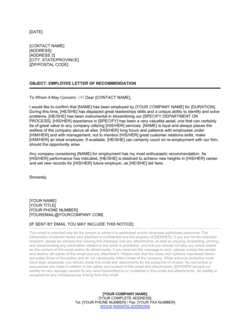
Complete the header with sender and recipient details
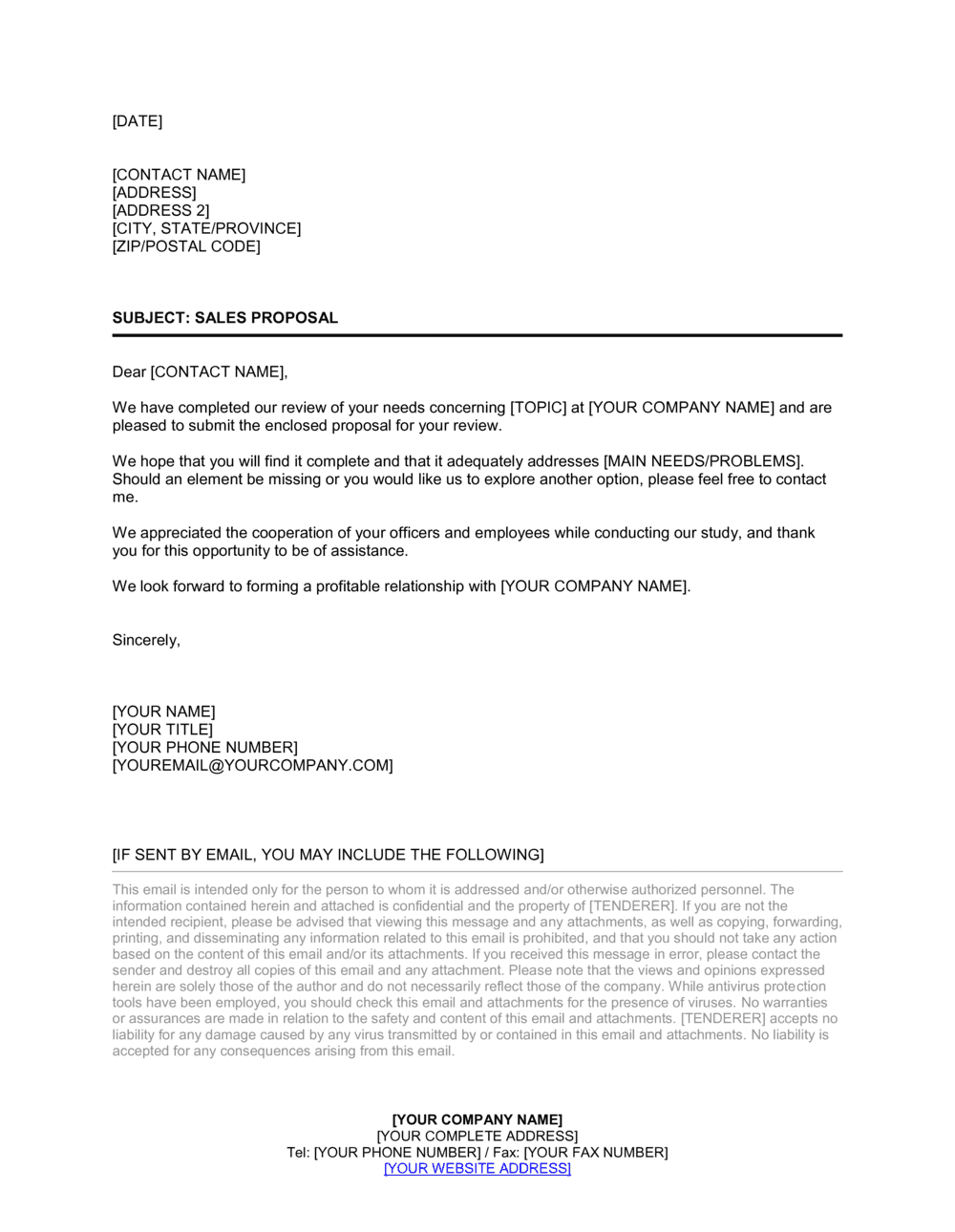
Enter your company's full legal name, mailing address, and contact information. Add the date, then the recipient's full name, title, organization, and address.
💡 Use the same company name and address format that appears on your proposal — inconsistency between the letter header and the proposal cover page looks careless.
2
Add a reference line if responding to an RFP
Insert a 'Re:' line naming the project and including any reference or tracking number issued in the RFP. This tells procurement teams exactly which submission they are holding.
💡 Copy the project name from the RFP verbatim — paraphrasing it can cause misfiling or disqualification in formal evaluation processes.
3
Write a named salutation
Address the recipient by name and title. If you are unsure of the correct name, call the issuing organization's main line to confirm before sending.
💡 For senior-level recipients, verify the correct honorific — using 'Mr.' for a recipient who holds a doctorate or military title is a noticeable oversight.
4
Draft the opening context paragraph
State why you are writing, reference any prior interaction, name the enclosed proposal, and connect immediately to the recipient's stated need or challenge.
💡 Keep this paragraph to three sentences maximum — the goal is orientation, not persuasion. Persuasion comes in the next paragraph.
5
Summarize the proposal and highlight key benefits
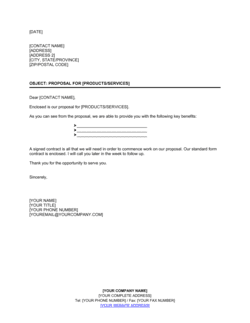
Write two to four sentences covering the proposal's core offer, the main deliverables, and the two or three outcomes most relevant to this specific recipient.
💡 Pull the quantified result you are most confident in and lead with it — a specific number (e.g., '20% reduction in processing time') is more persuasive than a general benefit claim.
6
Reference specific sections of the enclosed proposal
Point the reader to the pages or sections that support your key claims — pricing, timeline, credentials, or testimonials. This guides a busy reader to the evidence quickly.
💡 Verify section numbers and page references against the final version of the proposal before sending — mismatched references are a common last-minute error.
7
Insert a specific call to action with a follow-up date
State clearly what you want the recipient to do and when you will follow up. Give a direct phone number and email so there is no friction in responding.
💡 Set your follow-up date 5–7 business days after expected receipt — enough time for initial review, close enough to keep momentum.
8
Add the enclosure list and proofread the full package
List every document in the submission package in the enclosure notation. Then read the letter aloud once to catch awkward phrasing, and verify that every named enclosure is physically included.
💡 Send yourself a test email with all attachments before sending to the client — this catches missing files and formatting issues in PDF conversion.