You Are Highly Recommended as a Speaker for our Banquet Template

Free Word download β€’ Edit online β€’ Save & share with Drive β€’ Export to PDF

1 pageβ€’20–30 min to fillβ€’Difficulty: Standardβ€’Signature requiredβ€’Legal review recommended
Learn more ↓
FreeYou Are Highly Recommended as a Speaker for our Banquet Template

At a glance

What it is
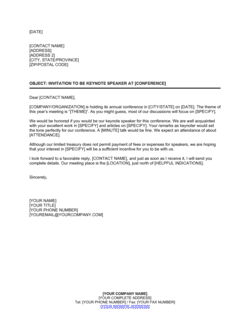
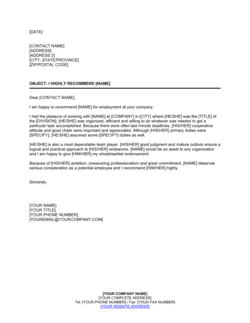
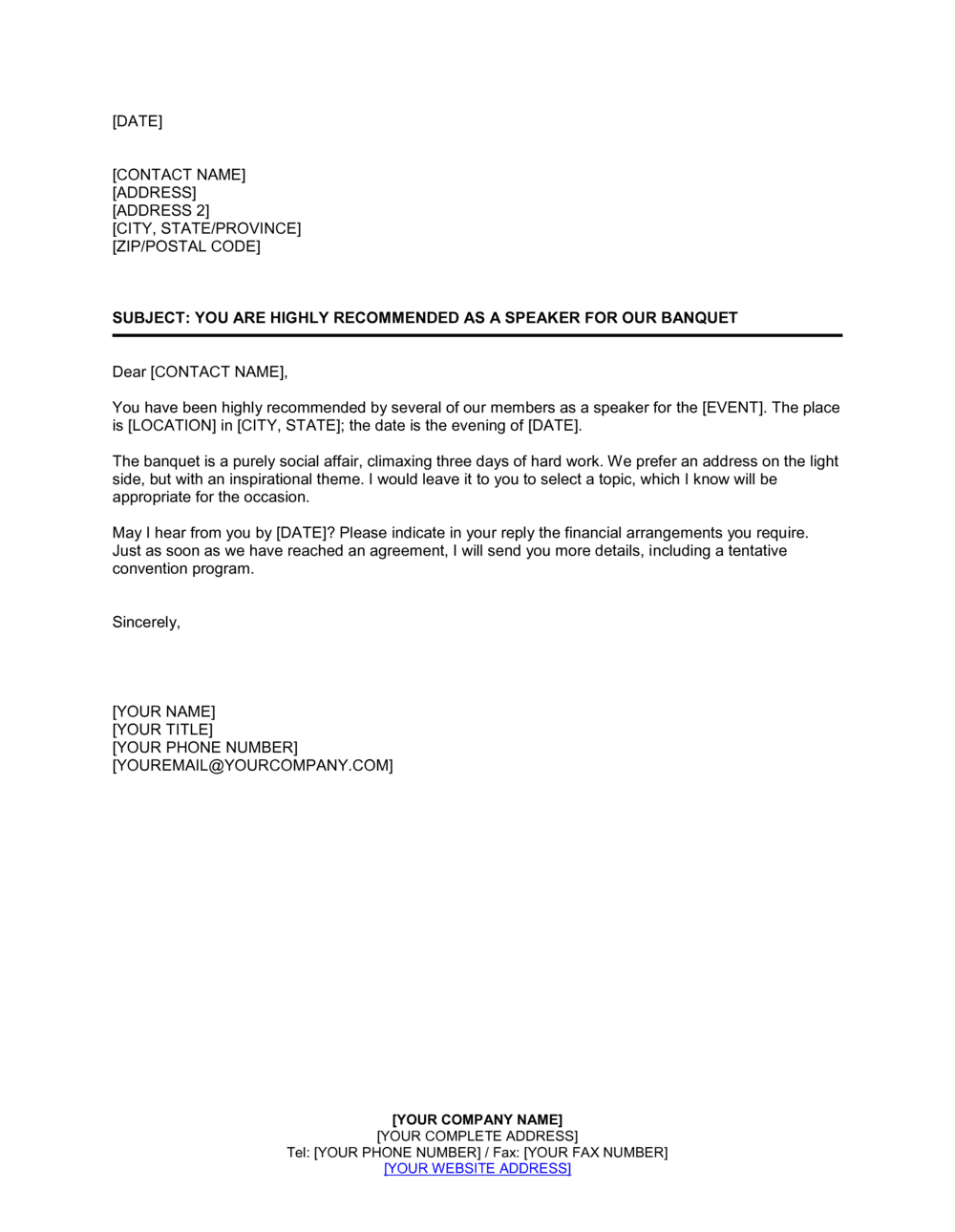
A Speaker Recommendation Letter for a Banquet is a formal written communication issued by an event organizer or sponsoring organization to invite and recommend a specific individual as a keynote or featured speaker at a banquet or formal dinner event. This free Word download provides a structured template you can edit online, confirm key event terms β€” date, venue, topic, honorarium, and logistics β€” and export as PDF for delivery to the prospective speaker.
When you need it
Use it when your organization or committee has identified a speaker for an upcoming banquet and needs to extend a formal, documented invitation that confirms the engagement details and creates a record of mutual expectations. It is also appropriate when a third party is recommending the speaker to the organizing body and needs to put that endorsement in writing.
What's inside
The letter covers the recommending party's endorsement and credentials, event date and venue details, the proposed speech topic and duration, honorarium or expense reimbursement terms, logistical arrangements such as travel and accommodation, confirmation requirements, and a closing call to action for the speaker to accept.

What is a Speaker Recommendation Letter for a Banquet?

A Speaker Recommendation Letter for a Banquet is a formal written communication in which an event organizer or sponsoring party invites and endorses a specific individual to deliver a speech or keynote address at a banquet or formal dinner. The letter confirms the event name, date, venue, speech topic and duration, honorarium or compensation terms, travel and accommodation arrangements, recording rights, and a deadline for the speaker to confirm acceptance. When signed by both parties, it functions as a pre-contractual record of mutual expectations and β€” depending on jurisdiction and the specificity of its terms β€” may constitute a binding agreement in its own right.

Why You Need This Document

Extending a speaker invitation by phone or informal email leaves both parties exposed. Without a written record of the agreed topic, honorarium amount, and logistics, disputes arise after the fact over what was promised, who was responsible for travel costs, and whether the organizer has the right to record or distribute the presentation. A speaker who cancels two weeks before a 300-person banquet because no written notice obligation existed can cost the organizer significant time and money in last-minute replacements. Equally, an organizer who changes the event date or drops the honorarium without a written amendment has no clear contractual basis if the speaker walks away. This template closes those gaps in under 20 minutes, giving both parties a clear, signed record of what was agreed β€” protecting the event, the budget, and the professional relationship.

Which variant fits your situation?

If your situation is…Use this template
Inviting a keynote speaker to a corporate dinner or awards banquetSpeaker Recommendation Letter for Banquet
Formalizing a paid speaking engagement with full contract termsSpeaker Agreement
Inviting a panelist or workshop facilitator to a conferenceConference Speaker Invitation Letter
Requesting a speaker for a seminar or training eventSeminar Speaker Request Letter
Confirming a pro bono or volunteer speaker for a nonprofit eventVolunteer Speaker Confirmation Letter
Engaging a celebrity or high-profile public figure as a speakerCelebrity Appearance Agreement
Following up after verbal agreement to formalize speaker termsSpeaker Engagement Confirmation Letter

Common mistakes to avoid

❌ No confirmation deadline

Why it matters: Without a deadline, organizers have no basis to pursue an alternative speaker. Program materials, catering counts, and marketing may all be delayed while waiting for a response that never comes.

Fix: Set a specific calendar date β€” typically 7–14 days from the letter's issue date β€” and state explicitly that the invitation will be extended to an alternative speaker if no response is received.

❌ Undefined honorarium payment timing

Why it matters: Speakers and their agents interpret 'we will pay you' differently β€” some expect payment in advance, others within 30 days of the event. Mismatched expectations lead to strained relationships and invoice disputes.

Fix: State the exact payment timeline (e.g., 'within 30 days of the event date') and the payment method in the compensation clause, and get the speaker's banking details or mailing address at confirmation.

❌ Omitting recording and IP rights terms

Why it matters: Speakers retain intellectual property rights in their content by default. Recording and distributing a speech without written permission exposes the organizer to a copyright infringement claim.

Fix: Include a brief recording clause stating whether the event will be recorded, who owns the footage, and the permitted uses β€” internal archive only versus public distribution.

❌ Vague or missing speech topic

Why it matters: Programs are printed weeks before the event. If the topic listed in the letter doesn't match what the speaker delivers, audience expectations are unmet and the organizer's credibility suffers.

Fix: Agree on a specific speech title or topic before issuing the letter, or include a process for finalizing the topic within a defined timeframe (e.g., 'topic to be confirmed by [DATE]').

❌ No cancellation terms for the speaker

Why it matters: A speaker who cancels two weeks before a 300-person banquet creates significant financial and reputational harm β€” reprinted programs, last-minute replacement costs, and disappointed attendees.

Fix: Include a mutual cancellation clause: the speaker must provide at least [X] days' written notice, and a cancellation fee or forfeiture of the deposit applies if they cancel within [Y] days of the event.

❌ Sending the letter before venue and date are confirmed

Why it matters: Speakers who accept based on a provisional date and then receive a revised date or venue change may withdraw, citing material changes to the agreed terms.

Fix: Confirm all material logistics β€” date, time, venue, audience size β€” before issuing the letter. If circumstances require issuing early, mark provisional details clearly and commit to a final confirmation date.

The 9 key clauses, explained

Recommending party identification and endorsement

In plain language: Names the individual or organization extending the recommendation, their relationship to the event, and the basis for recommending this particular speaker.

Sample language
On behalf of [ORGANIZATION NAME], I am pleased to highly recommend [SPEAKER FULL NAME] as a featured speaker for our [EVENT NAME] banquet, to be held on [DATE] at [VENUE NAME], [CITY, STATE/PROVINCE].

Common mistake: Omitting the recommending party's authority or title β€” if the letter comes from a committee rather than an individual, the lack of a named signatory can cause the speaker to question whether the invitation is genuine or binding.

Event details and logistics

In plain language: Specifies the full event name, date, start time, venue address, expected audience size, and dress code or format of the banquet.

Sample language
The [EVENT NAME] will be held on [DATE] at [TIME], at [VENUE NAME], located at [FULL ADDRESS]. We expect approximately [NUMBER] guests. The event is [formal / semi-formal / black-tie] in dress.

Common mistake: Providing only a date without a confirmed venue or time β€” speakers schedule travel and other commitments around these details, and ambiguity can lead to last-minute conflicts or the speaker declining.

Speaker endorsement and qualifications

In plain language: States why the speaker has been selected β€” their expertise, credentials, reputation, and relevance to the event's theme or audience.

Sample language
We selected [SPEAKER NAME] based on [his/her/their] extensive background in [FIELD], including [SPECIFIC CREDENTIAL OR ACHIEVEMENT], which directly aligns with our theme of [EVENT THEME].

Common mistake: Using generic praise without specific credentials. Phrases like 'highly accomplished professional' without detail do not establish the speaker's relevance and can feel hollow to both the speaker and their representatives.

Speech topic, duration, and format

In plain language: Confirms the agreed title or subject of the speech, how long the speaker is expected to present, and whether Q&A or audience interaction is expected.

Sample language
We invite [SPEAKER NAME] to present on the topic of '[SPEECH TITLE / TOPIC]' for approximately [DURATION] minutes, followed by a [DURATION]-minute question-and-answer session with attendees.

Common mistake: Leaving the speech topic undefined or listing it only as 'TBD.' Organizers rely on the confirmed topic for printed programs and event marketing β€” a vague description creates a mismatch between what was promoted and what is delivered.

Honorarium or compensation terms

In plain language: States the amount and form of payment β€” honorarium, speaking fee, or pro bono β€” along with payment timing and method.

Sample language
In recognition of your participation, [ORGANIZATION NAME] will provide an honorarium of $[AMOUNT], payable by [CHECK / BANK TRANSFER] within [30] days following the event. Travel and accommodation expenses up to $[AMOUNT] will be reimbursed upon submission of receipts.

Common mistake: Omitting the payment method and timing. A letter that says 'we will pay you' without specifying when and how creates disputes after the event β€” especially for speakers who require payment in advance.

Travel and accommodation arrangements

In plain language: Describes who is responsible for booking and paying for the speaker's travel, hotel, and any pre-event meal or green room requirements.

Sample language
We will arrange and cover round-trip airfare from [CITY] and one night's accommodation at [HOTEL NAME or 'a hotel adjacent to the venue']. Ground transportation between the hotel and venue will also be provided.

Common mistake: Assuming the speaker will make their own arrangements without confirming this in writing. Undefined logistics lead to duplicate bookings, reimbursement disputes, and unnecessary stress on both sides immediately before the event.

Cancellation and substitution terms

In plain language: States the notice period required for cancellation by either party, any cancellation fee or honorarium retention, and whether a substitute speaker will be sought.

Sample language
In the event of cancellation by either party, written notice must be provided no later than [30] days before the event date. If [ORGANIZATION NAME] cancels with fewer than [14] days' notice, a cancellation fee of $[AMOUNT] will be payable to the speaker.

Common mistake: Including cancellation terms for the organizer only and ignoring speaker cancellation consequences. A speaker who cancels two weeks before a 400-person banquet causes significant harm β€” the letter should specify the speaker's notice obligation and any resulting fee.

Recording, photography, and IP rights

In plain language: Addresses whether the event will be photographed or recorded, how recordings may be used, and who retains ownership of the speech content.

Sample language
The event may be photographed and video recorded for [ORGANIZATION NAME]'s internal archives and [permitted / not permitted for] public distribution. Speaker retains all intellectual property rights in the speech content. Any public distribution of recordings requires the speaker's separate written consent.

Common mistake: Assuming the right to record and distribute without asking. A speaker who discovers their keynote has been posted publicly without consent may demand takedown and may pursue legal action β€” a brief clause prevents both outcomes.

Confirmation and acceptance requirement

In plain language: Requests that the speaker confirm their acceptance in writing by a specific deadline, after which the organizer may seek an alternative speaker.

Sample language
Please confirm your acceptance of this invitation by [DEADLINE DATE] by signing and returning this letter or by written reply to [CONTACT EMAIL]. If we do not receive confirmation by that date, we reserve the right to extend the invitation to an alternative speaker.

Common mistake: Setting no confirmation deadline. Without one, organizers wait indefinitely for a response and lose the ability to find an alternative speaker before program materials are printed.

How to fill it out

  1. 1

    Enter the recommending party and signatory details

    Add the full name, title, and organization of the person sending the letter. If the invitation comes from a committee, name the committee chair as the signatory with the committee name in parentheses.

    πŸ’‘ Use the signatory's direct contact information β€” not a generic info@ address β€” so the speaker or their agent can respond quickly.

  2. 2

    Complete the event name, date, time, and venue

    Fill in the full event name, confirmed date, start time, venue name, and complete street address. Include expected attendance and the dress code.

    πŸ’‘ Confirm the venue booking before sending the letter β€” a speaker who accepts and then learns the venue is unconfirmed will lose confidence in the organizer.

  3. 3

    Describe the speaker's qualifications and the reason for the recommendation

    Write two to three sentences identifying the speaker's specific credentials, achievements, or reputation that make them the right fit for this audience and event theme.

    πŸ’‘ Tie the speaker's background to a concrete theme or goal of the event β€” 'your work on supply chain resilience directly addresses our members' priorities this year' is more compelling than generic praise.

  4. 4

    Define the speech topic, duration, and format

    Enter the agreed or proposed speech title or topic, the expected presentation length in minutes, and whether a Q&A or panel segment follows.

    πŸ’‘ If the topic is still being negotiated, use a placeholder and follow up with an amended letter once confirmed β€” avoid printing programs before the topic is locked.

  5. 5

    Set the honorarium amount and payment terms

    Enter the honorarium or fee amount, the payment method (check or bank transfer), and the number of days after the event by which payment will be made. Add the expense reimbursement cap and receipt requirement.

    πŸ’‘ If the engagement is pro bono, state that explicitly β€” 'this is a volunteer engagement with no honorarium' β€” rather than leaving the compensation section blank.

  6. 6

    Describe travel, accommodation, and logistical arrangements

    Specify who books and pays for flights, hotel, and ground transport. If the speaker is responsible for their own arrangements, state the reimbursement ceiling and the submission deadline for receipts.

    πŸ’‘ For speakers traveling internationally, note that the organizer will provide a formal invitation letter for visa purposes if needed β€” this avoids a separate request later.

  7. 7

    Insert cancellation, recording, and IP terms

    Set the minimum notice period for cancellation, the cancellation fee or honorarium treatment, and whether the event will be recorded. State clearly whether recordings may be distributed publicly or are for internal use only.

    πŸ’‘ If you plan to post the recording on your website or YouTube, get the speaker's explicit written consent in this letter β€” retroactive permission is harder to obtain and easy to dispute.

  8. 8

    Set the confirmation deadline and send

    Enter a specific calendar date by which the speaker must confirm acceptance in writing. Sign the letter, export as PDF, and send directly to the speaker or their booking agent.

    πŸ’‘ Follow up by phone or email two business days before the confirmation deadline β€” speakers receive many invitations and a timely reminder materially increases your response rate.

Frequently asked questions

What is a speaker recommendation letter for a banquet?

A speaker recommendation letter for a banquet is a formal written communication from an event organizer or sponsoring party that invites a specific individual to speak at a banquet or formal dinner, confirms the event details and speech topic, and sets out the compensation, logistical, and cancellation terms. It functions as both a professional invitation and a pre-contractual document that records the mutual expectations of both parties before a more detailed speaker agreement is signed, if one is required.

Is a speaker recommendation letter legally binding?

A speaker recommendation letter can be legally binding if it contains the key elements of a contract β€” offer, acceptance, and consideration (such as an honorarium). When the speaker signs and returns the letter, it typically creates an enforceable agreement in most jurisdictions. For high-value engagements or speakers represented by agents, a separate formal speaker agreement is advisable to address IP, cancellation, and recording rights in greater detail.

What should a speaker invitation letter include?

At minimum, the letter should cover the recommending party's name and title, the full event details (name, date, time, venue, audience), the speaker's qualifications and the reason for the recommendation, the speech topic and duration, honorarium or fee amount and payment terms, travel and accommodation arrangements, cancellation terms, recording and IP rights, and a confirmation deadline with a signature block.

Does the speaker need to sign the letter?

Yes, requesting a signed acknowledgment is strongly recommended. A signed return creates a documented record that the speaker accepted the terms, which protects the organizer if the speaker later claims they were unaware of the topic, timing, or compensation arrangement. Include a signature line with a date field and a clear instruction to return the signed copy by the confirmation deadline.

What is the difference between a speaker recommendation letter and a speaker agreement?

A speaker recommendation letter is a relatively brief, warm invitation that sets out the key terms of the engagement. A speaker agreement is a full contract β€” typically 3–6 pages β€” covering IP ownership, exclusivity, liability, indemnification, and detailed cancellation provisions. For modest honorariums and familiar speakers, the letter alone may suffice. For keynotes commanding fees above $5,000 or with significant IP value, a full speaker agreement is advisable.

Who typically signs a speaker recommendation letter?

The letter is typically signed by the event chair, executive director, president of the organizing association, or the head of the planning committee β€” whoever has authority to commit the organization to the stated honorarium and logistical terms. Using a signatory with clear authority reduces the risk of the speaker questioning whether the invitation is genuine or the organization is able to honor the terms.

What happens if the speaker cancels after accepting?

If the letter includes a cancellation clause, the terms stated there govern β€” typically requiring written notice within a specified period and potentially forfeiting a deposit or paying a cancellation fee. Without a cancellation clause, the organizer's recourse depends on jurisdiction-specific contract law, which generally requires proof of loss. Including a mutual cancellation clause with defined notice periods and a cancellation fee for late withdrawal protects both parties.

Can I record the speaker's presentation at the banquet?

Not without permission. Speakers retain intellectual property rights in their original remarks and presentation content by default. Recording and distributing a speech without written consent can expose the organizer to a copyright infringement claim. Always include a recording clause in the letter stating whether the event will be recorded and what the permitted uses are β€” internal archive only versus public distribution on social media or a website.

Do I need a separate honorarium letter if the speaker is presenting for free?

A formal letter is still recommended even for pro bono engagements. Stating explicitly that no honorarium is offered, confirming travel expense reimbursement (if any), and setting a confirmation deadline prevents misunderstandings and documents mutual expectations. Many volunteer speakers still expect reimbursement for travel and meals β€” clarifying this upfront avoids awkward post-event conversations.

How this compares to alternatives

vs Speaker Agreement

A speaker agreement is a full contract covering IP assignment, exclusivity, liability, indemnification, and detailed cancellation provisions β€” typically 3–6 pages. A speaker recommendation letter is a shorter, warmer invitation that sets out key terms. Use the letter for initial outreach and modest honorariums; use a full agreement for high-value keynotes or speakers with representation.

vs Event Invitation Letter

A general event invitation letter invites a guest to attend; it does not establish a commitment to perform or present. A speaker recommendation letter creates mutual obligations β€” speech topic, duration, compensation, and logistics β€” making it a pre-contractual document rather than a social or networking invitation.

vs Offer Letter

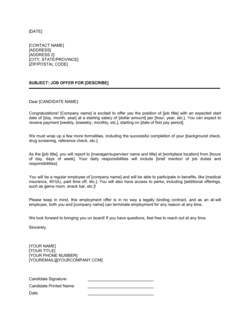
An employment offer letter establishes an ongoing employment relationship with salary, benefits, and termination terms. A speaker recommendation letter covers a single, time-limited engagement with no employment relationship. Mischaracterizing a speaking engagement as employment creates payroll tax and benefits obligations the organizer did not intend.

vs Service Agreement

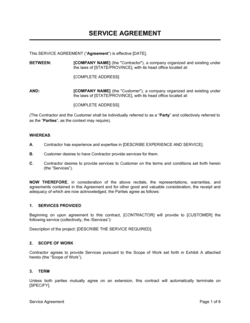
A service agreement is a broad contract for ongoing or multi-deliverable professional services. A speaker recommendation letter is purpose-built for a single banquet appearance, including event-specific logistical terms, honorarium, and recording rights that a generic service agreement does not address. For a one-time speaking engagement, the speaker letter or a dedicated speaker agreement is the more appropriate document.

Industry-specific considerations

Associations and nonprofits

Annual galas, awards banquets, and fundraising dinners where a credible speaker endorsement from a board member or past speaker carries significant weight with the invitee.

Corporate and financial services

Leadership dinners, investor appreciation events, and executive recognition banquets where speaker topic relevance to industry trends and regulatory developments is critical.

Healthcare and life sciences

Medical association banquets and research recognition dinners where speaker credentials must align with accreditation and continuing education requirements.

Education and academia

Commencement banquets, alumni recognition dinners, and faculty events where the speaker's academic standing and institutional affiliation are central to the invitation.

Jurisdictional notes

United States

A signed speaker letter can constitute a binding contract under US common law if it contains offer, acceptance, and consideration. Honorariums paid to US persons above $600 in a calendar year require a Form 1099-NEC from the organizer. Non-compete or exclusivity provisions are subject to state-specific enforceability standards, particularly in California.

Canada

Honorariums paid to Canadian residents are generally taxable income and must be reported by the recipient. Quebec organizers may need to issue the letter in French for provincially regulated organizations. Cancellation remedies are governed by provincial contract law, and courts will typically award expectation damages for a speaker who incurred costs in reliance on the invitation.

United Kingdom

A speaker invitation letter accepted in writing can form a binding contract under English contract law, even without a formal agreement. Honorariums paid to UK residents may trigger PAYE obligations if HMRC deems the speaker an employee for tax purposes β€” independent contractor status should be confirmed before payment. IR35 rules may apply for speakers engaged through personal service companies.

European Union

GDPR applies to any personal data collected from the speaker during the engagement process, including contact details and biographical information used in event marketing. Recording and distributing the speaker's presentation may require explicit consent under GDPR's data subject rights framework. Honorarium taxation varies by member state β€” organizers engaging speakers from outside their home country should confirm local withholding tax obligations.

Template vs lawyer β€” what fits your deal?

PathBest forCostTime
Use the templateAssociations, nonprofits, and corporate event teams inviting speakers with honorariums under $2,500 to standard banquet engagementsFree15–20 minutes
Template + legal reviewEngagements with honorariums between $2,500 and $10,000, speakers represented by agents, or events that will be recorded and publicly distributed$150–$4001–2 business days
Custom draftedHigh-profile keynotes with fees above $10,000, international speakers requiring visa documentation, or engagements with complex IP licensing or exclusivity requirements$500–$2,000+3–7 days

Glossary

Honorarium
A payment made to a speaker in recognition of their time and expertise, distinct from a contracted fee β€” typically used when the engagement is voluntary or semi-voluntary in nature.
Keynote Speaker
The featured presenter at an event whose remarks set the tone or theme for the entire program, usually given a prominent time slot and higher compensation than other speakers.
Engagement Confirmation
Written acknowledgment by the speaker that they accept the invitation and agree to the terms stated in the letter, creating a documented record of mutual commitment.
Letter of Invitation
A formal written communication extending an offer to participate in an event, which may carry legal weight as a pre-contractual document if it specifies material terms.
Expense Reimbursement
The organizer's commitment to reimburse the speaker for reasonable, pre-approved costs such as travel, accommodation, and meals incurred in connection with the engagement.
Speech Topic
The agreed subject matter and title of the speaker's presentation, which the organizer may rely upon for event marketing and program materials.
Cancellation Clause
A provision stating what happens if either party needs to cancel β€” whether the honorarium is forfeit, partially paid, or fully retained, and what notice period is required.
Intellectual Property (IP) in Speeches
The speaker's original content, slides, and remarks remain their IP unless expressly assigned or licensed to the organizer in writing.
Recording Release
Written permission from the speaker authorizing the organizer to record, reproduce, or distribute the speech in audio or video format.
Green Room Requirements
The speaker's pre-event logistical preferences β€” arrival time, private preparation space, AV setup, and any personal accommodations stated in the engagement terms.
Force Majeure
A clause excusing either party from performance if the event is prevented by circumstances beyond reasonable control, such as natural disasters, government orders, or public health emergencies.

Part of your Business Operating System

This document is one of 3,000+ business & legal templates included in Business in a Box.

  • Fill-in-the-blanks β€” ready in minutes
  • 100% customizable Word document
  • Compatible with all office suites
  • Export to PDF and share electronically

Create your document in 3 simple steps.

From template to signed document β€” all inside one Business Operating System.
1
Download or open template

Access over 3,000+ business and legal templates for any business task, project or initiative.

2
Edit and fill in the blanks with AI

Customize your ready-made business document template and save it in the cloud.

3
Save, Share, Send, Sign

Share your files and folders with your team. Create a space of seamless collaboration.

Save time, save money, and create top-quality documents.

β˜…β˜…β˜…β˜…β˜…

"Fantastic value! I'm not sure how I'd do without it. It's worth its weight in gold and paid back for itself many times."

Managing Director Β· Mall Farm
Robert Whalley
Managing Director, Mall Farm Proprietary Limited
β˜…β˜…β˜…β˜…β˜…

"I have been using Business in a Box for years. It has been the most useful source of templates I have encountered. I recommend it to anyone."

Business Owner Β· 4+ years
Dr Michael John Freestone
Business Owner
β˜…β˜…β˜…β˜…β˜…

"It has been a life saver so many times I have lost count. Business in a Box has saved me so much time and as you know, time is money."

Owner Β· Upstate Web
David G. Moore Jr.
Owner, Upstate Web

Run your business with a system β€” not scattered tools

Stop downloading documents. Start operating with clarity. Business in a Box gives you the Business Operating System used by over 250,000 companies worldwide to structure, run, and grow their business.

Start freeΒ Β·Β No credit card required