1
Enter the seller and buyer details
Fill in the full legal names, addresses, and contact information for both the selling company and the buying company. Use the registered legal entity name, not a trade name, to ensure the letter is enforceable.
💡 Match the entity name exactly to the name appearing on the original invoice to avoid any suggestion that the acknowledgment relates to a different party.
2
Reference the original invoice and discount request
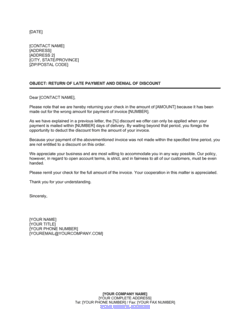
Enter the invoice number, invoice date, and the specific discount amount or percentage the buyer requested. Include the date of your prior denial letter.
💡 Attach a copy of the original denial letter as an exhibit — it creates a complete paper trail in a single document package.
3
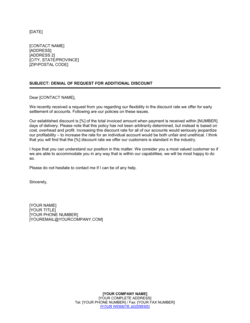
Reaffirm the discount denial
Confirm in plain language that the discount denial remains in effect and that no credit or allowance has been granted. This clause is the most important protection against an accord-and-satisfaction argument.
💡 Keep this language factual and neutral — avoid phrases like 'we regret to inform you' that could be read as softening the denial.
4
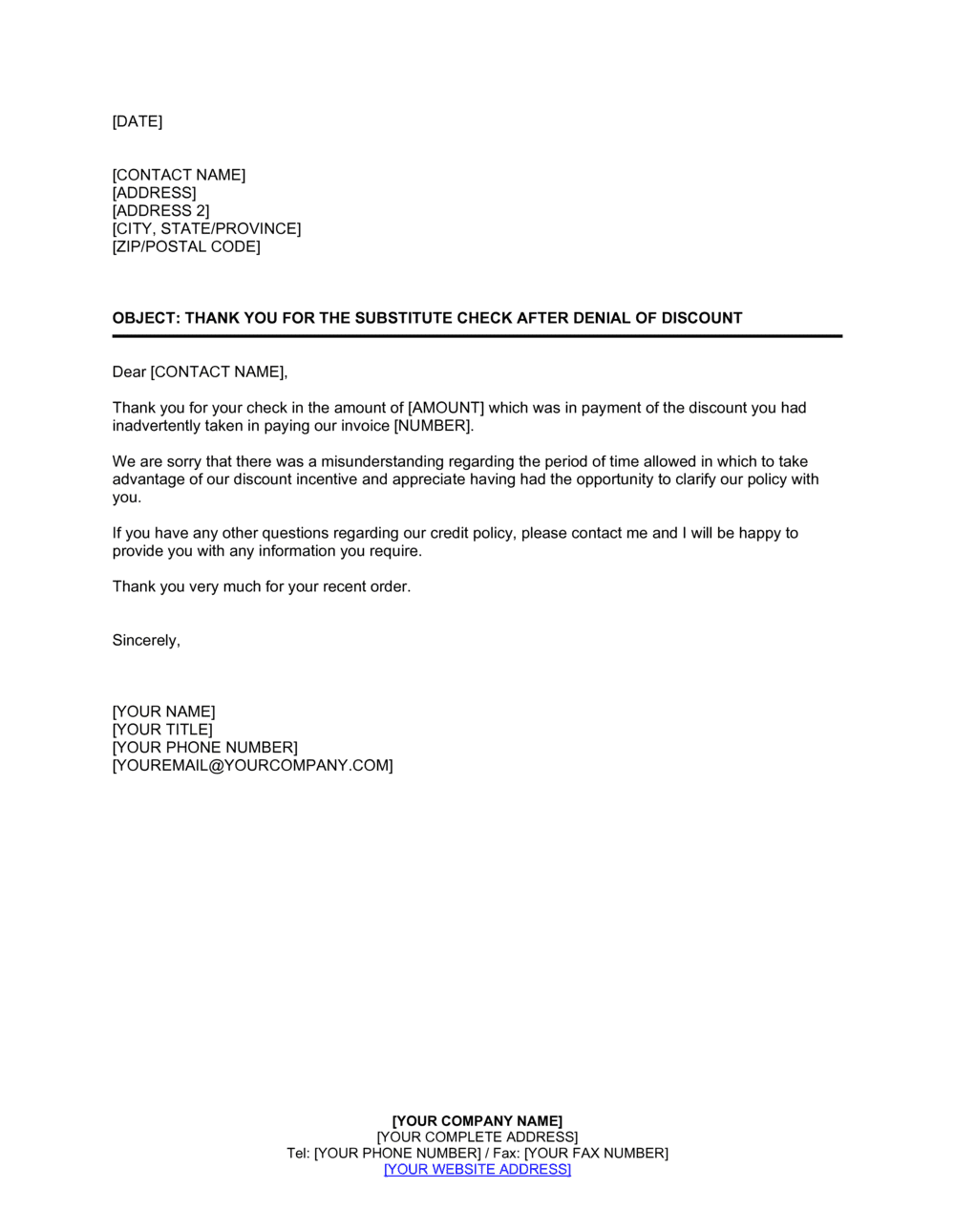
Document the substitute check details
Enter the substitute check number, date, drawee bank, and amount — both in figures and written out in words. Note the original check number the substitute is replacing.
💡 Confirm the original check has been voided or returned before issuing this letter — if it hasn't, note the intended disposition and follow through immediately.
5
State payment satisfaction conditions
Confirm that the substitute check amount equals the full invoice balance and that the payment obligation will be satisfied upon clearance — not before.
💡 Using 'upon clearance' rather than 'upon receipt' protects you from waiving the claim on an invoice if the substitute check also bounces.
6
Add the no-waiver and account-status clauses
Confirm the acknowledgment applies only to the referenced invoice, state the remaining account balance after application, and attach an updated statement if other invoices are open.
💡 If the buyer has more than three open invoices, attach a formal account statement rather than listing amounts in the letter body — it reduces errors and is easier to update.
7
Have an authorized representative sign and date the letter
The letter must be signed by someone with actual authority — typically the accounts receivable manager, CFO, or a director. Enter the signer's full name and title.
💡 If your company uses digital signatures, a timestamped e-signature service provides a stronger audit trail than a scanned wet signature for dispute purposes.
8
Send by tracked delivery and retain a copy
Deliver the letter by email with read receipt or by certified mail so you have proof of delivery. File the signed original, proof of delivery, and the substitute check copy together.
💡 Store the complete package — letter, check copy, original denial, and delivery confirmation — in the buyer's account file. This set of documents is your complete defense if the buyer later claims the discount should have been applied.