Thank You for Your Order Template

Free Word download β€’ Edit online β€’ Save & share with Drive β€’ Export to PDF

1 pageβ€’20–30 min to fillβ€’Difficulty: Standardβ€’Signature requiredβ€’Legal review recommended
Learn more ↓
FreeThank You for Your Order Template

At a glance

What it is
A Thank You For Your Order letter is a formal written confirmation sent by a seller to a buyer acknowledging receipt of a purchase order and stating the agreed terms β€” product or service details, pricing, delivery schedule, and payment conditions. This free Word download gives you a professionally structured template you can edit online and export as PDF to send to clients or customers immediately after an order is placed.
When you need it
Use it any time a buyer submits a purchase order, places a verbal order, or completes a transaction that requires a written record confirming what was ordered, at what price, and when delivery is expected. It is especially important for B2B transactions where disputed terms can delay payment or trigger costly chargebacks.
What's inside
Seller and buyer identification, order reference number and date, itemized description of goods or services ordered, confirmed pricing and applicable taxes, delivery or performance timeline, payment terms, return or cancellation conditions, and a signature block binding both parties to the confirmed terms.

What is a Thank You For Your Order Letter?

A Thank You For Your Order letter is a formal written order confirmation sent by a seller to a buyer immediately after a purchase is placed, acknowledging receipt of the order and setting out the binding terms of the transaction. It identifies both parties, itemizes the goods or services ordered with quantities and agreed specifications, confirms the total price and applicable taxes, commits to a delivery date and method, and states the payment terms. Beyond the courtesy implied by its name, this document functions as a legally enforceable commercial record β€” the written evidence of what was agreed before fulfillment begins, and the reference point for every invoice, dispute, or chargeback that may follow.

Why You Need This Document

Without a signed order confirmation, every disputed transaction becomes a credibility contest rather than a contract interpretation. Buyers who claim they ordered a different quantity, a different specification, or at a different price have no written document to contradict them β€” and in many jurisdictions, the absence of a written record favors the party making the claim. For manufacturers and custom-goods sellers, a buyer who cancels after production has begun owes you nothing unless a signed confirmation with cancellation terms exists. For service providers, scope creep is almost impossible to resist without a written record of what was agreed on day one. This template closes all of those gaps in under 15 minutes β€” documenting every material term before a single dollar is spent or a single item ships, and giving you a clean, enforceable foundation for invoicing, collections, and dispute resolution.

Which variant fits your situation?

If your situation is…Use this template
Confirming a single product or goods purchaseThank You For Your Order (Goods)
Acknowledging a professional services engagementService Order Confirmation
Confirming a recurring or subscription-based orderRecurring Order Acknowledgment
Accepting a formal purchase order from a corporate buyerPurchase Order Acceptance Letter
Declining or partially accepting an order due to stock or capacityOrder Acknowledgment with Partial Fulfillment Notice
Confirming a custom or made-to-order production requestCustom Order Confirmation Letter
Following up after delivery to close the transaction loopDelivery Confirmation Letter

Common mistakes to avoid

❌ Omitting item-level detail and relying on a PO reference

Why it matters: If the buyer later claims they ordered different specifications or quantities, a confirmation that says only 'per your PO #12345' gives you nothing to stand on.

Fix: Restate every item, quantity, and specification in the body of the confirmation β€” the PO number is a cross-reference, not a substitute for description.

❌ Using 'due upon receipt' instead of a specific payment date

Why it matters: This phrase has no standard legal meaning and is routinely used by buyers to justify paying 30–60 days after receipt, eroding your cash flow.

Fix: Calculate and print a specific calendar date for every order confirmation β€” e.g., 'Payment due: June 15, 2026' β€” so the due date is unambiguous.

❌ Confirming an unrealistic delivery date

Why it matters: Missing a confirmed delivery date gives the buyer grounds to cancel the order, claim damages, or initiate a chargeback β€” especially in B2B transactions with liquidated damages clauses.

Fix: Build in at least a 10–15% buffer over your internal production timeline before committing to a delivery date in writing.

❌ No cancellation or restocking fee clause for custom orders

Why it matters: Without it, a buyer who cancels after you have ordered materials or begun production has no contractual obligation to cover your sunk costs.

Fix: Include an explicit non-cancellation clause for made-to-order goods, or specify a cancellation fee that covers materials and labor incurred to date.

❌ Signing the confirmation after goods are already dispatched

Why it matters: An order confirmation signed after fulfillment is already underway provides little legal protection β€” the transaction has effectively occurred on undefined terms.

Fix: Make it a policy to obtain a signed or acknowledged order confirmation before releasing any goods to the carrier or commencing any service delivery.

❌ No governing law clause on cross-border orders

Why it matters: Without a governing law clause, a dispute between parties in different countries triggers a conflict-of-laws analysis that is time-consuming and expensive, with unpredictable results.

Fix: Always specify the governing jurisdiction and a dispute-resolution mechanism β€” even a simple 'disputes resolved by the courts of [STATE/COUNTRY]' clause significantly reduces litigation risk.

The 10 key clauses, explained

Parties and Order Reference

In plain language: Identifies the seller and buyer by full legal name and address, and assigns a unique order reference number and acknowledgment date.

Sample language
This Order Confirmation is issued by [SELLER LEGAL NAME], a [STATE/COUNTRY] [ENTITY TYPE] ('Seller'), to [BUYER LEGAL NAME] ('Buyer'), in acknowledgment of Purchase Order No. [PO NUMBER] dated [DATE]. Seller's Order Reference: [ORDER REF].

Common mistake: Using a trade name instead of the registered legal entity name. If a dispute arises, mismatched entity names can complicate enforcement and delay any legal proceedings.

Description of Goods or Services

In plain language: Itemizes exactly what was ordered β€” product names, SKUs, quantities, specifications, or service scope β€” leaving no ambiguity about what the seller is obligated to deliver.

Sample language
Seller confirms acceptance of the following order: [PRODUCT/SERVICE DESCRIPTION], SKU [SKU NUMBER], Quantity: [QTY], Specification: [SPEC DETAILS]. Any variation from the above requires written agreement from both parties.

Common mistake: Referencing only a PO number without restating the item details. If the PO is later amended or lost, the confirmation provides no independent record of what was agreed.

Pricing, Taxes, and Currency

In plain language: States the confirmed unit price, total order value, applicable taxes, and the transaction currency β€” preventing disputes over price changes or currency fluctuations after the order is placed.

Sample language
Unit Price: [CURRENCY] [UNIT PRICE]. Order Total (excluding tax): [CURRENCY] [SUBTOTAL]. Applicable Tax ([TAX RATE]%): [CURRENCY] [TAX AMOUNT]. Total Amount Due: [CURRENCY] [TOTAL].

Common mistake: Omitting the currency code on cross-border orders. Assuming USD when the buyer expects their local currency can result in underpayment and a disputed invoice.

Payment Terms and Late Fees

In plain language: Sets out when payment is due (e.g., Net 30 from invoice date), acceptable payment methods, and the interest or fee applied to overdue balances.

Sample language
Payment is due within [30] days of invoice date. Accepted methods: [bank transfer / credit card / cheque]. Balances unpaid after the due date accrue interest at [1.5]% per month ([18]% per annum) until settled.

Common mistake: Stating 'payment due upon receipt' without a specific date. This phrase is interpreted inconsistently and routinely results in payment arriving 30–45 days later than intended.

Delivery Schedule and Method

In plain language: Confirms the expected shipment or completion date, the delivery method or carrier, and the address to which goods or services are to be delivered.

Sample language
Seller will ship the goods via [CARRIER] to [DELIVERY ADDRESS] on or before [DELIVERY DATE]. Tracking information will be provided within [2] business days of dispatch. Estimated transit time: [X] business days.

Common mistake: Committing to a delivery date that is based on best-case production schedules. Over-promising and missing delivery dates is the most common source of order disputes and chargeback claims.

Title, Risk of Loss, and Inspection

In plain language: States when ownership and risk of damage transfer from seller to buyer, and gives the buyer a defined window to inspect and report defects before acceptance is deemed final.

Sample language
Title and risk of loss transfer to Buyer upon [dispatch from Seller's facility / delivery to Buyer's address]. Buyer shall inspect goods within [5] business days of receipt and notify Seller in writing of any defects. Failure to notify within this period constitutes acceptance.

Common mistake: Leaving title transfer undefined. Without this clause, a buyer whose goods are damaged in transit may claim the seller bears the loss β€” and in many jurisdictions, they would be correct.

Cancellation and Return Policy

In plain language: Defines the conditions under which either party may cancel the order, the notice required, and what refund, restocking fee, or compensation applies.

Sample language
Buyer may cancel this order with written notice at least [X] business days before the confirmed ship date, subject to a restocking fee of [Y]% of the order value. Orders for custom or made-to-order goods are non-cancellable once production has commenced.

Common mistake: Having no cancellation clause at all. Without one, a buyer who cancels after production begins has no contractual obligation to compensate the seller for sunk costs.

Force Majeure

In plain language: Excuses the seller from liability for delays or non-performance caused by events outside their reasonable control, while requiring prompt notice to the buyer.

Sample language
Seller shall not be liable for delays in delivery caused by circumstances beyond Seller's reasonable control, including acts of God, government actions, labor disputes, or supply-chain disruptions. Seller will notify Buyer within [5] business days of any such event and provide a revised delivery estimate.

Common mistake: Using an overly broad force majeure clause that includes foreseeable supply risks. Courts in some jurisdictions will not excuse performance for events the seller could have planned around, such as known supplier shortages.

Governing Law and Dispute Resolution

In plain language: Specifies which jurisdiction's law governs the confirmation and how disputes are handled β€” negotiation, mediation, arbitration, or courts.

Sample language
This Order Confirmation is governed by the laws of [STATE/PROVINCE/COUNTRY]. Any dispute arising from this order that cannot be resolved by negotiation within [30] days shall be referred to binding arbitration in [CITY] under the rules of [ARBITRATION BODY], except claims for injunctive relief.

Common mistake: Choosing a governing law with no connection to either party's location. Courts in some jurisdictions will apply local law regardless, making the clause ineffective and creating unpredictable outcomes.

Entire Agreement and Modification

In plain language: Confirms that the written order confirmation is the complete agreement for this transaction and that any modification must be in writing and signed by both parties.

Sample language
This Order Confirmation constitutes the entire agreement between the parties with respect to this order and supersedes all prior representations, quotations, or correspondence. No modification is binding unless made in writing and signed by authorized representatives of both parties.

Common mistake: Omitting this clause when a lengthy email chain or verbal negotiation preceded the confirmation. Without it, earlier communications can be introduced as conflicting contractual terms.

How to fill it out

  1. 1

    Enter seller and buyer legal entity names

    Use the full registered legal names of both parties β€” not trade names or personal names. Include business addresses and any applicable tax ID numbers.

    πŸ’‘ Cross-check the buyer's name against the purchase order they submitted. A name mismatch is the most common reason corporate AP departments reject order confirmations and delay payment.

  2. 2

    Assign an order reference number and record the date

    Create a unique sequential order reference (e.g., ORD-2026-0142) and enter today's date as the acknowledgment date. Also record the buyer's PO number if they issued one.

    πŸ’‘ Store the reference number in your order management system before sending β€” this is the number you will use on the invoice, shipping label, and any future correspondence.

  3. 3

    Itemize the goods or services in detail

    List every product or service ordered with its SKU, quantity, unit description, and any agreed specifications. Do not rely on a PO number reference alone.

    πŸ’‘ For custom or made-to-order items, attach a specification sheet as an exhibit and reference it in this clause β€” it becomes part of the binding confirmation.

  4. 4

    Confirm pricing, taxes, and currency

    Enter the unit price, order subtotal, applicable tax rate and amount, and the total amount due. State the currency explicitly, especially for cross-border orders.

    πŸ’‘ If the buyer is VAT-registered in the EU, include their VAT number β€” this determines whether you charge VAT or issue a zero-rated invoice.

  5. 5

    Set a specific due date for payment

    Calculate and enter a specific calendar due date based on your agreed terms (e.g., 'Due: June 15, 2026 β€” Net 30 from invoice date'). Add late-fee language if your terms include one.

    πŸ’‘ Send the invoice and order confirmation together so the buyer's AP team can match them immediately, reducing the chance of a payment-processing delay.

  6. 6

    Confirm the delivery date and method

    Enter the committed ship or completion date, the carrier or delivery method, and the full delivery address. Choose a date you are confident you can meet.

    πŸ’‘ If lead times are uncertain, state a range (e.g., 'on or before [DATE]') and include a force majeure notice period β€” this is better than committing to a date and missing it.

  7. 7

    State cancellation terms and return policy

    Specify the notice period required to cancel, any restocking or cancellation fee, and whether custom items are non-cancellable once production begins.

    πŸ’‘ For high-value orders, require the buyer to countersign the cancellation clause specifically β€” this signals they read and accepted the restriction.

  8. 8

    Sign and send before fulfillment begins

    Both parties should sign the confirmation before the seller ships goods or begins service delivery. Use email, eSign, or wet signature β€” retain a copy in your records.

    πŸ’‘ If the buyer is slow to return the signed copy, begin fulfillment only after receiving written confirmation by email that they accept the terms β€” a responsive email can serve as evidence of acceptance.

Frequently asked questions

What is a Thank You For Your Order letter?

A Thank You For Your Order letter is a formal written acknowledgment sent by a seller to a buyer confirming that an order has been received and accepted on specific terms. It records the items ordered, agreed pricing, delivery date, and payment conditions. Beyond being a courtesy communication, it functions as a binding commercial document that establishes the agreed terms for the transaction.

Is an order confirmation letter legally binding?

An order confirmation letter is generally considered legally binding when it identifies both parties, describes the goods or services, states the price and payment terms, and is signed or acknowledged by both sides. In many jurisdictions, a buyer's written or emailed acceptance of a confirmation β€” even without a wet signature β€” constitutes a binding contract. Including a signature block and an entire-agreement clause strengthens enforceability considerably.

What is the difference between an order confirmation and a purchase order?

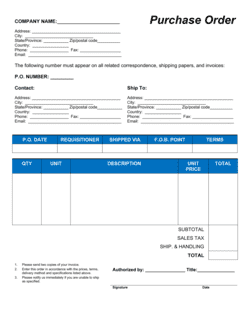
A purchase order is issued by the buyer to authorize a purchase from the seller. An order confirmation is the seller's written response accepting the buyer's order on stated terms. Together they form the transactional contract. If the seller's confirmation contains different terms than the buyer's PO, a 'battle of the forms' situation can arise β€” the last document signed or acknowledged typically governs.

Does an order confirmation replace a formal sales contract?

For standard, one-time transactions, a well-drafted order confirmation typically covers the same legal ground as a short-form sales contract. For high-value, recurring, or complex transactions β€” especially those involving custom goods, long lead times, or international delivery β€” a formal sales agreement with broader representations and warranties is advisable. The order confirmation can then reference and incorporate the master sales agreement by reference.

When should I send a Thank You For Your Order letter?

Send it immediately after receiving the buyer's purchase order or verbal confirmation β€” ideally the same business day, and always before production begins or goods are dispatched. Sending it promptly locks in the agreed terms while they are fresh and prevents the buyer from claiming different terms were verbally agreed later. For high-value orders, require a signed acknowledgment before releasing goods to the carrier.

What happens if the buyer does not sign the order confirmation?

In most jurisdictions, a buyer who places an order and proceeds with the transaction β€” pays a deposit, accepts delivery, or takes no action to dispute the stated terms β€” is typically bound by the confirmation's terms under conduct or implied acceptance. However, unsigned confirmations are harder to enforce cleanly. Best practice is to require countersignature or at minimum a written email reply stating acceptance before fulfillment.

Can I use this template for service orders as well as product orders?

Yes, with light modification. Replace the goods-specific clauses β€” SKU, quantity, delivery method, and title/risk-of-loss β€” with service-specific equivalents: scope of work, deliverable descriptions, start and completion dates, and acceptance criteria. The payment, cancellation, governing law, and entire-agreement clauses apply equally to service transactions.

What is a 'battle of the forms' and how does this template prevent it?

A battle of the forms occurs when a buyer's purchase order and the seller's order confirmation contain conflicting standard terms β€” for example, the PO specifies Net 60 but the confirmation states Net 30. Courts in most common-law jurisdictions apply the 'last shot' rule, treating the last document signed or accepted as governing. This template's entire-agreement clause and signature block ensure the seller's confirmed terms are the ones that control the transaction.

Do I need a lawyer to use an order confirmation template?

For standard domestic transactions of moderate value, a professionally drafted template is typically sufficient. Legal review is recommended for high-value orders (generally above $25,000), cross-border transactions, custom or made-to-order goods with significant sunk costs, or any order where a payment dispute could materially affect your business. A one-hour lawyer review of a template adapted to your specific business typically costs $150–$400 and is worthwhile for high-frequency or high-value order flows.

How this compares to alternatives

vs Sales Invoice

An order confirmation is sent before or immediately upon order placement to acknowledge and bind the agreed terms. An invoice is sent after delivery to request payment. The confirmation establishes what was agreed; the invoice triggers payment. Both should reference the same order number to close the transaction loop cleanly.

vs Purchase Order

A purchase order is issued by the buyer to initiate and authorize a transaction. A Thank You For Your Order letter is the seller's response, accepting the order on stated terms. The PO sets the buyer's expectations; the confirmation sets the seller's delivery and payment commitments. Both documents should be retained together as the complete transaction record.

vs Sales Agreement

A sales agreement is a detailed bilateral contract covering representations, warranties, indemnification, and multi-order relationships over time. An order confirmation is a transaction-level document covering a single order. For recurring business relationships, a master sales agreement governs the relationship while individual order confirmations handle each transaction.

vs Delivery Confirmation Letter

A Thank You For Your Order letter is sent at the time the order is placed to confirm terms in advance of fulfillment. A delivery confirmation letter is sent after goods or services have been delivered to confirm receipt and close the transaction. The order confirmation opens the transaction; the delivery confirmation closes it.

Industry-specific considerations

Manufacturing and wholesale

Custom production runs require non-cancellable order confirmations that lock in materials commitments and protect against buyer withdrawal after production begins.

Retail and e-commerce

High order volume makes a standardized, auto-generated confirmation essential for documenting terms, managing return policies, and disputing chargebacks with card networks.

Professional services

Service order confirmations establish scope, rate, and start date in writing β€” preventing scope creep and providing a reference point for invoicing and dispute resolution.

Construction and trades

Materials orders for job sites require confirmed pricing and delivery windows tied to project schedules, with clear risk-of-loss terms covering on-site delivery.

Jurisdictional notes

United States

Order confirmations are governed by UCC Article 2 for goods transactions β€” the UCC's 'battle of the forms' rule (Β§2-207) can override the seller's terms if the buyer's PO is deemed the offer. Including an integration clause and requiring countersignature is the most reliable way to ensure the seller's confirmation controls. Sales tax obligations vary by state and depend on the delivery location and the seller's economic nexus.

Canada

Canadian commercial law for goods transactions is governed provincially, primarily by Sale of Goods Acts modeled on the UK's original statute. Quebec applies civil law under the Civil Code, which handles contract formation differently from common-law provinces β€” acceptance must mirror the offer closely to avoid a counter-offer finding. GST/HST and provincial sales tax requirements depend on the seller's registration status and the province of delivery.

United Kingdom

The Sale of Goods Act 1979 and Consumer Rights Act 2015 imply statutory terms into UK goods transactions that cannot be excluded in consumer contracts. For B2B transactions, the Unfair Contract Terms Act 1977 requires that exclusion clauses β€” such as limits on liability for late delivery β€” meet a reasonableness test. VAT at the standard rate (currently 20%) must be clearly stated on confirmations issued to UK buyers.

European Union

The UN Convention on Contracts for the International Sale of Goods (CISG) applies to cross-border commercial transactions between EU member states and other CISG signatories unless expressly excluded. GDPR requires that any personal data collected via the order process β€” including buyer name and address β€” is processed lawfully and disclosed in a privacy notice. VAT treatment depends on whether the buyer is a registered business (B2B reverse charge may apply) or a consumer (seller charges destination-country VAT under the OSS scheme).

Template vs lawyer β€” what fits your deal?

PathBest forCostTime
Use the templateStandard domestic product or service orders of moderate value where both parties are familiar with the transaction typeFree10–15 minutes per order
Template + legal reviewHigh-value orders above $25,000, cross-border transactions, or custom/made-to-order goods with significant production commitments$150–$400 for a one-hour lawyer review and customization1–2 business days
Custom draftedEnterprise supply chain relationships, regulated goods (medical devices, hazardous materials), or recurring high-value orders with complex delivery and liability terms$800–$3,000+1–2 weeks

Glossary

Order Acknowledgment
A formal written notice from a seller to a buyer confirming that an order has been received and accepted on stated terms.
Purchase Order (PO)
A buyer-issued commercial document authorizing a purchase from a specific seller at an agreed price β€” the document this letter responds to.
Order Reference Number
A unique identifier assigned to each order, allowing both parties to trace communications, invoices, and shipments to a single transaction.
Payment Terms
The conditions under which the buyer must pay β€” including the due date (e.g., Net 30), accepted payment methods, and any early-payment discounts or late fees.
Delivery Schedule
The confirmed date or window by which the seller commits to ship, deliver, or complete the goods or services ordered.
Force Majeure
A clause excusing a party from performance obligations when delivery is prevented by circumstances outside their control β€” such as natural disasters, strikes, or supply disruptions.
Cancellation Policy
The conditions under which the buyer or seller may cancel the order, and what penalties, restocking fees, or refunds apply.
Liquidated Damages
A pre-agreed sum specified in the confirmation letter as compensation for late delivery or non-performance, replacing the need to prove actual loss.
Title and Risk of Loss
The point at which legal ownership of goods transfers from seller to buyer β€” typically at dispatch (FOB Origin) or on delivery (FOB Destination).
Governing Law
The jurisdiction whose laws apply to interpret and enforce the order confirmation if a dispute arises.
Entire Agreement Clause
A provision stating that the written order confirmation supersedes all prior verbal or written representations and constitutes the complete agreement for this transaction.

Part of your Business Operating System

This document is one of 3,000+ business & legal templates included in Business in a Box.

  • Fill-in-the-blanks β€” ready in minutes
  • 100% customizable Word document
  • Compatible with all office suites
  • Export to PDF and share electronically

Create your document in 3 simple steps.

From template to signed document β€” all inside one Business Operating System.
1
Download or open template

Access over 3,000+ business and legal templates for any business task, project or initiative.

2
Edit and fill in the blanks with AI

Customize your ready-made business document template and save it in the cloud.

3
Save, Share, Send, Sign

Share your files and folders with your team. Create a space of seamless collaboration.

Save time, save money, and create top-quality documents.

β˜…β˜…β˜…β˜…β˜…

"Fantastic value! I'm not sure how I'd do without it. It's worth its weight in gold and paid back for itself many times."

Managing Director Β· Mall Farm
Robert Whalley
Managing Director, Mall Farm Proprietary Limited
β˜…β˜…β˜…β˜…β˜…

"I have been using Business in a Box for years. It has been the most useful source of templates I have encountered. I recommend it to anyone."

Business Owner Β· 4+ years
Dr Michael John Freestone
Business Owner
β˜…β˜…β˜…β˜…β˜…

"It has been a life saver so many times I have lost count. Business in a Box has saved me so much time and as you know, time is money."

Owner Β· Upstate Web
David G. Moore Jr.
Owner, Upstate Web

Run your business with a system β€” not scattered tools

Stop downloading documents. Start operating with clarity. Business in a Box gives you the Business Operating System used by over 250,000 companies worldwide to structure, run, and grow their business.

Free Forever PlanΒ Β·Β No credit card required