Real Estate Development Business Plan Template

Free Word download β€’ Edit online β€’ Save & share with Drive β€’ Export to PDF

15 pagesβ€’1h 35m – 2h 10m to fillβ€’Difficulty: Expert
Learn more ↓
FreeReal Estate Development Business Plan Template

At a glance

What it is
A Real Estate Development Business Plan is a structured document that maps a development project or company's market opportunity, site strategy, project pipeline, financing structure, and pro forma financials into a single investor- and lender-ready package. This free Word download gives you a complete, editable starting point you can adapt for residential, commercial, or mixed-use projects and export as PDF to share with equity partners, construction lenders, or municipal stakeholders.
When you need it
Use it when approaching lenders or equity investors for project financing, applying for entitlements or rezoning approvals, or formalizing a development company's growth strategy for new partners or a board.
What's inside
Executive summary, company overview, market and submarket analysis, development strategy and site selection criteria, project pipeline with timelines and budgets, financing structure, pro forma financial projections, risk analysis, and management team profiles.

What is a Real Estate Development Business Plan?

A Real Estate Development Business Plan is a structured document that maps a developer's project opportunity, construction budget, financing structure, and pro forma financial returns into a single package for lenders, equity investors, and internal decision-makers. It covers everything from submarket analysis and site selection criteria to a detailed sources-and-uses table, waterfall distribution structure, and projected IRR and equity multiple over the hold period. Unlike a general business plan, its analytical core is the deal economics β€” construction cost per unit, stabilized NOI, loan-to-cost ratio, and exit cap rate β€” rather than product-market fit or customer acquisition. This free Word download gives you a complete, editable framework for residential, commercial, or mixed-use projects that you can adapt to a single asset or a multi-project pipeline.

Why You Need This Document

Without a formal development business plan, construction lenders decline applications for missing budget detail, equity partners pass on deals they cannot underwrite independently, and entitlement bodies question a developer's preparedness. The cost of omitting it is concrete: a disorganized capital ask adds weeks of back-and-forth before a lender issues a term sheet, and an underdocumented equity syndication exposes the developer to securities liability. A well-structured plan forces you to reconcile your sources and uses before committing to a land contract, stress-test your pro forma against a realistic downside, and document your entitlement risk before an investor discovers it in due diligence. This template gives you the structure to present a credible, investor-ready development plan in a fraction of the time it takes to build one from scratch.

Which variant fits your situation?

If your situation is…Use this template
Ground-up residential subdivision or homebuilding projectResidential Real Estate Development Business Plan
Commercial or mixed-use development pitched to institutional equityCommercial Real Estate Development Business Plan
Value-add acquisition and renovation strategyReal Estate Investment Business Plan
Short-term fix-and-flip project fundingFix and Flip Business Plan
Quick internal project summary for partnersOne-Page Business Plan
Property management company seeking growth capitalProperty Management Business Plan
Mixed-use or affordable housing development requiring public fundingNonprofit Business Plan

Common mistakes to avoid

❌ Using metro-level market data instead of submarket data

Why it matters: A metro vacancy rate of 3% can coexist with a submarket vacancy of 9% β€” using the metro figure makes a weak site look like a strong opportunity and destroys credibility with experienced capital partners.

Fix: Source vacancy, absorption, and rent data at the submarket level from a recognized data provider and cite the report date and provider explicitly.

❌ Omitting entitlement risk from the development strategy

Why it matters: An unentitled site carries significant schedule and cost uncertainty β€” lenders and equity investors price this risk heavily, and omitting it signals either inexperience or deliberate concealment.

Fix: Include a dedicated entitlement status paragraph listing every required approval, the current status of each, and the fallback plan if a key approval is delayed or denied.

❌ Presenting a sources-and-uses table that does not balance

Why it matters: A sources-and-uses gap β€” even a small one β€” signals that the developer does not have a fully funded project, and lenders will not proceed until every dollar of the capital stack is accounted for.

Fix: Build the sources-and-uses table in a spreadsheet first, confirm it balances to zero, then transcribe it into the plan. Cross-check it one final time before submission.

❌ Understating soft costs below 15% of hard costs

Why it matters: Experienced construction lenders underwrite soft costs at 15–25% of hard costs for ground-up development; a lower figure triggers a budget recast request and delays loan commitment.

Fix: Review your soft cost line items against comparable recent projects in your market and add a contingency line of at least 5% of total soft costs for unforeseen professional fees.

❌ Presenting only a base-case pro forma with no downside scenario

Why it matters: Equity investors and institutional lenders run their own stress tests immediately β€” a plan with only an optimistic scenario signals that the developer has not stress-tested their own assumptions.

Fix: Add a downside scenario column to the pro forma showing IRR and equity multiple at 85% of projected rent and a 50-basis-point higher exit cap rate.

❌ Team section lists titles without quantified project history

Why it matters: Statements like 'over 20 years of experience' without specific projects, unit counts, and dollar volumes are unverifiable and unconvincing to institutional capital that routinely checks sponsor track records.

Fix: Include a track record table for each principal showing project name, asset type, location, total cost, role, and delivery date β€” even if it means referencing projects completed at prior employers.

The 10 key sections, explained

Executive Summary

Company Overview

Market and Submarket Analysis

Development Strategy and Site Selection

Project Description and Timeline

Project Budget

Financing Structure

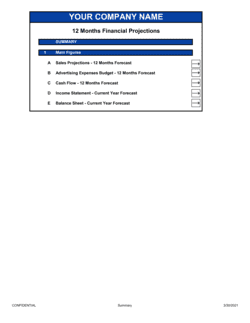
Pro Forma Financial Projections

Risk Analysis and Mitigation

Management Team

How to fill it out

  1. 1

    Complete the company overview and track record table

    Start with the legal entity name, principals, and a table of previously completed projects β€” asset type, location, total cost, units or square footage, and delivery date. This grounds the plan before any projections.

    πŸ’‘ If this is a first project, replace the track record table with the principals' most relevant prior employment β€” projects they managed for other developers count.

  2. 2

    Build the market analysis from sourced submarket data

    Pull vacancy, absorption, rent, and sale-price data from at least two independent sources (CoStar, CBRE, Marcus & Millichap, or a local broker report). Focus on the target submarket, not the metro average.

    πŸ’‘ Attach the source reports as an appendix β€” lenders with market expertise will verify the numbers, and having the reports on hand prevents follow-up delays.

  3. 3

    Define site selection criteria before describing the subject site

    State your acquisition criteria first β€” zoning, land cost per unit, proximity to demand drivers β€” then show how the subject site meets them. This frames the site as a disciplined choice, not an opportunistic one.

    πŸ’‘ Include a one-paragraph entitlement risk summary: what approvals are needed, what has been obtained, and what remains open.

  4. 4

    Build the project budget with market benchmarks

    Itemize hard costs, soft costs, financing costs, and developer fee. Include a cost-per-unit or cost-per-square-foot column and compare each line to local market benchmarks from recent comparable projects.

    πŸ’‘ If your hard cost estimate is more than 10% below local benchmarks, add a note explaining the variance β€” lenders will ask, and a proactive explanation is more credible than a reactive one.

  5. 5

    Structure the financing with a balanced sources-and-uses table

    List every source of capital (senior debt, mezzanine, LP equity, GP equity, subsidies) and every use (land, hard costs, soft costs, reserves, developer fee). Confirm sources equal uses to the dollar.

    πŸ’‘ State the loan-to-cost ratio and interest rate assumption explicitly β€” lenders benchmark against their own underwriting criteria immediately.

  6. 6

    Build the pro forma from unit-level assumptions

    Model revenue from the unit mix up: units Γ— market rent Γ— economic occupancy. Build operating expenses from category benchmarks (management 4–6%, maintenance, insurance, taxes). Calculate NOI, apply an exit cap rate, and back into IRR and equity multiple.

    πŸ’‘ Run a downside scenario at 85% of projected rent and a 50-basis-point higher exit cap rate. Present it alongside the base case β€” it signals analytical discipline.

  7. 7

    Write the risk section with quantified impacts and named mitigations

    Identify the five highest-probability risks β€” construction cost overrun, entitlement delay, lease-up delay, interest rate increase, and exit market softness. For each, state the financial impact and the specific mitigation already in place.

    πŸ’‘ A risk that already has a signed contract or completed permit as its mitigation is far more credible than a risk paired only with a management intention.

  8. 8

    Write the executive summary last

    Pull the total project cost, equity raise, projected IRR, equity multiple, and delivery date from the completed sections. Compress the investment thesis into three to four sentences that explain why this project, in this submarket, with this team, generates the projected return.

    πŸ’‘ The executive summary is the only section many investors read before deciding whether to continue. Every number in it must exactly match the body of the plan.

Frequently asked questions

What is a real estate development business plan?

A real estate development business plan is a structured document that outlines a developer's or development company's market opportunity, project pipeline, financing structure, pro forma financials, and management team. It functions as both an internal operating roadmap and an external capital-raising document used to secure construction loans, equity investment, and entitlement approvals from municipalities.

What sections should a real estate development business plan include?

A complete plan covers ten core sections: executive summary, company overview with track record, market and submarket analysis, development strategy and site selection criteria, project description and timeline, project budget, financing structure with a sources-and-uses table, pro forma financial projections, risk analysis with mitigations, and management team profiles. Lenders and equity investors typically focus on the budget, financing structure, pro forma, and track record sections first.

How is a real estate development business plan different from a standard business plan?

A real estate development plan is project-specific and heavily weighted toward financial underwriting β€” pro forma NOI, IRR, equity multiple, LTC ratios, and a waterfall distribution structure. A general business plan focuses on products, customers, and revenue growth. The real estate plan requires a sources-and-uses table, a construction budget with hard and soft cost breakdowns, and an entitlement status summary that a standard business plan does not.

What financial projections are required in a real estate development business plan?

At minimum: a total project cost budget, a sources-and-uses table, a stabilized operating pro forma showing NOI and cash-on-cash return, an IRR and equity multiple calculation over the projected hold period, and a construction draw schedule aligned to the loan terms. Institutional lenders and equity investors also expect a downside scenario and a sensitivity table showing IRR at varying rent growth and exit cap rate assumptions.

Do I need a real estate development business plan to get a construction loan?

Yes, in practice. Construction lenders require a detailed project budget, sources-and-uses table, project timeline, and pro forma as part of the loan application. A formal business plan organizes these components into a single document and adds the market analysis and sponsor track record that lenders use to evaluate credit risk. Submitting scattered spreadsheets instead of an organized plan signals an unsophisticated sponsor.

How long should a real estate development business plan be?

For a single project pitched to a lender or equity partner, 20–30 pages plus a financial model appendix is typical. A company-level plan covering a pipeline of multiple projects may run 30–45 pages. The financial model β€” pro forma, budget, and draw schedule β€” is usually presented as a separate Excel appendix rather than embedded in the narrative document.

What is a waterfall distribution in a real estate development plan?

A waterfall distribution is the profit-sharing structure between the developer (general partner) and equity investors (limited partners). Returns are distributed in tiers: investors first receive a preferred return (typically 6–8% annually), then a return of contributed capital, then remaining profits are split between LPs and the GP at an agreed ratio β€” often 70/30 or 80/20 LP/GP. The developer earns a larger percentage above the hurdle rate as compensation for outperformance.

Can I use this template for both residential and commercial development?

Yes, with section-level adjustments. Residential plans emphasize unit mix, absorption rate, and price-per-unit comps. Commercial plans focus on tenant creditworthiness, lease terms, NOI stability, and cap rate comparables. The financing structure, budget, and pro forma sections use the same framework for both, but the market analysis and project description sections require asset-class-specific data.

How often should a real estate development business plan be updated?

Update the plan whenever a material assumption changes β€” land cost, construction cost, projected rents, interest rates, or entitlement status. For active fundraising, review and update before every new investor or lender meeting. For a company-level plan covering a pipeline, a full annual refresh aligned to the fiscal year is standard, with mid-year updates to the pro forma as actuals come in from projects under construction.

Do I need a consultant to write a real estate development business plan?

For a first project or a straightforward single-asset plan, a well-structured template combined with submarket data from a broker handles most of the work. Engage a real estate financial consultant ($2,000–$8,000) when pitching institutional equity, pursuing a public subsidy or tax credit program (LIHTC, opportunity zone), or when the project involves complex phasing or a joint-venture structure that requires a custom waterfall model.

How this compares to alternatives

vs Real Estate Investment Business Plan

A real estate investment plan focuses on acquiring and managing existing income-producing properties β€” analyzing in-place NOI, cap rates, and value-add upside through renovation or re-tenanting. A development plan focuses on creating new buildings from the ground up or through major repositioning, with a construction budget, entitlement risk, and a development-phase timeline that an acquisition plan does not require.

vs Property Management Business Plan

A property management business plan describes how a company will operate, lease, and maintain properties owned by third-party clients β€” focusing on fee revenue, staffing ratios, and portfolio growth. A development plan is project-centric, focused on building and selling or stabilizing a specific asset. The two are complementary: developers often retain a property management company to operate completed projects.

vs Standard Business Plan

A standard business plan covers products, customers, and revenue growth across any industry. A real estate development business plan replaces the product and sales sections with a construction budget, sources-and-uses table, entitlement strategy, and pro forma financial model. The analytical center of gravity is the deal economics β€” IRR, equity multiple, and LTC β€” rather than customer acquisition and unit economics.

vs Financial Projections Template

A financial projections template covers a company's P&L, cash flow, and balance sheet over 12 months. A development plan's pro forma models a project-level investment return β€” construction draw schedule, stabilized NOI, disposition proceeds, and IRR over a 3–7 year hold β€” which a general financial projections template is not structured to capture.

Industry-specific considerations

Residential Development

Unit mix optimization, absorption rate modeling, price-per-unit comps, and HOA or condo structure considerations.

Commercial Real Estate

Anchor tenant strategy, NNN lease structures, tenant improvement allowances, and cap rate exit underwriting.

Mixed-Use and Urban Infill

Ground-floor retail underwriting alongside residential pro forma, parking studies, and transit-oriented development entitlement strategy.

Industrial and Logistics

Clear height and dock-door specifications, e-commerce proximity demand drivers, and sale-leaseback or build-to-suit structures.

Template vs pro β€” what fits your needs?

PathBest forCostTime
Use the templateIndividual developers, first-time development ventures, and community bank or credit union loan applicationsFree2–4 weeks (40–70 hours including financial modeling)
Template + professional reviewProjects above $5M, equity syndications, and applications to regional or national construction lenders$1,500–$4,000 for a real estate financial analyst or consultant review3–5 weeks
Custom draftedInstitutional equity raises, LIHTC or opportunity zone projects, large mixed-use or multi-phase developments$4,000–$12,000 for a professional real estate advisory firm4–8 weeks

Glossary

Pro Forma
Forward-looking financial statements that project revenues, costs, and returns for a development project based on stated assumptions.
Entitlement
The governmental approval process β€” zoning, permits, environmental clearance β€” that authorizes a specific type of development on a parcel.
Net Operating Income (NOI)
Gross rental income minus operating expenses, before debt service and capital expenditures β€” the primary measure of a completed project's income performance.
Loan-to-Cost (LTC)
A construction lending metric expressing the loan amount as a percentage of total project cost; most lenders cap LTC at 65–80%.
Internal Rate of Return (IRR)
The annualized return on invested equity that equates the present value of cash inflows with the initial investment β€” the standard profitability benchmark in real estate development.
Equity Multiple
Total distributions returned to equity investors divided by total equity contributed β€” a 2.0x multiple means every dollar invested returned two dollars.
Hard Costs
Direct construction costs β€” land, site work, materials, and labor β€” as opposed to soft costs such as architecture, engineering, permits, and financing.
Soft Costs
Indirect project costs including architecture, engineering, legal fees, permits, financing fees, and developer overhead.
Absorption Rate
The pace at which available units or square footage in a market are leased or sold over a given period, expressed as units per month.
Cap Rate
Net operating income divided by property value β€” used to value stabilized income-producing real estate and compare investment opportunities.
Waterfall Distribution
A tiered profit-sharing structure between a developer and equity investors that allocates returns in a defined sequence β€” preferred return, return of capital, then promoted interest.

Part of your Business Operating System

This document is one of 3,000+ business & legal templates included in Business in a Box.

  • Fill-in-the-blanks β€” ready in minutes
  • 100% customizable Word document
  • Compatible with all office suites
  • Export to PDF and share electronically

Create your document in 3 simple steps.

From template to signed document β€” all inside one Business Operating System.
1
Download or open template

Access over 3,000+ business and legal templates for any business task, project or initiative.

2
Edit and fill in the blanks with AI

Customize your ready-made business document template and save it in the cloud.

3
Save, Share, Send, Sign

Share your files and folders with your team. Create a space of seamless collaboration.

Save time, save money, and create top-quality documents.

β˜…β˜…β˜…β˜…β˜…

"Fantastic value! I'm not sure how I'd do without it. It's worth its weight in gold and paid back for itself many times."

Managing Director Β· Mall Farm
Robert Whalley
Managing Director, Mall Farm Proprietary Limited
β˜…β˜…β˜…β˜…β˜…

"I have been using Business in a Box for years. It has been the most useful source of templates I have encountered. I recommend it to anyone."

Business Owner Β· 4+ years
Dr Michael John Freestone
Business Owner
β˜…β˜…β˜…β˜…β˜…

"It has been a life saver so many times I have lost count. Business in a Box has saved me so much time and as you know, time is money."

Owner Β· Upstate Web
David G. Moore Jr.
Owner, Upstate Web

Run your business with a system β€” not scattered tools

Stop downloading documents. Start operating with clarity. Business in a Box gives you the Business Operating System used by over 250,000 companies worldwide to structure, run, and grow their business.

Free Forever PlanΒ Β·Β No credit card required