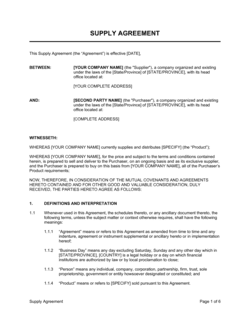
Manufacturing Distribution Agreement Template

Free Word download • Edit online • Save & share with Drive • Export to PDF

15 pages30–45 min to fillDifficulty: ComplexSignature requiredLegal review recommended
Learn more ↓
FreeManufacturing Distribution Agreement Template

At a glance

What it is
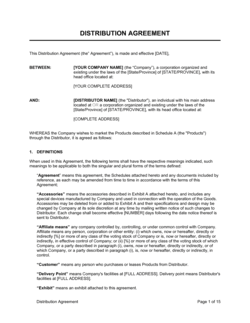
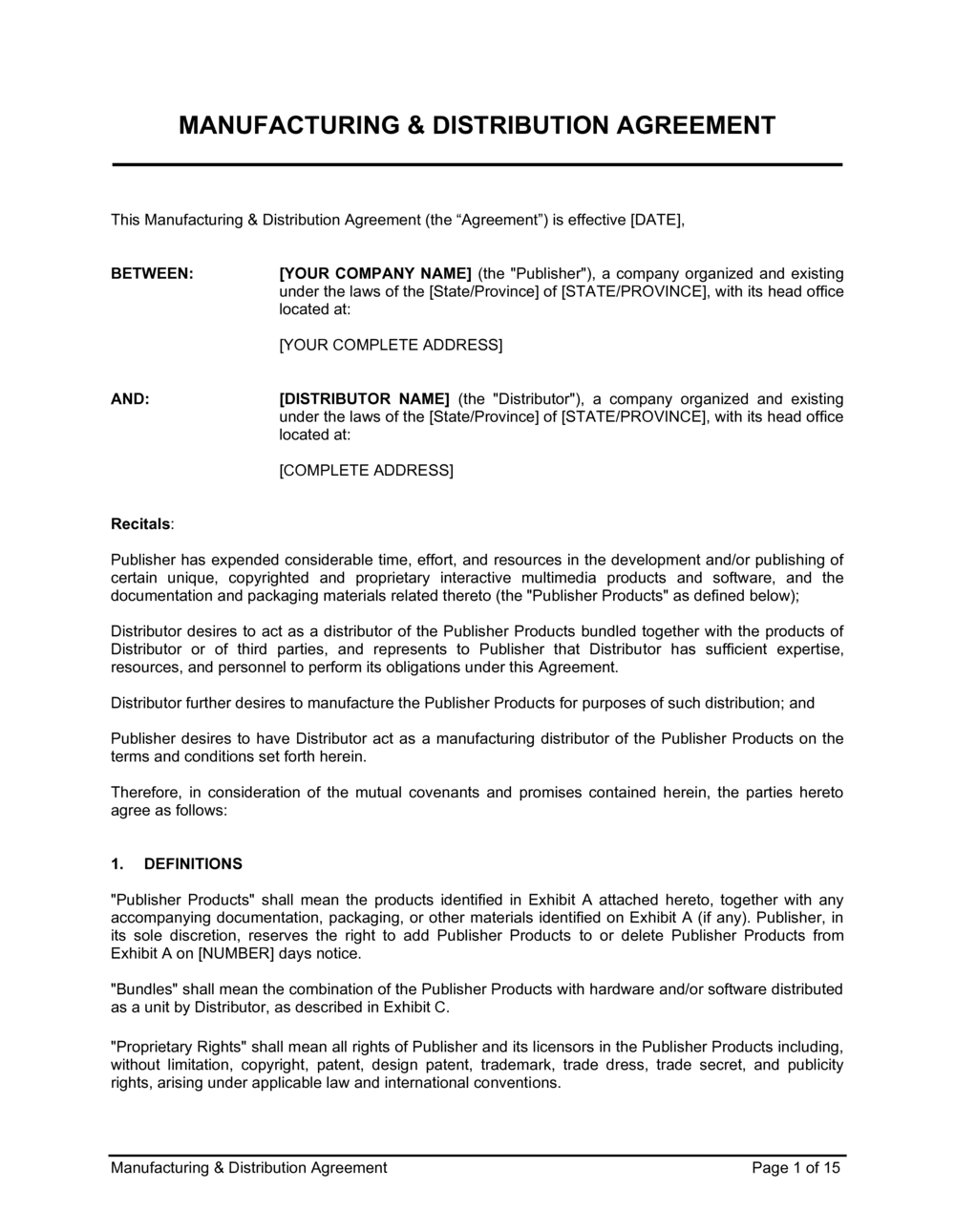
A Manufacturing Distribution Agreement is a legally binding contract between a manufacturer and a distributor that governs how the distributor purchases, markets, and resells the manufacturer's products in a defined territory. This free Word download covers territory rights, pricing, minimum purchase obligations, IP usage, confidentiality, and termination in a single document you can edit online and export as PDF for execution.
When you need it
Use it when appointing a regional or national distributor to sell your manufactured goods, when entering a new market through a third-party distribution partner, or when replacing an informal reseller arrangement with enforceable written terms.
What's inside
Territory definition and exclusivity rights, product specifications and pricing, minimum purchase requirements, marketing and branding obligations, intellectual property licensing, confidentiality, warranties, indemnification, and termination conditions including cure periods and post-termination obligations.

What is a Manufacturing Distribution Agreement?

A Manufacturing Distribution Agreement is a legally binding contract between a manufacturer and a distributor that establishes the full terms of their commercial relationship — including the products covered, the geographic territory in which the distributor may sell, whether those rights are exclusive or non-exclusive, the transfer pricing structure, minimum purchase obligations, permitted use of the manufacturer's brand and trademarks, and the conditions under which either party may terminate. Unlike a one-off purchase order or informal reseller arrangement, a distribution agreement creates an ongoing framework governing every transaction and obligation between the two parties for the duration of the relationship.

Why You Need This Document

Distributing products through a third party without a written agreement exposes the manufacturer on every front simultaneously. A distributor with no minimum purchase obligation can hold an exclusive territory indefinitely while generating negligible sales — blocking the manufacturer from appointing an active partner or entering the market directly. Without IP provisions, the distributor may register the manufacturer's trademarks locally, creating a legal hostage situation that is expensive to unwind. Without clear termination terms and post-termination inventory obligations, a departing distributor can dump remaining stock at below-floor prices, damaging the brand in a market the manufacturer worked years to build. A signed, comprehensive distribution agreement closes each of these gaps before the first shipment leaves the warehouse, and gives both parties a clear roadmap for resolving disputes commercially rather than in court.

Which variant fits your situation?

If your situation is…Use this template
Granting a single distributor sole rights within a territoryExclusive Distribution Agreement
Appointing multiple distributors in the same regionNon-Exclusive Distribution Agreement
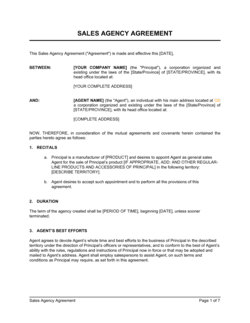
Distributing through a sales agent who does not take title to goodsSales Agency Agreement
Selling directly to a buyer who resells under their own brandWholesale Purchase Agreement
Short-term or trial distribution arrangement before a full commitmentDistribution Letter of Intent
Distributing software or digital products rather than physical goodsSoftware Distribution Agreement
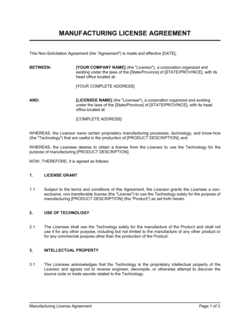
Granting a third party the right to manufacture and sell under your brandManufacturing License Agreement

Common mistakes to avoid

❌ Granting exclusivity without minimum purchase obligations

Why it matters: A distributor can lock up an entire territory indefinitely without generating meaningful sales, preventing the manufacturer from appointing an active partner or selling directly.

Fix: Tie exclusivity explicitly to minimum purchase thresholds. If minimums are missed, the agreement converts to non-exclusive automatically after a defined cure period.

❌ No restriction on distributor trademark registration

Why it matters: In many jurisdictions — particularly across Asia and parts of Latin America — a distributor can register the manufacturer's brand locally and later demand payment or litigation to release it.

Fix: Include an express prohibition on the distributor registering any manufacturer trademark, trade name, or domain in any jurisdiction, with an obligation to cooperate in cancellation if a registration occurs.

❌ Setting transfer prices without a change-notice period

Why it matters: A price increase applied immediately to open orders leaves the distributor locked into commitments made under the prior price, creating cash losses and triggering breach claims.

Fix: Require written notice of any price change at least 30 to 60 days in advance and state that orders placed before the notice date are fulfilled at the prior price.

❌ No post-termination inventory buyback provision

Why it matters: A terminated distributor holding unsold stock has no incentive to manage pricing carefully — they may sell below minimum prices or through unauthorized channels to recoup their investment.

Fix: Include a buyback obligation requiring the manufacturer to repurchase unsold, undamaged inventory at transfer price within 30 days of termination, excluding any stock the distributor damaged or discounted without authorization.

❌ Omitting a cap on aggregate liability

Why it matters: Without a liability ceiling, a single product recall or IP infringement claim can expose the manufacturer to damages that dwarf the commercial value of the distribution relationship.

Fix: Cap each party's aggregate liability at 12 months of transfer prices paid under the agreement in the preceding year, with explicit carve-outs only for fraud, willful misconduct, and death or personal injury.

❌ No cure period for payment or performance defaults

Why it matters: Immediate termination for a first payment default is disproportionate in most commercial relationships and is treated skeptically by courts in the UK, EU, and Canada. It also destroys the goodwill the distribution relationship was built to create.

Fix: Grant a 15- to 30-day written notice and cure period for payment defaults, and a 30- to 60-day period for other material breaches. Reserve immediate termination only for insolvency, fraud, and IP misuse.

The 10 key clauses, explained

Parties, recitals, and appointment

In plain language: Identifies the manufacturer and distributor as legal entities, states the background of the commercial relationship, and formally appoints the distributor to sell specified products.

Sample language
[MANUFACTURER LEGAL NAME] ('Manufacturer') hereby appoints [DISTRIBUTOR LEGAL NAME] ('Distributor') as its [exclusive / non-exclusive] distributor for the Products listed in Schedule A within the Territory defined in Schedule B, and Distributor accepts such appointment.

Common mistake: Using a trade name instead of the registered legal entity. If the manufacturer's entity name differs from its brand, enforcement of IP and payment obligations becomes ambiguous.

Territory and exclusivity

In plain language: Defines the geographic boundaries of the distributor's rights and states whether those rights are exclusive, non-exclusive, or sole (manufacturer retains direct sales rights).

Sample language
The Territory shall be [COUNTRY / REGION / STATES]. During the Term, Manufacturer shall not appoint any other distributor within the Territory [and shall not sell directly to end customers within the Territory] without Distributor's prior written consent.

Common mistake: Granting exclusivity without a minimum purchase obligation. Without a purchase floor, the distributor can hold an exclusive territory indefinitely without generating meaningful sales volume.

Products, pricing, and transfer terms

In plain language: Lists the products covered, sets the transfer price or pricing formula, and defines the commercial terms — including currency, payment due dates, and volume discounts.

Sample language
Manufacturer shall sell Products to Distributor at the prices set out in Schedule C, subject to revision on [30] days' written notice. Payment is due Net [30] days from invoice date. Prices are in [USD / GBP / EUR] and exclude freight, insurance, and applicable taxes.

Common mistake: Failing to include a price-change notice period. Unilateral price increases with no notice give the distributor no time to adjust existing customer commitments, leading to disputes and early termination.

Minimum purchase obligations

In plain language: Sets the minimum annual or quarterly purchase volume the distributor must meet, and states the consequence of missing the target — typically conversion from exclusive to non-exclusive or early termination right.

Sample language
Distributor shall purchase no less than [QUANTITY / VALUE] of Products per [calendar year / quarter] ('Minimum Purchase Obligation'). Failure to meet the Minimum Purchase Obligation in any period gives Manufacturer the option, on [30] days' notice, to convert this Agreement to non-exclusive.

Common mistake: Setting minimum purchase obligations in units rather than dollars when product mix varies. A unit-based floor can be met by buying only the cheapest SKUs, leaving the manufacturer's premium lines unrepresented.

Marketing, branding, and promotional obligations

In plain language: Requires the distributor to actively promote the products using approved materials, sets minimum marketing spend or activity requirements, and restricts use of the manufacturer's trademarks to approved formats.

Sample language
Distributor shall conduct marketing activities in accordance with Manufacturer's brand guidelines (Schedule D) and shall spend no less than [X]% of net sales on promotion of the Products within the Territory per year. All marketing materials require Manufacturer's prior written approval.

Common mistake: No approval requirement for marketing materials. Distributor-created materials using the manufacturer's trademarks in non-compliant or culturally inappropriate ways can cause lasting brand damage.

Intellectual property license

In plain language: Grants the distributor a limited, non-transferable license to use the manufacturer's trademarks, trade dress, and product documentation solely for authorized sales activities, and reserves all other IP rights to the manufacturer.

Sample language
Manufacturer grants Distributor a limited, non-exclusive, non-transferable license to use Manufacturer's Marks solely to market and sell the Products within the Territory during the Term. All goodwill arising from such use inures to Manufacturer. Distributor shall not register any Manufacturer Mark in any jurisdiction.

Common mistake: No restriction on the distributor registering the manufacturer's trademarks in the territory. In several jurisdictions — particularly in Asia — a distributor can register a foreign brand's mark and hold it hostage unless the agreement explicitly prohibits this.

Confidentiality

In plain language: Prohibits both parties from disclosing the other's confidential information — including pricing, customer lists, product roadmaps, and trade secrets — during and after the agreement.

Sample language
Each party ('Receiving Party') shall hold the other party's Confidential Information in strict confidence and shall not disclose it to any third party without the Disclosing Party's prior written consent. This obligation survives termination for [3] years.

Common mistake: Defining confidentiality as mutual without carving out publicly available information. A clause that treats all information as confidential is unworkable in practice and may be unenforceable as written.

Warranties, liability, and indemnification

In plain language: States the manufacturer's product warranties, limits each party's liability for indirect damages, and allocates responsibility for product liability claims and third-party IP infringement.

Sample language
Manufacturer warrants that Products will conform to the specifications in Schedule A for [12] months from date of delivery. Manufacturer shall indemnify Distributor against third-party product liability claims arising from defects in manufacturing. Neither party is liable for indirect, consequential, or punitive damages.

Common mistake: No cap on the manufacturer's aggregate liability. Without a liability cap — typically set at 12 months of fees paid — a single product defect claim can expose the manufacturer to uncapped losses.

Term, termination, and cure

In plain language: Sets the initial contract duration, renewal mechanism, and the conditions under which either party may terminate — for cause (immediately), for convenience (on notice), or for missed purchase obligations.

Sample language
This Agreement commences on [START DATE] and continues for [2] years ('Initial Term'), renewing automatically for [1]-year periods unless either party gives [90] days' written notice of non-renewal. Either party may terminate for material breach that remains uncured [30] days after written notice.

Common mistake: No cure period for payment defaults. Terminating immediately on first non-payment — especially for a distributor who is otherwise performing well — is commercially disruptive and courts in many jurisdictions view it as a disproportionate remedy.

Post-termination obligations and governing law

In plain language: Requires the distributor to stop using IP, return or destroy inventory within a defined period, and hand over customer data. States the governing law and dispute resolution mechanism.

Sample language
Upon termination, Distributor shall immediately cease use of Manufacturer's Marks and, within [30] days, return or destroy unsold inventory at Manufacturer's election. Customer and sales data relating to the Products shall be transferred to Manufacturer within [14] days. This Agreement is governed by the laws of [JURISDICTION]. Disputes shall be resolved by [arbitration / courts of CITY].

Common mistake: No post-termination inventory buyback provision. A distributor left holding significant unsold stock with no buyback right has every incentive to dump product at below-floor pricing, damaging the brand in the territory.

How to fill it out

  1. 1

    Identify both parties with full legal entity names

    Enter the manufacturer's and distributor's registered legal names, jurisdictions of incorporation, and principal business addresses. Confirm the entity type (LLC, Inc., Ltd.) matches corporate registry records.

    💡 Request a recent certificate of incorporation from the distributor before signing — it confirms the entity name and that they are in good standing.

  2. 2

    Define the territory precisely

    State the geographic scope by country, region, state, or postal code range. If the territory is exclusive, list any carve-outs — such as the manufacturer's direct key accounts — explicitly.

    💡 Ambiguous territory definitions are the single most common source of distribution disputes. Use ISO country codes or official administrative boundaries, not informal region names like 'the Midwest.'

  3. 3

    List the covered products in Schedule A

    Attach a product schedule listing each SKU, product name, and specification. Decide whether future products are automatically included or require a separate amendment.

    💡 State explicitly whether the agreement covers current products only or all products manufactured by the company. Silence here typically benefits the distributor.

  4. 4

    Set pricing, payment terms, and the price-change notice period

    Enter transfer prices or the pricing formula in Schedule C. Set Net 30 or Net 60 payment terms and a minimum notice period — typically 30–60 days — for price changes.

    💡 Index transfer prices to a cost component (e.g., commodity price index) if raw material volatility is significant, to avoid renegotiation every time costs shift.

  5. 5

    Set minimum purchase obligations and review frequency

    Enter the annual or quarterly minimum in dollars (not units) and the consequence of missing the floor — conversion to non-exclusive is the most common remedy. Include a review mechanism to reset minimums each year.

    💡 Set Year 1 minimums at 60–70% of your realistic forecast to give the distributor a ramp period. Aggressive floors in Year 1 push distributors to negotiate exclusivity out of the deal entirely.

  6. 6

    Attach brand guidelines and marketing approval requirements

    Reference the current brand guidelines in Schedule D and specify the approval process — typically written approval within 10 business days. State whether digital and social media assets require separate approval.

    💡 Include a deemed-approval provision: if the manufacturer does not respond to a materials request within the stated window, the materials are considered approved. This keeps the distributor from being blocked by slow internal reviews.

  7. 7

    Complete the term, renewal, and termination clauses

    Set an initial term of 1–3 years with automatic annual renewal. Specify notice periods for non-renewal (90 days is standard), for-cause termination triggers, and the cure period for remediable breaches (30 days is typical).

    💡 Consider including a step-down exclusivity clause: if the distributor misses purchase minimums two periods in a row, exclusivity converts to non-exclusive automatically without requiring termination.

  8. 8

    Confirm governing law and sign before the relationship begins

    Select the governing jurisdiction — typically the manufacturer's home state or country — and the dispute resolution mechanism. Both authorized signatories must execute the agreement before the first product shipment.

    💡 For cross-border agreements, include a UN CISG opt-out clause if you want domestic sales law to apply — the CISG applies by default to international contracts between parties in signatory states unless excluded.

Frequently asked questions

What is a manufacturing distribution agreement?

A manufacturing distribution agreement is a legally binding contract between a manufacturer and a distributor that defines the terms under which the distributor purchases, markets, and resells the manufacturer's products in a specified territory. It covers pricing, exclusivity, minimum purchase requirements, brand usage, liability allocation, and termination conditions. Without one, the commercial relationship is governed by informal arrangements and jurisdiction-specific default rules — typically more favorable to the distributor.

What is the difference between an exclusive and non-exclusive distribution agreement?

An exclusive distribution agreement gives a single distributor the sole right to sell the manufacturer's products in a defined territory, typically prohibiting the manufacturer from appointing other distributors or selling directly in that region. A non-exclusive agreement allows the manufacturer to appoint multiple distributors in the same territory simultaneously. Exclusivity is a valuable right that should always be tied to minimum purchase obligations — otherwise the distributor can hold the territory indefinitely without performing.

Does a distribution agreement need to be in writing?

No law in most jurisdictions strictly requires a distribution agreement to be in writing, but oral or informal arrangements are nearly impossible to enforce reliably. Courts in the EU, UK, and Canada apply implied terms and good-faith obligations that can override informal understandings in ways that favor the distributor. A signed written agreement with clearly defined territory, pricing, and termination terms is the only reliable way to manage the relationship.

How long should a manufacturing distribution agreement last?

Initial terms of one to three years with automatic annual renewal are standard for most product categories. Shorter terms — one year — are appropriate for new distributor relationships or fast-moving markets where pricing and product lines change frequently. Longer initial terms of three to five years may be appropriate where the distributor is making a significant upfront investment in warehousing, sales infrastructure, or market development. Always include a non-renewal notice period of 60 to 90 days.

Can a manufacturer terminate a distribution agreement early?

Yes, generally — most distribution agreements include termination rights for material breach (with a cure period), insolvency, or change of control of the distributor. Termination for convenience (without cause) is also common but typically requires a longer notice period — 90 to 180 days. In some EU member states, commercial agents and distributors have statutory rights to compensation upon termination that apply regardless of what the contract says, so legal review is advisable before terminating a cross-border distribution relationship.

What happens to unsold inventory when a distribution agreement ends?

The contract should specify this explicitly. Common approaches include a manufacturer buyback obligation at transfer price (minus any distributor discount earned), a sell-off period of 30 to 90 days during which the distributor can clear remaining stock, or an obligation to return inventory at the distributor's cost. Without a clear provision, terminated distributors often dump remaining stock at below-floor pricing, damaging the brand in the territory.

Do I need a lawyer to draft a manufacturing distribution agreement?

For straightforward domestic distribution with a well-understood product line and a known commercial partner, a high-quality template reviewed internally is often sufficient for initial arrangements. Legal review is strongly advisable when the distributor operates in a different country, exclusivity is being granted, the product carries significant liability risk, or the relationship involves material upfront investment by either party. Cross-border agreements in particular carry jurisdiction-specific termination compensation rules that a template alone cannot anticipate.

What governing law should I choose for a cross-border distribution agreement?

Manufacturers typically prefer their home jurisdiction's law as the governing law. However, courts in some countries — notably within the EU — may apply local mandatory rules on distributor termination compensation regardless of the chosen governing law. For agreements with EU or UK distributors, choose a neutral arbitration forum such as the ICC or LCIA and specify a dispute resolution seat in a commercially neutral jurisdiction like England, Switzerland, or Singapore, subject to legal advice for the specific countries involved.

What is a gray market and how does a distribution agreement prevent it?

A gray market occurs when genuine products are sold through unauthorized channels — for example, a distributor in a lower-price territory reselling to buyers in a higher-price territory to arbitrage the price difference. Distribution agreements prevent this by including explicit prohibitions on active sales outside the territory, reporting obligations on customer destination, and termination rights for territory violations. These clauses are generally enforceable in the US and UK but must be drafted carefully within EU competition law, which restricts absolute territorial restrictions.

How this compares to alternatives

vs Sales Agency Agreement

A sales agency agreement engages an agent who solicits orders on the manufacturer's behalf but never takes title to the goods — the manufacturer contracts directly with end customers and bears inventory risk. A distribution agreement transfers title and inventory risk to the distributor, who buys at transfer price and resells at a margin. The distinction matters enormously for tax, liability, and EU commercial agency compensation rules.

vs Wholesale Purchase Agreement

A wholesale purchase agreement governs a single transaction or series of spot purchases at agreed prices — it does not create an ongoing relationship, territory rights, or marketing obligations. A manufacturing distribution agreement is a framework governing the entire commercial relationship over time, including exclusivity, brand usage, and minimum purchase commitments.

vs Manufacturing License Agreement

A manufacturing license agreement grants a third party the right to manufacture products using the licensor's IP, often for sale under the licensor's brand. A distribution agreement grants the right to sell products already manufactured by the manufacturer. The fundamental difference is who bears manufacturing responsibility and the associated production risk.

vs Non-Disclosure Agreement

An NDA protects confidential information shared during pre-contract negotiations or ongoing operations but creates no commercial relationship, no distribution rights, and no obligations to buy or sell. An NDA should be signed before distribution negotiations begin; the distribution agreement itself then contains its own confidentiality clause covering the ongoing relationship.

Industry-specific considerations

Consumer goods and FMCG

Shelf-life and sell-through obligations, promotional co-funding requirements, and retailer-specific compliance terms are central to FMCG distribution agreements.

Industrial equipment and machinery

Distributor certification requirements, after-sales service and spare parts obligations, and product liability indemnification are critical given the safety exposure of equipment sales.

Food and beverage

Temperature-controlled storage compliance, regulatory import approvals, country-of-origin labeling, and expiry-date management create specialized obligations that must be reflected in the agreement.

Healthcare and medical devices

FDA or CE-mark compliance by the distributor, adverse event reporting obligations, and regulatory recall cooperation clauses are non-negotiable in medical device distribution arrangements.

Jurisdictional notes

United States

US distribution agreements are governed primarily by state contract law and the UCC for goods transactions. There is no federal statute requiring compensation upon termination, but several states — including Wisconsin, Puerto Rico, and New Jersey — have dealer protection laws that may grant distributors termination rights regardless of contract terms. Resale price maintenance is per se illegal under the Sherman Act. Antitrust review of exclusive territorial restrictions is assessed under the rule of reason.

Canada

Canadian distribution agreements are governed by provincial law. Quebec's Civil Code creates stronger implied good-faith obligations than common-law provinces. There is no statutory distributor compensation right analogous to EU commercial agent rules, but courts apply the duty of good faith broadly on termination. French-language requirements under Quebec's Charter of the French Language may require that contracts with Quebec-based distributors be available in French.

United Kingdom

Post-Brexit, UK distribution law no longer applies EU block exemptions directly, though the UK has retained a largely equivalent vertical agreements block exemption. Pure distributors — as opposed to commercial agents — do not benefit from the Commercial Agents Regulations and have no statutory right to compensation upon termination. However, courts apply good-faith principles and may imply reasonable notice periods. Competition law review of exclusivity and pricing clauses is administered by the Competition and Markets Authority.

European Union

EU distribution agreements must comply with the Vertical Block Exemption Regulation (VBER 2022), which permits exclusive territory restrictions below a 30% market-share threshold but prohibits absolute territorial exclusivity that prevents passive sales. Pure distributors are not covered by the Commercial Agents Directive, but several EU member states — including Belgium, Germany, and France — have enacted national laws granting distributors compensation or notice rights on termination that apply regardless of governing law choice. GDPR applies to any customer data transferred under the agreement.

Template vs lawyer — what fits your deal?

PathBest forCostTime
Use the templateDomestic distribution arrangements with known partners, straightforward product lines, and no exclusivityFree1–2 hours to complete
Template + legal reviewExclusive territory grants, high-value product lines, or arrangements with a distributor in a different province or state$500–$1,5003–5 business days
Custom draftedCross-border distribution in the EU, UK, or Asia; products with significant liability exposure; or distributor investments requiring long-term commitments$2,500–$8,000+2–4 weeks

Glossary

Exclusive Distribution
A grant of rights giving a single distributor the sole authority to sell the manufacturer's products within a defined territory, excluding all other distributors and sometimes the manufacturer itself.
Territory
The geographic area — country, region, state, or postal zone — within which the distributor is authorized to sell the manufacturer's products.
Minimum Purchase Obligation
A contractual requirement that the distributor purchase at least a specified quantity or dollar value of products per period, typically used to protect the manufacturer from an inactive distributor holding territory rights.
Transfer Price
The price at which the manufacturer sells products to the distributor, distinct from the price the distributor charges its end customers.
Resale Price Maintenance (RPM)
An arrangement where the manufacturer sets the minimum or maximum price at which the distributor may resell products — subject to competition law restrictions in most jurisdictions.
Shelf Life / Sell-Through Obligation
A contractual requirement that the distributor sell or return products within a defined period to prevent outdated inventory from remaining in the channel.
Indemnification
A clause requiring one party to compensate the other for specific losses — for example, the manufacturer indemnifying the distributor against product liability claims.
Intellectual Property License
A limited grant allowing the distributor to use the manufacturer's trademarks, logos, and trade dress solely for the purpose of marketing and selling the authorized products.
Termination for Cause
The right to end the agreement immediately upon a material breach — such as non-payment, unauthorized territory sales, or insolvency — without the standard notice period.
Post-Termination Obligations
Duties that survive contract termination, including return or destruction of unsold inventory, cessation of IP use, and handover of customer records.
Force Majeure
A clause excusing a party's non-performance when an extraordinary event beyond their control — such as a natural disaster, war, or government action — makes performance impossible.
Gray Market
The unauthorized resale of genuine products through channels outside the manufacturer's approved distribution network, often across territorial boundaries at discounted prices.

Part of your Business Operating System

This document is one of 3,000+ business & legal templates included in Business in a Box.

  • Fill-in-the-blanks — ready in minutes
  • 100% customizable Word document
  • Compatible with all office suites
  • Export to PDF and share electronically

Create your document in 3 simple steps.

From template to signed document — all inside one Business Operating System.
1
Download or open template

Access over 3,000+ business and legal templates for any business task, project or initiative.

2
Edit and fill in the blanks with AI

Customize your ready-made business document template and save it in the cloud.

3
Save, Share, Send, Sign

Share your files and folders with your team. Create a space of seamless collaboration.

Save time, save money, and create top-quality documents.

★★★★★

"Fantastic value! I'm not sure how I'd do without it. It's worth its weight in gold and paid back for itself many times."

Managing Director · Mall Farm
Robert Whalley
Managing Director, Mall Farm Proprietary Limited
★★★★★

"I have been using Business in a Box for years. It has been the most useful source of templates I have encountered. I recommend it to anyone."

Business Owner · 4+ years
Dr Michael John Freestone
Business Owner
★★★★★

"It has been a life saver so many times I have lost count. Business in a Box has saved me so much time and as you know, time is money."

Owner · Upstate Web
David G. Moore Jr.
Owner, Upstate Web

Run your business with a system — not scattered tools

Stop downloading documents. Start operating with clarity. Business in a Box gives you the Business Operating System used by over 250,000 companies worldwide to structure, run, and grow their business.

Free Forever Plan · No credit card required