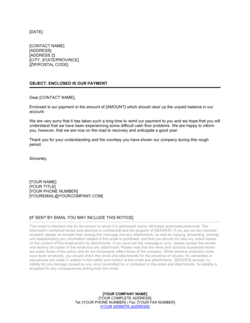
Letter Agreement on Repayment Schedule Template

Free Word download β€’ Edit online β€’ Save & share with Drive β€’ Export to PDF

1 pageβ€’20–25 min to fillβ€’Difficulty: Standard
Learn more ↓
FreeLetter Agreement on Repayment Schedule Template

At a glance

What it is
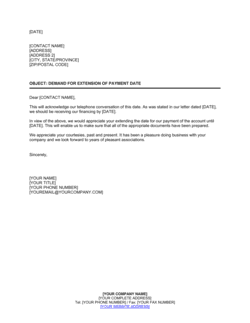
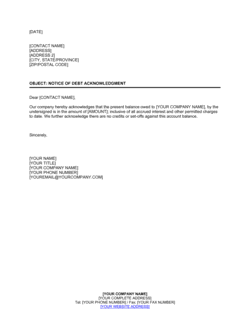
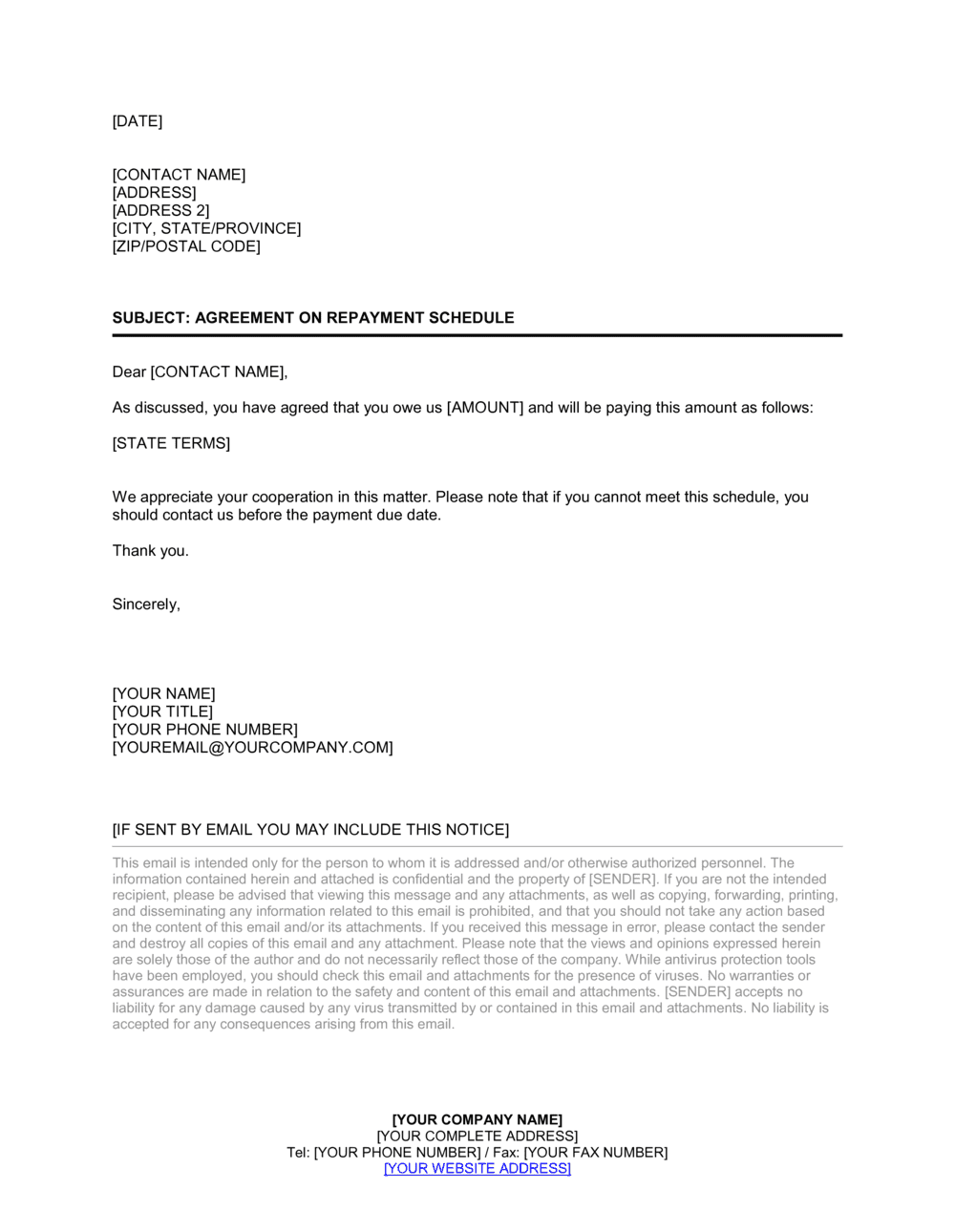
A Letter Agreement On Repayment Schedule is a formal written letter that confirms the terms under which a debtor will repay an outstanding balance to a creditor in structured installments. This free Word download gives you a ready-to-edit template you can customize with the parties' details, outstanding balance, installment amounts, payment dates, and any applicable interest, then export as PDF and send immediately.
When you need it
Use it when two parties have agreed verbally or informally that an overdue balance will be repaid over time and need a written record of that arrangement. It is equally useful when renegotiating a lump-sum debt into installments to avoid escalation or legal action.
What's inside
Identification of both parties, a statement of the outstanding balance, a structured installment schedule with specific dates and amounts, interest terms if applicable, default consequences, and closing acknowledgment language for both parties to sign.

What is a Letter Agreement On Repayment Schedule?

A Letter Agreement On Repayment Schedule is a formal written document that records the mutually agreed terms under which a debtor will repay an outstanding balance to a creditor in structured installments over a defined period. It identifies both parties, states the total amount owed, sets out each payment date and amount in a clear schedule, addresses interest if applicable, and defines the consequences of a missed payment. When countersigned by the debtor, it replaces informal email exchanges or verbal arrangements with a single, authoritative written record that both parties can rely on.

Why You Need This Document

Without a written repayment agreement, a creditor who has agreed to accept installment payments has no enforceable record of when payments are due, how much each should be, or what happens if one is missed. Debtors may dispute the balance, delay payments, or claim the arrangement was different from what was discussed. Informal email threads are easily misread or ignored. A signed letter agreement closes these gaps immediately: it acknowledges the debt, locks in a schedule with specific calendar dates, and gives the creditor a documented basis to accelerate the full balance or escalate to collections if the debtor defaults. This template gives you a professionally structured starting point you can complete in under 30 minutes β€” no legal background required β€” and send the same day an arrangement is agreed.

Which variant fits your situation?

If your situation is…Use this template
Debtor has fully defaulted and requires a formal legal repayment contractPromissory Note
Repayment involves a secured asset such as property or equipmentLoan Agreement With Collateral
Both parties want a full release of liability upon final paymentDebt Settlement Agreement
Creditor is sending a formal demand before offering a payment planDemand Letter for Payment
Repayment is between individuals rather than businessesPersonal Loan Agreement
Parties need a simple acknowledgment that an amount is owedAcknowledgment of Debt
Payment plan is part of a broader settlement of a disputed claimSettlement Agreement

Common mistakes to avoid

❌ No countersignature from the debtor

Why it matters: A letter signed only by the creditor is a unilateral statement, not a mutual agreement. If the debtor disputes the terms, there is no record of their acceptance.

Fix: Always obtain the debtor's countersignature before the first payment is due. Use an e-signature tool to timestamp acceptance.
❌ Installment amounts that do not sum to the total balance

Why it matters: Arithmetic errors create a disputed residual balance at the end of the schedule β€” the debtor considers themselves paid in full while the creditor shows an open balance.

Fix: Total all installments in the schedule and verify the sum equals the outstanding balance plus any agreed interest before sending the letter.

❌ Vague due dates such as 'monthly' or 'on the first'

Why it matters: Ambiguous timing gives the debtor room to argue that a payment made on the 5th of the month was on time, while the creditor expected the 1st.

Fix: List the exact calendar date for every installment β€” e.g., 'June 1, 2026' β€” and make no assumptions about implied timing.

❌ Omitting a default and acceleration clause

Why it matters: Without it, a missed payment does not automatically accelerate the debt, leaving the creditor with no documented basis to demand the full balance or escalate to collections.

Fix: Include a clear acceleration clause stating that two missed payments (or one, after the grace period) make the full remaining balance immediately due.

The 10 key clauses, explained

Parties and Date

In plain language: Identifies the creditor and debtor by full legal name and address, and records the date the letter is issued.

Sample language
This Letter Agreement is entered into as of [DATE] between [CREDITOR LEGAL NAME] ('Creditor'), located at [CREDITOR ADDRESS], and [DEBTOR LEGAL NAME] ('Debtor'), located at [DEBTOR ADDRESS].

Common mistake: Using a trade name or personal nickname instead of the legal entity or individual's full registered name β€” creating ambiguity about who is bound by the agreement.

Acknowledgment of Outstanding Balance

In plain language: States the total amount owed as of the agreement date and confirms the debtor accepts that figure as accurate.

Sample language
Debtor acknowledges that as of [DATE], the outstanding balance owed to Creditor is $[AMOUNT] ('Outstanding Balance'), arising from [BRIEF DESCRIPTION OF ORIGIN β€” e.g., unpaid invoices, loan proceeds, overdue rent].

Common mistake: Omitting the origin of the debt β€” without context, the debtor can later dispute whether the balance is correct or what it relates to.

Repayment Schedule

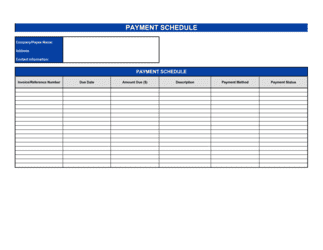
In plain language: Sets out each installment amount and its specific due date, often as a table, so there is no ambiguity about timing or amounts.

Sample language
Debtor agrees to repay the Outstanding Balance in [NUMBER] installments as follows: Installment 1 β€” $[AMOUNT] due on [DATE]; Installment 2 β€” $[AMOUNT] due on [DATE]; [CONTINUE AS NEEDED].

Common mistake: Stating installment frequency without specifying exact calendar dates β€” 'monthly' leaves room for dispute about which day of the month payment is due.

Interest Terms

In plain language: States whether interest accrues on the outstanding balance, the applicable rate, and how it is calculated.

Sample language
The Outstanding Balance shall accrue interest at a rate of [X]% per annum, calculated on the declining balance. If no interest applies, state: 'No interest shall accrue on the Outstanding Balance provided payments are made on schedule.'

Common mistake: Leaving interest terms silent β€” if a dispute arises, courts may apply a statutory interest rate that differs from what either party expected.

Payment Method and Instructions

In plain language: Specifies how each installment must be paid β€” bank transfer, cheque, or electronic payment β€” and provides the details needed to make the payment.

Sample language
All installments shall be paid by [METHOD β€” e.g., bank transfer / cheque / ACH] to [ACCOUNT DETAILS / PAYEE NAME / ADDRESS]. Payments shall reference '[REFERENCE β€” e.g., Invoice #, Agreement Date]'.

Common mistake: Omitting payment instructions from the letter itself β€” debtors who lose the accompanying email have no way to complete the transfer correctly.

Grace Period and Late Payment

In plain language: Defines how many days after a due date the debtor has before a missed payment is considered a default, and any late fee that applies.

Sample language
Debtor shall have a grace period of [X] calendar days after each due date. If payment is not received within the grace period, a late fee of $[AMOUNT] / [X]% of the overdue installment shall be added to the next installment.

Common mistake: No grace period at all β€” without one, a payment delayed by a weekend or banking holiday automatically triggers default and can damage an otherwise cooperative repayment relationship.

Default and Acceleration

In plain language: States what happens if the debtor misses a payment beyond the grace period β€” typically, the entire remaining balance becomes immediately due.

Sample language
If Debtor fails to make any installment within the grace period, Creditor may declare the entire remaining Outstanding Balance immediately due and payable, and pursue all available remedies at law or in equity.

Common mistake: No default clause at all β€” omitting it leaves the creditor with no documented basis to accelerate the debt or escalate to collections without returning to the debtor for a new agreement.

Entire Agreement and Modifications

In plain language: Confirms that this letter is the complete record of the repayment arrangement and that any changes must be in writing.

Sample language
This Letter Agreement constitutes the entire understanding between the parties regarding repayment of the Outstanding Balance and supersedes all prior oral or written agreements. Any modification must be made in writing and signed by both parties.

Common mistake: Relying on an email chain as the modification record β€” if the original letter requires written modifications, an informal email thread may not satisfy that requirement and can be disregarded.

Governing Law

In plain language: Identifies the jurisdiction whose laws govern interpretation and enforcement of the agreement.

Sample language
This Agreement shall be governed by and construed in accordance with the laws of [STATE / PROVINCE / COUNTRY], without regard to its conflict of laws principles.

Common mistake: Omitting governing law entirely β€” in cross-border arrangements, each party may assume a different jurisdiction applies, creating uncertainty if a dispute arises.

Signatures and Acknowledgment

In plain language: Provides signature lines for both parties with name, title, and date, confirming mutual acceptance of the terms.

Sample language
Agreed and accepted as of the date first written above. [CREDITOR LEGAL NAME]: _______________ Name: [NAME] Title: [TITLE] Date: [DATE] | [DEBTOR LEGAL NAME]: _______________ Name: [NAME] Title: [TITLE] Date: [DATE]

Common mistake: Only the creditor signs and sends the letter without obtaining the debtor's countersignature β€” a one-sided letter is not a mutual agreement and has weaker enforceability.

How to fill it out

  1. 1

    Enter both parties' full legal names and addresses

    Fill in the creditor's and debtor's complete legal names β€” registered business name or individual's full name β€” along with current mailing addresses.

    πŸ’‘ Confirm the debtor's legal name against any existing contract or invoice to ensure the correct entity is bound.

  2. 2

    State the outstanding balance and its origin

    Enter the exact dollar amount owed as of the agreement date and briefly describe what generated the debt β€” unpaid invoices, a prior loan, overdue rent, or similar.

    πŸ’‘ Attach a copy of the original invoice or loan statement as an exhibit so the balance cannot be disputed later.

  3. 3

    Build the installment schedule with specific dates

    List each installment amount and its exact calendar due date. Use a table format for clarity. Make sure the installments sum to the full outstanding balance plus any agreed interest.

    πŸ’‘ Avoid due dates that fall on weekends or public holidays β€” set the due date to the nearest preceding business day to prevent automatic grace-period triggers.

  4. 4

    Decide whether interest applies and enter the rate

    If interest is agreed, state the annual rate and confirm whether it applies to the declining balance or a flat amount. If no interest applies, state that explicitly.

    πŸ’‘ Check the applicable jurisdiction's maximum allowable interest rate on private debts before entering a figure to avoid usury issues.

  5. 5

    Add payment method details

    Specify how payments must be sent β€” bank transfer with account number and routing number, cheque payable to a named party, or an online payment portal link.

    πŸ’‘ Include a payment reference the debtor should use on every transfer so you can match receipts to installments without manual follow-up.

  6. 6

    Set the grace period and late-fee terms

    Choose a grace period of 3–7 calendar days and state any late fee clearly. A grace period reduces friction while still protecting the creditor's rights.

    πŸ’‘ A flat late fee (e.g., $25–$50) is easier to administer than a percentage; a percentage is more proportionate for large balances.

  7. 7

    Send for countersignature before the first payment is due

    Send the completed letter to the debtor and request a signed copy be returned before the first installment date. File the countersigned original in a secure location.

    πŸ’‘ Use a PDF e-signature tool to get a timestamped, auditable countersignature rather than relying on a scanned copy.

Frequently asked questions

What is a letter agreement on repayment schedule?

A letter agreement on repayment schedule is a formal written document that records the terms under which a debtor will repay an outstanding balance in defined installments. It identifies both parties, states the total amount owed, sets out each payment date and amount, and addresses what happens if a payment is missed. When countersigned by the debtor, it creates a mutual written record that replaces informal arrangements.

Is a letter agreement legally binding?

A letter agreement is generally considered legally binding in most jurisdictions when it identifies the parties, states the subject matter and consideration, and is accepted by both sides β€” typically through countersignature. It is not a formal contract drafted by a lawyer, but courts routinely enforce well-drafted letter agreements as evidence of a mutual understanding. Always obtain the debtor's countersignature to establish mutual acceptance.

What is the difference between a letter agreement and a promissory note?

A letter agreement on repayment is a mutual, bilateral document confirming terms both parties have negotiated. A promissory note is a unilateral written promise by the debtor to repay a specific sum and is treated more like a financial instrument β€” it can be transferred or endorsed to a third party. Promissory notes are typically used for formal loans; letter agreements suit renegotiated or informal repayment arrangements between business parties.

Do I need a lawyer to prepare a repayment schedule letter?

For most standard business repayment arrangements, a well-structured template is sufficient. Consider involving a lawyer when the amount is significant (typically above $10,000), when the debtor is disputing the balance, when a prior agreement has already been breached, or when the arrangement involves collateral or cross-border parties.

What happens if the debtor misses a payment?

If the agreement contains a grace period and default clause, the creditor may first allow the grace period to pass, then formally notify the debtor of default. If an acceleration clause is included, the creditor can demand the entire remaining balance immediately. Without these clauses, the creditor's options are limited and may require a new negotiation or court action. Document every missed payment in writing as it occurs.

Should a repayment schedule letter include interest?

Including interest is optional and depends on the nature of the original debt and the parties' relationship. For overdue invoices, creditors often waive interest to encourage prompt repayment. For restructured loans, a modest interest rate compensates the creditor for extending time. If interest is included, verify the rate does not exceed the maximum lawful rate in the applicable jurisdiction, as usury rules vary widely.

Can a repayment schedule letter be modified after it is signed?

Yes, but any modification should be made in writing and signed by both parties. A verbal agreement to change a payment date or reduce an installment is difficult to prove and may not be enforceable if the original letter requires written amendments. Issue a short amendment letter referencing the original agreement date and the specific term being changed.

How many installments should a repayment schedule have?

The number of installments depends on the outstanding balance, the debtor's cash flow, and the creditor's need for timely recovery. Common structures range from 3 to 12 monthly installments for business debts under $50,000. Fewer, larger installments reduce administrative tracking; more installments reduce the debtor's per-period burden. Avoid schedules exceeding 24 months without considering whether a formal loan agreement with stronger protections is more appropriate.

How this compares to alternatives

vs Promissory Note

A promissory note is a unilateral written promise by the debtor to repay a sum and functions as a transferable financial instrument. A letter agreement is bilateral β€” both parties confirm mutually negotiated terms. Use a promissory note when the creditor needs a standalone instrument they could assign or enforce independently; use a letter agreement when documenting a renegotiated arrangement between parties with an existing relationship.

vs Demand Letter for Payment

A demand letter requests immediate payment of a full outstanding balance and is typically the step before legal action. A repayment schedule letter records a plan for installment repayment already agreed between the parties. Demand letters escalate; repayment letters resolve.

vs Loan Agreement

A loan agreement is a comprehensive contract governing the disbursement of new funds, security, representations, and covenants. A letter agreement on repayment schedule addresses an existing debt that is already owed and is being restructured. If the underlying debt is disputed or involves collateral, a formal loan agreement provides stronger protections.

vs Debt Settlement Agreement

A debt settlement agreement reduces the total amount owed in exchange for a lump-sum or accelerated payment and typically includes a full release of liability. A repayment schedule letter does not reduce the balance β€” it simply structures how the full amount is repaid over time. Use a settlement agreement when the creditor is willing to accept less than the full balance.

Industry-specific considerations

Professional Services

Agencies and consultants use repayment letters to convert unpaid project invoices into a structured plan without involving collections agencies or disrupting the client relationship.

Retail and Wholesale

Suppliers use repayment letters to restructure overdue trade credit balances with buyers, preserving the commercial relationship while securing a written recovery commitment.

Real Estate and Property Management

Landlords issue repayment letters to tenants with arrears, setting out a schedule to recover overdue rent without proceeding immediately to eviction.

Construction and Trades

Subcontractors and material suppliers use repayment letters when a general contractor owes for completed work or delivered materials, avoiding lien filings while a payment plan is honored.

Template vs pro β€” what fits your needs?

PathBest forCostTime
Use the templateBusiness owners, creditors, and freelancers formalizing a straightforward repayment plan on an undisputed balanceFree15–30 minutes
Template + professional reviewArrangements involving balances above $10,000, interest terms, or a debtor with a history of missed payments$150–$400 for a brief lawyer or accountant review1–2 days
Custom draftedDisputed debts, cross-border parties, collateral-backed arrangements, or where the creditor anticipates litigation$500–$1,500+3–7 days

Glossary

Repayment Schedule
A table or list specifying each installment amount, its due date, and the remaining balance after each payment.
Outstanding Balance
The total amount owed by the debtor at the time the repayment agreement is signed, before any installments are applied.
Installment
A single, scheduled partial payment made toward reducing the outstanding balance on a defined date.
Default
The debtor's failure to make a scheduled installment by its due date, triggering the remedies stated in the agreement.
Grace Period
A defined number of days after a due date during which a late payment is accepted without triggering default consequences.
Interest Rate
The percentage applied to the outstanding balance that determines the additional amount owed on top of the principal repayment.
Acceleration Clause
A provision that makes the entire remaining balance immediately due and payable if the debtor misses a defined number of payments.
Creditor
The party to whom the debt is owed β€” typically a lender, supplier, landlord, or service provider.
Debtor
The party that owes the outstanding balance and commits to repaying it according to the agreed schedule.
Acknowledgment of Debt
A written confirmation by the debtor that the stated outstanding balance is accurate and is owed to the creditor.

Part of your Business Operating System

This document is one of 3,000+ business & legal templates included in Business in a Box.

  • Fill-in-the-blanks β€” ready in minutes
  • 100% customizable Word document
  • Compatible with all office suites
  • Export to PDF and share electronically

Create your document in 3 simple steps.

From template to signed document β€” all inside one Business Operating System.
1
Download or open template

Access over 3,000+ business and legal templates for any business task, project or initiative.

2
Edit and fill in the blanks with AI

Customize your ready-made business document template and save it in the cloud.

3
Save, Share, Send, Sign

Share your files and folders with your team. Create a space of seamless collaboration.

Save time, save money, and create top-quality documents.

β˜…β˜…β˜…β˜…β˜…

"Fantastic value! I'm not sure how I'd do without it. It's worth its weight in gold and paid back for itself many times."

Managing Director Β· Mall Farm
Robert Whalley
Managing Director, Mall Farm Proprietary Limited
β˜…β˜…β˜…β˜…β˜…

"I have been using Business in a Box for years. It has been the most useful source of templates I have encountered. I recommend it to anyone."

Business Owner Β· 4+ years
Dr Michael John Freestone
Business Owner
β˜…β˜…β˜…β˜…β˜…

"It has been a life saver so many times I have lost count. Business in a Box has saved me so much time and as you know, time is money."

Owner Β· Upstate Web
David G. Moore Jr.
Owner, Upstate Web

Run your business with a system β€” not scattered tools

Stop downloading documents. Start operating with clarity. Business in a Box gives you the Business Operating System used by over 250,000 companies worldwide to structure, run, and grow their business.

Free Forever PlanΒ Β·Β No credit card required