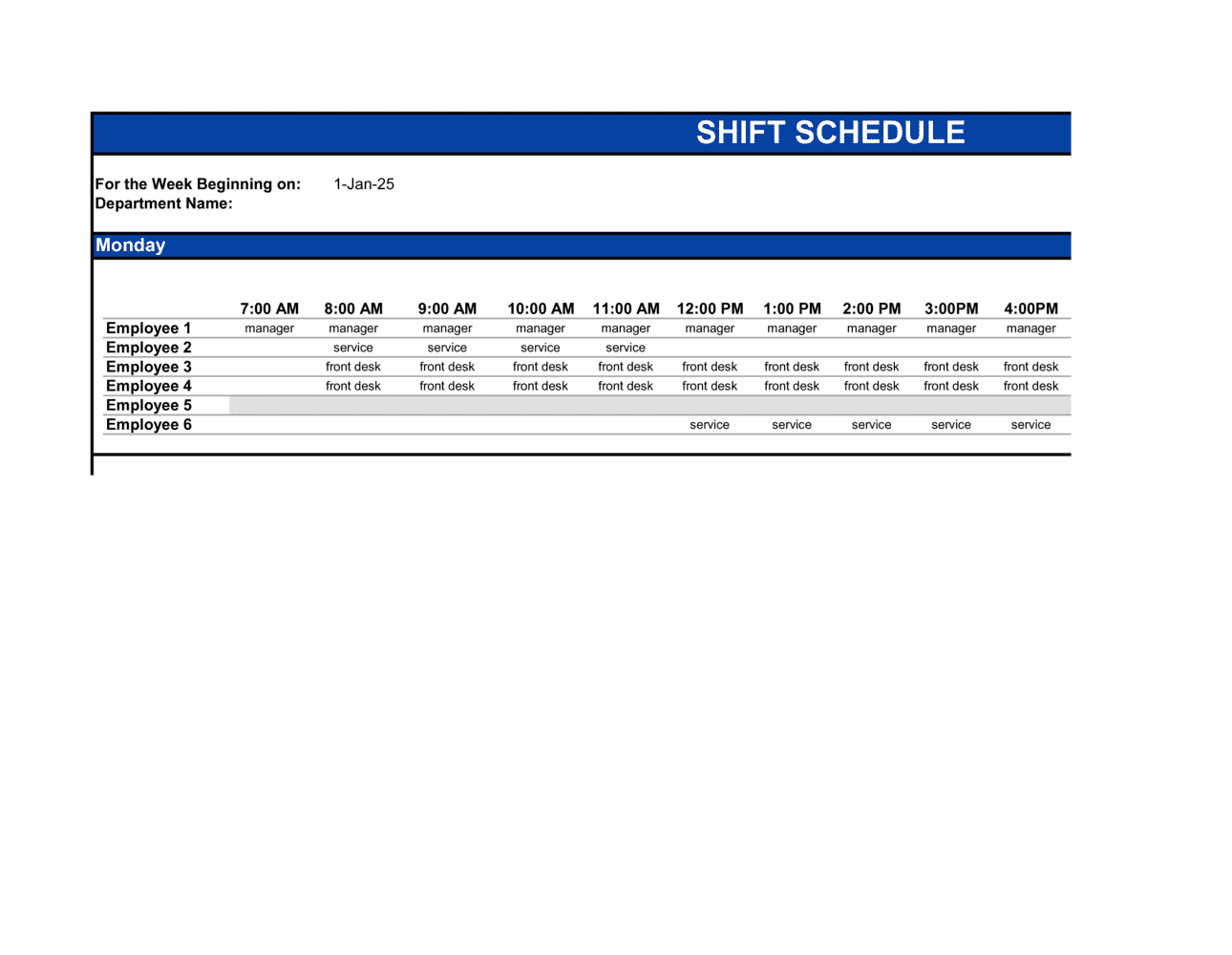
- Shift
- A defined block of working time assigned to an employee, with a fixed start time, end time, and designated role or workstation.
- Rotating Shift
- A scheduling pattern in which employees cycle through different shift periods — day, evening, and night — on a predetermined schedule.
- Split Shift
- A single workday divided into two or more distinct work periods separated by an unpaid break longer than a standard meal break.
- Overtime
- Hours worked beyond the statutory or contractual threshold — typically 40 hours per week or 8 hours per day — that trigger premium pay rates.
- Rest Period
- A mandatory minimum gap between the end of one shift and the start of the next, required by statute or collective agreement to prevent fatigue.
- Shift Differential
- A pay premium applied to evening, night, weekend, or holiday shifts to compensate employees for working outside standard hours.
- Shift Swap
- A mutually agreed exchange of scheduled shifts between two employees, subject to supervisor approval, that does not alter total hours or overtime obligations.
- On-Call
- A designation requiring an employee to be available to work on short notice during a defined period, which may trigger minimum pay guarantees depending on jurisdiction.
- Predictive Scheduling
- Laws in certain jurisdictions requiring employers to post schedules a minimum number of days in advance and pay premiums for last-minute changes.
- Break Entitlement
- The minimum rest and meal break periods an employee is legally entitled to during a shift, determined by shift length and applicable employment standards legislation.
- Collective Bargaining Agreement (CBA)
- A negotiated contract between an employer and a union that may prescribe shift lengths, rotation patterns, overtime rules, and scheduling notice requirements beyond statutory minimums.