Communications Strategy

Free Word download β€’ Edit online β€’ Save & share with Drive β€’ Export to PDF

16 pagesβ€’25–35 min to fillβ€’Difficulty: Complex
Learn more ↓
FreeCommunications Strategy Template

At a glance

What it is
A Communications Strategy is a structured planning document that defines what an organization wants to say, to whom, through which channels, and how it will measure whether those messages landed. This free Word download gives you a ready-to-edit framework covering objectives, audience segmentation, key messages, channel mix, calendar, and KPIs β€” exportable as PDF and shareable with leadership or agency partners in a single document.
When you need it
Use it when launching a product, rebranding, managing a crisis, entering a new market, or aligning internal teams around a major organizational change. Any situation where inconsistent or absent messaging creates confusion β€” internally or externally β€” calls for a written communications strategy.
What's inside
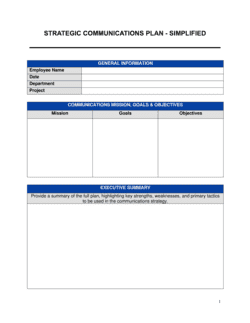
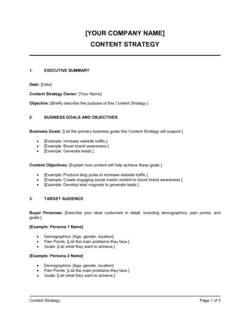
Situation analysis, communication objectives tied to business goals, audience personas with message maps, channel selection rationale, content and editorial calendar, roles and responsibilities, budget allocation, and a measurement framework with defined KPIs and reporting cadence.

What is a Communications Strategy?

A Communications Strategy is a structured planning document that defines what an organization wants to say, to which audiences, through which channels, and how it will measure whether those messages achieved their intended effect. It connects every communications activity β€” from press releases and social posts to internal announcements and investor updates β€” to a specific business objective, ensuring that messaging decisions are deliberate rather than reactive. Unlike a tactical content calendar or channel plan, a communications strategy operates at the level of audience priorities, core narratives, and measurable outcomes, giving teams a shared framework they can apply consistently across all touchpoints and over time.

Why You Need This Document

Without a written communications strategy, organizations default to ad hoc messaging β€” each department communicating independently, with inconsistent tone, conflicting priorities, and no shared definition of success. The consequences are concrete: campaigns that fail to reach the right audience because channel selection was based on habit rather than behavior data; employee changes that land badly because internal messaging was an afterthought; brand perceptions that drift because no one owns the core narrative. A communications strategy closes these gaps by forcing explicit decisions about who matters most, what they need to hear, and how you will know the communication worked. This template gives you a complete, editable framework that takes an organization from blank page to board-ready strategy in days rather than weeks.

Which variant fits your situation?

If your situation is…Use this template
Managing messaging across an entire brand at the corporate levelCorporate Communications Strategy
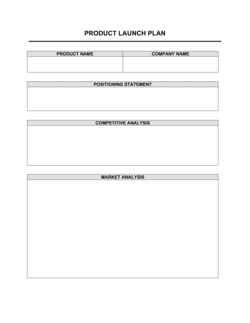
Coordinating messaging for a specific product or service launchProduct Launch Communications Plan
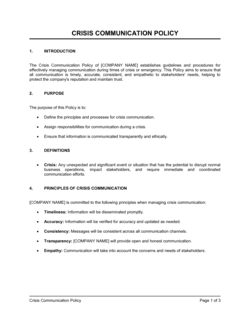
Managing communications during a crisis or reputational incidentCrisis Communication Plan
Aligning employees around a merger, reorg, or policy changeInternal Communications Plan
Outlining a full marketing and channel strategyMarketing Plan
Planning social media content and posting cadenceSocial Media Strategy
Presenting communications ROI to executive stakeholdersMarketing Report

Common mistakes to avoid

❌ Setting activity-based rather than outcome-based objectives

Why it matters: Publishing 20 posts per month is an activity, not an outcome. Activity metrics let underperforming strategies look busy while failing to move any business needle.

Fix: Rewrite every objective in the form: move [METRIC] from [BASELINE] to [TARGET] by [DATE]. If you cannot fill in those blanks, the objective is not ready.

❌ One message for all audiences

Why it matters: A message framed for investors β€” focused on ROI and growth trajectory β€” will feel tone-deaf to frontline employees worried about job security. Audience-agnostic messaging produces low engagement across every segment.

Fix: Build a message map with a distinct primary message and two to three supporting proof points for each priority audience segment.

❌ No defined approval workflow

Why it matters: Without a documented review and approval process, urgent content bypasses quality checks, legally sensitive statements go unreviewed, and off-brand posts create reputational incidents that require crisis management.

Fix: Document the approval chain for every content type before production begins and enforce it consistently, including for social media replies and internal announcements.

❌ No budget contingency for reactive communications

Why it matters: Organizations that allocate 100% of the communications budget to planned activities are forced to cancel or delay campaigns when a crisis, product issue, or competitive event demands rapid unplanned response.

Fix: Reserve a minimum of 10–15% of the total communications budget as an unallocated contingency specifically for reactive or opportunistic communications needs.

❌ Choosing channels based on what the team is comfortable with

Why it matters: Defaulting to a channel your team knows well β€” even if your audience rarely uses it β€” means messages are never seen by the people they are designed to influence.

Fix: For each audience segment, document which two to three channels they use most frequently before selecting your channel mix. Use existing analytics, surveys, or industry benchmarks to validate the choice.

❌ Treating the strategy as a one-time document

Why it matters: A communications strategy written in January and not reviewed until December will be misaligned with business reality by Q2, resulting in messaging that is off-strategy or actively contradicts current organizational priorities.

Fix: Schedule a quarterly strategy review with KPI results compared to targets, and a formal annual refresh to reset objectives, audiences, and channel mix.

The 9 key sections, explained

Situation Analysis

Communication Objectives

Audience Segmentation and Stakeholder Map

Key Messages and Message Map

Channel Strategy

Content and Editorial Calendar

Roles, Responsibilities, and Approval Workflow

Budget Allocation

Measurement Framework and KPIs

How to fill it out

  1. 1

    Complete the situation analysis before writing objectives

    Audit your current communications β€” what channels you use, what recent results looked like, and what internal or external changes are prompting this strategy. Include a brief competitive or peer review.

    πŸ’‘ A 10-question internal survey sent to five to ten stakeholders takes one day and surfaces blind spots that no external research will catch.

  2. 2

    Write SMART communication objectives tied to business goals

    For each objective, state a specific metric, a baseline value, a target, and a deadline. Link every objective explicitly to a business outcome β€” revenue, retention, adoption, or reputation.

    πŸ’‘ If you cannot name the business goal a communications objective supports, cut the objective.

  3. 3

    Map your audiences by priority and influence

    List every stakeholder group, then rank them by how critical they are to achieving your objectives. Document their key concerns, current perceptions, and preferred information channels for each top-priority segment.

    πŸ’‘ Limit your primary audience list to three segments maximum β€” strategies that try to reach everyone equally reach no one effectively.

  4. 4

    Draft audience-specific messages with proof points

    For each primary audience, write one core message in 25 words or fewer, then list two to three supporting facts or proof points. Ensure each message addresses the audience's specific concern rather than the organization's preferred talking points.

    πŸ’‘ Test your messages by asking: would someone outside our organization find this credible and relevant? If not, rewrite.

  5. 5

    Select channels based on audience behavior, not organizational habit

    For each audience segment, identify where they actually get their information. Cross-reference this against your budget and team capacity. Document why you are excluding channels as well as why you are including them.

    πŸ’‘ Owning three channels well consistently outperforms spreading effort across eight channels poorly.

  6. 6

    Build the editorial calendar with owners and deadlines

    Map each planned content piece to a publication date, channel, format, responsible owner, and approval deadline. Align the calendar to product, sales, and organizational milestones so communications support the wider business rhythm.

    πŸ’‘ Color-code the calendar by audience segment to quickly identify gaps where a key audience has no touchpoints in a given month.

  7. 7

    Define the approval workflow before content production begins

    Document who must review and approve each content type, the turnaround time at each stage, and the escalation path for urgent or sensitive communications. Share this with every content contributor before the first piece is drafted.

    πŸ’‘ Set a standing rule: no content goes live without written approval from the designated owner, even if it is a reply to a social media comment.

  8. 8

    Set KPIs and schedule reporting checkpoints

    Assign at least one measurable KPI to each communications objective. Confirm the data source and collection method, then schedule monthly or quarterly reviews where results are compared to targets and the strategy is adjusted accordingly.

    πŸ’‘ Build a one-page dashboard that reports all KPIs side by side β€” it makes trend identification and executive reporting significantly faster.

Frequently asked questions

What is a communications strategy?

A communications strategy is a planning document that defines what an organization wants to communicate, to which audiences, through which channels, and how success will be measured. It connects messaging decisions to business objectives, ensuring that every communication activity β€” press releases, internal updates, social posts, or campaigns β€” serves a defined purpose rather than happening reactively.

What is the difference between a communications strategy and a communications plan?

A communications strategy sets the direction β€” objectives, audience priorities, key messages, and channel rationale. A communications plan translates that strategy into a tactical schedule of specific activities, owners, dates, and budgets. The strategy answers "why and what"; the plan answers "who, when, and how much." Both documents are typically produced together and updated on the same cycle.

How long should a communications strategy be?

For most organizations, 10–20 pages is the right length β€” enough to document the situation, objectives, audience map, message map, channel rationale, and measurement framework without burying the key decisions in detail. Appendices for the full editorial calendar and budget breakdown can extend the document, but the core strategy should be readable in under 30 minutes by a senior stakeholder.

Who should be involved in creating a communications strategy?

The core team typically includes the communications or marketing lead, a representative from senior leadership to align on business objectives, and relevant subject matter experts β€” product, HR, or legal depending on the strategy's scope. For external communications, agency partners are often involved in drafting. The strategy should be approved by whoever owns the organizational goals it is designed to support.

How often should a communications strategy be updated?

A full refresh annually is standard, aligned to the business planning cycle. A lighter quarterly review should compare KPI results to targets and flag any channel, message, or audience assumptions that need adjustment. Major organizational events β€” a product launch, acquisition, leadership change, or crisis β€” warrant an immediate out-of-cycle review regardless of timing.

What KPIs should a communications strategy include?

KPIs should map directly to each communications objective. Common metrics include media impressions and share of voice for awareness objectives, email open and click-through rates for engagement objectives, employee survey scores for internal communications objectives, and inbound inquiry volume or lead attribution for demand-generation objectives. Avoid tracking vanity metrics β€” follower counts or total posts published β€” that do not connect to a business outcome.

What is the PESO model and should I use it in my communications strategy?

PESO stands for Paid, Earned, Shared, and Owned channels. It is a framework for ensuring your channel strategy covers the full communications landscape rather than defaulting to a single channel type. Using it in your strategy helps identify gaps β€” for example, relying entirely on owned channels with no earned media, or spending heavily on paid while neglecting content that builds long-term organic visibility. It is a useful organizing framework, not a mandatory template structure.

Can a communications strategy be used for internal communications?

Yes. Internal communications strategies follow the same structure but focus on employee and leadership audiences, channels such as intranet, all-hands meetings, and email, and outcomes such as change adoption rates, employee engagement scores, or policy compliance. They are particularly important during mergers, restructures, leadership transitions, and major technology or process changes where misaligned messaging creates confusion and erodes trust.

Do I need an agency to build a communications strategy?

Not for most organizations. A structured template handles the framework; the strategic thinking β€” objectives, audience priorities, and message development β€” comes from inside the organization. Agencies add most value when the organization lacks in-house communications expertise, is entering an unfamiliar market, or needs channel-specific execution capabilities such as media relations or paid media management. For straightforward annual planning, a well-completed template and a half-day internal workshop are typically sufficient.

How this compares to alternatives

vs Marketing Plan

A marketing plan focuses on driving demand and revenue growth through product positioning, pricing, and promotional mix. A communications strategy addresses the broader question of how an organization communicates with all stakeholders β€” including employees, media, investors, and the public β€” not just potential customers. The two documents often share channel and message decisions but serve different primary purposes.

vs Crisis Communication Plan

A crisis communication plan is a reactive document specifying who speaks, what they say, and through which channels during a specific incident. A communications strategy is a proactive document setting direction for planned communications over a defined period. A well-built communications strategy includes a summary crisis protocol, but the full crisis plan is a separate, more detailed document maintained and rehearsed independently.

vs Brand Strategy

A brand strategy defines the organization's identity β€” purpose, values, positioning, and visual and verbal identity. A communications strategy applies that identity by deciding what to say, to whom, and when. Brand strategy is the foundation; the communications strategy is how that foundation is expressed in ongoing stakeholder interactions.

vs Social Media Strategy

A social media strategy is a channel-specific plan covering platform selection, content formats, posting cadence, community management, and social KPIs. A communications strategy sets the broader direction that the social media strategy executes against. If you only need a plan for your social channels, the social media strategy template is the right starting point; if you need to coordinate messaging across all channels and stakeholder groups, start with the communications strategy.

Industry-specific considerations

Technology / SaaS

Product launch sequencing across developer, enterprise buyer, and press audiences, with separate message tracks for each segment and channel-specific content for analyst briefings, launch blogs, and social amplification.

Healthcare

Regulated language requirements, patient and clinician audience separation, crisis communications protocols for product safety or data breach scenarios, and compliance review stages built into the approval workflow.

Nonprofit / Public Sector

Donor stewardship messaging alongside advocacy and public awareness campaigns, with distinct channels and messages for grant funders, individual donors, volunteers, and beneficiary communities.

Professional Services

Thought leadership as the primary awareness channel, with message maps tailored to C-suite buyers versus procurement, and measurement tied to inbound inquiry volume and pipeline attribution.

Template vs pro β€” what fits your needs?

PathBest forCostTime
Use the templateSmall to mid-size organizations with an in-house communications or marketing lead handling annual planningFree1–2 weeks (including internal workshops and stakeholder alignment)
Template + professional reviewOrganizations entering a new market, managing a major change program, or preparing communications for a fundraising round$500–$2,500 for a communications consultant review or half-day strategy workshop facilitation2–3 weeks
Custom draftedLarge organizations with complex multi-audience stakeholder environments, regulated industries, or those managing a sustained PR or public affairs campaign$5,000–$25,000+ for a full agency strategy engagement4–8 weeks

Glossary

Key Message
A short, specific statement the organization wants its audience to understand, remember, or act on after receiving any communication.
Audience Persona
A semi-fictional profile of a target audience segment describing their demographics, concerns, information sources, and communication preferences.
Channel Mix
The combination of communication channels β€” email, social media, press, events, paid media β€” selected to reach each audience segment.
Message Map
A structured table linking each audience segment to its primary message, supporting proof points, and the desired action or belief change.
Editorial Calendar
A timeline that schedules specific content pieces, announcements, and campaigns across channels for a defined period.
Tone of Voice
The consistent personality and style an organization uses across all written and spoken communications β€” formal, conversational, authoritative, empathetic, or otherwise.
KPI (Key Performance Indicator)
A measurable value used to evaluate whether a communications activity is achieving its stated objective β€” e.g., media impressions, email open rate, or employee survey score.
Stakeholder Mapping
The process of identifying all groups with an interest in an organization's activities and ranking them by influence and communication priority.
Share of Voice
A brand's percentage of total mentions or media coverage in a defined topic area relative to competitors, used as a benchmark for PR effectiveness.
PESO Model
A framework categorizing communications channels into four types: Paid, Earned, Shared, and Owned β€” used to ensure a balanced channel strategy.

Part of your Business Operating System

This document is one of 3,000+ business & legal templates included in Business in a Box.

  • Fill-in-the-blanks β€” ready in minutes
  • 100% customizable Word document
  • Compatible with all office suites
  • Export to PDF and share electronically

Create your document in 3 simple steps.

From template to signed document β€” all inside one Business Operating System.
1
Download or open template

Access over 3,000+ business and legal templates for any business task, project or initiative.

2
Edit and fill in the blanks with AI

Customize your ready-made business document template and save it in the cloud.

3
Save, Share, Send, Sign

Share your files and folders with your team. Create a space of seamless collaboration.

Save time, save money, and create top-quality documents.

β˜…β˜…β˜…β˜…β˜…

"Fantastic value! I'm not sure how I'd do without it. It's worth its weight in gold and paid back for itself many times."

Managing Director Β· Mall Farm
Robert Whalley
Managing Director, Mall Farm Proprietary Limited
β˜…β˜…β˜…β˜…β˜…

"I have been using Business in a Box for years. It has been the most useful source of templates I have encountered. I recommend it to anyone."

Business Owner Β· 4+ years
Dr Michael John Freestone
Business Owner
β˜…β˜…β˜…β˜…β˜…

"It has been a life saver so many times I have lost count. Business in a Box has saved me so much time and as you know, time is money."

Owner Β· Upstate Web
David G. Moore Jr.
Owner, Upstate Web

Run your business with a system β€” not scattered tools

Stop downloading documents. Start operating with clarity. Business in a Box gives you the Business Operating System used by over 250,000 companies worldwide to structure, run, and grow their business.

Free Forever PlanΒ Β·Β No credit card required