1
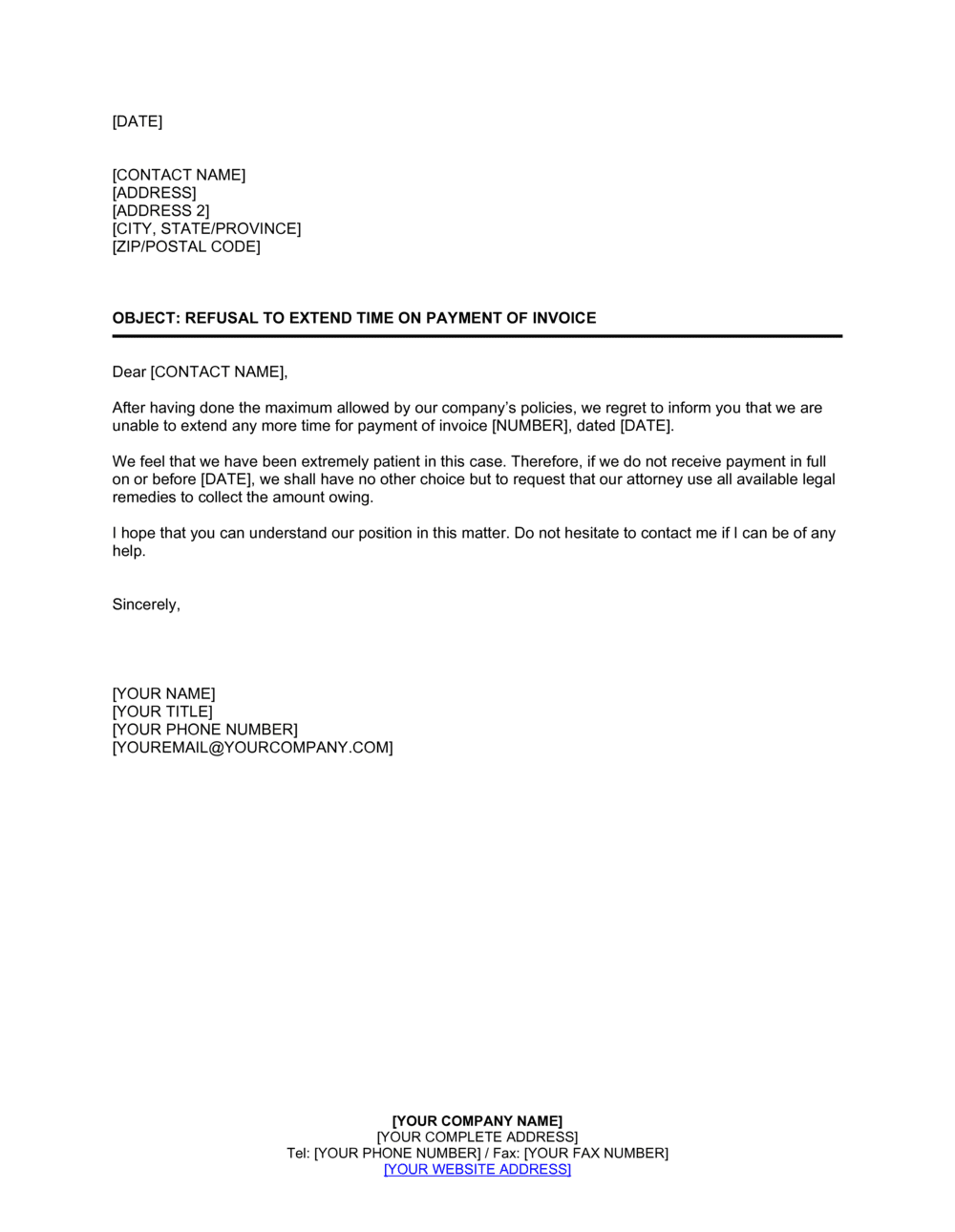
Enter the creditor and debtor legal names and addresses
Use full registered legal entity names for both parties — not trade names or abbreviations. Include the debtor's billing address and the name of their accounts-payable contact if known.
💡 Cross-check the debtor's name against the original invoice and the underlying contract to ensure exact consistency — discrepancies create grounds for dispute.
2
Reference the invoice precisely
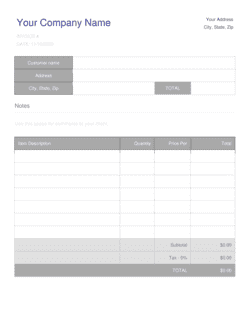
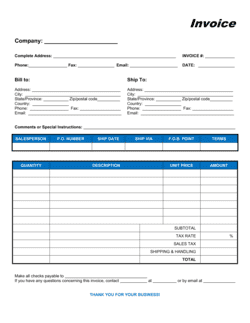
Enter the invoice number, original invoice date, and the exact outstanding amount in the stated currency. If late fees have accrued, calculate the updated total and show both figures clearly.
💡 Attach a copy of the original invoice to the letter as an exhibit — it prevents the debtor from claiming they cannot locate the relevant document.
3
Acknowledge the debtor's extension request
State the date the request was received and the specific extension period the debtor asked for. This creates a clear record that a formal request was made and formally refused.
💡 If the request was made verbally, note that in the letter: 'Your verbal request of [DATE] to [PERSON].' Converting the verbal request to written record strengthens your position.
4
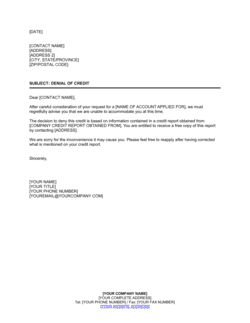
State the denial in unambiguous terms
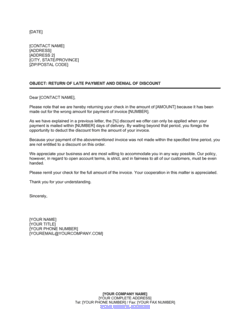
Write the denial in plain, direct language that leaves no room for the debtor to interpret the letter as a conditional approval or a willingness to negotiate further.
💡 Avoid phrases like 'at this time,' 'currently,' or 'under the present circumstances' — they imply the denial could change and invite another extension request.
5
Calculate and insert late payment charges
Apply the late-fee rate from the original contract or invoice to the outstanding principal from the original due date to the date of the letter. State both the daily or monthly accrual rate and the total accrued to date.
💡 Confirm the applicable statutory interest rate for your jurisdiction as a floor — in the UK, the Late Payment of Commercial Debts Act sets 8% above the Bank of England base rate, which applies automatically if your contract rate is lower.
6
Set a specific payment deadline and provide payment instructions
Give the debtor a precise calendar date — typically 7 to 10 business days from the date of the letter — by which full payment must be received. Include complete remittance instructions: bank account, ACH, wire details, or check payable to.
💡 7 business days is the industry-standard demand window; shorter periods may be deemed unreasonable and longer periods signal you are not serious about enforcement.
7
List the consequences of continued non-payment
Specify exactly what happens if the deadline is missed — collections referral, legal proceedings, credit reporting, or exercise of any security interest. Make these consequences concrete, not vague.
💡 Only list consequences you actually intend to follow through on. Idle threats in a formal letter reduce your credibility and may be used against you in subsequent proceedings.
8
Sign and send via a traceable method
Have an authorized signatory sign the letter and send it via email with read receipt, certified mail, or courier — any method that creates a delivery timestamp and proof of receipt.
💡 Send simultaneously by email and certified mail to eliminate any argument that the letter was never received.