1
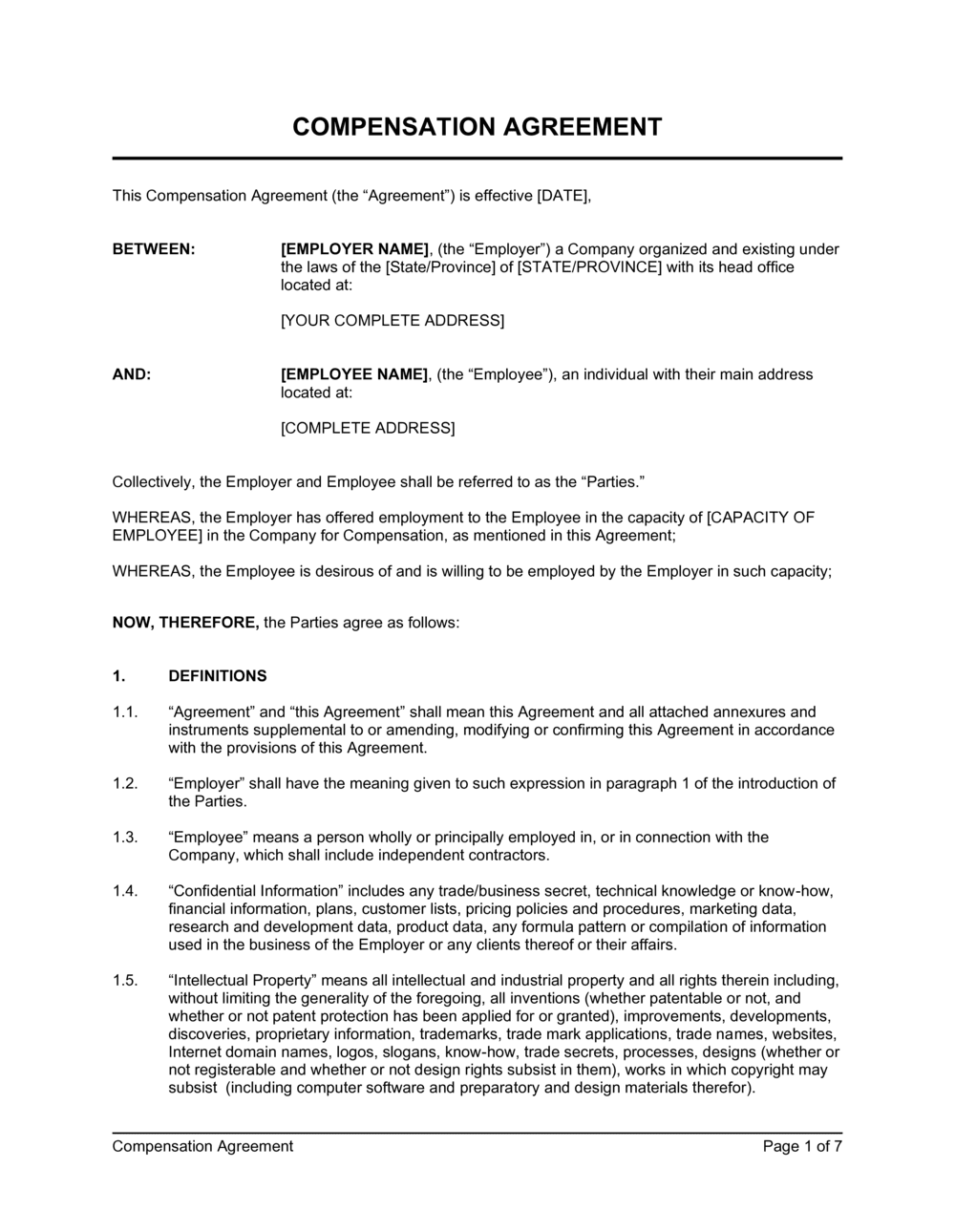
Identify the parties and confirm the effective date
Enter the employer's full registered legal name, state of incorporation, and entity type. Enter the employee's or contractor's legal name as it appears on government-issued ID. Set the effective date to the first day the new compensation terms apply — which may differ from the signing date.
💡 Cross-check the employer entity name against your payroll system before execution. A mismatch between the contracting entity and the payroll entity can void enforcement of restrictive clauses.
2
Enter base salary or rate and payment schedule
State the exact annual salary or hourly rate, the pay frequency (bi-weekly is standard in North America), and the payment method. If the role is part-time or project-based, specify the number of expected hours per week or the project scope.
💡 For multi-currency or cross-border arrangements, state the currency explicitly — USD 80,000 and CAD 80,000 differ by roughly 25% and the ambiguity creates immediate disputes.
3
Define bonus eligibility and label it clearly as discretionary or guaranteed
Enter the bonus target as a percentage of base salary, the performance metrics that determine payout (with specific KPIs if possible), and the payment timing. If the bonus is discretionary, use that word explicitly and have counsel review the language.
💡 Attach the performance metrics as a separate Schedule A that can be updated annually without amending the main agreement.
4
Build out the commission formula in detail
Specify the commission percentage, the exact trigger event (closed deal, collected revenue, or gross profit), how commission is calculated for partial periods, and when commission is forfeited if the employee resigns before payout.
💡 Address draws against commission explicitly — state whether the draw is recoverable and over what timeframe — to avoid wage-claim disputes when commission underperforms.
5
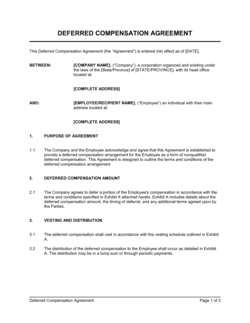
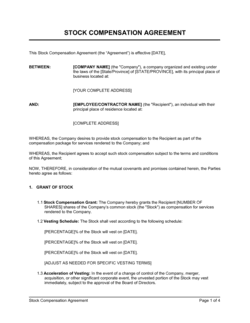
Reference equity or deferred compensation by incorporating the plan document
If the recipient receives equity or deferred compensation, reference the governing plan document and the separate grant or option agreement by name. Do not duplicate terms — state only the high-level grant size and refer to the plan for vesting details.
💡 Confirm the Board has authorized the grant before inserting specific share counts. An unauthorized grant reference can create securities and contract liability.
6
Add the clawback provision scaled to the role
Include a clawback clause for any variable or incentive compensation. For executives or public company employees, tie the clawback trigger to financial restatements. For sales roles, tie it to commission reversals on returned or disputed orders.
💡 SEC-listed companies must comply with Exchange Act Rule 10D-1 clawback requirements enacted in 2023 — consult counsel to confirm the clause meets current regulatory standards.
7
Confirm governing law matches the employee's work location
Set the governing jurisdiction to the state or country where the employee physically performs their work, not the company's home state. Several jurisdictions — including California, New York, and the EU member states — apply local employment law regardless of a contrary choice-of-law clause.
💡 For remote employees who may relocate, add a clause requiring the employee to notify HR of any change in work location so the governing law can be updated.
8
Execute before the effective date and store a signed copy
Both parties must sign before the compensation terms take effect. Post-effective-date signatures raise a fresh-consideration problem for clawback and forfeiture clauses in common-law jurisdictions. Use an eSign tool to timestamp execution and store the fully-executed copy securely.
💡 Send the employee a copy of the fully executed agreement within 24 hours of signing — this reduces later claims that they never reviewed the final terms.