Checklist Pretermination

Free download β€’ Use as a template β€’ Print or share

1 pageβ€’20–25 min to useβ€’Difficulty: Standard
Learn more ↓
FreeChecklist Pretermination Template

At a glance

What it is
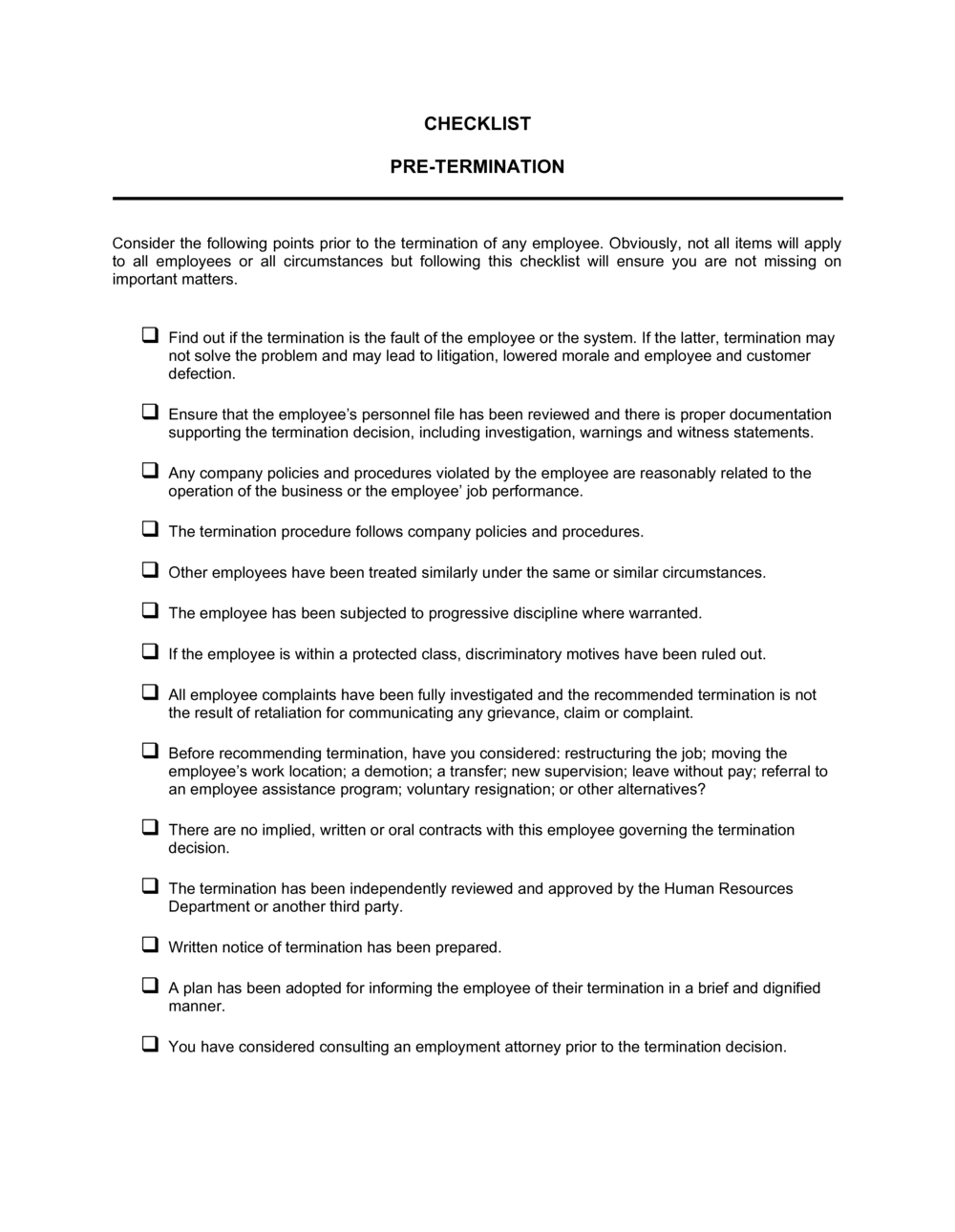
A Checklist Pretermination is a structured form HR managers and supervisors complete before formally ending an employee's employment. This free Word download walks you through every required step β€” from documentation review and notice calculation to final pay and equipment return β€” so nothing is missed before the employee's last day.
When you need it
Use it any time you are preparing to terminate an employee, whether for cause, performance issues, redundancy, or end of a fixed-term contract. Complete it before the termination meeting takes place.
What's inside
Employee and role identification, grounds for termination, documentation review confirmations, notice period and final pay calculations, benefits cessation steps, IT and asset return items, and a sign-off block for the responsible manager and HR representative.

What is a Checklist Pretermination?

A Checklist Pretermination is a structured form that HR managers and supervisors complete before formally notifying an employee of their dismissal. It walks step by step through every required action β€” verifying supporting documentation, calculating notice entitlements and final pay, scheduling IT access revocation, preparing property return, and confirming the communication plan β€” so that nothing is missed before the termination meeting takes place. By capturing all of these steps in a single signed document, it creates a defensible record that the employer followed a consistent and procedurally fair process.

Why You Need This Document

Terminating an employee without a documented pre-termination process is one of the most common reasons employers lose unfair dismissal and wrongful termination claims. Courts and employment tribunals look for evidence that the employer followed a fair procedure β€” proper notice, documented grounds, and correct final pay β€” before concluding the employment. Without a completed checklist, gaps in the process surface under cross-examination and become liabilities. Final pay errors, premature IT revocation, and missing documentation are entirely preventable with a 15-minute review before the termination meeting. This template gives your HR team and line managers a consistent, reusable process that protects the business and ensures every departing employee receives exactly what they are entitled to.

Which variant fits your situation?

If your situation is…Use this template
Terminating an employee for documented performance failuresChecklist Pretermination (For Cause)
Eliminating a role through redundancy or restructuringEmployee Layoff Checklist
Offboarding an employee after their last dayEmployee Offboarding Checklist
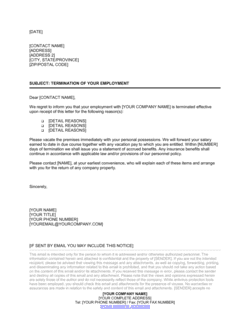
Formally notifying the employee of dismissal in writingEmployee Dismissal Letter
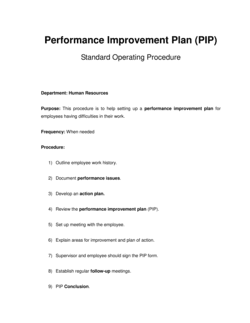
Documenting a performance improvement plan before terminationPerformance Improvement Plan
Issuing a written warning before initiating terminationEmployee Warning Letter
Settling a termination dispute outside of litigationSeverance Agreement

Common mistakes to avoid

❌ Ticking checklist boxes without verifying the underlying documents

Why it matters: A ticked box with no supporting file offers no protection in an unfair dismissal claim. The checklist is only as reliable as the documents it references.

Fix: Open each referenced file before marking it complete. If a document is missing, pause the process until it is located or recreated properly.

❌ Calculating notice from the current role start date

Why it matters: Statutory notice in most jurisdictions is based on total continuous service, not time in the current role. Underpaying notice creates a wage claim against the employer.

Fix: Always use the original hire date β€” confirmed against the employment contract or HR system β€” as the start of the notice calculation.

❌ Revoking IT access before the termination meeting

Why it matters: An employee who discovers their access has been cut before being formally notified may have grounds for a constructive dismissal claim and will almost certainly escalate the situation.

Fix: Schedule IT access revocation to take effect at the same time as or immediately after the termination meeting, not before.

❌ Skipping the HR co-sign requirement

Why it matters: A single manager signature provides no independent verification that procedural steps were followed β€” a critical gap if the termination is challenged internally or legally.

Fix: Require a second signature from an HR representative on every completed checklist before the termination proceeds.

The 10 key fields, explained

Employee and Role Identification

Grounds for Termination

Documentation Review Confirmation

Notice Period Calculation

Final Pay Calculation

Benefits Cessation Steps

IT Access and System Revocation

Return of Company Property

Communication Plan

Manager and HR Sign-Off

How to fill it out

  1. 1

    Complete the employee identification block

    Enter the employee's full legal name, job title, department, supervisor, employee ID, and original hire date. Confirm the name matches payroll records exactly.

    πŸ’‘ Pull the hire date from the original employment contract or HR system β€” not the employee's most recent role start date.

  2. 2

    Select and document the grounds for termination

    Choose the applicable reason category and write a brief factual description. Keep it factual and specific β€” reference dates, incidents, or documented performance issues.

    πŸ’‘ Avoid conclusory language like 'unsuitable for the role.' Cite the specific policy, clause, or documented incident that supports the decision.

  3. 3

    Review and confirm all supporting documentation

    Work through the documentation checklist and verify each referenced document is physically in the employee's file before ticking the box.

    πŸ’‘ If a warning letter or PIP is missing from the file, locate the original before proceeding β€” do not tick the box speculatively.

  4. 4

    Calculate the notice period and final pay

    Determine the contractual or statutory notice entitlement based on total continuous service. Calculate all final pay components β€” wages, accrued vacation, and expenses β€” and record the totals.

    πŸ’‘ Run the vacation accrual calculation through payroll software to avoid manual arithmetic errors on the final payout amount.

  5. 5

    Schedule IT access revocation and property return

    Coordinate with IT to set the exact date and time for access revocation. Prepare the property return itemized list with serial numbers before the termination meeting.

    πŸ’‘ For remote employees, arrange a prepaid courier for equipment return before the termination meeting so the logistics are already in place.

  6. 6

    Prepare the communication plan

    Confirm who will notify internal teams and external contacts, in what order, and using what message. Approve the internal announcement before the termination date.

    πŸ’‘ Always notify the employee first β€” before any colleague, client, or vendor is told β€” to avoid a constructive dismissal or reputational harm claim.

  7. 7

    Obtain manager and HR sign-off

    Have both the responsible manager and the HR representative review the completed checklist, confirm all items are ticked and supported, then sign and date the sign-off block.

    πŸ’‘ File the signed checklist in the employee's HR record immediately after execution β€” it is a key document in any subsequent dispute or audit.

Frequently asked questions

What is a pretermination checklist?

A pretermination checklist is a structured form an employer completes before formally ending an employee's employment. It confirms that all required procedural steps β€” documentation review, notice calculation, final pay, benefits cessation, IT revocation, and property return β€” have been completed before the termination meeting takes place. Using one reduces legal exposure and ensures consistent, defensible process.

Why is a pretermination checklist important?

Skipping procedural steps before a termination is one of the most common reasons employers lose unfair dismissal claims. A completed checklist creates a documented record that the employer followed a fair and consistent process. It also ensures the employee receives everything they are legally entitled to β€” correct final pay, accrued vacation, and proper notice β€” on time.

When should the pretermination checklist be completed?

Complete it before the termination meeting β€” not during or after. Every item on the checklist should be verified and signed off before the employee is notified. This ensures the employer is fully prepared to answer questions about final pay, notice, benefits, and property return during the meeting itself.

Who should complete the pretermination checklist?

The direct manager initiates and works through the checklist, but an HR representative should review and co-sign it before the termination proceeds. For small businesses without a dedicated HR function, the business owner should complete both roles or seek brief HR advisory input before executing a termination.

What is the difference between a pretermination checklist and an offboarding checklist?

A pretermination checklist covers the steps completed before and during the termination meeting β€” verifying documentation, calculating final pay, and preparing for the conversation. An offboarding checklist covers what happens after the employee has been notified β€” knowledge transfer, access handover, exit interview, and final equipment collection. Both are needed for a complete termination process.

Does this checklist apply to layoffs as well as for-cause terminations?

Yes. The core procedural steps β€” notice calculation, final pay, benefits cessation, IT revocation, and property return β€” apply to any termination, regardless of whether it is for cause, redundancy, or mutual agreement. The grounds-for-termination field simply reflects the applicable reason category, and the documentation review section adjusts to reference redundancy selection criteria rather than disciplinary records.

How long should the completed checklist be retained?

Retain the completed, signed checklist for a minimum of 3 years after the termination date, or longer if an employment claim has been filed or is reasonably anticipated. In many jurisdictions, the limitation period for employment claims runs 2–3 years from the date of termination, so retaining the record beyond that window is prudent.

How this compares to alternatives

vs Employee Offboarding Checklist

A pretermination checklist covers the steps completed before the employee is notified β€” documentation review, notice calculation, and preparation. An offboarding checklist covers post-notification steps β€” knowledge transfer, exit interview, and final equipment collection. A complete termination process requires both documents in sequence.

vs Employee Dismissal Letter

The dismissal letter is the formal written notice delivered to the employee at the termination meeting. The pretermination checklist is completed before that letter is issued, confirming all required steps are in place. The checklist enables the letter; the letter executes the decision the checklist prepared.

vs Performance Improvement Plan

A performance improvement plan documents the corrective process before termination is considered. A pretermination checklist is used after that process has concluded without the required improvement. The PIP is the last step in progressive discipline; the pretermination checklist begins the formal termination procedure.

vs Employee Warning Letter

A warning letter is issued during the disciplinary process to put the employee on formal notice of unacceptable conduct or performance. The pretermination checklist references those warning letters as supporting documentation when the decision to terminate is ultimately made. One precedes the other in the disciplinary timeline.

Industry-specific considerations

Technology / SaaS

IT access revocation and IP protection are critical β€” departing employees often have access to source code, customer data, and cloud infrastructure that must be severed on a precise schedule.

Financial Services

Regulatory obligations require immediate revocation of trading system access and notification to compliance officers; final pay calculations must account for deferred compensation and clawback provisions.

Healthcare

HIPAA access to patient records must be revoked on or before the final day; professional licensing and credentialing records require separate notification to licensing bodies.

Retail / Hospitality

High staff turnover makes a standardized checklist especially valuable; cash-handling reconciliation and POS access deactivation are additional steps relevant to this sector.

Template vs pro β€” what fits your needs?

PathBest forCostTime
Use the templateSmall businesses and HR teams processing standard terminations with documented disciplinary historyFree15–30 minutes per termination
Template + professional reviewTerminations involving senior employees, contested performance records, or potential legal sensitivity$150–$400 for an HR advisor or employment lawyer review1–2 days
Custom draftedHigh-volume employers needing an integrated termination workflow built into an HRIS system$500–$2,000 for HR consulting or system configuration1–3 weeks

Glossary

Pretermination
The set of procedural steps an employer must complete before formally ending an employee's employment, designed to reduce legal exposure and ensure fairness.
Termination for Cause
Ending employment due to specific documented misconduct, gross negligence, or policy violations that justify dismissal without severance.
Notice Period
The length of time β€” set by contract or statute β€” an employer must give an employee before termination takes effect.
Final Pay
All wages, accrued vacation, and outstanding expense reimbursements owed to an employee on or before their last day of work.
Severance Pay
A lump sum or periodic payment offered to an employee upon termination, separate from final pay, in exchange for a release of claims.
Progressive Discipline
A documented sequence of corrective actions β€” verbal warning, written warning, performance improvement plan β€” taken before termination to give the employee a fair opportunity to improve.
Constructive Dismissal
A situation where an employer's actions make working conditions so intolerable that the employee is effectively forced to resign, treated legally as a termination.
COBRA / Benefits Continuation
In the US, federal law requiring employers with 20 or more employees to offer continuation of group health coverage to terminated employees for up to 18 months.
Exit Interview
A structured conversation or form completed by a departing employee to gather feedback on the role and organization before their last day.
Return of Company Property
The process of collecting all employer-owned assets β€” laptops, access badges, vehicles, and documents β€” from an employee prior to or on their final day.

Part of your Business Operating System

This document is one of 3,000+ business & legal templates included in Business in a Box.

  • Fill-in-the-blanks β€” ready in minutes
  • 100% customizable Word document
  • Compatible with all office suites
  • Export to PDF and share electronically

Create your document in 3 simple steps.

From template to signed document β€” all inside one Business Operating System.
1
Download or open template

Access over 3,000+ business and legal templates for any business task, project or initiative.

2
Edit and fill in the blanks with AI

Customize your ready-made business document template and save it in the cloud.

3
Save, Share, Send, Sign

Share your files and folders with your team. Create a space of seamless collaboration.

Save time, save money, and create top-quality documents.

β˜…β˜…β˜…β˜…β˜…

"Fantastic value! I'm not sure how I'd do without it. It's worth its weight in gold and paid back for itself many times."

Managing Director Β· Mall Farm
Robert Whalley
Managing Director, Mall Farm Proprietary Limited
β˜…β˜…β˜…β˜…β˜…

"I have been using Business in a Box for years. It has been the most useful source of templates I have encountered. I recommend it to anyone."

Business Owner Β· 4+ years
Dr Michael John Freestone
Business Owner
β˜…β˜…β˜…β˜…β˜…

"It has been a life saver so many times I have lost count. Business in a Box has saved me so much time and as you know, time is money."

Owner Β· Upstate Web
David G. Moore Jr.
Owner, Upstate Web

Run your business with a system β€” not scattered tools

Stop downloading documents. Start operating with clarity. Business in a Box gives you the Business Operating System used by over 250,000 companies worldwide to structure, run, and grow their business.

Start freeΒ Β·Β No credit card required