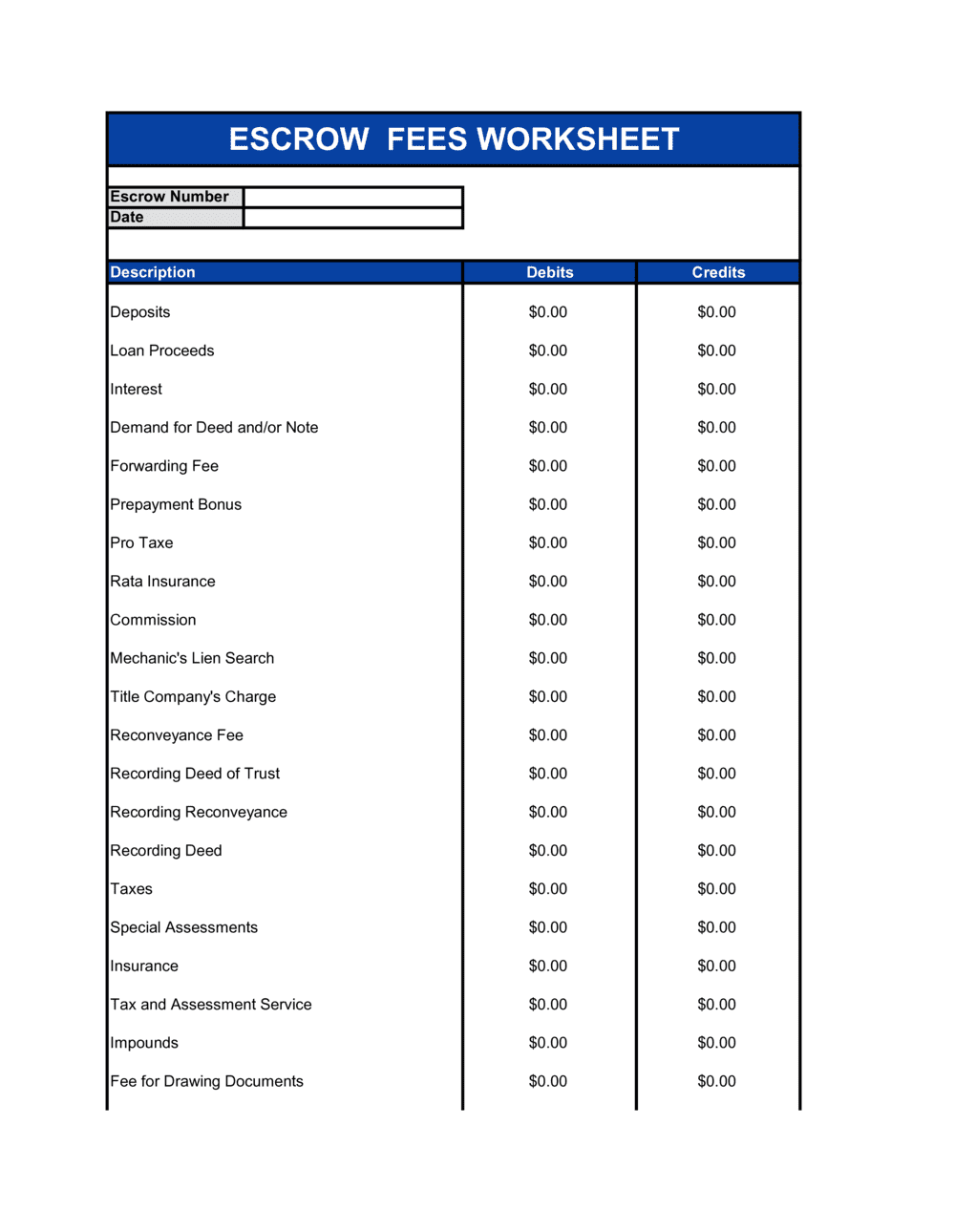
- Escrow
- An arrangement in which a neutral third party holds funds or documents until all conditions of a transaction have been met by both parties.
- Escrow Officer
- The licensed professional or company responsible for managing the escrow account, preparing fee disclosures, and disbursing funds at closing.
- Closing Costs
- All fees and expenses β beyond the purchase price β that buyers and sellers pay to complete a real estate or financial transaction.
- Proration
- The proportional allocation of ongoing costs such as property taxes, HOA dues, or insurance premiums between buyer and seller based on the closing date.
- Escrow Holdback
- A portion of sale proceeds withheld in escrow after closing to cover a specific contingency β such as a repair obligation or a post-closing indemnity claim.
- Disbursement
- The release of funds from the escrow account to the appropriate payee β seller, lender, title company, or government authority β once all conditions are satisfied.
- Title Insurance
- A one-time premium paid at closing that protects the buyer and lender against defects in the property's ownership history that were not discovered during the title search.
- HUD-1 Settlement Statement
- A standardized US federal form previously used to itemize all charges in a real estate settlement; largely replaced by the CFPB Closing Disclosure for most residential transactions after 2015.
- Closing Disclosure (CD)
- The CFPB-mandated form provided to borrowers at least three business days before closing that itemizes all loan terms, projected monthly payments, and closing costs.
- Net Proceeds
- The amount a seller receives after all escrow fees, loan payoffs, commissions, and prorations are deducted from the gross sale price.
- Impound Account
- A lender-controlled escrow sub-account funded at closing to pre-collect future property tax and insurance payments, ensuring those obligations are paid on time.
- Good Faith Estimate (GFE)
- A preliminary disclosure of estimated closing costs provided to borrowers early in the mortgage process; replaced by the Loan Estimate form under the TRID rule.