1
Identify every state where employees work
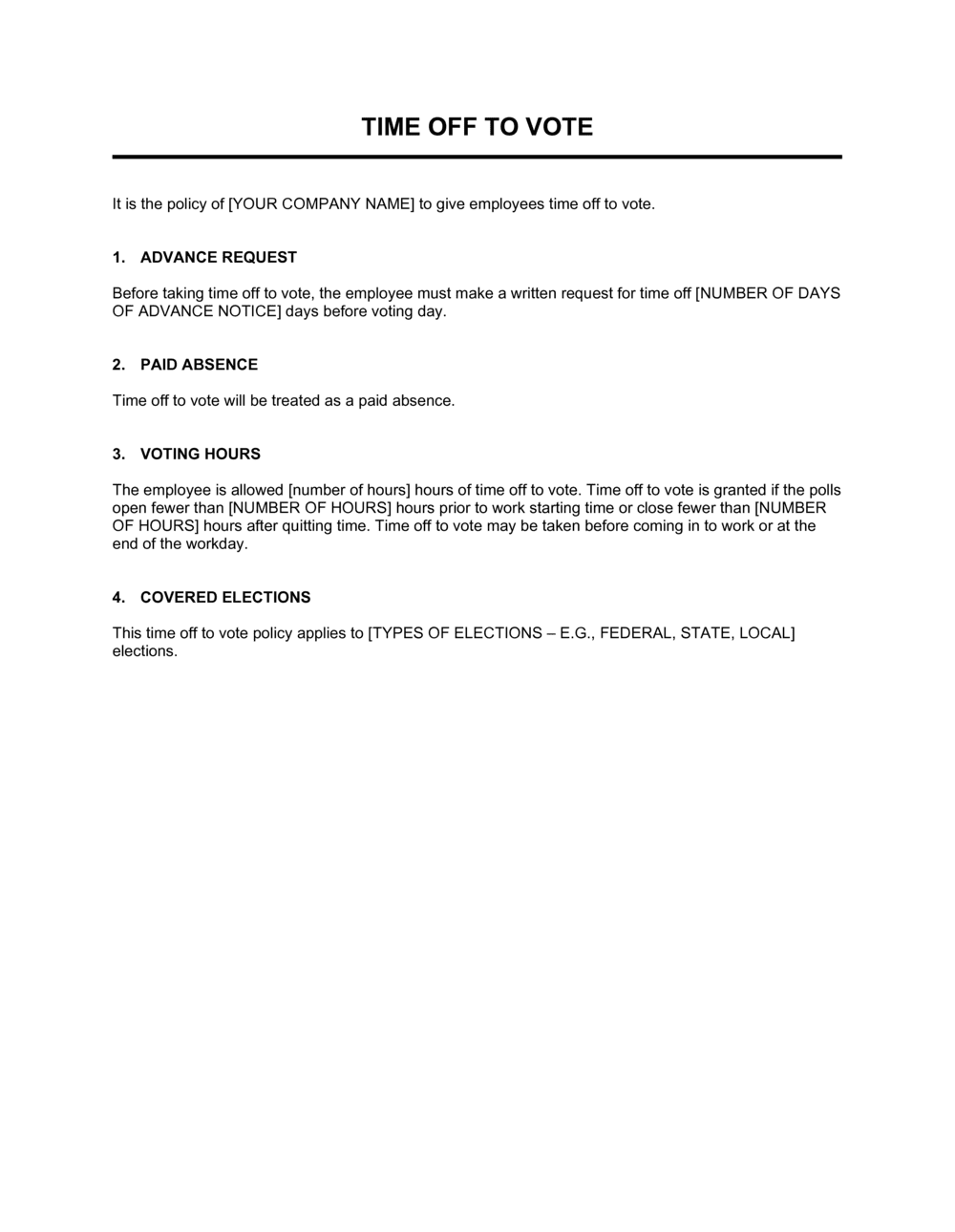
List all states in which the company has at least one employee. Pull the voting leave statute for each state — note the required paid hours, eligibility conditions, and advance notice limits.
💡 More than 30 states have voting leave laws, and requirements vary widely. A state-by-state comparison from your state labor department's website is the fastest way to map this.
2
Set the leave amount to the highest applicable state minimum
If employees work in multiple states, set the company-wide leave amount to the most generous state requirement. Document state-specific variations in an addendum if lower minimums apply in certain locations.
💡 Using the most generous minimum as the company default simplifies administration and avoids accidental violations in high-protection states.
3
Define the advance notice window
Enter the number of business days employees must give before requesting voting leave. Confirm this number does not exceed any state-mandated cap on notice requirements.
💡 Two business days is a safe standard for most jurisdictions and aligns with what most state statutes permit.
4
Specify paid versus unpaid status
Confirm whether voting leave hours are paid at regular base rate, unpaid, or drawn from the PTO bank. Cross-check this against state law — several states mandate paid leave as a separate entitlement that cannot be charged to PTO.
💡 Create a distinct payroll code for voting leave now, before the first election. Retroactively separating it from PTO records for an audit is time-consuming.
5
Draft the anti-retaliation and non-interference language
Include an explicit statement that managers may not penalize, discourage, or attempt to influence employees' voting decisions. Reference any applicable state anti-retaliation statute by name in the footnotes.
💡 Run this section past your employment counsel or HR advisor — in some states, a weak or missing non-retaliation clause creates independent liability.
6
Set the recordkeeping requirement and assign ownership
Specify how long leave requests must be retained (three years is a safe minimum), which system they are stored in, and which team is responsible for auditing compliance after each election.
💡 Store voting leave records in the same location as other employment records so they are accessible during any labor department audit.
7
Publish and communicate the policy before each election cycle
Add the finalized policy to the employee handbook and send a standalone reminder at least two weeks before any election. Include the advance notice deadline in the reminder.
💡 A calendar reminder set 21 days before each election day ensures the policy reminder is never sent too late for employees to meet the notice requirement.
8
Review and update after every legislative cycle
Check for amendments to state voting leave statutes in the first quarter of each year and after any state legislative session that addresses employment law. Update the policy before the next election season.
💡 Subscribe to your state labor department's employer newsletter to receive automatic notifications of statutory changes.