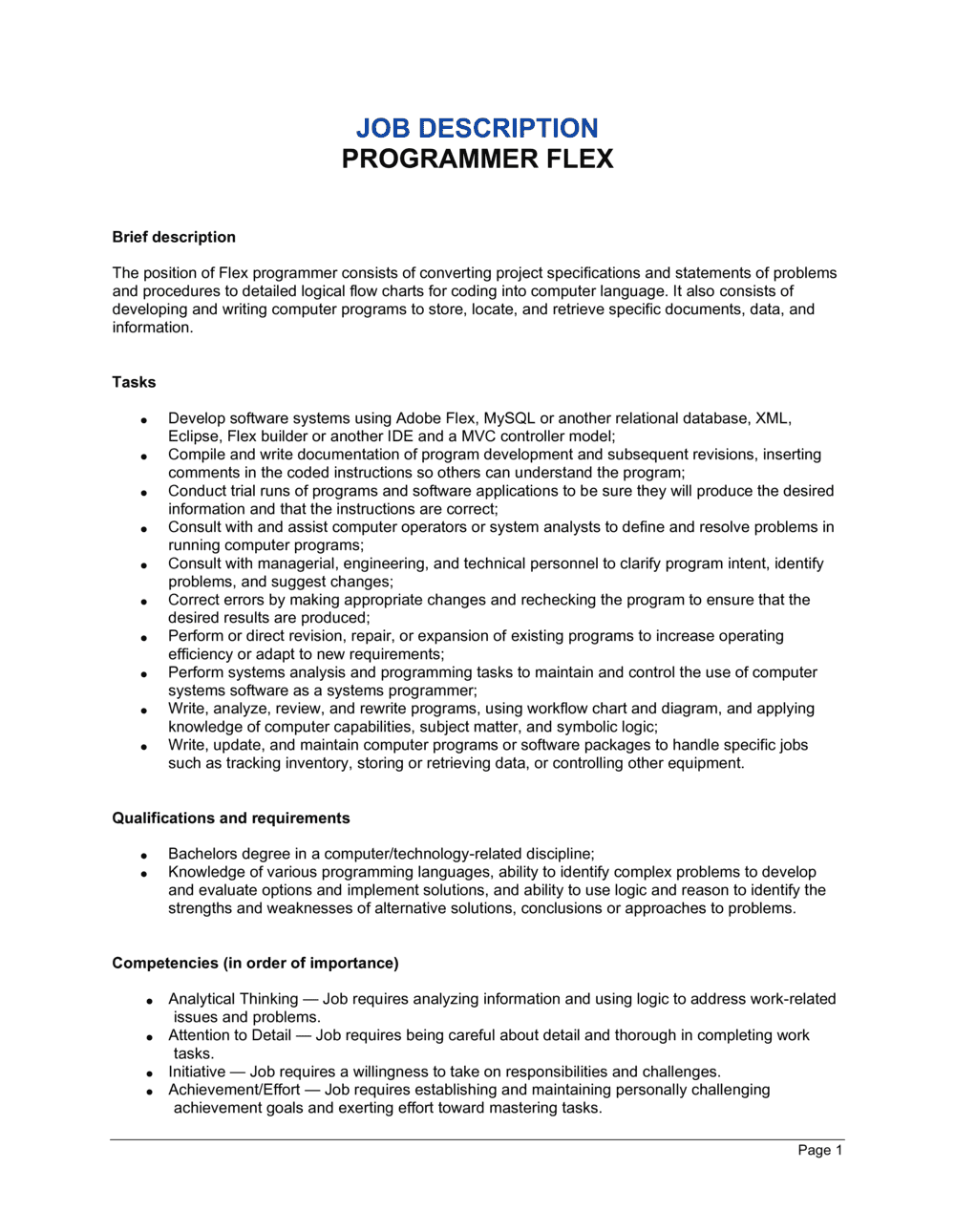
Programmer Flex Job Description Template

Free Word download β€’ Edit online β€’ Save & share with Drive β€’ Export to PDF

3 pagesβ€’20–30 min to fillβ€’Difficulty: Standardβ€’Signature requiredβ€’Legal review recommended
Learn more ↓
FreeProgrammer Flex Job Description Template

At a glance

What it is
A Programmer Flex Job Description is a binding employment document that defines the role, responsibilities, flexible work conditions, compensation, and legal obligations for a programmer or software developer operating under a flexible work arrangement β€” including remote, hybrid, or variable-hours schedules. This free Word download gives you a structured, legally grounded starting point you can edit online and export as PDF to share with candidates or attach to an offer letter.
When you need it
Use it when hiring a programmer, software developer, or IT specialist into a role with non-standard hours, remote or hybrid location, or a compressed or flexible schedule β€” where a generic job description would leave duties, availability expectations, and IP ownership ambiguous.
What's inside
Role title and reporting structure, core technical duties and tech stack, flexible work terms and availability requirements, compensation and classification, intellectual property assignment, confidentiality obligations, performance standards, and governing law.

What is a Programmer Flex Job Description?

A Programmer Flex Job Description is a binding employment document that defines the role, technical duties, flexible work conditions, compensation structure, intellectual property ownership, and legal obligations for a programmer or software developer engaged under a non-standard work arrangement β€” including fully remote, hybrid, compressed-week, or variable-hours schedules. Unlike a generic job posting, it creates enforceable obligations on both sides: the employer commits to the agreed compensation and flex terms; the programmer commits to availability windows, code ownership, confidentiality, and performance standards. This free Word download gives you a professionally structured, legally grounded starting point you can edit online, attach to an offer letter, and export as PDF for signature before day one.

Why You Need This Document

A generic job description or informal offer letter is not designed to govern the specific risks of a flex programming role. Without a signed document that explicitly addresses IP assignment, core availability hours, data security protocols, and exit credentials, you face four compounding exposures simultaneously. First, code written by a remote programmer on a personal device may legally belong to that programmer if no assignment clause covers off-premises work. Second, without defined core hours, there is no objective benchmark for availability disputes, making performance management and termination-for-cause decisions difficult to defend. Third, a departing developer who was never contractually required to return credentials retains live access to your codebase and cloud environments β€” sometimes for months. Fourth, misclassifying a non-exempt programmer as exempt under the FLSA creates back-pay liability for every overtime hour worked, compounded across the entire tenure. A signed Programmer Flex Job Description, executed before the first day of work, closes all four gaps with a single document β€” and signals to candidates that your company takes remote work governance as seriously as the code itself.

Which variant fits your situation?

If your situation is…Use this template
Hiring a full-time salaried programmer with standard hoursSoftware Developer Employment Agreement
Engaging a programmer as a self-employed contractorIndependent Contractor Agreement
Hiring a programmer on a fixed project with a defined end dateFixed-Term Employment Contract
Hiring a senior engineering lead or CTO with equityExecutive Employment Agreement
Bringing on a part-time or hourly junior developerPart-Time Employment Contract
Onboarding a remote programmer in a different countryRemote Work Employment Agreement
Defining scope for a short-term programming projectSoftware Development Agreement

Common mistakes to avoid

❌ No core-hours clause in a flex arrangement

Why it matters: Without defined core hours, there is no objective standard for assessing availability or responsiveness β€” making performance management and termination-for-cause decisions extremely difficult to defend.

Fix: Specify a minimum daily core-hours window, the days it applies, and the timezone. State that failure to be reachable during core hours constitutes a performance issue.

❌ IP assignment limited to company premises or equipment

Why it matters: Flex and remote programmers routinely write code on personal laptops and outside standard hours. A location-restricted IP clause may leave significant intellectual property β€” including entire feature builds β€” legally owned by the employee.

Fix: Draft the assignment to cover all work product created 'in connection with the Company's business,' regardless of device, location, or time of day.

❌ Misclassifying a non-exempt programmer as exempt

Why it matters: Programmers earning below the FLSA salary threshold, or whose primary duties are routine rather than creative or managerial, are non-exempt and entitled to 1.5Γ— overtime. Misclassification triggers back-pay liability for every overtime hour worked, plus penalties.

Fix: Confirm both the salary-level test ($684/week as of 2024) and the duties test before marking a programmer exempt. When in doubt, classify as non-exempt.

❌ No equipment-return and credential-revocation clause

Why it matters: A departing remote programmer who retains cloud credentials, SSH keys, or codebase access is an active security and IP liability β€” often for weeks or months after separation.

Fix: Include a specific exit protocol clause requiring return or certified wipe of all devices and revocation of all system access within a fixed number of business days after the last working day.

❌ Signing the agreement after the programmer's start date

Why it matters: In common-law jurisdictions, an employee already working has given no new consideration for post-start restrictions. IP assignment, non-compete, and confidentiality clauses signed after day one may be unenforceable.

Fix: Execute the agreement on or before the programmer's first day. If circumstances require a later signature, provide documented additional compensation β€” a signing bonus or salary increase β€” as fresh consideration.

❌ Worldwide non-compete for a fully remote programmer

Why it matters: Courts in California, the UK, and the EU routinely strike down geographically unlimited non-competes as unreasonable, voiding the clause entirely and leaving the employer with no post-employment protection.

Fix: Replace a geographic scope with a client-and-project-specific restriction: the programmer may not work on a competing product for the specific customers or verticals they served during the final 12 months of employment.

The 10 key clauses, explained

Role title, department, and reporting structure

In plain language: Identifies the exact job title, the team or department the programmer belongs to, and who they report to on a day-to-day basis.

Sample language
Employee is engaged as [JOB TITLE] within the [DEPARTMENT] team and reports directly to [MANAGER TITLE / NAME]. This is a [FULL-TIME / PART-TIME] flex position.

Common mistake: Using a generic title like 'Developer' instead of a specific one such as 'Back-End Engineer, Payments Platform.' Vague titles create ambiguity about scope during performance reviews and IP disputes.

Core technical duties and tech stack

In plain language: Lists the programmer's primary responsibilities β€” what they build, maintain, and own β€” and specifies the languages, frameworks, and tools required.

Sample language
Employee shall design, develop, test, and maintain [PRODUCT / SYSTEM] using [PROGRAMMING LANGUAGES] and [FRAMEWORKS / TOOLS]. Additional duties include code review, technical documentation, and participation in sprint planning.

Common mistake: Listing every possible technology the company uses rather than the tools actually required for the role. Overbroad tech-stack clauses make performance evaluation and hiring benchmarks meaningless.

Flexible work terms and availability requirements

In plain language: Defines the specific flex arrangement β€” remote, hybrid, compressed week, or variable hours β€” and sets the core hours window the programmer must observe.

Sample language
Employee may work from [LOCATION / REMOTE] on a flexible schedule. Employee must be available and reachable during core hours of [START TIME] to [END TIME], [DAYS], [TIMEZONE]. Total weekly hours shall not fall below [MINIMUM HOURS].

Common mistake: Describing the flex arrangement without specifying core hours or a minimum weekly hour commitment. Without these anchors, disputes over availability and productivity have no objective standard.

Compensation, classification, and pay frequency

In plain language: States whether the programmer is salaried or hourly, their pay rate, payment schedule, and FLSA exempt or non-exempt classification.

Sample language
Employee shall be compensated at a [ANNUAL SALARY OF $X / HOURLY RATE OF $X], payable [BI-WEEKLY / SEMI-MONTHLY]. Employee is classified as [EXEMPT / NON-EXEMPT] under applicable wage and hour law.

Common mistake: Classifying a flex programmer as exempt without confirming the duties test is met. Misclassification under the FLSA or provincial employment standards exposes the employer to back-pay liability for all overtime hours worked.

Intellectual property assignment

In plain language: Transfers ownership of all code, software, algorithms, and related work product created by the programmer during employment to the employer, including work done on personal devices.

Sample language
All work product, code, software, inventions, and improvements created by Employee in connection with their role are the sole property of [COMPANY NAME] and are hereby irrevocably assigned to [COMPANY NAME], whether created during or outside standard working hours.

Common mistake: Limiting IP assignment to work done on company premises or company equipment. Flex programmers routinely work from home on personal devices β€” a location-restricted clause leaves significant IP exposure.

Confidentiality and data security obligations

In plain language: Prohibits the programmer from disclosing or misusing the company's source code, product roadmaps, customer data, and business information, and requires them to follow data security protocols.

Sample language
Employee shall not disclose or use any Confidential Information of [COMPANY NAME] without prior written consent. Employee shall comply with the Company's data security policies, including [SPECIFIC POLICIES, e.g., VPN use, encrypted storage, two-factor authentication].

Common mistake: Omitting specific data security obligations like VPN use or encrypted storage. A generic confidentiality clause doesn't address the heightened breach risk of remote programming work.

Non-compete and non-solicitation

In plain language: Restricts the programmer from joining direct competitors or soliciting the company's customers and employees for a defined period and geography after leaving.

Sample language
For [X] months following separation, Employee shall not (a) engage in a Competing Business within [GEOGRAPHIC AREA / WORLDWIDE FOR REMOTE ROLES], or (b) solicit any customer, client, or employee of [COMPANY NAME].

Common mistake: Applying a broad geographic non-compete to a fully remote programmer. Courts increasingly view worldwide non-competes for remote workers as unreasonable restraints of trade β€” focus restrictions on specific clients and customer segments instead.

Performance standards and review process

In plain language: Sets objective benchmarks for code quality, delivery timelines, sprint participation, and the cadence of formal performance reviews.

Sample language
Employee is expected to meet the performance standards set out in Schedule A, including [SPRINT VELOCITY TARGET], [CODE REVIEW TURNAROUND], and [UPTIME / QUALITY METRICS]. Formal reviews shall occur [QUARTERLY / ANNUALLY].

Common mistake: Including no performance standards at all, or standards so vague ('meets expectations') that they cannot support a performance-improvement plan or termination-for-cause decision.

Termination, notice, and equipment return

In plain language: States the notice period for voluntary or employer-initiated termination, conditions for immediate termination for cause, and the obligation to return or wipe company equipment and credentials on exit.

Sample language
Either party may terminate with [X weeks'] written notice. Company may terminate for Cause immediately. Upon separation, Employee shall return or certifiably wipe all Company data, devices, and credentials within [X] business days.

Common mistake: No equipment-return or credential-revocation clause for remote programmers. Without it, a departing developer retains access to codebases, cloud environments, and customer data β€” often indefinitely.

Governing law and dispute resolution

In plain language: Specifies which jurisdiction's employment law governs the agreement and how disputes are resolved β€” arbitration, mediation, or litigation.

Sample language
This Agreement is governed by the laws of [STATE / PROVINCE / COUNTRY]. Disputes shall be resolved by [binding arbitration / mediation then litigation] in [CITY], except claims for injunctive relief to protect Confidential Information or IP.

Common mistake: Choosing a governing law that doesn't correspond to where the programmer actually works. Several jurisdictions β€” including California and Ontario β€” apply local law regardless of the contract's choice-of-law clause.

How to fill it out

  1. 1

    Enter the employer's legal entity name and the programmer's details

    Use the company's full registered legal name β€” not a brand or trade name β€” and the programmer's legal name as it appears on government ID. Add the job title, department, and reporting manager.

    πŸ’‘ Cross-reference your corporate registry to confirm the exact legal entity name before execution β€” IP assignment must run to the correct legal owner.

  2. 2

    Define the flex work arrangement and core hours

    Specify whether the role is fully remote, hybrid, or variable-hours compressed. Set the core-hours window the programmer must observe β€” include the timezone explicitly for distributed teams.

    πŸ’‘ For teams spanning multiple time zones, set core hours in UTC rather than a local timezone to avoid daylight-saving ambiguity.

  3. 3

    List the technical duties and required tech stack

    Describe the primary systems the programmer will build or maintain, and list only the languages, frameworks, and tools they will actually use in this role. Attach a Schedule A for granular sprint expectations.

    πŸ’‘ Keeping the tech stack in a Schedule A rather than the body clause lets you update it without a contract amendment when the stack evolves.

  4. 4

    Set the compensation, pay schedule, and FLSA classification

    Enter the annual salary or hourly rate, payment frequency, and explicitly state the FLSA classification (exempt or non-exempt). Confirm the duties test is met before marking a programmer exempt.

    πŸ’‘ Many junior and mid-level programmers earning below the FLSA salary threshold of $684/week are non-exempt and entitled to overtime β€” misclassifying them is one of the most common and costly errors in tech hiring.

  5. 5

    Tailor the IP assignment clause for remote work

    Ensure the IP assignment covers work product created on personal devices and outside standard hours, as long as it relates to the company's business. Include an explicit list of what counts as work product: code, documentation, configurations, and training data.

    πŸ’‘ If the programmer has pre-existing IP they want excluded, list it in a Schedule B prior-inventions disclosure β€” this protects both parties.

  6. 6

    Add data security obligations specific to remote access

    Reference the company's specific security policies β€” VPN requirements, encrypted storage, multi-factor authentication, and prohibited use of public networks. These belong in the confidentiality clause, not just a separate handbook.

    πŸ’‘ Embedding security requirements in the signed contract (not only a policy doc) makes them contractually enforceable and easier to act on if breached.

  7. 7

    Set the termination notice period and exit protocol

    Specify the notice period, list what constitutes cause for immediate termination, and detail the exit protocol: return or wipe of devices, revocation of system access, and handover documentation timeline.

    πŸ’‘ Schedule access revocation β€” GitHub, AWS, Jira, Slack β€” as a checklist in Schedule C so no credential is overlooked on the programmer's last day.

  8. 8

    Sign before the programmer's first day and retain a fully executed copy

    Both parties must sign before day one. Post-start-date signatures create a fresh-consideration problem that can void the IP assignment and non-compete clauses in common-law jurisdictions.

    πŸ’‘ Use an e-signature tool that timestamps the signing event β€” this is your primary evidence of pre-employment execution if a dispute arises.

Frequently asked questions

What is a programmer flex job description?

A programmer flex job description is a binding employment document that defines the role, technical duties, flexible work conditions, compensation, IP ownership, and legal obligations for a programmer or software developer working under a non-standard schedule β€” such as remote, hybrid, compressed-week, or variable-hours arrangements. Unlike a generic job posting, it creates enforceable obligations on both sides and governs the employment relationship throughout its duration.

How is a flex job description different from a standard job description?

A standard job description lists duties and qualifications for a fixed- location, fixed-hours role. A flex job description adds clauses that govern the flexible arrangement specifically: core availability hours, remote work protocols, data security obligations for off-site access, and IP assignment language broad enough to cover work done on personal devices outside business hours. Without these additions, a standard description leaves significant operational and legal gaps for flex roles.

Does a programmer flex job description need to be signed?

Yes. To be legally binding β€” particularly for the IP assignment, confidentiality, and non-compete clauses β€” the document must be signed by both the employer and the employee before the programmer's first day of work. An unsigned job description is persuasive evidence of agreed terms but is not an enforceable contract in most jurisdictions.

Who owns the code a flex programmer writes from home?

Under a properly drafted IP assignment clause, all code and work product created by the programmer in connection with their role belongs to the employer β€” regardless of where or when it was written. Without an explicit assignment clause, or if the clause is limited to company premises, the programmer may retain rights to code written on personal devices or outside core hours. Always ensure the IP assignment is location- and device-agnostic.

Can I include a non-compete clause for a remote programmer?

You can, but enforceability depends heavily on jurisdiction and how the clause is drafted. A worldwide geographic restriction is routinely struck down by courts for remote workers. A more defensible approach is to restrict the programmer from working on competing products serving the same specific customers or vertical markets they served in the final year of employment. California, Minnesota, and several EU countries restrict or ban post-employment non-competes entirely β€” consult a lawyer before including one for programmers in those jurisdictions.

What core hours should I set for a flex programmer?

Most flex programming roles set a 3–5 hour daily core window during which the programmer must be reachable β€” typically covering the overlap between the team's various time zones. For US-based teams, a 10am–2pm Eastern window is common. For distributed global teams, a UTC-anchored window avoids daylight-saving complications. Core hours should be specific: day of week, start and end time, and timezone must all be stated.

What happens if a programmer is misclassified as exempt?

If a programmer is classified as FLSA-exempt but does not meet both the salary-level test ($684/week in 2024) and the duties test, the employer owes back pay for every overtime hour worked β€” typically 1.5Γ— the regular rate. The Department of Labor can audit up to three years of payroll records, and class-action misclassification suits in tech have resulted in seven-figure settlements. When in doubt, classify programmers earning near the threshold as non-exempt.

Do I need a lawyer to create a programmer flex job description?

For a straightforward domestic flex hire at a small company, a high-quality template reviewed by the hiring manager is often sufficient. Engage a lawyer when the programmer will have access to sensitive IP or source code in a competitive market, when the role spans multiple jurisdictions, when the compensation structure includes equity, or when the non-compete scope needs to be calibrated for enforceability in a specific state or country. A 1–2 hour template review typically costs $300–$600.

What should the exit protocol cover for a remote programmer?

The exit protocol clause should require the programmer to return or certifiably wipe all company-owned or company-data-containing devices within a stated number of business days, confirm revocation of all system credentials (GitHub, cloud environments, VPN, communication tools, and CI/CD pipelines), and complete a defined handover period. Without a written protocol, credential revocation is often incomplete β€” leaving former employees with live access to production systems.

How this compares to alternatives

vs Independent Contractor Agreement

An independent contractor agreement engages a self-employed programmer for project-based work with no employment entitlements β€” no benefits, no tax withholding, and no overtime. A programmer flex job description establishes an employment relationship with all associated statutory protections. Misclassifying an employee programmer as a contractor triggers back taxes, benefit liability, and penalties. The key test is the degree of control the company exercises over how the work is performed.

vs Remote Work Employment Agreement

A remote work employment agreement governs the logistics of working from home for any role β€” equipment, expenses, home-office standards β€” but does not define the programmer's specific technical duties, tech stack, or performance standards. A programmer flex job description addresses both the flex arrangement and the programming role in a single binding document, making it the more complete choice for technical hires.

vs Fixed-Term Employment Contract

A fixed-term contract sets a defined end date after which employment automatically terminates. A programmer flex job description runs indefinitely and is terminated by notice or cause. Fixed-term arrangements suit project-specific engagements, but if the programmer continues working past the end date, courts in many jurisdictions imply indefinite employment β€” with full notice and severance obligations.

vs Executive Employment Agreement

An executive employment agreement is designed for C-suite or VP-level hires with equity grants, change-of-control provisions, enhanced severance, and board-level reporting obligations. A programmer flex job description is appropriate for individual-contributor and mid-level technical roles. Using an executive agreement for a developer hire creates unnecessary complexity and governance obligations not suited to the role.

Industry-specific considerations

SaaS / Technology

IP assignment covers algorithms, ML models, and API integrations; core hours anchor async distributed engineering teams; equity vesting referenced in a parallel option agreement.

Financial Services / Fintech

Data security obligations reference SOC 2 and PCI-DSS compliance requirements; confidentiality extends to transaction data and proprietary trading logic; enhanced credential-revocation protocols on exit.

Healthcare / HealthTech

HIPAA obligations incorporated by reference; remote access to patient data systems requires specific encryption and audit-logging standards; BAA alignment required before first-day access.

Professional Services

Client-facing programmers require client non-solicitation clauses; billable-hours tracking integrated into performance standards; conflict-of-interest clause covering client engagements.

Jurisdictional notes

United States

At-will employment applies in 49 states, but the flex arrangement and IP assignment must still be documented before day one to be enforceable. FLSA classification is critical β€” programmers earning below $684/week are non-exempt and entitled to overtime regardless of title. California voids most post-employment non-competes and restricts IP assignment for off-duty inventions under Labor Code Β§2870. Several states including New York and Illinois require written remote work policies.

Canada

At-will employment does not exist in Canada. Employment Standards Acts in each province set minimum notice and termination pay β€” Ontario common-law notice can reach one month per year of service for longer-tenured programmers. Flex and remote work arrangements should reference provincial ESA minimums explicitly. Quebec contracts must be provided in French for provincially regulated employers. Non-competes are enforceable only if reasonable in scope, duration, and geography.

United Kingdom

Employers must provide a written statement of employment particulars on or before the first day of work, which the flex job description satisfies when properly executed. Flexible working requests are a statutory right for eligible employees after 26 weeks of service. Post-employment restrictive covenants are enforceable only if they protect a legitimate business interest and are no wider than necessary. Garden leave is a common mechanism for protecting IP and client relationships during the notice period.

European Union

The EU Transparent and Predictable Working Conditions Directive requires written employment terms within seven days of hire. GDPR imposes specific obligations on remote programmers accessing personal data β€” these must be referenced in the confidentiality clause. Post-employment non-competes typically require financial compensation to the employee (ranging from 25–100% of salary depending on the member state) to be enforceable. Works council consultation may be required before implementing new flex work policies in Germany, France, and the Netherlands.

Template vs lawyer β€” what fits your deal?

PathBest forCostTime
Use the templateDomestic flex programmer hires at small to mid-size companies where duties, flex terms, and IP are straightforwardFree20–30 minutes
Template + legal reviewHires involving sensitive IP, cross-state or cross-border arrangements, or non-compete clauses that need jurisdiction-specific calibration$300–$6001–3 days
Custom draftedSenior engineers with equity, programmers in heavily regulated industries (fintech, healthcare), or multi-jurisdiction distributed teams$1,500–$4,000+1–3 weeks

Glossary

Flex Work Arrangement
An employment setup allowing the employee to vary their working hours, location, or schedule outside a standard 9-to-5 framework, subject to agreed availability windows.
Core Hours
The fixed daily or weekly window during which a flex worker must be reachable and available, regardless of their broader flexible schedule.
IP Assignment
A contractual clause transferring ownership of all code, software, and work product created by the programmer during employment to the employer.
FLSA Classification
The US Fair Labor Standards Act designation of a worker as either exempt (salaried, no overtime) or non-exempt (hourly, overtime-eligible) based on duties and pay level.
Work Product
Any deliverable created by the programmer in the course of their role β€” including code, documentation, designs, algorithms, and configuration files.
Non-Solicitation Clause
A post-employment restriction preventing the departing programmer from recruiting the employer's other employees or clients for a defined period.
Tech Stack
The specific programming languages, frameworks, tools, and platforms the programmer is expected to use and maintain in the role.
At-Will Employment
An employment relationship in most US states that either party may end at any time, for any lawful reason, without advance notice β€” unless the contract specifies otherwise.
Availability Window
The defined hours during which a flex programmer must be contactable and able to respond to requests, even if their total hours are flexible.
Confidential Information
Non-public technical, business, or customer data the programmer accesses during employment that they are contractually prohibited from disclosing or using outside the role.

Part of your Business Operating System

This document is one of 3,000+ business & legal templates included in Business in a Box.

  • Fill-in-the-blanks β€” ready in minutes
  • 100% customizable Word document
  • Compatible with all office suites
  • Export to PDF and share electronically

Create your document in 3 simple steps.

From template to signed document β€” all inside one Business Operating System.
1
Download or open template

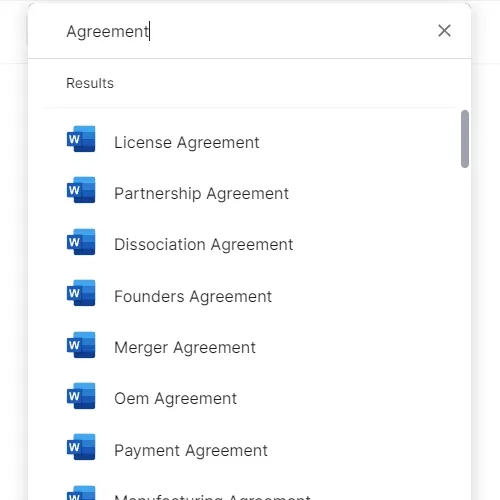
Access over 3,000+ business and legal templates for any business task, project or initiative.

2
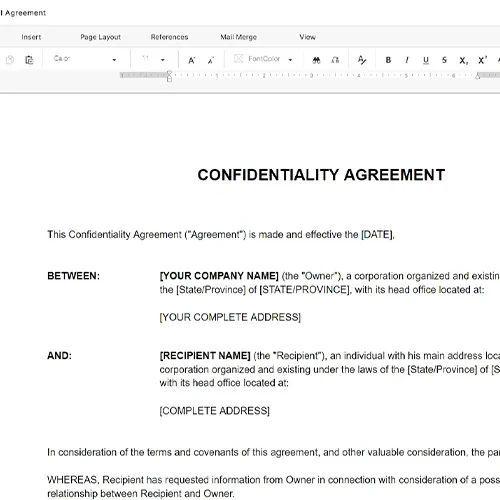
Edit and fill in the blanks with AI

Customize your ready-made business document template and save it in the cloud.

3
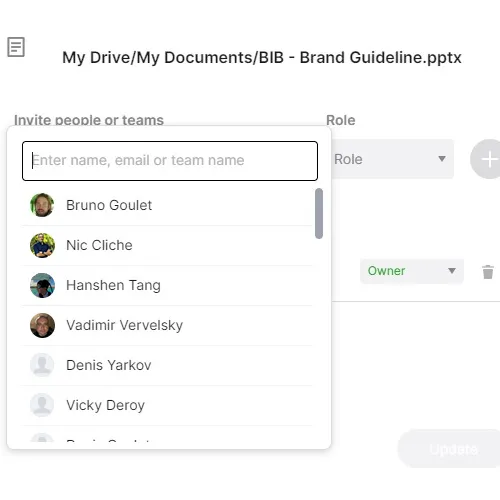
Save, Share, Send, Sign

Share your files and folders with your team. Create a space of seamless collaboration.

Save time, save money, and create top-quality documents.

β˜…β˜…β˜…β˜…β˜…

"Fantastic value! I'm not sure how I'd do without it. It's worth its weight in gold and paid back for itself many times."

Managing Director Β· Mall Farm
Robert Whalley
Managing Director, Mall Farm Proprietary Limited
β˜…β˜…β˜…β˜…β˜…

"I have been using Business in a Box for years. It has been the most useful source of templates I have encountered. I recommend it to anyone."

Business Owner Β· 4+ years
Dr Michael John Freestone
Business Owner
β˜…β˜…β˜…β˜…β˜…

"It has been a life saver so many times I have lost count. Business in a Box has saved me so much time and as you know, time is money."

Owner Β· Upstate Web
David G. Moore Jr.
Owner, Upstate Web

Run your business with a system β€” not scattered tools

Stop downloading documents. Start operating with clarity. Business in a Box gives you the Business Operating System used by over 250,000 companies worldwide to structure, run, and grow their business.

Free Forever PlanΒ Β·Β No credit card required