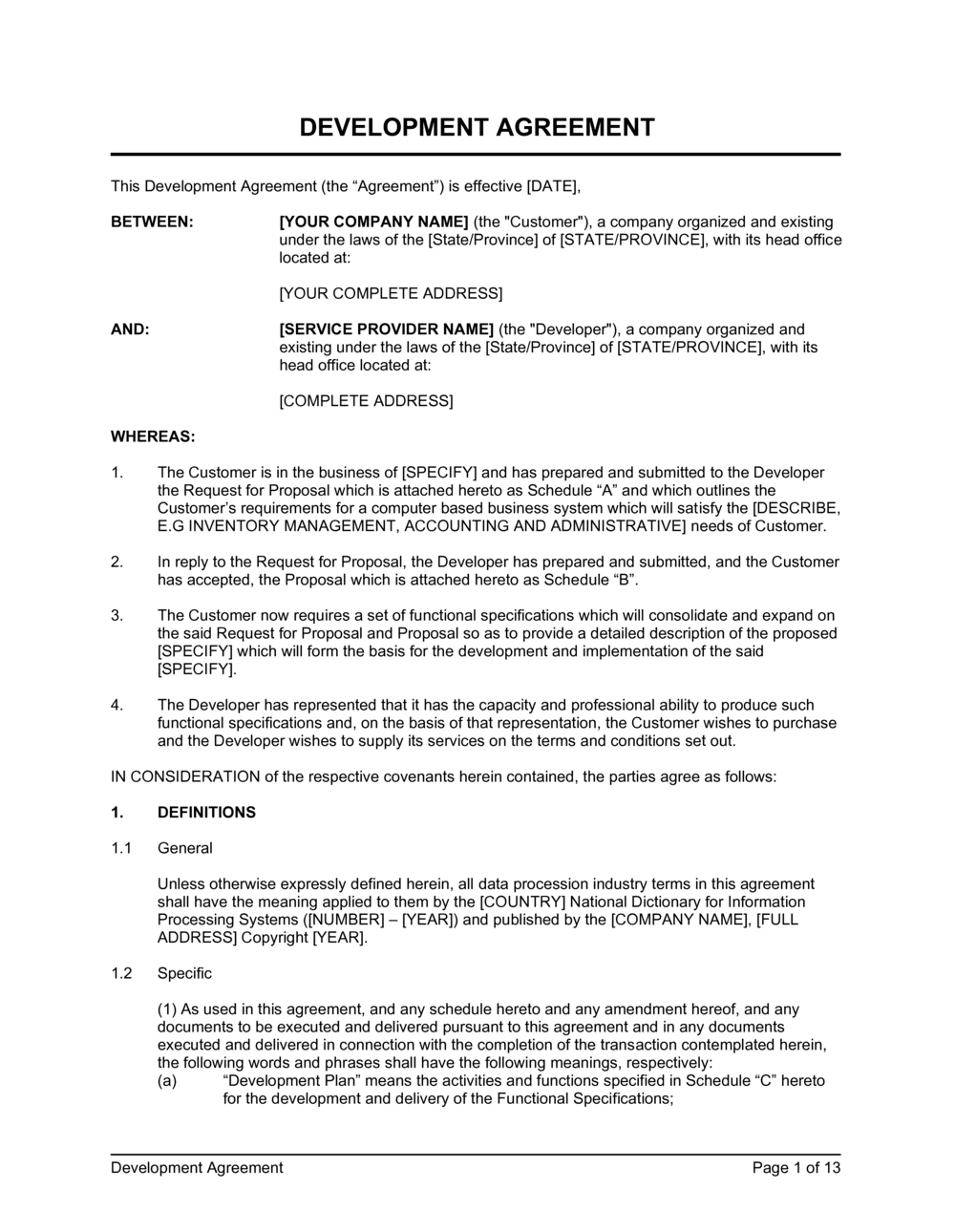
Development Agreement General Template

Free Word download • Edit online • Save & share with Drive • Export to PDF

13 pages30–40 min to fillDifficulty: ComplexSignature requiredLegal review recommended
Learn more ↓
FreeDevelopment Agreement General Template

At a glance

What it is
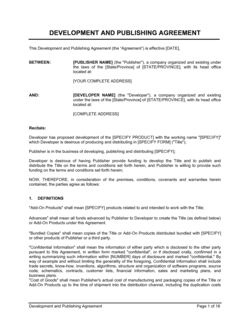
A Development Agreement is a legally binding contract between a client and a developer — individual or company — that governs the design, build, and delivery of a custom product, software application, website, or other engineered work. This free Word download covers scope, milestones, payment schedule, IP ownership, warranties, and termination in a single document you can edit online and export as PDF.
When you need it
Use it whenever you commission or undertake custom development work where the scope, timeline, and ownership of the output must be unambiguous before work begins. It is essential for software builds, website projects, hardware prototypes, and any bespoke product requiring iterative delivery.
What's inside
Scope of work and deliverables, project milestones and payment schedule, intellectual property assignment, confidentiality obligations, warranties and acceptance testing, change-order procedures, and termination and dispute resolution clauses.

What is a Development Agreement?

A Development Agreement is a legally binding contract between a client and a developer — whether an individual freelancer, an agency, or a technology company — that governs the full lifecycle of a custom build: scope definition, milestone delivery, payment, intellectual property transfer, warranties, and termination. Unlike a general service agreement or a brief statement of work, a development agreement integrates project-specific detail with enforceable legal protections, establishing exactly what will be built, when it will be delivered, who will own it, and what happens if something goes wrong. It is the governing document for software applications, websites, hardware prototypes, and any other engineered output created on behalf of a commissioning party.

Why You Need This Document

Without a signed development agreement, the most consequential questions in any development engagement are left unanswered in writing: who owns the code, what exactly is in scope, and what happens if the developer disappears halfway through. Clients who rely on informal statements of work or verbal agreements routinely discover — after paying tens of thousands of dollars — that the developer retains copyright over the finished product, that disputed features were never actually promised, or that there is no contractual mechanism to recover work in progress after a relationship breaks down. A properly executed development agreement eliminates all three risks before work begins. It gives the developer a clear, unambiguous scope to build against, ties every payment to an accepted deliverable, and ensures that IP transfers to the client automatically upon final payment — making this template an essential foundation for any serious development engagement.

Which variant fits your situation?

If your situation is…Use this template
Hiring a freelance developer for a short-term coding projectIndependent Contractor Agreement
Engaging an agency for ongoing software maintenance and feature developmentSoftware Maintenance Agreement
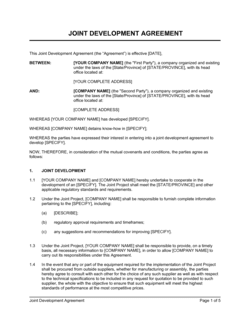
Co-developing a product with a partner company sharing IPJoint Development Agreement
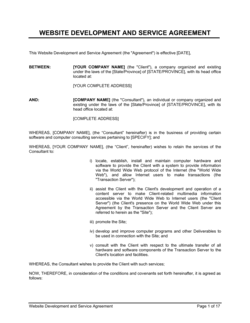
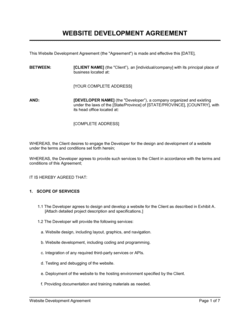
Commissioning a custom website with defined pages and CMSWeb Development Agreement
Building a mobile application with staged milestone releasesSoftware Development Agreement
Prototyping hardware or a physical product with an engineering firmProduct Development Agreement
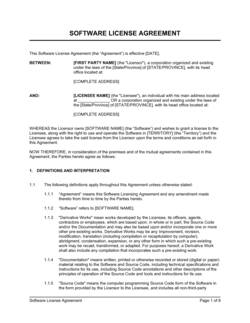
Licensing completed software back to the developer after deliverySoftware License Agreement

Common mistakes to avoid

❌ Vague or missing scope of work

Why it matters: Without a detailed Schedule A, the developer and client operate on different assumptions about what is included. This is the root cause of the majority of development disputes and cost overruns.

Fix: Write every feature, integration, and deliverable into Schedule A before signing. If it is not in writing, it is not in scope — and adding it later means a change order and additional fees.

❌ No formal acceptance testing procedure

Why it matters: Without a defined review window and defect-correction process, clients delay payment indefinitely by claiming deliverables are incomplete, and developers claim work is done when it clearly is not.

Fix: Specify the exact number of business days for review, a written defect list format, and a correction period. Include an auto-acceptance provision if the client does not respond within the window.

❌ IP assignment without a 'work made for hire' clause or explicit transfer language

Why it matters: Under US and UK copyright law, a contractor does not automatically assign IP to the client by delivering the work. Without explicit assignment language, the developer may retain copyright over code they were paid to build.

Fix: Include both a 'work made for hire' designation and a separate irrevocable assignment clause covering any work that does not qualify as work made for hire under applicable law.

❌ No background IP or open-source component schedule

Why it matters: A developer who embeds proprietary reusable components without disclosure can later claim a license fee to use the finished product. GPL or AGPL open-source components can impose viral licensing obligations on the entire codebase.

Fix: Require the developer to list all background IP and third-party libraries before signing. Confirm all open-source licenses are compatible with the client's intended commercial use.

❌ Front-loaded payment schedule with no milestone linkage

Why it matters: Paying 50% or more upfront with no deliverable-linked milestones removes the client's main enforcement tool. Once the developer has most of the fee, there is little financial incentive to fix defects or meet deadlines.

Fix: Structure payments so that at least 40% of the total fee is tied to acceptance of specific deliverables, with the final 15–20% held until written final acceptance.

❌ No work-in-progress delivery clause on termination

Why it matters: If a project is terminated midway — due to developer breach, insolvency, or mutual agreement — a client with no WIP delivery clause has no contractual right to receive the code already built, leaving them unable to continue development elsewhere.

Fix: Add an explicit clause requiring the developer to deliver all work product, code, documentation, and credentials to the client upon termination, regardless of the reason, in exchange for payment for accepted work.

The 10 key clauses, explained

Parties, recitals, and effective date

In plain language: Identifies the client and developer as legal entities, states the purpose of the agreement, and records the date it takes effect.

Sample language
This Development Agreement ('Agreement') is entered into as of [DATE] between [CLIENT LEGAL NAME], a [STATE/COUNTRY] [ENTITY TYPE] ('Client'), and [DEVELOPER LEGAL NAME], a [STATE/COUNTRY] [ENTITY TYPE] ('Developer').

Common mistake: Using trade names or personal names instead of registered legal entities. If the contracting party does not match the entity that receives payment or holds IP, enforcement becomes complicated and costly.

Scope of work and deliverables

In plain language: Defines exactly what the developer will build, the specific outputs to be delivered, and what is explicitly excluded from the engagement.

Sample language
Developer shall design, develop, and deliver the Deliverables described in Schedule A, attached hereto and incorporated by reference. Any work not expressly described in Schedule A requires a written Change Order signed by both parties.

Common mistake: Leaving the scope in the main body as a vague description rather than a detailed Schedule A. Vague scope is the single most common source of cost overruns and disputes on development projects.

Project timeline and milestones

In plain language: Sets out key dates for each project phase, when deliverables must be submitted, and the consequences of delay.

Sample language
Developer shall complete each Milestone by the date set out in Schedule B. If Developer anticipates a delay of more than [5] business days, Developer shall provide written notice to Client within [2] business days of becoming aware of the delay.

Common mistake: Treating the schedule as aspirational rather than contractual. Without agreed milestone dates tied to payment and consequences, developers have no structural incentive to meet deadlines.

Fees, payment schedule, and invoicing

In plain language: States the total project fee or hourly rate, the payment amounts linked to each milestone, and the invoicing and payment process.

Sample language
Client shall pay Developer a total fixed fee of $[AMOUNT], payable as follows: [X]% ($[AMOUNT]) upon execution; [X]% ($[AMOUNT]) upon completion of Milestone 1; [X]% ($[AMOUNT]) upon final acceptance. Invoices are payable within [15] days of receipt.

Common mistake: Front-loading payments to the developer without tying later disbursements to acceptance of specific deliverables. A schedule that pays 50% at signing and 50% upon 'completion' gives the client no leverage if quality falls short.

Intellectual property assignment

In plain language: Transfers ownership of all work product, code, designs, and documentation created during the project from the developer to the client upon full payment.

Sample language
Upon receipt of full payment, Developer hereby irrevocably assigns to Client all right, title, and interest in and to the Deliverables, including all copyrights, patents, trade secrets, and other intellectual property rights. Developer retains no license to use the Deliverables for other clients without Client's prior written consent.

Common mistake: Omitting the 'upon full payment' trigger, which can result in the client owning IP before all invoices are settled — removing the developer's primary payment enforcement mechanism.

Developer background IP and third-party components

In plain language: Identifies any pre-existing code, tools, or libraries the developer brings to the project and grants the client a license to use them as part of the delivered work.

Sample language
Developer may incorporate Background IP (as listed in Schedule C) and open-source third-party components into the Deliverables. Developer grants Client a non-exclusive, perpetual, royalty-free license to use Background IP solely as incorporated in the Deliverables. Developer warrants that all third-party components are used in compliance with their applicable licenses.

Common mistake: No background IP clause at all. Without it, a developer can later claim that reusable components embedded in the client's product are proprietary, creating a license dispute or a demand for additional fees post-delivery.

Acceptance testing and change orders

In plain language: Establishes the process for the client to review and formally accept each deliverable, and the procedure for requesting scope changes.

Sample language
Client shall have [10] business days following delivery of each Deliverable to review and either (a) provide written acceptance or (b) deliver a written defect list. Developer shall correct confirmed defects within [10] business days. Any changes to scope require a Change Order signed by both parties prior to implementation.

Common mistake: No defined acceptance window. Without a stated review period, clients delay acceptance indefinitely — stalling the developer's next payment trigger — or dispute deliverables months after delivery.

Confidentiality

In plain language: Prevents either party from disclosing the other's confidential information — product roadmaps, business data, technical architecture — during and after the project.

Sample language
Each party agrees to hold the other party's Confidential Information in strict confidence and not to disclose it to any third party or use it for any purpose other than performing its obligations under this Agreement. This obligation survives termination for [3] years.

Common mistake: Mutual confidentiality clauses that don't exclude information already in the public domain or information the receiving party developed independently. Overly broad clauses create enforcement uncertainty and are harder to defend in litigation.

Warranties and representations

In plain language: States what each party guarantees — the developer warrants the work is original, free of defects for the warranty period, and does not infringe third-party IP; the client warrants it has authority to commission the work.

Sample language
Developer warrants that: (a) the Deliverables will conform to the specifications in Schedule A for [90] days after acceptance; (b) the Deliverables do not infringe any third-party intellectual property rights; and (c) Developer has the right to enter into and perform this Agreement.

Common mistake: Accepting a warranty of only 30 days on a complex software project. Serious defects in integrated systems often surface during the first production release cycle, which typically falls outside a 30-day window.

Termination, remedies, and governing law

In plain language: States the conditions under which either party may terminate, what compensation is owed upon termination, and which jurisdiction's law governs the agreement.

Sample language
Either party may terminate this Agreement upon [30] days' written notice. Client may terminate immediately for Developer's material breach not cured within [10] days of notice. Upon termination, Developer shall deliver all work in progress to Client; Client shall pay for all work accepted and approved as of the termination date. This Agreement is governed by the laws of [STATE/COUNTRY].

Common mistake: No work-in-progress delivery obligation upon termination. Without it, a client who terminates a failing project has no contractual right to receive the code that already exists — leaving them unable to engage a replacement developer.

How to fill it out

  1. 1

    Identify both parties with full legal entity names

    Enter the registered legal name, entity type, and jurisdiction of both the client and the developer. For individuals, use their full legal name and residential address.

    💡 Run a quick corporate registry search to confirm the developer's registered entity name matches what appears on their invoices — mismatches are a red flag and complicate IP enforcement.

  2. 2

    Build Schedule A: detailed scope of work

    Write a line-by-line description of every feature, module, and deliverable — including file formats, technical specifications, and explicit exclusions. Reference any wireframes, technical specs, or design briefs as attachments.

    💡 Use the developer's own technical proposal as the starting point for Schedule A, then add explicit exclusions for anything discussed but not agreed. Undocumented verbal agreements become disputes.

  3. 3

    Set Schedule B: milestones, dates, and payment triggers

    Map each milestone to a specific calendar date and a payment amount. Ensure no single payment exceeds 30–40% of the total contract value to maintain leverage throughout delivery.

    💡 Tie the final payment — typically 15–25% of the total — to formal written acceptance of the last deliverable, not to project 'completion,' which is subjective.

  4. 4

    Define the IP assignment and background IP terms

    Confirm whether IP transfers upon full payment or milestone by milestone. List all background IP the developer will incorporate in Schedule C, and verify that any open-source components are used under a license compatible with the client's intended commercial use.

    💡 Ask the developer for a list of all open-source libraries before signing. GPL-licensed components in commercial software can create mandatory open-sourcing obligations that void the client's proprietary IP strategy.

  5. 5

    Set acceptance testing windows and defect correction periods

    Enter the number of business days the client has to review each deliverable (10–15 days is typical) and the number of days the developer has to correct confirmed defects. Define what constitutes a 'defect' versus a 'change request' to prevent scope creep.

    💡 A deliverable not responded to within the acceptance window should be deemed accepted by the client — include this auto-acceptance provision to prevent indefinite review delays.

  6. 6

    Draft the change-order procedure

    Specify that all scope changes must be submitted in writing, include a response timeframe for the developer to price the change (e.g., within 5 business days), and require both parties' signatures before any additional work begins.

    💡 Number change orders sequentially (CO-001, CO-002) and keep them as signed addenda to the main agreement. This creates a clean audit trail if the total project cost is ever disputed.

  7. 7

    Confirm termination obligations and governing law

    Set the notice period for either party to terminate without cause (30 days is standard), the immediate-termination triggers for material breach, the work-in-progress delivery obligation, and the state or country whose law governs. Confirm the dispute resolution method — arbitration or courts.

    💡 Choose an arbitration clause for cross-border development engagements — litigation across jurisdictions is far more expensive and slower than international commercial arbitration.

  8. 8

    Execute before any work begins

    Both parties must sign the agreement — and all schedules — before the developer writes a single line of code. Obtain countersigned copies and store them in a secure, accessible location.

    💡 Use a timestamped e-signature tool so both parties have a verifiable execution record. Work started before signing creates an implied contract on the developer's existing terms, not yours.

Frequently asked questions

What is a development agreement?

A development agreement is a legally binding contract between a client and a developer — an individual, freelancer, or company — that governs the design, build, and delivery of a custom product, software application, website, or other engineered work. It defines scope, milestones, fees, IP ownership, warranties, and termination rights, replacing informal arrangements with enforceable obligations on both sides.

Who needs a development agreement?

Any business or individual commissioning custom development work needs one before work begins — startup founders building MVPs, small businesses hiring web developers, enterprises engaging outsourced engineering teams, and development agencies protecting themselves when delivering client projects. Without a signed agreement, both parties are exposed to scope disputes, IP ownership ambiguity, and unenforceable payment terms.

Does a development agreement transfer IP to the client?

Only if the contract explicitly says so. Under US and UK copyright law, a contractor retains copyright in work they create unless there is a written assignment or the work qualifies as 'work made for hire.' A development agreement should include both work-made-for-hire language and a separate irrevocable IP assignment clause to cover all work product, code, designs, and documentation created during the project.

What is the difference between a development agreement and an independent contractor agreement?

An independent contractor agreement is a general-purpose document covering the relationship between a business and a self-employed individual — payment, classification, and basic IP terms. A development agreement is project-specific: it includes a detailed scope of work, milestone schedule, acceptance testing procedures, change-order process, and technical warranties that a generic contractor agreement does not. For any material development engagement, the development agreement governs; the contractor agreement may run alongside it.

What payment structure should a development agreement use?

Milestone-based payment is standard for fixed-price development projects. A common structure is 25–30% at signing, 25–30% at a defined mid-project milestone, and the remaining 40–50% upon final acceptance. No single payment should exceed 40% of the total contract value before the corresponding deliverable is accepted. For time-and-materials engagements, monthly invoicing against a not-to-exceed budget is typical.

How should scope changes be handled in a development agreement?

All scope changes should go through a formal written change-order process. The client submits a written request, the developer prices and schedules the additional work within a defined window (typically 5 business days), and both parties sign the change order before any additional work begins. Verbal agreements to expand scope are the primary driver of payment disputes on development projects and are generally unenforceable under contract law.

Is a development agreement enforceable across borders?

Yes, generally, when the governing law and dispute resolution clauses are carefully drafted. Choosing a neutral governing law (such as a US state both parties accept, or English law for international projects) and an arbitration clause administered by a recognized body like the ICC or AAA is typically more effective than relying on courts in either party's jurisdiction. Each country may have mandatory local employment or contractor classification rules that override the contract regardless of the chosen governing law.

What warranties should a development agreement include?

At minimum: a warranty that deliverables conform to the agreed specifications for a defined period after acceptance (90 days is standard for complex software), a warranty that the work does not infringe any third-party IP rights, and a warranty that the developer has the authority to enter into and perform the agreement. Clients should negotiate a warranty period long enough to cover the first production release cycle, where most integration defects surface.

Do I need a lawyer to draft a development agreement?

For straightforward domestic development engagements with clear scope and a known developer, a well-structured template is typically sufficient with careful customization. Engage a lawyer when the project value exceeds $50,000, when IP is central to the business model, when the developer is in a different country, when the project involves regulated data (health, financial, or personal data), or when the agreement includes source-code escrow, equity compensation, or white-labeling rights.

How this compares to alternatives

vs Independent Contractor Agreement

An independent contractor agreement covers the general terms of a self-employed relationship — classification, payment, and basic IP. A development agreement is project-specific, adding a detailed scope of work, milestone schedule, acceptance testing, and technical warranties. For any material build, you need the development agreement; the contractor agreement may run alongside it to address employment classification.

vs Software License Agreement

A software license agreement governs the right to use software that already exists — it does not cover the act of building it. A development agreement governs the creation process, and may include a license back to the developer for background IP components. Once delivery is complete, a separate license agreement may be needed if the client plans to sublicense or redistribute the product.

vs Non-Disclosure Agreement

An NDA protects confidential information shared during discussions before any contract is signed — it does not create obligations to deliver work, pay fees, or assign IP. A development agreement includes its own confidentiality clause covering the project itself. An NDA is appropriate at the pre-contract stage; the development agreement governs once work is commissioned.

vs Service Agreement

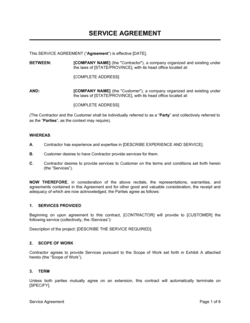
A general service agreement covers ongoing or recurring service delivery without project-specific detail — it is appropriate for retainers, support contracts, and managed services. A development agreement is designed for a defined-scope build with milestones, acceptance testing, and IP transfer. Using a generic service agreement for a bespoke development project leaves scope, IP, and acceptance testing undefined.

Industry-specific considerations

Technology / SaaS

IP assignment of source code and proprietary algorithms is critical; background IP schedules for reusable frameworks, API integrations, and open-source components must be explicitly documented.

E-commerce / Retail

Website and platform builds require acceptance testing tied to specific performance benchmarks — page load speeds, checkout conversion flows, and payment gateway integration — as defined acceptance criteria.

Healthcare / MedTech

Development of software handling patient data triggers HIPAA (US) or GDPR (EU/UK) compliance obligations; the agreement must include data processing addenda and security requirement schedules.

Financial Services / Fintech

Regulatory compliance requirements — PCI-DSS, SOC 2, FCA authorization — must be incorporated as contractual obligations on the developer, with audit rights and breach notification timelines specified.

Manufacturing / Hardware

Hardware prototype development agreements require physical deliverable specifications, materials sourcing obligations, testing and certification milestones, and provisions for tooling and mould ownership.

Media / Creative Agencies

Creative development engagements need clear distinction between the agency's background IP (brand frameworks, design systems) and client-owned deliverables to prevent post-project licensing disputes.

Jurisdictional notes

United States

US copyright law does not automatically assign ownership of contractor-created work to the client — a written IP assignment is essential. Under 17 U.S.C. § 101, only certain categories of commissioned work qualify as 'work made for hire'; software typically does not qualify unless the parties are employer and employee. California, New York, and Delaware each have distinct contractor classification rules that affect whether a developer can be engaged as an independent contractor rather than an employee.

Canada

Canadian copyright law similarly defaults to creator ownership for contractor-developed works, making an explicit written assignment clause mandatory. Provinces have varying contractor classification tests — Ontario's Employment Standards Act and BC's Employment Standards Act set thresholds that may require developers engaged long-term to be reclassified as employees. Quebec civil law applies distinct contract rules for companies and individuals operating in that province.

United Kingdom

Under the Copyright, Designs and Patents Act 1988, copyright in works created by independent contractors belongs to the contractor by default — a written assignment is required to transfer ownership to the client. IR35 rules (off-payroll working legislation) may require the client to treat a developer as an employee for tax purposes depending on the nature of the engagement. Post-Brexit, GDPR obligations for projects handling UK personal data are governed by the UK GDPR and Data Protection Act 2018.

European Union

EU member states vary in their default rules on contractor IP ownership — France, Germany, and the Netherlands each have distinct provisions. GDPR compliance is mandatory for any development project handling personal data of EU residents; a Data Processing Agreement must be incorporated by reference or appended. Some EU jurisdictions also impose mandatory author's moral rights that cannot be waived, meaning the client may need to include a moral rights waiver or consent clause where permissible under local law.

Template vs lawyer — what fits your deal?

PathBest forCostTime
Use the templateDomestic development projects under $25,000 with a known developer and clear scopeFree30–60 minutes
Template + legal reviewProjects over $25,000, cross-border engagements, or builds involving sensitive IP or regulated data$400–$900 for a 1–2 hour attorney review2–5 days
Custom draftedEnterprise software builds, joint development arrangements, source-code escrow, equity-linked developer compensation, or multi-party development consortiums$2,000–$8,000+1–3 weeks

Glossary

Scope of Work
A detailed written description of all tasks, deliverables, and boundaries of the project the developer is engaged to complete.
Deliverable
A specific, agreed output — such as a working software module, design mockup, or documented API — that the developer must provide by a defined date.
Milestone
A defined checkpoint in the project timeline tied to completion of a specific deliverable or phase, often linked to a payment trigger.
IP Assignment
A contractual clause transferring ownership of all work product, code, and inventions created during the project from the developer to the client.
Acceptance Testing
A formal process by which the client reviews a deliverable against agreed criteria and either accepts it or provides a written list of defects for correction.
Change Order
A written amendment to the original scope of work that documents additional tasks, revised timelines, or adjusted fees agreed by both parties.
Escrow (Source Code)
An arrangement where the developer deposits source code with a neutral third party, released to the client if the developer ceases operations or breaches the agreement.
Warranty Period
A defined period after delivery — commonly 30 to 90 days — during which the developer is obligated to fix defects in the delivered work at no extra charge.
Liquidated Damages
A pre-agreed sum specified in the contract that one party pays to the other if a defined breach — such as a missed deadline — occurs, avoiding a full damages calculation.
Work Made for Hire
A US copyright doctrine under which certain works created by an employee or contractor under a written agreement are treated as owned by the commissioning party from creation.
Force Majeure
A clause excusing a party from performance obligations when extraordinary events beyond their control — such as natural disasters or government shutdowns — make performance impossible.
Limitation of Liability
A clause capping the maximum financial exposure of one or both parties, typically expressed as a multiple of fees paid under the agreement.

Part of your Business Operating System

This document is one of 3,000+ business & legal templates included in Business in a Box.

  • Fill-in-the-blanks — ready in minutes
  • 100% customizable Word document
  • Compatible with all office suites
  • Export to PDF and share electronically

Create your document in 3 simple steps.

From template to signed document — all inside one Business Operating System.
1
Download or open template

Access over 3,000+ business and legal templates for any business task, project or initiative.

2
Edit and fill in the blanks with AI

Customize your ready-made business document template and save it in the cloud.

3
Save, Share, Send, Sign

Share your files and folders with your team. Create a space of seamless collaboration.

Save time, save money, and create top-quality documents.

★★★★★

"Fantastic value! I'm not sure how I'd do without it. It's worth its weight in gold and paid back for itself many times."

Managing Director · Mall Farm
Robert Whalley
Managing Director, Mall Farm Proprietary Limited
★★★★★

"I have been using Business in a Box for years. It has been the most useful source of templates I have encountered. I recommend it to anyone."

Business Owner · 4+ years
Dr Michael John Freestone
Business Owner
★★★★★

"It has been a life saver so many times I have lost count. Business in a Box has saved me so much time and as you know, time is money."

Owner · Upstate Web
David G. Moore Jr.
Owner, Upstate Web

Run your business with a system — not scattered tools

Stop downloading documents. Start operating with clarity. Business in a Box gives you the Business Operating System used by over 250,000 companies worldwide to structure, run, and grow their business.

Free Forever Plan · No credit card required