Charge Back Application of Discount on Delayed Shipment Template

Free Word download • Edit online • Save & share with Drive • Export to PDF

1 page20–25 min to fillDifficulty: Standard
Learn more ↓
FreeCharge Back Application of Discount on Delayed Shipment Template

At a glance

What it is
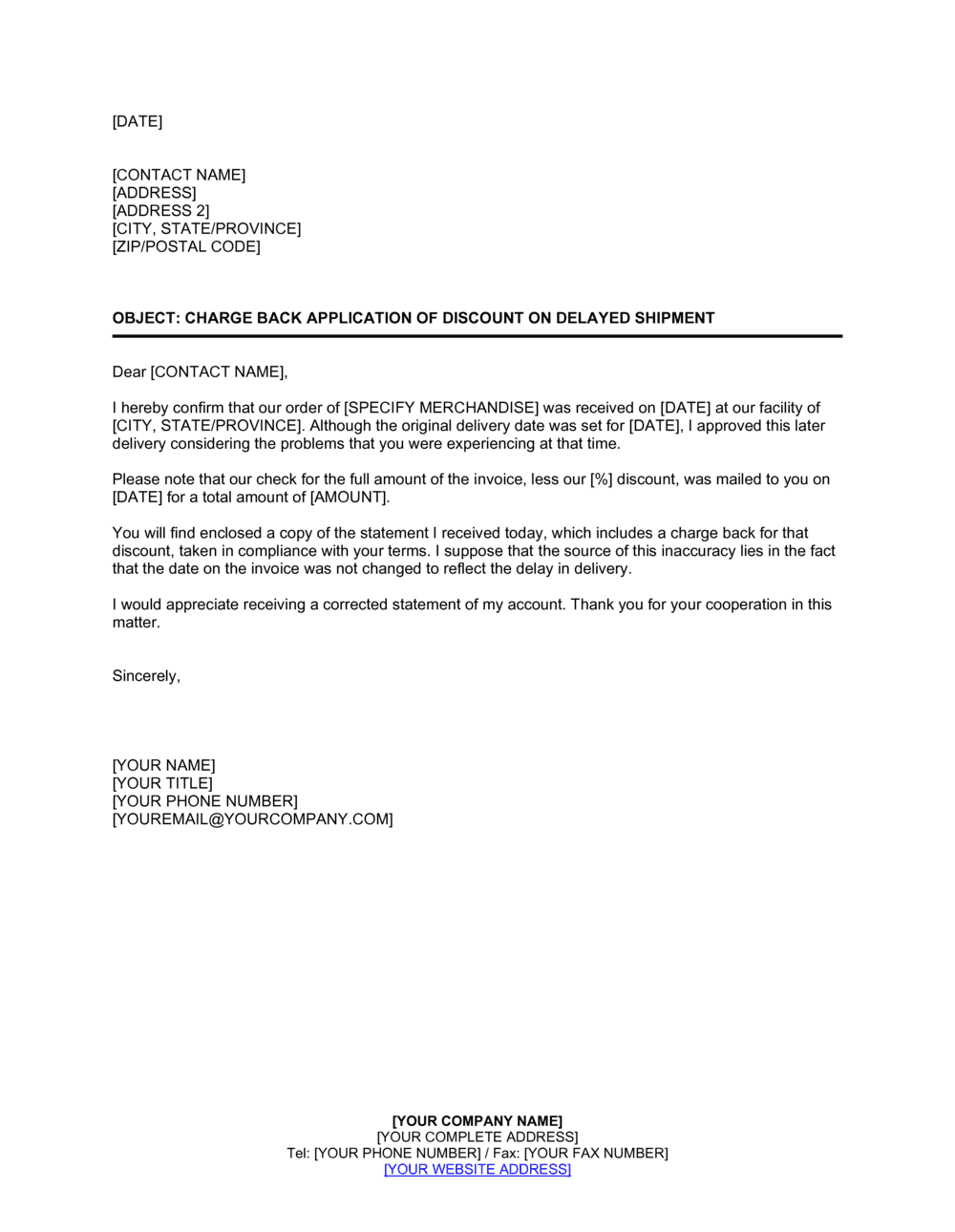
A Charge Back Application of Discount on Delayed Shipment is a structured form a buyer or retailer submits to a vendor to formally claim a pre-agreed discount against an invoice when goods arrive after the contracted delivery date. This free Word download provides a ready-to-use form you can edit online and export as PDF, capturing all the shipment, invoice, and calculation details needed to process the deduction cleanly.
When you need it
Use it whenever a vendor ships after the agreed delivery date and your purchase agreement or vendor compliance manual entitles you to a late- delivery deduction. It converts an informal complaint into a documented, auditable chargeback that your accounts payable team can apply against the open invoice.
What's inside
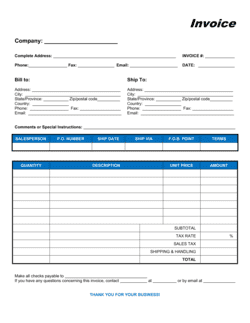
Buyer and vendor identification fields, original purchase order and invoice references, contracted versus actual delivery dates, shipment delay calculation, discount rate and dollar amount, and a supporting notes section for attaching proof-of-delivery records or carrier documentation.

What is a Charge Back Application of Discount on Delayed Shipment?

A Charge Back Application of Discount on Delayed Shipment is a structured form a buyer submits to formally claim a pre-agreed monetary deduction from a vendor invoice when goods arrive after the contracted delivery date. It captures every element needed to calculate and authorize the deduction — purchase order reference, invoice details, contracted versus actual delivery dates, applicable discount rate, and the resulting chargeback amount — in a single auditable document. The form does not create a new obligation; it exercises a right already established in a purchase order, vendor compliance manual, or supply agreement, converting that right into a specific, documented deduction your accounts payable team can process against the open invoice.

Why You Need This Document

Processing late-delivery deductions without a completed chargeback form creates three immediate problems: your accounts payable team has no documented authorization to reduce the invoice, your vendor has no formal notification of what was deducted and why, and your finance records show a payment shortfall with no supporting calculation if audited. Vendors who receive an undocumented short payment routinely treat it as a billing error, re-age the receivable, and escalate to collections — turning a valid contractual penalty into a payment dispute that damages the supplier relationship and consumes time to resolve. A completed chargeback application with attached proof-of-delivery and agreement reference closes all three gaps: it authorizes the deduction internally, notifies the vendor with a verifiable calculation, and creates an audit trail that holds up to scrutiny. This template gives you a ready-to-use form that takes under 15 minutes to complete and ensures every delayed-shipment deduction you make is traceable, defensible, and processed cleanly.

Which variant fits your situation?

If your situation is…Use this template
Vendor shipped on time but delivered damaged or incomplete goodsDamaged Goods Chargeback Form
Vendor failed to meet labeling or packaging compliance requirementsVendor Compliance Chargeback Form
Formally notifying the vendor of a shipment shortfall before deductingChargeback Letter to Supplier
Tracking multiple vendor chargebacks across a periodChargeback Log / Register
Disputing an invoice amount before payment is issuedInvoice Dispute Letter
Requesting a credit note from the vendor instead of a deductionCredit Note Request Letter

Common mistakes to avoid

❌ No contractual basis cited for the discount rate

Why it matters: A chargeback without a documented rate from the purchase agreement or compliance manual is a unilateral deduction — vendors routinely dispute and reverse these, and your AP team may not process them without backup.

Fix: Always reference the specific clause, section number, and document name that authorizes the rate, and attach a copy of that page.
❌ Using the carrier scan date instead of the warehouse receipt date

Why it matters: Carriers sometimes scan a package as delivered before your warehouse formally receives and logs it — this can inflate the delay period and result in an overstated chargeback the vendor will challenge.

Fix: Use the date your receiving team stamped or signed the delivery documentation as the official actual receipt date.

❌ Applying the discount rate to the full invoice instead of the delayed line items

Why it matters: If only a subset of ordered items was delayed, applying the rate to the entire invoice overstates the deduction and creates a dispute that slows payment on the remainder.

Fix: Identify the specific line items that shipped late, calculate the deduction on their value only, and itemize the breakdown in the chargeback amount field.

❌ Submitting the form without attachments

Why it matters: Without a POD or carrier tracking record, the vendor has no independent evidence of the late arrival and is entitled to request documentation before honoring the deduction — extending resolution by weeks.

Fix: Treat the POD as mandatory, not optional. Never submit a chargeback form without at least the delivery confirmation and PO copy attached.

The 10 key fields, explained

Buyer and vendor identification

Purchase order number

Invoice reference and amount

Contracted delivery date

Actual receipt date

Delay period calculation

Applicable discount rate

Chargeback amount

Supporting documentation reference

Authorized signatory and submission date

How to fill it out

  1. 1

    Retrieve the purchase order and vendor agreement

    Before completing the form, locate the original PO and the relevant section of your vendor compliance manual or purchase agreement that authorizes the late-delivery discount and states the applicable rate.

    💡 Attach a copy of the relevant clause or page from the agreement to the submission — it eliminates the most common vendor dispute before it starts.

  2. 2

    Enter buyer and vendor identification

    Fill in both parties' full legal names, addresses, and any internal account or vendor numbers. Cross-reference the vendor's account number against your ERP or AP system.

    💡 Use the exact vendor name as it appears in your vendor master file to prevent matching failures in your accounts payable system.

  3. 3

    Record PO and invoice references

    Enter the PO number, PO date, vendor invoice number, invoice date, and the total invoice value. These three references tie the chargeback to a specific, verifiable transaction.

    💡 If multiple invoices cover the same PO, list each invoice separately rather than combining them — mixed deductions are harder to reconcile.

  4. 4

    Enter contracted and actual delivery dates

    State the delivery date required by the PO or agreement, then enter the date the goods were formally received and signed off at your warehouse. Use the warehouse receiving stamp, not the carrier scan.

    💡 Keep a copy of the signed delivery receipt (POD) in the same file as the chargeback form for fast retrieval if the vendor requests proof.

  5. 5

    Calculate the delay period and chargeback amount

    Subtract the contracted delivery date from the actual receipt date to get the delay in days. Multiply by the applicable discount rate and the relevant invoice value. Confirm whether the agreement uses calendar or business days.

    💡 Show the full arithmetic in the form — e.g., '3 days × 1% × $10,000 = $300' — so the vendor's AP team can verify the calculation without contacting you.

  6. 6

    Attach supporting documentation

    Compile the POD, carrier tracking printout, PO copy, and the relevant vendor agreement extract. List each attachment by name in the supporting documentation field.

    💡 Highlight the delivery date on the POD before attaching it — a single visible date point resolves most vendor challenges immediately.

  7. 7

    Submit through the correct channel and retain a copy

    Send the completed form and attachments to the vendor's accounts receivable or vendor compliance contact, and simultaneously route to your accounts payable team for deduction processing. Save a timestamped copy.

    💡 Send by email with read receipt or via your vendor portal so you have a transmission record if the vendor claims non-receipt.

Frequently asked questions

What is a chargeback for a delayed shipment?

A delayed shipment chargeback is a formal deduction a buyer applies against a vendor invoice when goods arrive after the contracted delivery date. The buyer calculates the deduction using a pre-agreed discount rate — typically a percentage of the invoice value per day late — and submits a completed chargeback form to document and justify the reduction. The right to make the deduction must be established in the purchase order or vendor compliance agreement before the chargeback is valid.

Do I need a signed contract before issuing this chargeback?

Yes. The discount rate and trigger conditions for a delayed shipment chargeback must be set out in an existing purchase order, vendor compliance manual, or supplier agreement before you can apply a deduction. A chargeback without a contractual basis is a unilateral deduction that the vendor can dispute and that your own accounts payable team may decline to process. Always reference the specific clause authorizing the rate on the form.

How is the chargeback amount calculated?

The standard calculation is: discount rate (%) multiplied by the applicable invoice or line-item value, multiplied by the number of days the shipment was late. For example, a 1% per-day rate on a $5,000 invoice that arrived 3 days late equals a $150 deduction. Always check whether the agreement bases the rate on the full invoice, the delayed line items only, or a flat fee per delay period, and confirm whether days are counted as calendar or business days.

What documentation should I attach to the chargeback form?

At minimum, attach the signed proof of delivery (POD) showing the actual receipt date, a copy of the original purchase order showing the contracted delivery date, and the relevant section of your vendor compliance manual or agreement showing the authorized discount rate. Carrier tracking records and warehouse receiving logs strengthen the submission and preempt the most common vendor challenges.

Can a vendor dispute a delayed shipment chargeback?

Yes. Vendors typically dispute chargebacks on three grounds: the contracted delivery date was not clearly stated, the delay was caused by a carrier or force-majeure event outside their control, or the calculation was applied to the wrong invoice value. A well-completed form with POD, PO copy, and agreement clause attached resolves most disputes before they escalate. If the vendor disputes in writing, respond with the same documentation package and your timestamped submission record.

Is this form the same as a credit note?

No. A chargeback form is a buyer-initiated document that instructs the buyer's accounts payable team to deduct an amount from the vendor's invoice. A credit note is a vendor-issued document that reduces the outstanding balance on a specific invoice. Both achieve a similar financial result, but they originate from different parties. Some buyers prefer to request a credit note instead of issuing a unilateral chargeback, particularly with vendors where the relationship is ongoing.

What if the shipment was late because of the carrier, not the vendor?

Liability depends on the shipping terms in the purchase agreement. Under FOB Origin terms, title and risk transfer to the buyer when the vendor hands goods to the carrier — the vendor is generally not liable for carrier delays. Under FOB Destination or DDP terms, the vendor is responsible for delivery and carrier delays are typically their risk. Review the Incoterms or shipping terms in the PO before submitting the chargeback to confirm the vendor is the correct party to charge.

How do I track multiple chargebacks against the same vendor?

For high-frequency vendor relationships, maintain a chargeback register or log that records each form submitted, the chargeback amount, the invoice it was applied to, and its resolution status. This gives your accounts payable team a running reconciliation and provides audit-ready documentation if a vendor disputes cumulative deductions at year-end.

Does this form need to be signed?

A formal wet or electronic signature is not legally required for most commercial chargeback submissions, but including the name and title of the authorized submitter confirms internal approval and gives the vendor a specific contact to respond to. Some vendor compliance programs require an authorized signatory block — check your vendor agreement to confirm any formal approval requirements.

How this compares to alternatives

vs Credit note

A credit note is issued by the vendor to reduce an outstanding invoice balance — it is vendor-initiated and requires vendor cooperation. A chargeback application is buyer-initiated and applied as a unilateral deduction against the invoice. Use a credit note when the vendor agrees to the reduction; use the chargeback form when you are enforcing a contractual right without waiting for vendor action.

vs Invoice dispute letter

An invoice dispute letter challenges the amount or validity of an invoice and requests correction before payment. A chargeback application accepts the invoice as valid but applies a pre-authorized deduction for a specific compliance failure. Use the dispute letter when the invoice itself is incorrect; use the chargeback form when the invoice is correct but a contractual penalty applies.

vs Vendor chargeback letter

A vendor chargeback letter is a written notification informing the supplier that a deduction will be or has been taken, and explaining the reason. The chargeback application form is the structured internal document that calculates and authorizes the deduction. Both are typically issued together — the form drives the AP deduction; the letter notifies the vendor.

vs Purchase order

A purchase order establishes the delivery terms and contractual basis that make a chargeback possible — including the required delivery date and penalty schedule. The chargeback application form is the downstream document that exercises the rights created by the PO. Without a PO with explicit delivery terms, the chargeback form has no enforceable basis.

Industry-specific considerations

Retail and consumer goods

Large retailers enforce strict vendor compliance programs with published per-day late-delivery penalties tied to seasonal replenishment windows and planogram resets.

Manufacturing and industrial supply

Production line dependencies mean delayed component shipments carry direct downtime costs, making contractual chargeback rates a standard cost-recovery mechanism.

E-commerce and fulfillment

Third-party seller agreements and 3PL contracts typically include SLA-based deduction schedules for late inbound shipments that disrupt published customer delivery promises.

Food and beverage

Perishable goods amplify late-delivery consequences — reduced shelf life and markdown costs are commonly built into vendor chargeback calculations as defined line items.

Template vs pro — what fits your needs?

PathBest forCostTime
Use the templateBuyers, AP teams, and supply chain coordinators enforcing standard vendor compliance chargebacksFree10–15 minutes per chargeback
Template + professional reviewOrganizations setting up a new vendor compliance program or formalizing chargeback policies for the first time$200–$500 (operations consultant or procurement advisor review)1–3 days
Custom draftedEnterprise retailers with complex multi-tier vendor compliance programs requiring custom penalty schedules and ERP integration$1,000–$3,000 (procurement or supply chain specialist)1–2 weeks

Glossary

Chargeback
A deduction a buyer applies against a vendor invoice to recover costs or penalties arising from non-compliance with agreed terms.
Contracted Delivery Date
The specific date by which the vendor is obligated to deliver goods, as stated in the purchase order or vendor agreement.
Actual Receipt Date
The date the buyer's warehouse or receiving department physically accepted the shipment from the carrier.
Delay Period
The number of calendar or business days between the contracted delivery date and the actual receipt date.
Discount Rate
The pre-agreed percentage applied to the invoice value or line-item total to calculate the monetary deduction for each day or period of delay.
Vendor Compliance Manual
A document issued by a retailer or buyer that defines shipment, labeling, and delivery standards along with the penalty schedule for non-compliance.
Deduction
The specific dollar amount subtracted from the open vendor invoice, calculated by applying the discount rate to the relevant invoice value.
Proof of Delivery (POD)
Carrier-generated documentation confirming the date and condition in which a shipment was delivered to the consignee.
Purchase Order (PO) Number
A unique buyer-assigned reference number that authorizes the purchase and links the invoice, shipment, and chargeback to the same transaction.
Remittance Advice
A document sent with payment that details which invoices are being paid and itemizes any deductions, including chargeback amounts.

Part of your Business Operating System

This document is one of 3,000+ business & legal templates included in Business in a Box.

  • Fill-in-the-blanks — ready in minutes
  • 100% customizable Word document
  • Compatible with all office suites
  • Export to PDF and share electronically

Create your document in 3 simple steps.

From template to signed document — all inside one Business Operating System.
1
Download or open template

Access over 3,000+ business and legal templates for any business task, project or initiative.

2
Edit and fill in the blanks with AI

Customize your ready-made business document template and save it in the cloud.

3
Save, Share, Send, Sign

Share your files and folders with your team. Create a space of seamless collaboration.

Save time, save money, and create top-quality documents.

★★★★★

"Fantastic value! I'm not sure how I'd do without it. It's worth its weight in gold and paid back for itself many times."

Managing Director · Mall Farm
Robert Whalley
Managing Director, Mall Farm Proprietary Limited
★★★★★

"I have been using Business in a Box for years. It has been the most useful source of templates I have encountered. I recommend it to anyone."

Business Owner · 4+ years
Dr Michael John Freestone
Business Owner
★★★★★

"It has been a life saver so many times I have lost count. Business in a Box has saved me so much time and as you know, time is money."

Owner · Upstate Web
David G. Moore Jr.
Owner, Upstate Web

Run your business with a system — not scattered tools

Stop downloading documents. Start operating with clarity. Business in a Box gives you the Business Operating System used by over 250,000 companies worldwide to structure, run, and grow their business.

Start free · No credit card required