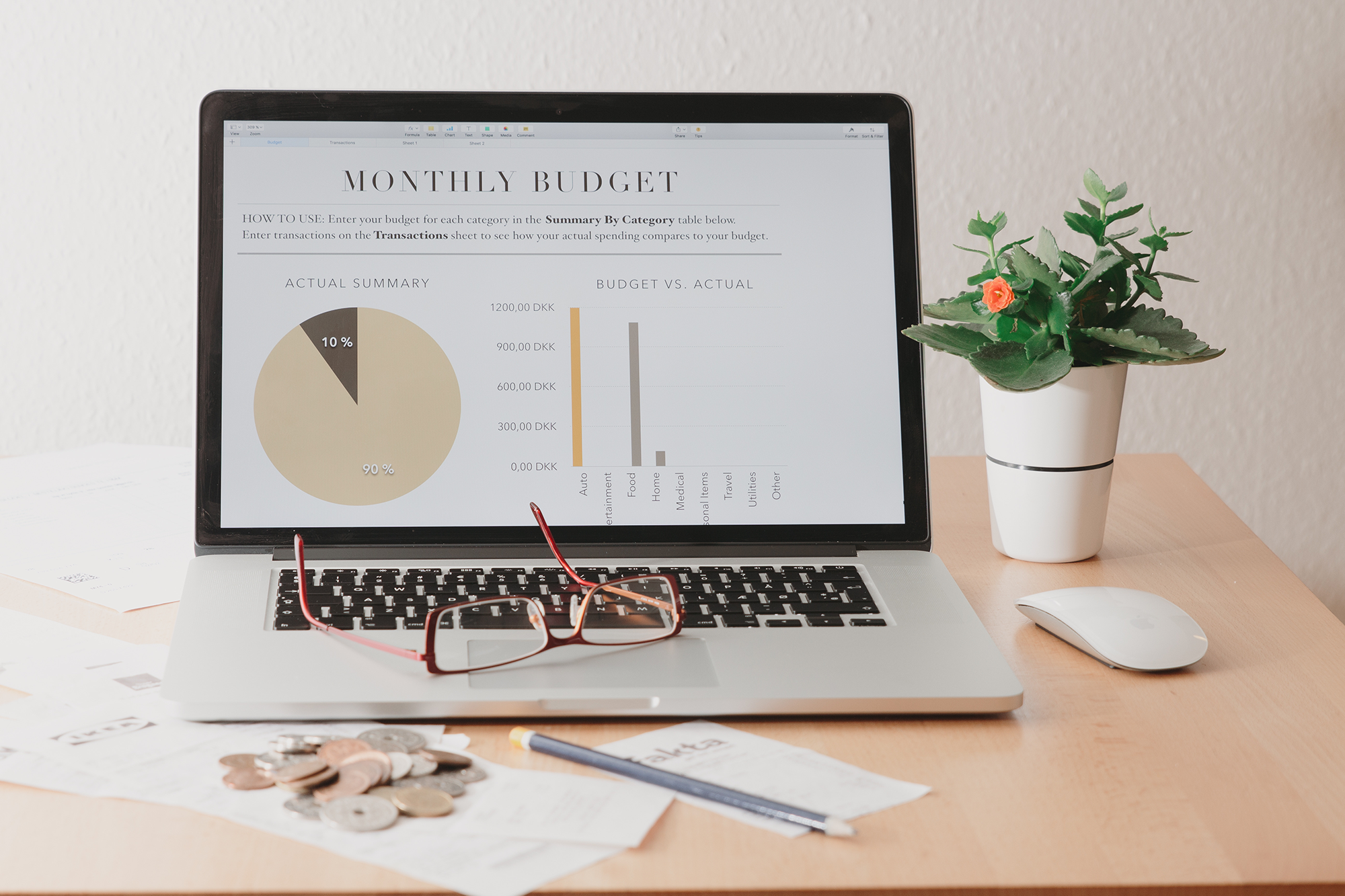
Money doesn’t just flow—it needs direction.
A small business without a clear budget and cash flow plan is like a ship sailing without a compass. It might move forward for a while, but eventually, it will drift off course.
Budgeting and cash flow planning aren’t just accounting tasks—they are strategic tools that help you make confident decisions, survive tough months, and scale when opportunity knocks.
Whether you’re just starting your business or trying to stabilize after years of chaos, this complete guide will show you how to create a simple, effective financial plan—without needing to be a finance expert.
By the end, you’ll know exactly how to forecast your income, manage expenses, and maintain a healthy cash flow. And you’ll see how tools like Business in a Box make the process effortless with ready-made templates and dashboards.
Why Every Business Needs a Budget and Cash Flow Plan
A budget is your financial map—it shows you where your money should go.
Cash flow planning is your navigation system—it ensures you always have enough fuel to keep the journey going.
Without them, you risk:
- Overspending without realizing it
- Running out of money during slow months
- Missing growth opportunities because you can’t predict liquidity
- Making emotional rather than data-driven decisions
According to studies, nearly 80% of businesses that fail do so due to cash flow issues—not because their product wasn’t good.
The good news? With a clear budget and cash flow plan, you can prevent this fate.
Understand the Difference Between Budget and Cash Flow
Before building your plan, it’s essential to understand how these two concepts work together:
| Budget | Cash Flow Plan |
| A projection of income and expenses over a period | A timeline of when cash enters and exits |
| Focused on profitability | Focused on liquidity |
| Answers “How much will we earn and spend?” | Answers “Will we have enough money to pay bills on time?” |
| Usually reviewed monthly or quarterly | Should be reviewed weekly |
In simple terms, your budget keeps you profitable.
Your cash flow plan keeps you alive
Step 1: Define Your Financial Goals
Before you start entering numbers, define what you want your money to achieve. A budget is not just about controlling spending—it’s about aligning your money with your mission.
Ask yourself:
- What revenue goal do we want to hit this year?
- What profit margin are we aiming for?
- Do we want to reinvest in marketing, new hires, or product development?
- How much do we want to save or keep in reserve?
Once your goals are clear, your budget becomes a roadmap for achieving them.
Tip: In Business in a Box, you can connect financial goals to projects and departments, ensuring everyone works toward the same numbers.
Step 2: Estimate Your Revenue
Your budget starts with an honest look at how much money you expect to make.
Here’s how to forecast realistically:
- Review past performance. Look at last year’s or last quarter’s revenue. Identify seasonal patterns.
- Analyze customer base. How many clients do you have, and what’s the average spend per customer?
- Include growth expectations. Are you adding new products, clients, or markets this year?
- Be conservative. It’s better to underestimate income than overpromise and fall short.
Create a simple breakdown:
- Product A: $50,000
- Service B: $30,000
- Online Sales: $20,000
Total Expected Revenue: $100,000
Now, you have the foundation for your budget.
Step 3: List Fixed and Variable Expenses
Next, list where your money goes.
Fixed Expenses:
These stay the same every month. Examples include:
- Rent or office lease
- Salaries and payroll
- Insurance
- Internet and utilities
- Software subscriptions
Variable Expenses:
These fluctuate based on activity:
- Marketing and advertising
- Inventory or supplies
- Travel and events
- Commissions or bonuses
Pro Tip: In Business in a Box, use the Expense Tracking Template to categorize these automatically by department or project, so you can see where your money really goes.
Step 4: Plan for One-Time and Hidden Costs
One of the most common budgeting mistakes is forgetting about irregular expenses. These can derail your plan if not accounted for.
Examples include:
- Annual software renewals
- Equipment maintenance or upgrades
- Professional fees (lawyers, accountants)
- Tax payments
- Unexpected repairs or emergencies
Create a category called “Non-Monthly Costs” in your budget to spread these expenses across the year.
If a $2,400 annual insurance payment is due in June, set aside $200 per month so it doesn’t hit all at once.
Step 5: Build Your Budget Spreadsheet (or Use Templates)
Now you’re ready to put it all together. You can build your own spreadsheet, or—better—use pre-designed templates to save time. Your budget should include:- Projected income by month
- Fixed and variable expenses
- Net profit per month
- Yearly totals
| Month | Revenue | Expenses | Net Profit | Notes |
| January | $10,000 | $8,000 | $2,000 | Marketing ramp-up |
| February | $12,000 | $9,000 | $3,000 | New client onboarded |
| March | $15,000 | $10,000 | $5,000 | Peak season |
Step 6: Create Your Cash Flow Forecast
This is where many entrepreneurs get stuck—but it’s simpler than it looks. Your cash flow forecast tracks when money actually moves, not just what’s planned. For each month, list:- Cash inflows: Customer payments, loans, investments.
- Cash outflows: Rent, payroll, bills, taxes, supplies.
| Month | Inflows | Outflows | Net Cash Flow | Ending Balance |
| January | $12,000 | $13,000 | -$1,000 | $9,000 |
| February | $15,000 | $11,000 | +$4,000 | $13,000 |
| March | $18,000 | $16,000 | +$2,000 | $15,000 |
Step 7: Track Your Actuals Monthly
Budgets are not “set and forget.” They’re living tools.
At the end of each month:
- Compare budgeted vs actual income and expenses.
- Note any variances and explain why they happened.
- Adjust your forecasts for the next period.
In Business in a Box, you can attach your budget file to your Finance Department page and update it monthly. The dashboard will visualize your trends automatically, showing you where adjustments are needed.
Step 8: Manage Cash Flow Like a CEO
Cash flow is what keeps your business running day to day.
Here are simple but powerful strategies to manage it well:
- Speed Up Incoming Cash
- Invoice immediately after delivering work.
- Offer early payment discounts.
- Use automated reminders for overdue invoices.
- Accept multiple payment methods.
- Slow Down Outgoing Cash
- Negotiate 30- or 45-day payment terms with vendors.
- Schedule bill payments strategically.
- Lease instead of buying equipment when possible.
- Maintain a Safety Buffer
Keep a reserve fund equal to 3–6 months of expenses. This is your business’s oxygen tank during tough times.
Step 9: Use KPIs to Measure Financial Health
Tracking the right Key Performance Indicators (KPIs) ensures you’re not flying blind.
Here are essential financial KPIs for small businesses:
- Gross Profit Margin: (Revenue – Cost of Goods Sold) / Revenue
- Net Profit Margin: Net Income / Revenue
- Operating Cash Flow: Cash generated from business operations
- Accounts Receivable Turnover: How quickly customers pay
- Current Ratio: Current Assets / Current Liabilities
In Business in a Box, you can create KPI dashboards linked directly to your financial spreadsheets, giving you a live view of performance at all times.
Step 10: Plan for Taxes, Savings, and Growth
Your budget should go beyond operations—it should help you grow and stay compliant.
Set aside:
- Taxes: 20–30% of profit (depending on your jurisdiction)
- Emergency Fund: 5–10% of monthly revenue
- Growth Investment: Marketing, technology, or training
If you use Business in a Box, you can assign each of these to specific budget categories and monitor progress with reminders.
Avoid These 5 Common Budgeting Mistakes
Even experienced entrepreneurs fall into these traps. Avoid them early:
- Overestimating revenue – Be realistic or slightly conservative.
- Ignoring seasonality – Plan for slow months.
- Forgetting taxes – Include them in monthly budgets.
- Not reviewing regularly – A budget ignored is useless.
- Not involving your team – Department heads should own their numbers too.
With Business in a Box, you can assign departmental budgets and track accountability automatically.
Automate and Simplify with Business in a Box
Here’s how Business in a Box makes budgeting and cash flow management effortless:
Prebuilt Templates
Access 3,000+ business templates—including annual budgets, cash flow trackers, and forecasting sheets—ready to use instantly.
Departmental Dashboards
Track each team’s financial performance and integrate reports in one view.
Task Automation
Assign tasks like “Submit Budget Update” or “Review Cash Flow” with automatic reminders and due dates.
Secure Document Storage
Keep all financial files, contracts, and invoices safely organized in one place—no more scattered folders.
AI Insights (Coming Soon)
Get smart financial recommendations—like expense optimization and forecast alerts—from your AI assistant inside the platform.
The result?
You save time, reduce stress, and gain total clarity on your company’s financial future.
Example: A Simple Budget and Cash Flow Plan in Action
Let’s say Sarah runs a small digital marketing agency.
Her annual revenue goal is $250,000. She builds her budget like this:
- Fixed Costs: $90,000 (salaries, rent, software)
- Variable Costs: $70,000 (ads, freelancers, travel)
- Taxes: $40,000
- Profit Goal: $50,000
She breaks these down month by month in Business in a Box using templates.
Then, she forecasts her cash flow—knowing her biggest client pays quarterly. That insight helps her set aside reserves during good months.
By reviewing her numbers weekly in her Business in a Box dashboard, she never gets surprised by sudden cash shortages again.
The Power of Planning Ahead
Creating a budget and cash flow plan isn’t just about control—it’s about freedom.
It gives you the confidence to:
- Hire new team members
- Invest in growth opportunities
- Handle downturns calmly
- Scale sustainably
With the right tools, financial planning becomes empowering—not overwhelming.
How Often Should You Update Your Budget and Cash Flow Plan?
Consistency is key.
- Weekly: Review cash flow and bank balances.
- Monthly: Compare actual vs budget and adjust.
- Quarterly: Revisit your strategy and forecasts.
- Annually: Redesign your entire plan for the next year.
The more frequent your reviews, the fewer surprises you’ll face.
Business in a Box simplifies this rhythm—reminding you of key financial dates, updates, and review cycles.
Align Money with Vision
Ultimately, a budget isn’t about spreadsheets—it’s about alignment.
It connects your daily financial actions with your long-term vision.
When every dollar you spend supports your mission, you build momentum and clarity.
And when your tools (like Business in a Box) automate the financial busywork, you get to focus on what truly matters—growth, impact, and freedom.
Quick Checklist: Your Budget and Cash Flow Toolkit
Business Budget Template
Cash Flow Forecast Sheet
Expense Tracker
KPI Dashboard
Tax Planner
Profit & Loss Statement
Annual Financial Goals Sheet
Department Budget Tracker
All available inside Business in a Box—ready to customize for your exact business type.

Final Thoughts: Take Control of Your Financial Destiny
Budgeting and cash flow management aren’t about restriction—they’re about empowerment.
When you plan your money, you plan your future.
A simple budget gives you focus.
A clear cash flow plan gives you stability.
And with Business in a Box, you get the clarity, automation, and templates to manage both effortlessly.
So don’t wait for another month of financial uncertainty.
Take charge, plan ahead, and run your business with the confidence of a true financial professional.
Create your budget and cash flow plan today with Business in a Box. Simplify your finances, eliminate guesswork, and focus on what you do best—growing your business.
Related blogs

The Benefits of Using Templates for Contracts and Legal Docs
In business, every agreement matters.
Whether you’re hiring a new employee, signing a client, partnering with a supplier, or protecting intellectual property — contracts are the foundation of trust and clarity.

10 Common Accounting Mistakes Small Businesses Make (and How to Avoid Them)
Accounting may not be the most exciting part of running a business — but it’s one of the most important.

How to Manage Compliance and Documentation Easily
Running a business today means managing an ever-growing ocean of documents, policies, and regulations. From contracts and HR files to licenses, tax returns, and data privacy records—documentation and compliance touch every part of your operation.