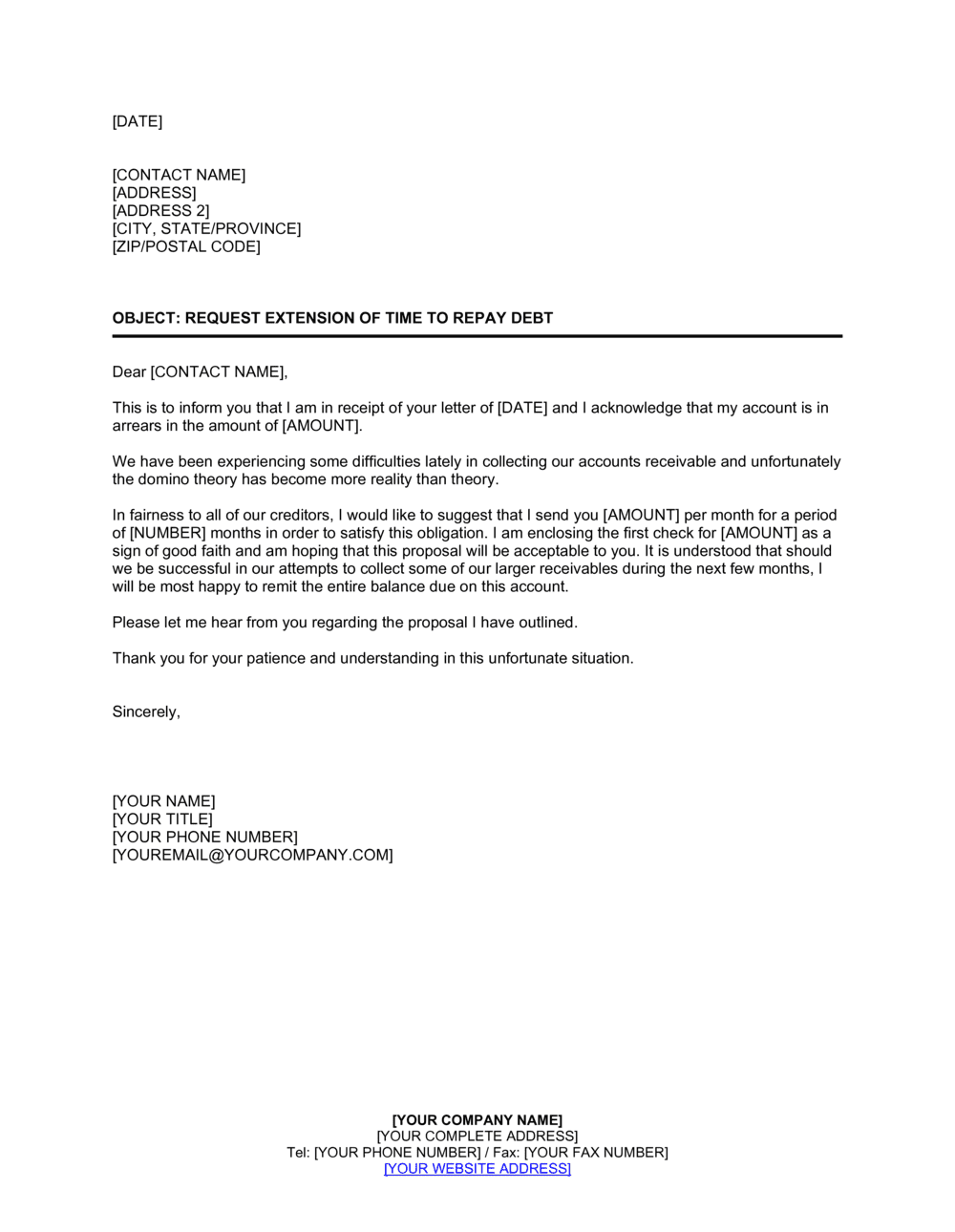
Request of Extension of Time to Repay Debt Template

Free Word download β€’ Edit online β€’ Save & share with Drive β€’ Export to PDF

1 pageβ€’15–25 min to fillβ€’Difficulty: Standard
Learn more ↓
FreeRequest of Extension of Time to Repay Debt Template

At a glance

What it is
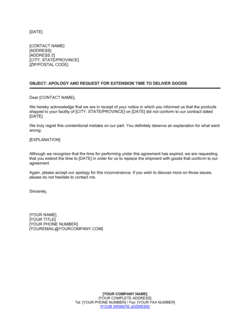
A Request for Extension of Time to Repay Debt is a formal letter a debtor sends to a creditor asking to move the original repayment deadline to a new agreed date. This free Word download gives you a structured, professional starting point β€” edit the reason, proposed date, and any compensating arrangements, then send it in minutes.
When you need it
Use it when a payment deadline is approaching and you cannot meet it in full β€” whether due to a short-term cash flow gap, an unexpected expense, or a delayed receivable. Sending this letter before the due date signals good faith and creates a paper trail of the revised arrangement.
What's inside
Debtor and creditor identification, a reference to the original debt and due date, a clear explanation of the reason for the request, the proposed new repayment date, any compensating offer (partial payment, additional interest, or revised schedule), and a closing request for written confirmation.

What is a Request for Extension of Time to Repay Debt?

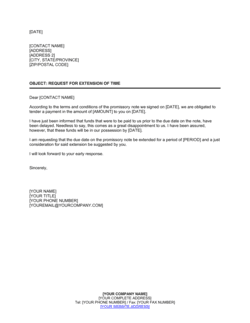
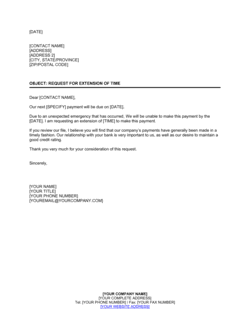
A Request for Extension of Time to Repay Debt is a formal letter a debtor sends to a creditor asking to move the original repayment deadline to a specific new date. It sets out the reason the original date cannot be met, commits the debtor to a firm revised date, and typically offers a compensating arrangement β€” such as a partial payment upfront or additional interest on the outstanding balance β€” to give the creditor a concrete reason to agree. Unlike a verbal request, a written letter creates a paper trail of the revised arrangement and demonstrates the good faith that keeps most creditors at the negotiating table rather than escalating to collection.

Why You Need This Document

Missing a payment deadline without notice is treated as default β€” it can trigger penalty interest, damage your credit profile, and prompt the creditor to accelerate the full balance or refer the debt to a collection agency. A proactive written request, sent before the due date, changes the dynamic entirely: it shows the creditor you are tracking the obligation, communicates a realistic plan, and gives them documentation to support approving the extension internally. Without it, you leave the creditor no option but to follow their standard collections process. This template gives you a complete, professional letter in under 20 minutes β€” covering every element a creditor needs to evaluate and accept your request without back-and-forth.

Which variant fits your situation?

If your situation is…Use this template
Requesting a single extended due date with no partial paymentRequest for Extension of Time to Repay Debt
Proposing a revised installment schedule instead of one lump sumDebt Repayment Agreement
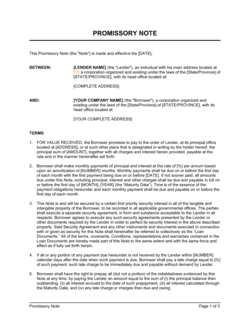
Acknowledging a debt and committing to repay it in writingPromissory Note
Formally disputing the amount owed before discussing timingDebt Dispute Letter
Offering a reduced lump-sum settlement instead of an extensionDebt Settlement Agreement
Notifying a creditor of inability to pay and proposing a hardship arrangementFinancial Hardship Letter

Common mistakes to avoid

❌ Sending the letter after the due date has passed

Why it matters: A letter sent after default places you in breach and removes the creditor's incentive to negotiate β€” penalties and collection action may already be triggered.

Fix: Send the request at least 5–10 business days before the original due date so the creditor has time to review and respond.

❌ Providing a vague or emotional reason for the request

Why it matters: Phrases like 'going through a difficult time' give the creditor no basis for evaluating whether the new date is realistic, and can read as an attempt to avoid the obligation.

Fix: State the specific cause β€” a named client's payment of $X delayed by Y days β€” and the expected resolution date that makes the new repayment date credible.

❌ Proposing an open-ended extension

Why it matters: Without a specific new date, the creditor cannot update their records, and you have made no enforceable commitment β€” the debt remains in default.

Fix: Always state a specific calendar date. If you are uncertain, choose a conservative (later) date you are confident you can meet rather than an optimistic one you might miss.

❌ Making no compensating offer

Why it matters: A bare request asks the creditor to absorb the cost of the delay with no benefit β€” most creditors will refuse or counter with less favorable terms.

Fix: Offer at least a partial payment or agreement to cover accrued interest for the extension period. Even a small concession substantially improves acceptance rates.

The 9 key clauses, explained

Header and parties

In plain language: Identifies the debtor (sender) and creditor (recipient) with full names, addresses, and contact details, and states the date the letter is written.

Sample language
[YOUR FULL NAME / COMPANY NAME] | [ADDRESS] | [DATE] To: [CREDITOR FULL NAME / COMPANY NAME] | [ADDRESS]

Common mistake: Using a trade name or nickname instead of the creditor's full legal entity name β€” the letter may fail to reach the correct accounts department.

Reference to the original debt

In plain language: Cites the specific loan, invoice, or agreement by number or date so the creditor can locate the record without ambiguity.

Sample language
Re: Extension Request β€” Loan Agreement dated [DATE] / Invoice No. [NUMBER] β€” Original Amount: $[AMOUNT] β€” Original Due Date: [DATE]

Common mistake: Omitting the invoice or agreement reference number, forcing the creditor to research which debt is being discussed before they can respond.

Acknowledgment of the obligation

In plain language: States clearly that the debtor recognizes the debt, accepts responsibility for it, and is not disputing the amount owed.

Sample language
I/We acknowledge the outstanding balance of $[AMOUNT] owed to [CREDITOR NAME] under the above-referenced agreement and do not dispute this obligation.

Common mistake: Combining the acknowledgment with an implied dispute β€” phrases like 'the amount you claim' undermine good faith and may prompt the creditor to refuse the extension.

Reason for the extension request

In plain language: Explains the specific circumstance preventing repayment on the original date β€” cash flow shortfall, delayed receivable, unexpected expense, or other documented cause.

Sample language
Due to [SPECIFIC REASON β€” e.g., a delayed payment from a key client / an unexpected repair expense of $X], I/we are currently unable to meet the original repayment date of [DATE].

Common mistake: Providing a vague reason like 'financial difficulties' with no supporting context β€” creditors are more likely to grant extensions when the cause is specific and temporary.

Proposed new repayment date

In plain language: States the exact new date by which the debtor commits to making full repayment, or the revised milestone if partial payments are proposed.

Sample language
I/We respectfully request an extension of [X] days, with full repayment to be made no later than [NEW DATE].

Common mistake: Proposing an open-ended extension ('as soon as possible') rather than a specific date β€” this gives the creditor no firm commitment to accept.

Compensating offer

In plain language: Offers the creditor something in return for agreeing to the extension β€” a partial payment today, additional interest on the outstanding balance, or an accelerated repayment schedule.

Sample language
In recognition of the inconvenience caused, I/we offer to [make a partial payment of $[AMOUNT] immediately / pay additional interest of [X]% on the outstanding balance for the extension period / accelerate repayment with a payment of $[AMOUNT] on [DATE]].

Common mistake: Making no compensating offer at all β€” a bare extension request with no concession gives the creditor no incentive to agree and signals that the debtor is not taking the obligation seriously.

Assurance of commitment

In plain language: Reaffirms the debtor's intention and ability to meet the new date, providing any brief supporting evidence of the expected improvement in their financial position.

Sample language
I/We are confident that the above circumstances are temporary. [A receivable of $[AMOUNT] is expected by [DATE] / Our [revenue / cash position] is projected to normalize by [DATE]], enabling us to meet the revised repayment date.

Common mistake: Omitting this paragraph entirely β€” without a forward-looking statement, the creditor has no reason to believe the new date will be honored any more than the original.

Request for written confirmation

In plain language: Asks the creditor to respond in writing β€” by letter, email, or countersigned copy β€” confirming acceptance of the proposed terms.

Sample language
I/We kindly ask that you confirm your acceptance of this extension request in writing at your earliest convenience. Please contact me/us at [PHONE / EMAIL] if you have any questions or wish to discuss revised terms.

Common mistake: Not requesting written confirmation, leaving the extension as a verbal or implied agreement that is difficult to rely on if a dispute later arises.

Closing and signature

In plain language: Closes the letter professionally, expresses appreciation for the creditor's consideration, and includes the debtor's name, title (if applicable), and signature.

Sample language
Thank you for your understanding and consideration. I/We value our relationship and are committed to meeting the revised terms. Sincerely, [YOUR SIGNATURE] [YOUR FULL NAME / TITLE] [COMPANY NAME, IF APPLICABLE]

Common mistake: Closing with an apologetic or pleading tone that undermines the professional register of the letter β€” keep the closing courteous and businesslike.

How to fill it out

  1. 1

    Enter the date and both parties' details

    Add today's date, your full legal name or company name and address, and the creditor's full legal name and address. For business debts, use registered entity names, not trade names.

    πŸ’‘ Match the debtor name exactly to the name on the original loan or invoice β€” a mismatch can cause the letter to be routed to the wrong department.

  2. 2

    Reference the specific debt

    In the subject line, cite the original agreement date, invoice number, outstanding balance, and original due date. This allows the creditor to locate the account before reading further.

    πŸ’‘ If you have multiple outstanding obligations with the same creditor, send a separate letter for each one β€” combining them creates confusion and weakens both requests.

  3. 3

    Acknowledge the debt clearly

    State in plain terms that you recognize the outstanding balance and are not disputing the amount. Keep this sentence direct and unambiguous.

    πŸ’‘ If you do dispute the amount, resolve that separately first β€” an extension request is not the right vehicle for a billing dispute.

  4. 4

    Explain the reason with specifics

    Describe the exact circumstance causing the shortfall β€” a specific client payment delayed by a stated number of days, a named unexpected expense with a dollar amount, or a documented revenue gap. The more specific, the more credible.

    πŸ’‘ One clear, specific reason is more persuasive than a list of contributing factors β€” pick your strongest explanation.

  5. 5

    State a firm new repayment date

    Commit to a specific calendar date, not a range or a conditional. Calculate how long you realistically need and add a small buffer β€” missing the extended date is worse than requesting a slightly longer one.

    πŸ’‘ Requesting 14–30 extra days is almost always granted for first-time requests with a clear reason. Requesting 90+ days without a strong explanation invites a counteroffer or refusal.

  6. 6

    Add a compensating offer

    Propose at least one concession: a partial payment made today, a small additional interest charge for the extension period, or a commitment to pay early if circumstances improve. Quantify it specifically.

    πŸ’‘ A partial payment of even 10–20% of the balance signals seriousness and dramatically increases the likelihood of acceptance.

  7. 7

    Request written confirmation and sign

    Close by asking the creditor to confirm acceptance in writing, provide your contact details, and sign with your name and title. Send by email with read receipt or by certified mail for a physical record.

    πŸ’‘ Follow up by phone within 48 hours if you have not received a response β€” lenders and suppliers often need a prompt before acting on extension requests.

Frequently asked questions

What is a request for extension of time to repay debt?

It is a formal letter from a borrower or debtor to a creditor asking to move the original repayment deadline to a new agreed date. It explains the reason for the delay, proposes a specific new repayment date, and typically includes a compensating offer β€” such as a partial payment or additional interest β€” to incentivize the creditor's agreement.

When should I send a debt repayment extension letter?

Send it as early as possible β€” ideally 5–10 business days before the original due date. Contacting the creditor proactively before a missed payment demonstrates good faith, keeps you out of technical default, and gives the creditor time to review and respond before the deadline passes. Sending it after the due date puts you in a significantly weaker position.

Does a creditor have to grant an extension?

No. A creditor is not legally obligated to agree to a repayment extension β€” acceptance is at their discretion. However, creditors generally prefer a cooperative debtor who communicates proactively over the cost and uncertainty of collection proceedings. A well-structured letter with a specific reason, firm date, and compensating offer materially improves the likelihood of acceptance.

Should I offer to pay additional interest for the extension period?

Offering to cover accrued interest on the outstanding balance for the extension period is one of the most effective concessions you can make. It compensates the creditor for the time value of their money and signals that you are treating the extension as a genuine obligation rather than an opportunity to delay indefinitely. If the interest amount is small, it costs you little but makes the request substantially more attractive.

Does agreeing to an extension reset the original loan terms?

Not automatically. An extension letter changes only the repayment date β€” all other original terms (interest rate, governing agreement, amount owed) remain in force unless the creditor explicitly agrees to amend them in writing. If you want to restructure other terms at the same time, use a formal debt repayment agreement or an amendment to the original contract.

Do I need a lawyer to write a debt extension request letter?

For most straightforward personal or small-business debts, a professional template is sufficient. Consider consulting a lawyer if the debt is substantial (typically above $50,000), the creditor has already initiated legal proceedings, the original agreement contains penalty clauses that may be triggered, or you are negotiating with a bank on a secured loan.

What if the creditor does not respond to my extension request?

Follow up in writing within 5 business days, referencing your original letter by date. If there is still no response by the original due date, document your attempts to communicate and consider making at least a partial payment to demonstrate good faith. Keep copies of all correspondence β€” if the matter escalates, a clear paper trail of your proactive efforts strengthens your position significantly.

What happens if I miss the extended repayment date?

Missing the extended date places you in default and typically eliminates the creditor's willingness to negotiate further. Penalty interest, late fees, and collection action become more likely. If you anticipate missing the extended date, contact the creditor immediately and send another written request β€” but be aware that a second extension is far harder to obtain and may require stronger compensating terms.

How this compares to alternatives

vs Debt Settlement Agreement

A debt settlement agreement proposes to resolve the debt for a reduced lump-sum amount β€” permanently extinguishing the remaining balance. A repayment extension letter keeps the full original amount intact and only moves the due date. Use the extension when you intend to repay in full; use the settlement agreement when you cannot repay in full and the creditor may prefer a smaller guaranteed amount over collection risk.

vs Promissory Note

A promissory note is a signed legal instrument that creates or documents a debt obligation with specific repayment terms. A debt extension letter is a request β€” it becomes binding only once the creditor confirms acceptance. For large debts, once a creditor accepts an extension, converting the arrangement into a new or amended promissory note provides stronger legal certainty for both parties.

vs Financial Hardship Letter

A financial hardship letter is typically used in consumer contexts β€” mortgage relief, student loan deferment, or utility payment plans β€” and explains ongoing financial distress without committing to a specific new date. A debt extension request is more transactional: it names a precise new repayment date and offers compensating terms. Use the extension request for business and private debts where you have a clear recovery timeline.

vs Demand for Payment Letter

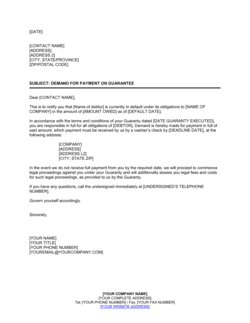
A demand for payment letter is sent by the creditor to the debtor β€” the opposite direction entirely. It asserts that a debt is overdue and demands immediate payment, often as a precursor to legal action. If you have already received a demand letter, respond with a debt extension request promptly to demonstrate good faith and attempt to negotiate before the creditor escalates.

Industry-specific considerations

Small Business and Retail

Seasonal cash flow gaps and delayed customer payments make short-term supplier debt extensions common; a professional letter preserves the supplier relationship while buying time.

Construction and Trades

Progress payment delays from general contractors frequently cause subcontractors to need extensions on material supplier invoices β€” citing the specific upstream delay strengthens the request.

Professional Services

Consultants and agencies with long client payment cycles often need to bridge short-term financing gaps; an extension letter to a lender referencing a specific outstanding receivable is typically well-received.

Startups and Early-Stage Companies

Founders repaying bridge loans or convertible notes to angels may need extensions around fundraising timelines; referencing the expected close date of a funding round provides credible context.

Template vs pro β€” what fits your needs?

PathBest forCostTime
Use the templateIndividuals and small businesses requesting an extension on a straightforward personal loan, supplier invoice, or private debtFree15–20 minutes
Template + professional reviewBusiness owners dealing with a bank or institutional lender, or where the original agreement contains penalty or acceleration clauses$100–$300 for a brief lawyer or accountant review1–2 days
Custom draftedLarge debts above $50,000, secured loans, or situations where the creditor has already initiated legal proceedings$300–$1,000+2–5 days

Glossary

Debtor
The party who owes money to another party under a loan, invoice, or other credit arrangement.
Creditor
The party to whom money is owed β€” a bank, supplier, private lender, or individual.
Repayment Extension
A mutually agreed postponement of a payment deadline to a new date, without cancelling the underlying obligation.
Original Due Date
The repayment date stated in the original loan agreement, invoice, or verbal arrangement.
Compensating Arrangement
An offer made by the debtor to offset the inconvenience of the extension β€” such as a partial payment, a higher interest rate, or an accelerated future schedule.
Good Faith
Acting honestly and transparently in a transaction β€” contacting a creditor proactively before a missed payment is a recognized demonstration of good faith.
Promissory Note
A written, signed promise to repay a specific sum by a specific date, which can be used to formalize an extension once the creditor agrees.
Default
Failure to repay a debt on the agreed due date, which can trigger penalty interest, collection action, or legal proceedings.
Written Confirmation
A response from the creditor β€” letter, email, or countersigned copy β€” that formally acknowledges and accepts the proposed extension terms.
Accrued Interest
Interest that has built up on the outstanding balance between the original due date and the new extended repayment date.

Part of your Business Operating System

This document is one of 3,000+ business & legal templates included in Business in a Box.

  • Fill-in-the-blanks β€” ready in minutes
  • 100% customizable Word document
  • Compatible with all office suites
  • Export to PDF and share electronically

Create your document in 3 simple steps.

From template to signed document β€” all inside one Business Operating System.
1
Download or open template

Access over 3,000+ business and legal templates for any business task, project or initiative.

2
Edit and fill in the blanks with AI

Customize your ready-made business document template and save it in the cloud.

3
Save, Share, Send, Sign

Share your files and folders with your team. Create a space of seamless collaboration.

Save time, save money, and create top-quality documents.

β˜…β˜…β˜…β˜…β˜…

"Fantastic value! I'm not sure how I'd do without it. It's worth its weight in gold and paid back for itself many times."

Managing Director Β· Mall Farm
Robert Whalley
Managing Director, Mall Farm Proprietary Limited
β˜…β˜…β˜…β˜…β˜…

"I have been using Business in a Box for years. It has been the most useful source of templates I have encountered. I recommend it to anyone."

Business Owner Β· 4+ years
Dr Michael John Freestone
Business Owner
β˜…β˜…β˜…β˜…β˜…

"It has been a life saver so many times I have lost count. Business in a Box has saved me so much time and as you know, time is money."

Owner Β· Upstate Web
David G. Moore Jr.
Owner, Upstate Web

Run your business with a system β€” not scattered tools

Stop downloading documents. Start operating with clarity. Business in a Box gives you the Business Operating System used by over 250,000 companies worldwide to structure, run, and grow their business.

Start freeΒ Β·Β No credit card required