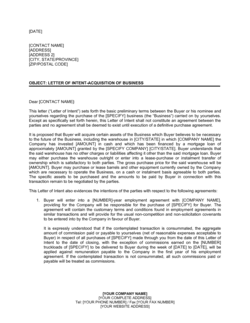
Our New Product Line is a Natural Fit for Your Business Template

Free Word download • Edit online • Save & share with Drive • Export to PDF

1 page20–30 min to fillDifficulty: StandardSignature requiredLegal review recommended
Learn more ↓
FreeOur New Product Line is a Natural Fit for Your Business Template

At a glance

What it is
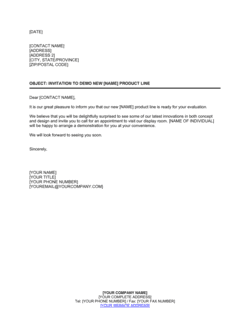
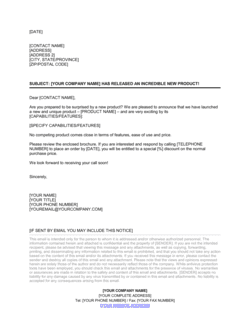
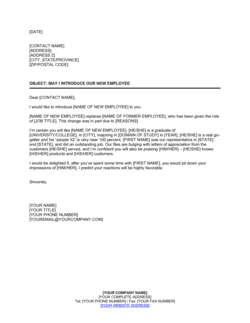
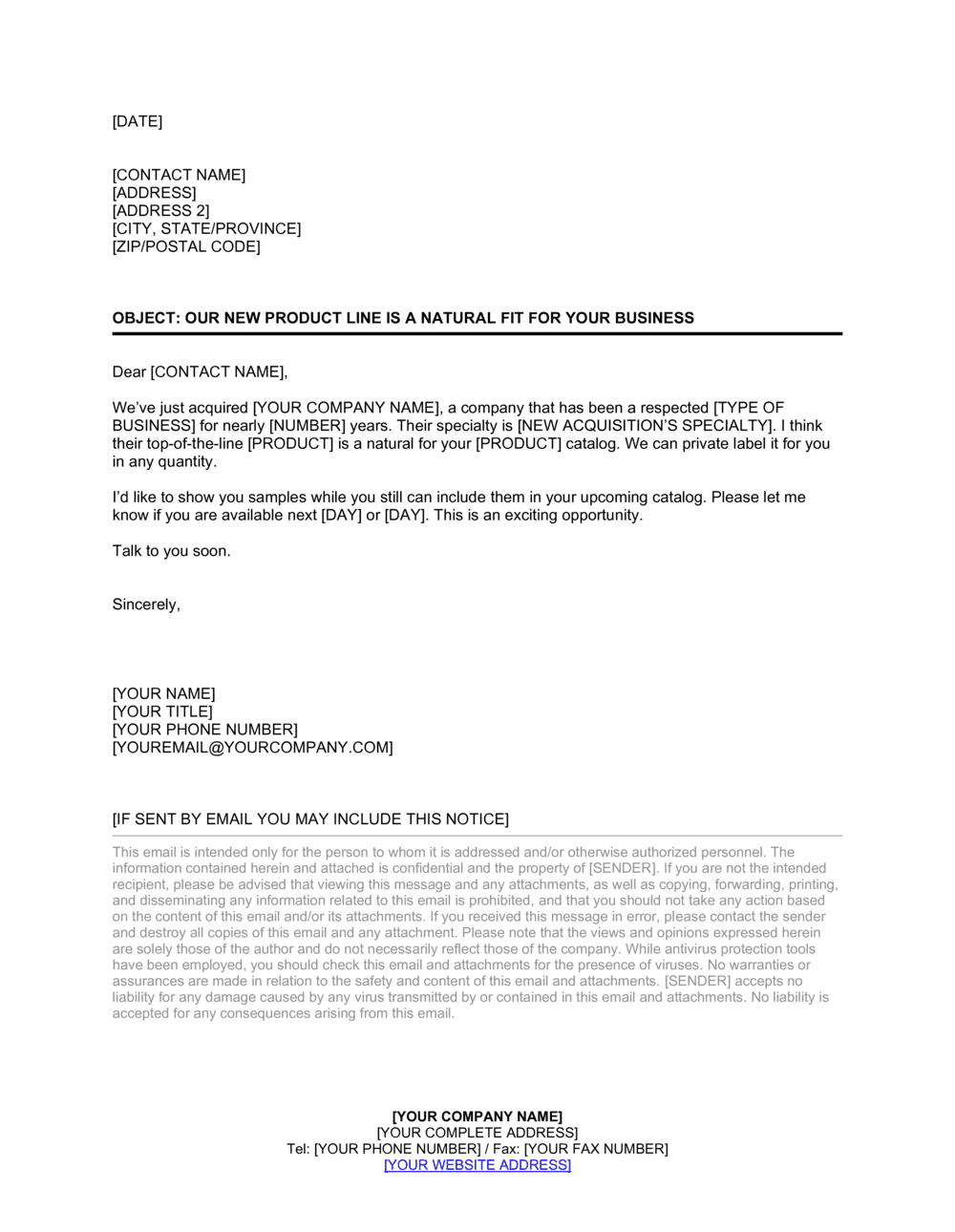
"Our New Product Line Is A Natural Fit For Your Business" is a formal B2B sales letter that introduces a supplier's new product line to an existing or prospective business client and makes the case that the offering aligns with that client's operations, customer base, or strategic goals. This free Word download gives you a structured, professional starting point you can edit online and export as PDF to send to buyers, procurement managers, or distribution partners.
When you need it
Use it when launching a new product line and reaching out to wholesale buyers, retailers, distributors, or existing accounts to secure stocking commitments, trial orders, or introductory meetings. It is also effective when cross-selling into an existing client relationship where the new line complements what they already purchase from you.
What's inside
An opening statement of fit, a concise description of the new product line and its key benefits, evidence of alignment with the recipient's business model or customer needs, introductory pricing or terms, a clear call to action, and contact information for follow-up.

What is "Our New Product Line Is A Natural Fit For Your Business"?

"Our New Product Line Is A Natural Fit For Your Business" is a formal B2B sales letter that a supplier, manufacturer, or brand uses to introduce a new product range to a specific business buyer — a retailer, wholesaler, distributor, or existing account — and make a structured commercial case that stocking or purchasing the line aligns with the recipient's business model, customer base, and category strategy. Unlike a generic product announcement, this letter is designed to be personalized: it names the recipient's existing category or customer demographic, connects the new product line directly to that context, provides introductory trade terms, and closes with a specific call to action. The document functions as both a persuasion tool and a professional record of the initial commercial communication.

Why You Need This Document

A poorly structured or generic product introduction letter is one of the most common reasons a promising new product line fails to gain distribution traction. Buyers at retail chains, buying groups, and wholesale distributors receive dozens of supplier pitches weekly — a letter that reads like a broadcast blast is deleted without a response, regardless of how strong the product actually is. This template gives you the structure to make a buyer-first case: leading with fit, backing it with specific commercial terms, and closing with a clear next step that reduces friction. Beyond conversion, a well-drafted letter that references specific pricing and trade terms creates a documented record of the commercial communication — relevant if a buyer later claims they were misled about pricing, exclusivity, or availability. For significant accounts or letters that include binding introductory pricing windows, a brief legal review ensures the language does not inadvertently create obligations you cannot fulfill.

Which variant fits your situation?

If your situation is…Use this template
Introducing the product line to a completely new prospect with no prior relationshipCold Sales Introduction Letter
Following up after an initial meeting or trade show conversationFollow-Up Sales Letter
Presenting a full proposal including pricing schedules and order termsBusiness Proposal
Offering an exclusive distribution arrangement alongside the product pitchDistribution Agreement
Announcing a new product line to the general public or pressPress Release — New Product
Pitching to a large retail chain requiring a formal vendor presentationVendor Proposal Template
Sending a product sample offer with formal terms attachedProduct Sample Agreement

Common mistakes to avoid

❌ Generic fit claims with no recipient-specific detail

Why it matters: Buyers receive dozens of product pitches weekly. A letter that could have been sent to any business signals low effort and poor targeting, and is typically discarded without a response.

Fix: Reference at least one specific, observable fact about the recipient's business — their current category, a recent store refresh, or a customer demographic you have in common.

❌ Leading with features instead of buyer benefits

Why it matters: Technical specifications mean nothing to a buyer evaluating shelf space or margin. A feature-first letter forces the reader to do the mental work of translating specs into commercial value — most won't bother.

Fix: Lead every benefit statement with the commercial outcome ('delivers [X]% margin at RRP') before naming the feature that enables it.

❌ Omitting trade terms from the initial letter

Why it matters: Buyers who must chase a price list or MOQ before deciding routinely disengage. Each additional step in the information-gathering process reduces conversion by a meaningful margin.

Fix: Include the wholesale unit price, RRP, MOQ, and payment terms directly in the letter body — or attach a complete price list and flag it explicitly.

❌ Passive or open-ended close

Why it matters: Ending with 'please don't hesitate to reach out' transfers all initiative to the buyer, who already has a full inbox and competing priorities.

Fix: Close with a specific ask, a named follow-up date, and your direct contact number — then actually follow up on the date you stated.

❌ Sending the same letter to every prospect without customization

Why it matters: Mass-blast sales letters are identifiable by even a casual reader and signal that the sender has not evaluated whether the product is genuinely a fit, undermining the core claim of the letter.

Fix: Customize at minimum the fit analysis paragraph and the salutation for each recipient — everything else can be templated.

❌ Referencing enclosures that are not attached

Why it matters: A buyer who reads 'see attached catalog' and finds no attachment has an immediate negative impression of your operational competence — exactly the opposite of what a new product pitch requires.

Fix: Before sending, run a physical checklist: catalog attached, price list attached, sample form attached. Send yourself a test copy first.

The 9 key clauses, explained

Salutation and relationship opener

In plain language: Addresses the recipient by name and title, and references any prior relationship or shared context to establish credibility and relevance immediately.

Sample language
Dear [BUYER FIRST NAME / TITLE LAST NAME], I am writing on behalf of [COMPANY NAME] to share an opportunity I believe is directly aligned with [RECIPIENT COMPANY NAME]'s current product offering in [CATEGORY].

Common mistake: Opening with a generic 'To Whom It May Concern' on a targeted sales letter — it signals the sender has not researched the recipient and reduces open rates and response rates significantly.

Product line introduction

In plain language: Describes the new product line in plain terms — what it is, what problem it solves, and which customer segment it serves.

Sample language
We have recently launched [PRODUCT LINE NAME], a range of [DESCRIPTION] designed for [TARGET CONSUMER / USE CASE]. The line includes [NUMBER] SKUs spanning [CATEGORIES], available from [DATE].

Common mistake: Leading with technical specifications instead of the customer problem the product solves — buyers evaluate fit against their customer's needs, not the product's features.

Fit analysis and alignment statement

In plain language: Explicitly connects the product line to the recipient's business — their existing category, customer demographics, or strategic direction — making the case that stocking it is a natural extension.

Sample language
Given that [RECIPIENT COMPANY NAME] serves [CUSTOMER PROFILE] and currently carries [COMPLEMENTARY CATEGORY], [PRODUCT LINE NAME] is a direct complement to your existing assortment and addresses a gap your customers are actively seeking.

Common mistake: Stating fit in vague terms ('this would be great for your customers') without citing any specific aspect of the recipient's business — this makes the letter indistinguishable from a mass blast and reduces credibility.

Key benefits and differentiators

In plain language: Lists the two to four most commercially relevant advantages of the product line — margin, exclusivity, proven sell-through, trend alignment — from the buyer's perspective, not the supplier's.

Sample language
[PRODUCT LINE NAME] delivers: (1) [X]% gross margin at the recommended retail price of $[X]; (2) [CERTIFICATION / TREND ALIGNMENT] resonating with [CONSUMER SEGMENT]; (3) a [RETURN POLICY / EXCLUSIVITY WINDOW] reducing your stocking risk.

Common mistake: Listing five or more benefits without prioritizing — buyers skim; three sharp, buyer-relevant benefits outperform a ten-point feature list every time.

Introductory pricing and trade terms

In plain language: States the wholesale price, recommended retail price, MOQ, payment terms, and any introductory discount or promotional period available to first-order buyers.

Sample language
Introductory wholesale price: $[X] per unit (RRP $[X]). MOQ: [NUMBER] units per SKU. Payment terms: Net [30/60] from invoice date. Introductory offer: [X]% discount on first orders placed by [DATE].

Common mistake: Omitting MOQ or payment terms from the letter — buyers who must request basic commercial terms before deciding typically disengage rather than follow up.

Social proof and traction evidence

In plain language: Provides credibility through market data, early adopter logos, sell-through results, or awards relevant to the recipient's sector.

Sample language
[PRODUCT LINE NAME] has already been adopted by [REFERENCE CUSTOMER / RETAILER] and achieved [X]% sell-through in the first [TIMEFRAME]. It was recognized as [AWARD / CERTIFICATION] in [YEAR].

Common mistake: Making unverifiable claims ('fastest-growing product in the category') without citing a source — buyers in procurement roles are trained to discount superlatives with no evidence.

Call to action and next steps

In plain language: Asks for a specific, low-friction next step — a 15-minute call, a sample order, or confirmation of a trade show meeting — with a clear deadline or limited-offer hook.

Sample language
I would welcome a 15-minute call at your convenience to walk you through the full line and discuss how we can support your [SEASON / QUARTER] planning. I will follow up by [DATE] — or you can reach me directly at [PHONE / EMAIL].

Common mistake: Ending the letter with 'Please feel free to contact us if you have questions' — this passive close shifts all momentum to the recipient and dramatically reduces follow-through.

Contact information and sign-off

In plain language: Provides the sender's full name, title, company, phone, email, and website, with a professional closing that reinforces the relationship tone.

Sample language
Sincerely, [SENDER FULL NAME] | [TITLE] | [COMPANY NAME] | [PHONE] | [EMAIL] | [WEBSITE]

Common mistake: Including only an email address and no phone number — buyers who prefer a quick call before committing will not pursue the opportunity if the contact details are incomplete.

Enclosures and attachments reference

In plain language: Notes any supporting materials attached or available on request — a product catalog, price list, sample kit, or terms and conditions document.

Sample language
Enclosures: [PRODUCT LINE NAME] Catalog (attached) | Wholesale Price List (available on request) | Sample Kit Order Form (attached)

Common mistake: Referencing enclosures that are not actually attached to the email or physical letter — this erodes professionalism and creates friction at the exact moment a buyer is ready to engage.

How to fill it out

  1. 1

    Research the recipient before filling in any field

    Review the recipient's website, product assortment, and LinkedIn profile to identify their current category focus, customer base, and any gaps your product line addresses. This research feeds directly into the fit analysis clause.

    💡 A single specific detail about the recipient's business ('I noticed your spring range focuses on [CATEGORY]') in the opening paragraph doubles response rates compared to a generic opener.

  2. 2

    Complete the salutation and relationship opener

    Address the recipient by first name if you have a prior relationship, or by title and last name for a cold outreach. Reference a shared context — a trade show, a referral, or a category you know they carry.

    💡 If you have no prior relationship, a mutual referral or shared industry association reference is the single strongest opener.

  3. 3

    Describe the product line in two to three sentences

    Name the product line, describe it in plain language, identify the target consumer, and list the number of SKUs and availability date. Keep this to three sentences maximum — detail belongs in the attached catalog.

    💡 Write the product description at a level a buyer's assistant can understand and relay — avoid trade jargon unless you know the recipient uses it.

  4. 4

    Write the fit analysis with specific references to the recipient's business

    Name the recipient's existing category or customer profile, then connect it explicitly to your product line. Use phrases like 'given that your customers are [DEMOGRAPHIC]' or 'complementing your existing [CATEGORY] range.'

    💡 If you are sending this letter to multiple recipients, customize the fit analysis for each — a mail-merged generic version is immediately recognizable and reduces response rates significantly.

  5. 5

    Fill in introductory pricing and trade terms precisely

    Enter the wholesale unit price, recommended retail price, MOQ per SKU, payment terms, and the expiry date of any introductory offer. Confirm these figures with your finance or pricing team before sending.

    💡 State the RRP alongside the wholesale price — buyers assess margin at a glance; making them calculate it is friction you can eliminate.

  6. 6

    Add one to two pieces of specific social proof

    Choose the most credible reference available — a named retail account, a sell-through percentage, or an industry award. Cite the source or timeframe so the claim is verifiable.

    💡 One specific, sourced data point ('42% sell-through in 8 weeks at [RETAILER]') outperforms three vague superlatives.

  7. 7

    Write a direct, time-bound call to action

    Choose a single next step — a call, a sample request, or a trade show meeting — and name a specific follow-up date. Avoid multiple CTAs; one clear ask is more effective than several options.

    💡 Proposing two specific time slots ('I am available Tuesday at 10am or Thursday at 2pm') converts better than 'let me know when you're free.'

  8. 8

    Attach supporting materials and verify enclosures

    Attach the product catalog, price list, and any sample order form before sending. Check that every document referenced in the enclosures clause is actually attached.

    💡 Name attachments clearly — 'ProductLineName_WholesaleCatalog_2026.pdf' beats 'Document1.pdf' and reduces the chance your email is flagged as spam.

Frequently asked questions

What is a new product line sales letter?

A new product line sales letter is a formal written communication from a supplier or manufacturer to a business buyer — retailer, wholesaler, or distributor — introducing a new range of products and making the case that stocking or purchasing the line is a natural fit for the recipient's business. It combines a value proposition, fit analysis, commercial terms, and a call to action in a single professional document.

When should I send a new product line letter instead of making a phone call?

A written letter or email works best as the first touchpoint with a buyer you have not previously spoken to, or as a formal follow-up after an initial conversation. It gives the recipient something to share internally with their category or procurement team, and it creates a paper trail that a phone call alone cannot. In most B2B contexts, a letter followed by a call within three to five business days is the most effective sequence.

Does a sales letter constitute a legally binding offer?

In most jurisdictions, a sales letter is classified as an invitation to treat rather than a binding offer — meaning it invites the recipient to make an order, which the supplier can then accept or decline. However, if the letter contains specific pricing, quantities, and acceptance language ('this offer is valid until [DATE]'), courts in some jurisdictions may treat it as a binding offer. Consider consulting a lawyer if you intend the letter to create contractual obligations.

What is the difference between a sales letter and a business proposal?

A sales letter is typically one to two pages and is designed to generate initial interest and a response. A business proposal is a longer, more detailed document covering scope, deliverables, pricing schedules, terms and conditions, and often a formal signature block. A sales letter gets you the meeting; a proposal closes the deal. For significant distribution arrangements, follow the letter with a formal proposal or distribution agreement.

How long should a new product line sales letter be?

One page is the standard target for a B2B sales letter sent by email or post. Buyers at retail chains and distributors receive high volumes of supplier pitches and rarely read past the first page. Keep the body to four to six short paragraphs, attach supporting materials separately, and reserve detail for the follow-up meeting or formal proposal.

Should I include pricing in the letter?

Yes, for most B2B outreach. Including the wholesale unit price, RRP, and MOQ allows the buyer to do a quick margin calculation before responding — removing this friction increases response rates. If your pricing is tiered or complex, include a summary of your best introductory tier in the letter and attach the full price list. Only withhold pricing if your sales process requires a consultative discussion before quoting.

How do I personalize this letter for each recipient?

At minimum, customize the salutation, the fit analysis paragraph, and any reference to the recipient's specific product category or customer base. If you are sending to more than ten prospects, build a simple mail-merge table with the recipient's name, company, and one category-specific fit detail. A letter that names a specific aspect of the recipient's business converts significantly better than an identical blast to every contact on the list.

What supporting materials should I attach to the letter?

The most effective attachments are a visual product catalog, a wholesale price list with MOQs and trade terms, and a sample order form or next-step response mechanism. If you have a sell-through case study or press coverage, include it as a one-page summary. Keep attachments to three documents or fewer — more than that signals disorganization and increases the chance the email is filtered as spam.

How should I follow up after sending the letter?

Follow up by phone or email three to five business days after sending, referencing the letter and asking a specific question — 'Did you have a chance to review the catalog?' or 'Would a 15-minute call this week work to discuss fit for your spring range?' One follow-up is professional; three or more without a response suggests the prospect is not interested and you should move on or try a different contact within the same organization.

How this compares to alternatives

vs Business Proposal

A business proposal is a longer, formal document covering detailed scope, deliverables, pricing schedules, and terms — typically 5–20 pages with a signature block. A new product line sales letter is a one-to-two-page opener designed to generate a response and a meeting. Use the sales letter first; send the proposal after the buyer expresses interest.

vs Distribution Agreement

A distribution agreement is a binding contract governing the terms of an ongoing distribution relationship — territory, exclusivity, minimum purchase commitments, and termination rights. A new product line sales letter is a non-binding commercial communication designed to initiate that relationship. The letter comes first; the distribution agreement formalizes what the letter started.

vs Product Launch Press Release

A press release announces a new product to media and public audiences in a broadcast format with no specific recipient. A sales letter is a targeted, personalized communication to a specific business buyer making a commercial case for stocking the product. They serve different audiences and different stages of the launch process.

vs Cold Sales Email

A cold sales email is a short, informal digital message optimized for a quick reply — typically three to five sentences with a single link or attachment. A formal sales letter is longer, more structured, and carries greater credibility for high-value B2B relationships where professionalism and completeness signal supplier quality. Use an email for volume prospecting; use a formal letter for key accounts.

Industry-specific considerations

Consumer Goods and Retail

Category fit against existing planogram, margin analysis at RRP, and seasonal timing tied to buyer review windows.

Food and Beverage

Shelf-life, regulatory compliance, and distribution temperature requirements are buyer priorities alongside margin and sell-through data.

Manufacturing and Wholesale

MOQ, lead time, and volume pricing tiers are the primary commercial terms buyers evaluate before engaging; include all three in the letter.

Health and Beauty

Certifications (organic, cruelty-free, dermatologist-tested) and regulatory compliance claims must be accurate and substantiated before inclusion in any sales letter.

Jurisdictional notes

United States

In the US, a sales letter is generally treated as an invitation to treat rather than a binding offer under the UCC. However, if the letter specifies price, quantity, and a defined acceptance window, it may constitute a firm offer under UCC §2-205 — particularly if the sender is a merchant. False or misleading claims about product performance or market position in a sales letter can trigger FTC Act liability.

Canada

Canadian contract law follows common-law offer-and-acceptance principles in most provinces; Quebec applies civil law under the Civil Code. A detailed sales letter with specific pricing and an acceptance deadline may be treated as a binding offer in either system. Competition Bureau guidelines prohibit deceptive marketing practices, including unsubstantiated superiority claims, in B2B sales communications.

United Kingdom

Under English contract law, a sales letter is typically an invitation to treat — the buyer's order constitutes the offer, which the supplier then accepts. However, letters containing firm pricing and a stated validity period may be interpreted as offers. The Consumer Protection from Unfair Trading Regulations 2008 and the Business Protection from Misleading Marketing Regulations 2008 prohibit misleading commercial claims in B2B and B2C communications.

European Union

EU member states vary in whether a detailed price quotation constitutes a binding offer — French and German commercial law are more likely to treat a specific price letter as an offer than common-law jurisdictions. The EU Unfair Commercial Practices Directive prohibits misleading B2C communications; the Misleading and Comparative Advertising Directive applies to B2B contexts. GDPR requirements apply to any personal data used in targeting or personalizing the letter.

Template vs lawyer — what fits your deal?

PathBest forCostTime
Use the templateSales managers and small business owners introducing a new product line to existing or prospective B2B buyersFree30–60 minutes per customized letter
Template + legal reviewLetters that include binding pricing commitments, exclusivity language, or promotional terms with a defined acceptance window$150–$400 for a brief legal or commercial review1–2 days
Custom draftedAnchor accounts, exclusive distribution proposals, or letters to publicly listed retailers where commercial commitments carry material financial exposure$500–$2,000+3–7 days

Glossary

Value Proposition
A concise statement of the specific benefit a product delivers to a target customer and why it is preferable to alternatives.
SKU (Stock Keeping Unit)
A unique identifier assigned to each distinct product variant, used for inventory tracking and ordering.
Introductory Pricing
A temporarily reduced price offered to new buyers for an initial order period to lower the barrier to trial.
Minimum Order Quantity (MOQ)
The smallest number of units a supplier will sell in a single order, set to cover production or fulfillment costs.
Distribution Channel
The path through which a product travels from manufacturer to end consumer — including wholesalers, distributors, and retailers.
Cross-Selling
Offering an additional or complementary product to an existing customer who already purchases from the seller.
Trade Terms
The agreed conditions of a commercial sale — payment timing, discount structures, return policies, and delivery responsibilities.
Call to Action (CTA)
A specific, direct request for the recipient to take a defined next step — scheduling a call, placing a trial order, or confirming interest.
Category Fit
The degree to which a new product aligns with the buyer's existing product assortment, customer base, or store category.
Vendor Onboarding
The administrative process a buyer uses to register a new supplier in their procurement system before the first purchase order can be issued.

Part of your Business Operating System

This document is one of 3,000+ business & legal templates included in Business in a Box.

  • Fill-in-the-blanks — ready in minutes
  • 100% customizable Word document
  • Compatible with all office suites
  • Export to PDF and share electronically

Create your document in 3 simple steps.

From template to signed document — all inside one Business Operating System.
1
Download or open template

Access over 3,000+ business and legal templates for any business task, project or initiative.

2
Edit and fill in the blanks with AI

Customize your ready-made business document template and save it in the cloud.

3
Save, Share, Send, Sign

Share your files and folders with your team. Create a space of seamless collaboration.

Save time, save money, and create top-quality documents.

★★★★★

"Fantastic value! I'm not sure how I'd do without it. It's worth its weight in gold and paid back for itself many times."

Managing Director · Mall Farm
Robert Whalley
Managing Director, Mall Farm Proprietary Limited
★★★★★

"I have been using Business in a Box for years. It has been the most useful source of templates I have encountered. I recommend it to anyone."

Business Owner · 4+ years
Dr Michael John Freestone
Business Owner
★★★★★

"It has been a life saver so many times I have lost count. Business in a Box has saved me so much time and as you know, time is money."

Owner · Upstate Web
David G. Moore Jr.
Owner, Upstate Web

Run your business with a system — not scattered tools

Stop downloading documents. Start operating with clarity. Business in a Box gives you the Business Operating System used by over 250,000 companies worldwide to structure, run, and grow their business.

Free Forever Plan · No credit card required