Discount Retail Store Business Plan Template

Free Word download β€’ Edit online β€’ Save & share with Drive β€’ Export to PDF

35 pagesβ€’2h 55m – 3h 55m to fillβ€’Difficulty: Expert
Learn more ↓
FreeDiscount Retail Store Business Plan Template

At a glance

What it is
A Discount Retail Store Business Plan is a structured planning document that maps out every dimension of launching or growing a discount retail operation β€” from target customer segments and merchandise sourcing to pricing strategy, store layout, staffing, and 3-year financial projections. This free Word download gives you a ready-to-edit framework you can customize for your specific store concept and export as PDF to share with lenders, investors, or partners.
When you need it
Use it when applying for a small business loan, seeking investors for a new store location, formalizing an existing operation for expansion, or building an internal roadmap before committing to a lease and build-out.
What's inside
Executive summary, company overview, market and competitive analysis, merchandise and sourcing strategy, pricing and promotional approach, store operations plan, management team, and a full financial model including startup costs, P&L, cash flow, and break-even analysis.

What is a Discount Retail Store Business Plan?

A Discount Retail Store Business Plan is a structured planning document that defines the concept, market opportunity, merchandise sourcing model, pricing strategy, store operations, and financial projections for a discount retail operation. It covers everything from trade-area demographics and competitive positioning to opening inventory requirements, daily transaction break-even calculations, and a three-year P&L. Unlike a general retail plan, it must explicitly address the mechanics of value-price sourcing, margin management across heterogeneous merchandise categories, and the shrinkage controls that make a low-price model financially viable.

Why You Need This Document

Opening a discount retail store without a written business plan means committing to a lease, build-out costs, and opening inventory β€” typically $80,000 to $300,000 β€” without a validated model for how the store reaches profitability. Banks and SBA lenders require a formal plan for any retail financing application, and the absence of one ends the conversation before it starts. Beyond financing, the planning process itself forces you to confront the three questions that determine whether a discount store survives its first year: Is there enough traffic in the trade area to hit your daily transaction target? Can your sourcing model sustain target margins at your price points? And does your working capital cover the gap between opening day and cash-flow positive operations? This template gives you a framework to answer all three with real data before you sign anything.

Which variant fits your situation?

If your situation is…Use this template
Opening a single brick-and-mortar discount storeDiscount Retail Store Business Plan
Launching a general e-commerce discount or clearance siteE-commerce Business Plan
Opening a dollar-store or fixed-price conceptRetail Store Business Plan
Starting a thrift or consignment retail operationThrift Store Business Plan
Seeking a quick internal alignment tool before full planningOne-Page Business Plan
Expanding an existing discount chain to new marketsBusiness Expansion Plan
Planning a pop-up or seasonal discount retail eventMarketing Plan

Common mistakes to avoid

❌ No trade-area-level market data

Why it matters: National discount retail statistics do not validate a single store location. Lenders evaluate foot traffic, local demographics, and competition within a 3–5 mile radius β€” without this data, the market analysis section is functionally empty.

Fix: Pull census demographic data, CoStar or LoopNet traffic reports, and a competitor map for your specific trade area and include them as supporting exhibits.

❌ Uniform gross margin assumption across all categories

Why it matters: Blending a 20% consumables margin with a 55% home goods margin into a single 37% average produces a P&L that is wrong in both directions β€” understating margin on soft goods and overstating it on staples.

Fix: Model gross margin by category, weight each category by its share of planned sales mix, and calculate a true blended margin from the bottom up.

❌ Underestimating opening inventory investment

Why it matters: A discount store that opens with sparse shelving looks like a closing sale, not a value destination β€” customers leave without buying and do not return. Lenders who see a low opening inventory budget flag it as a retail viability risk.

Fix: Budget opening inventory to achieve a minimum of 80% shelf capacity on opening day. For a 5,000 sq ft store, this typically requires $80,000–$150,000 in landed merchandise cost.

❌ No markdown cadence or dead-stock policy

Why it matters: Inventory that does not turn ties up cash, crowds out new merchandise, and signals poor buying discipline to any lender or investor reviewing the plan.

Fix: Define a specific markdown schedule: initial discount at Week [X], deeper discount at Week [X], liquidation or donation at Week [X]. Include the policy in the store operations section.

❌ Writing the executive summary first

Why it matters: An executive summary written before the body sections will contradict the financial model and competitive analysis details, making the entire document look uncoordinated to a reader who checks.

Fix: Complete every section of the plan before writing the executive summary, then distill the key facts from the finished document into 1–2 pages.

❌ Omitting shrinkage controls from the operations plan

Why it matters: Discount retail shrinkage averages 1.5–3% of revenue β€” on a $600,000 annual store, that is $9,000–$18,000 in annual inventory loss. A plan with no loss-prevention discussion tells lenders the owner has not operated retail before.

Fix: Document at minimum: EAS tagging policy by price threshold, daily cash reconciliation procedure, CCTV coverage, and receiving verification protocol.

The 10 key sections, explained

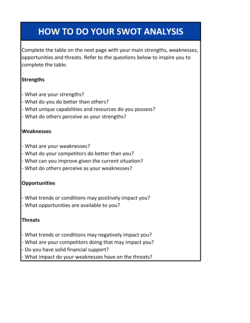
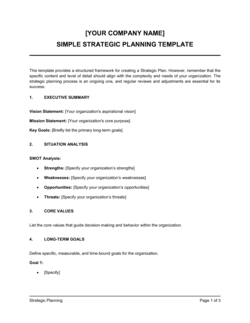
Executive Summary

Company Overview

Market Analysis

Competitive Analysis

Merchandise and Sourcing Strategy

Pricing and Promotional Strategy

Store Operations Plan

Management Team

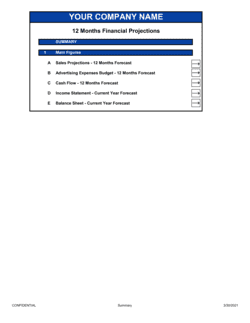
Financial Projections

Funding Requirements and Use of Funds

How to fill it out

  1. 1

    Define your store concept and trade area

    Start by documenting the store format (general merchandise, specific category focus, or closeout), the target trade area, and the customer profile you intend to serve. This anchors every downstream section.

    πŸ’‘ Pull free census data from data.census.gov for your target zip codes β€” median household income, population density, and vehicle traffic counts are exactly what lenders want to see.

  2. 2

    Complete the market and competitive analysis

    Research the local discount retail landscape within a 5-mile radius. Document at least four direct or indirect competitors with their formats, price points, and estimated square footage. Identify the gap your store fills.

    πŸ’‘ Visit each competitor in person before writing this section β€” firsthand observations about product mix, customer traffic, and store condition are more credible than secondhand summaries.

  3. 3

    Build the merchandise mix and sourcing model

    List your planned product categories with target SKU counts, gross margin ranges, and primary sourcing channels. Include supplier names, minimum order requirements, and payment terms where known.

    πŸ’‘ Contact at least two liquidation or closeout suppliers before finalizing this section β€” confirmed supplier relationships make the plan materially more credible to lenders.

  4. 4

    Document the pricing and markdown strategy

    Define your everyday pricing policy (e.g., 40% below full retail), your markdown cadence for slow-moving goods, and any planned loss-leader or promotional tactics.

    πŸ’‘ Express prices as a percentage below a specific benchmark (manufacturer suggested retail price, or comparable Amazon listing) β€” vague 'low price' language does not satisfy a lender's due diligence.

  5. 5

    Detail the store operations model

    Fill in staffing levels, store hours, POS and inventory system selection, receiving procedures, planogram refresh frequency, and loss prevention measures.

    πŸ’‘ Specify shrinkage controls explicitly β€” even a two-sentence loss-prevention policy demonstrates operational awareness that many first-time retail plans omit.

  6. 6

    Build the three-statement financial model

    Model startup costs, monthly P&L for Year 1, and annual P&L for Years 2–3. Start from daily transaction count Γ— average transaction value to build the revenue line β€” never reverse-engineer from a target.

    πŸ’‘ Include a sensitivity table showing profitability at 75% and 90% of projected sales. Lenders always stress-test retail plans against lower traffic assumptions.

  7. 7

    State the funding ask with specific allocations

    Enter the total capital required, split between equity and debt, and break it into at least five spending buckets: build-out, opening inventory, systems, marketing, and working capital reserve.

    πŸ’‘ Working capital reserves should cover at least three months of fixed operating costs β€” lenders view anything less as a liquidity risk.

  8. 8

    Write the executive summary last

    Pull the single strongest data point from each completed section and compress them into 1–2 pages. Highlight the funding ask, the break-even metric, and the owner's most relevant credential.

    πŸ’‘ Read the executive summary aloud to someone unfamiliar with the plan β€” if they cannot explain the concept and the opportunity back to you in two minutes, simplify it further.

Frequently asked questions

What is a discount retail store business plan?

A discount retail store business plan is a structured document that outlines the concept, market opportunity, merchandise strategy, store operations, management team, and financial projections for a discount retail operation. It is used to secure financing from banks or investors, satisfy franchisor requirements, or guide internal planning before committing to a lease and store build-out.

What financial projections should a discount retail business plan include?

A complete financial section covers startup costs itemized by category (build-out, opening inventory, systems, working capital), a monthly P&L for Year 1, annual P&L for Years 2–3, a cash flow statement, and a break-even analysis expressed in both monthly net sales and daily transaction count at your target average transaction value. Lenders typically also want a sensitivity analysis showing performance at 75% and 90% of projected sales.

How much does it cost to open a discount retail store?

Startup costs for a discount retail store typically range from $80,000 to $300,000 depending on store size, lease-improvement obligations, and opening inventory depth. A 3,000–5,000 sq ft store in a secondary strip center commonly requires $40,000–$80,000 for build-out and fixtures, $60,000–$120,000 for opening inventory, $5,000–$15,000 for POS and systems, and three months of working capital as a reserve. Your business plan should itemize each of these buckets with sourced estimates.

What sourcing channels do discount retailers typically use?

Common sourcing channels include liquidation platforms (B-Stock, Direct Liquidation, BULQ), closeout wholesalers, manufacturer overstock programs, returned-goods processors, and direct import from overseas manufacturers. Each channel has different merchandise quality, minimum order sizes, and margin profiles. A credible business plan names specific suppliers and documents confirmed or preliminary terms rather than describing channels in the abstract.

What gross margin should I project for a discount retail store?

Gross margin varies significantly by merchandise category. Consumables and household staples typically run 15–25%. General merchandise and housewares run 35–50%. Seasonal, apparel, and impulse items can reach 50–65%. A well-structured discount store targets a blended gross margin of 35–45%, depending on mix. Project margin by category and calculate a weighted blended rate β€” applying a single flat margin to all categories produces an inaccurate P&L.

Do I need a business plan to get an SBA loan for a retail store?

Yes. SBA 7(a) and SBA 504 lenders require a formal business plan that includes a company description, market analysis, management overview, and at least two years of financial projections. The plan does not need to be professionally written, but it must demonstrate that you understand the market, have a credible path to break-even, and have accounted for startup costs and working capital needs accurately.

How long should a discount retail store business plan be?

A plan intended for bank financing or investor review should run 20–30 pages plus a financial model appendix. The body covers the ten core sections; the appendix includes the full three-statement financial model, a startup cost schedule, and any supporting exhibits such as trade-area demographic data, lease term summaries, or supplier quotes. Plans shorter than 15 pages rarely contain enough market or financial detail to satisfy lender underwriting requirements.

What makes a discount retail business plan stand out to lenders?

Three factors separate strong plans from weak ones. First, a trade-area market analysis with real data β€” census demographics, traffic counts, and a competitor map within 5 miles. Second, a financial model built from daily transaction count and average transaction value upward, not backward from a revenue target. Third, confirmed supplier relationships with named vendors and documented terms. These three elements signal operational readiness rather than wishful thinking.

Can I use the same business plan for multiple store locations?

The business plan structure and financial model can be reused, but the market analysis, competitive landscape, site economics, and financial projections must be rebuilt for each location. Trade-area demographics, competition density, lease economics, and local wage rates differ enough between locations that a copied plan will fail underwriting for any new site. Treat each location plan as a separate document with shared operational and merchandising assumptions.

How this compares to alternatives

vs General Retail Store Business Plan

A general retail business plan covers any store concept without a specific value-pricing mandate. A discount retail plan must explicitly address the low-price sourcing model, margin compression management, and high-inventory-turnover requirements that define the discount format. Lenders evaluating a discount store expect to see a sourcing strategy and shrinkage controls that a general retail plan would not require.

vs One-Page Business Plan

A one-page plan is a rapid internal alignment tool for early-stage ideation. It lacks the financial model depth, trade-area market analysis, and sourcing documentation that banks and investors require for a brick-and-mortar retail loan. Use the one-page format to test the concept, then build the full plan before approaching any lender or investor.

vs Marketing Plan

A marketing plan covers customer acquisition channels, promotional tactics, and brand positioning in detail but omits the financial model, operations plan, and funding requirements that a business plan includes. A discount retail store needs both β€” the marketing plan drives the go-to-market strategy section, but it cannot substitute for the full business plan in a financing context.

vs Financial Projections Template

A standalone financial projections template models revenue, costs, and cash flow but provides no market context, competitive rationale, or operational framework. Lenders require narrative context alongside the numbers β€” the financial model is one section of the business plan, not a replacement for it.

Industry-specific considerations

Discount and Dollar Stores

Fixed-price and everyday-low-price formats require a sourcing model that sustains target margins at defined price points β€” the merchandise strategy section must demonstrate how the buying function maintains this discipline.

Liquidation and Closeout Retail

Opportunistic inventory sourcing means no two product cycles are identical β€” the plan must address how the store maintains category depth and visual merchandising standards when SKU availability varies.

Thrift and Resale Retail

Donation-based or consignment sourcing eliminates COGS volatility but requires a donation-intake operations model and pricing authority policy documented in the store operations section.

Grocery and Convenience Discount

Short product shelf life, health department licensing, and perishable inventory management add operational complexity that must be addressed in both the operations plan and the startup cost schedule.

Template vs pro β€” what fits your needs?

PathBest forCostTime
Use the templateFirst-time retail entrepreneurs applying for SBA loans under $350K or presenting to individual investorsFree2–4 weeks (30–60 hours)
Template + professional reviewOperators seeking financing above $350K or entering a new trade area without prior retail experience$500–$2,000 for a retail consultant or SCORE mentor review3–5 weeks
Custom draftedMulti-location rollouts, franchise system development, or institutional lender underwriting above $1M$3,000–$8,000 for a professional retail business plan writer4–8 weeks

Glossary

Gross Margin
Revenue minus the cost of goods sold, expressed as a percentage of revenue β€” the core profitability measure for any retail operation.
Inventory Turnover
How many times a store sells and replaces its inventory within a given period; higher turnover indicates efficient merchandising.
COGS (Cost of Goods Sold)
The direct cost of purchasing or producing the merchandise sold, excluding operating expenses like rent and labor.
Loss Leader
A product priced below cost to attract customer traffic, with the expectation that those customers will purchase higher-margin items.
Closeout Merchandise
Excess, discontinued, or returned inventory purchased from manufacturers or retailers at a steep discount for resale.
Average Transaction Value (ATV)
Total sales revenue divided by the number of customer transactions in a given period β€” a key metric for pricing and upsell strategy.
Break-Even Point
The sales volume at which total revenue equals total costs, producing neither profit nor loss.
Shrinkage
Inventory loss due to theft, damage, administrative error, or supplier fraud β€” a major cost driver in discount retail.
Planogram
A visual diagram specifying how and where merchandise is displayed on shelves to maximize sales per square foot.
Open-to-Buy (OTB)
The dollar amount of new inventory a buyer is authorized to purchase during a given period, based on planned sales and current stock levels.

Part of your Business Operating System

This document is one of 3,000+ business & legal templates included in Business in a Box.

  • Fill-in-the-blanks β€” ready in minutes
  • 100% customizable Word document
  • Compatible with all office suites
  • Export to PDF and share electronically

Create your document in 3 simple steps.

From template to signed document β€” all inside one Business Operating System.
1
Download or open template

Access over 3,000+ business and legal templates for any business task, project or initiative.

2
Edit and fill in the blanks with AI

Customize your ready-made business document template and save it in the cloud.

3
Save, Share, Send, Sign

Share your files and folders with your team. Create a space of seamless collaboration.

Save time, save money, and create top-quality documents.

β˜…β˜…β˜…β˜…β˜…

"Fantastic value! I'm not sure how I'd do without it. It's worth its weight in gold and paid back for itself many times."

Managing Director Β· Mall Farm
Robert Whalley
Managing Director, Mall Farm Proprietary Limited
β˜…β˜…β˜…β˜…β˜…

"I have been using Business in a Box for years. It has been the most useful source of templates I have encountered. I recommend it to anyone."

Business Owner Β· 4+ years
Dr Michael John Freestone
Business Owner
β˜…β˜…β˜…β˜…β˜…

"It has been a life saver so many times I have lost count. Business in a Box has saved me so much time and as you know, time is money."

Owner Β· Upstate Web
David G. Moore Jr.
Owner, Upstate Web

Run your business with a system β€” not scattered tools

Stop downloading documents. Start operating with clarity. Business in a Box gives you the Business Operating System used by over 250,000 companies worldwide to structure, run, and grow their business.

Free Forever PlanΒ Β·Β No credit card required