Customer Revival, Product Sales Template

Free Word download • Edit online • Save & share with Drive • Export to PDF

1 page20–30 min to fillDifficulty: StandardSignature requiredLegal review recommended
Learn more ↓
FreeCustomer Revival, Product Sales Template

At a glance

What it is
A Customer Revival Product Sales agreement is a binding contract between a seller and a lapsed or inactive customer that formalizes the terms under which the customer re-engages to purchase products. This free Word download lets you document re-engagement pricing, promotional incentives, delivery terms, and payment conditions in a single signed agreement you can export as PDF and execute in minutes.
When you need it
Use it when reaching out to customers who have stopped purchasing — whether dormant for 90 days or several years — and offering them a structured re-engagement deal. It is especially valuable when the revival offer includes special pricing, extended payment terms, or bundled incentives that differ from your standard sales terms.
What's inside
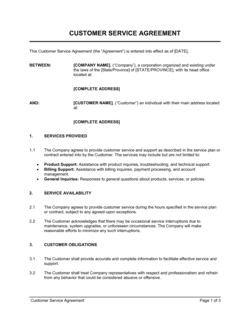
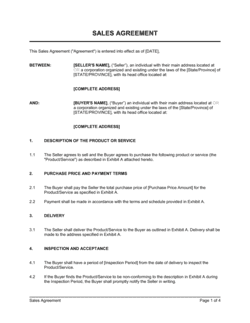
Parties and background, product descriptions and quantities, re-engagement pricing and incentive terms, payment schedule, delivery and acceptance conditions, representations and warranties, confidentiality of offer terms, and governing law with dispute resolution.

What is a Customer Revival Product Sales Agreement?

A Customer Revival Product Sales Agreement is a binding contract between a seller and a lapsed or inactive customer that formalizes the terms under which the customer re-engages to purchase products. Unlike a standard sales contract, it is structured specifically for win-back situations — documenting the special re-engagement pricing, time-limited incentives, delivery conditions, and confidentiality obligations that govern the revival offer. It converts a verbal or email-based re-engagement conversation into an enforceable document that protects both parties from pricing disputes, delivery misunderstandings, and non-payment risk.

Why You Need This Document

Relying on informal emails or verbal agreements to re-engage lapsed customers creates four concrete risks simultaneously. First, there is no enforceable record of the special pricing terms — the buyer can claim a different discount was agreed, or attempt to invoke the revival price on future orders beyond the intended window. Second, without a signed acceptance clause, the seller has no clear trigger for when the buyer committed, making it difficult to enforce payment deadlines or pursue overdue balances. Third, absent a confidentiality clause, a revived customer may share your promotional pricing with active accounts — triggering most-favored-customer demands and systematic margin erosion. Fourth, no inspection and rejection window means defect claims can surface weeks after delivery, with no contractual basis to limit them. A signed Customer Revival Product Sales Agreement closes all four gaps before the first unit ships, giving your sales team a professional, credible document that reinforces — rather than undermines — the commercial relationship you are working to rebuild.

Which variant fits your situation?

If your situation is…Use this template
Re-engaging a lapsed B2B product buyer with a one-time promotional offerCustomer Revival Product Sales Agreement
Reactivating a customer for a service rather than a physical productCustomer Revival Services Agreement
Onboarding a brand-new customer for the first timeProduct Sales Agreement
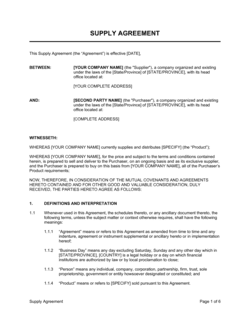
Setting up ongoing supply of products under a recurring arrangementSupply Agreement
Offering a lapsed customer a discount via a formal written offer letterSales Proposal
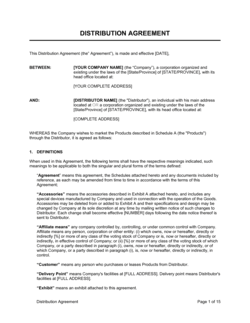
Re-engaging a wholesale distributor with updated terms and pricingDistribution Agreement
Reviving a customer through a negotiated settlement of an overdue accountPayment Plan Agreement

Common mistakes to avoid

❌ Omitting an offer expiry date on revival pricing

Why it matters: Without an expiry date, buyers may attempt to invoke discounted pricing weeks or months after the offer was made, creating margin erosion and pricing disputes with your active customer base.

Fix: Set a specific calendar date — typically 14–21 days from the agreement date — as the deadline for the buyer to execute. State that standard pricing applies automatically after that date.

❌ Vague product descriptions without a schedule

Why it matters: Describing products as 'assorted items' or 'standard product line' gives the buyer grounds to dispute whether the correct goods were shipped, increasing return and chargeback risk.

Fix: Attach a Schedule A listing every SKU, model number, unit quantity, and specification. Reference the schedule explicitly in the product description clause.

❌ No inspection and rejection window

Why it matters: Without a defined period for the buyer to inspect and formally reject non-conforming goods, defect claims can arise weeks after delivery — at which point the seller cannot reasonably investigate or mitigate.

Fix: Include a 5–10 business day inspection window from confirmed delivery, with a requirement that rejection notices be sent in writing and specify the defect in detail.

❌ Skipping the confidentiality clause for revival pricing

Why it matters: When revival discounts become known to full-price customers, they routinely demand the same terms — triggering renegotiations, most-favored-customer disputes, and systematic margin erosion.

Fix: Include an explicit confidentiality obligation covering pricing, discounts, and incentive terms, with a survival period of at least two years after the agreement terminates.

❌ No deposit or milestone payment on the first revival order

Why it matters: Lapsed customers carry higher credit risk than active accounts. Shipping goods on full Net 30 terms to a customer who stopped buying exposes the seller to non-payment with no recourse short of collections.

Fix: Require a deposit of 30–50% of the order value on execution, with the balance due Net 30 from delivery. This aligns seller exposure with buyer commitment.

❌ Governing law clause with no real connection to either party

Why it matters: Courts in the buyer's jurisdiction may refuse to apply a distant governing law that appears designed to circumvent local consumer or commercial protection rules, leaving the enforceability of the entire agreement in doubt.

Fix: Choose a governing law that corresponds to the seller's principal place of business or the buyer's jurisdiction, and confirm the choice is consistent with applicable mandatory law rules in both locations.

The 10 key clauses, explained

Parties and recitals

In plain language: Identifies the seller and buyer as legal entities, states the nature of their prior relationship, and records the commercial context — that the buyer has been inactive and the seller wishes to revive the relationship.

Sample language
This Customer Revival Product Sales Agreement ('Agreement') is entered into as of [DATE] between [SELLER LEGAL NAME], a [STATE/COUNTRY] [ENTITY TYPE] ('Seller'), and [BUYER LEGAL NAME], a [STATE/COUNTRY] [ENTITY TYPE] ('Buyer'). Buyer was previously a customer of Seller and has not placed a purchase order since [DATE]. Seller wishes to re-engage Buyer under the terms set out herein.

Common mistake: Using a trade name instead of the registered legal entity for either party. If the named entity does not match the party's corporate registration, enforcing payment or delivery obligations in court becomes unnecessarily complicated.

Product description and quantity

In plain language: Specifies exactly which products are covered by the revival offer — SKUs, model numbers, descriptions, and quantities — so there is no ambiguity about what the buyer is purchasing.

Sample language
Seller agrees to sell and Buyer agrees to purchase the following products: [PRODUCT NAME / SKU], Qty: [X] units; [PRODUCT NAME / SKU], Qty: [X] units, as further described in Schedule A attached hereto.

Common mistake: Describing products in general terms such as 'assorted goods' without referencing a schedule or SKU list. Vague product descriptions lead to disputes over whether the correct items were delivered and whether the order was fulfilled.

Revival pricing and incentive terms

In plain language: States the special re-engagement price, any discount from standard list price, bundled bonuses, and the expiry date after which the offer lapses and standard pricing applies.

Sample language
In consideration of Buyer's re-engagement, Seller offers a revival price of $[AMOUNT] per unit (representing a [X]% discount from standard list price of $[AMOUNT]). This revival pricing is valid for orders placed on or before [EXPIRY DATE]. Additional incentive: [BONUS PRODUCT / FREE SHIPPING / EXTENDED TERMS] as set out in Schedule B.

Common mistake: Omitting the offer expiry date. Without a defined deadline, the buyer may attempt to invoke the discounted pricing months later, creating a pricing dispute and margin erosion.

Payment terms and schedule

In plain language: Defines when and how the buyer must pay — full amount on delivery, deposit plus balance on Net 30, or an installment schedule — and the consequences of late payment.

Sample language
Buyer shall pay the total purchase price of $[AMOUNT] as follows: (a) a deposit of [X]% ($[AMOUNT]) due upon execution; (b) the remaining balance of $[AMOUNT] due Net [30/60] days from the invoice date. Overdue amounts accrue interest at [X]% per month from the due date.

Common mistake: Setting payment terms without specifying the trigger event for the clock to start. 'Net 30' is ambiguous unless the agreement states whether it runs from invoice date, ship date, or delivery date.

Delivery, risk of loss, and acceptance

In plain language: States the delivery method, expected lead time, the Incoterm that determines when risk transfers from seller to buyer, and the conditions under which the buyer formally accepts the goods.

Sample language
Seller shall deliver the products to [DELIVERY ADDRESS] within [X] business days of receipt of the deposit. Delivery is on [FOB / DDP / EXW] terms. Buyer shall inspect goods within [X] business days of delivery and notify Seller in writing of any non-conformance. Failure to notify within this period constitutes acceptance.

Common mistake: Failing to specify a rejection window. Without a defined inspection period, the buyer may claim defects weeks after delivery, making it difficult for the seller to investigate the complaint or contest a return.

Representations and warranties

In plain language: Records the seller's promises about the products — that they conform to specification, are free from defects, and comply with applicable laws — and the buyer's promise that it has authority to enter the agreement.

Sample language
Seller warrants that the products (a) conform to the specifications in Schedule A, (b) are free from material defects in materials and workmanship for [X] days from delivery, and (c) comply with applicable laws and regulations in [JURISDICTION]. Buyer represents that it has full authority to enter this Agreement and is not subject to any restriction preventing performance.

Common mistake: Including an implied warranty of fitness for a particular purpose without knowing the buyer's intended use. If the buyer uses the product in an application the seller was unaware of, this warranty may create unexpected liability.

Confidentiality of revival offer terms

In plain language: Prevents the buyer from disclosing the special re-engagement pricing or incentive terms to competitors, other customers, or the public, protecting the seller's standard pricing structure.

Sample language
Buyer agrees to keep the revival pricing, discounts, and incentive terms set out in this Agreement strictly confidential and shall not disclose them to any third party without the prior written consent of Seller. This obligation survives termination of the Agreement for a period of [X] years.

Common mistake: Omitting this clause entirely. When revival discounts become known to other active customers, they routinely demand the same pricing — eroding margins and creating most-favored-customer disputes.

Limitation of liability

In plain language: Caps the maximum damages either party can claim against the other — typically the total value of the transaction — and excludes indirect, consequential, and punitive damages.

Sample language
In no event shall either party be liable for any indirect, incidental, consequential, or punitive damages arising out of or related to this Agreement. Each party's total liability shall not exceed the total purchase price paid or payable under this Agreement.

Common mistake: Using a boilerplate limitation clause that excludes liability for gross negligence or fraud. Courts in many jurisdictions will refuse to enforce limitation clauses that purport to exclude liability for intentional misconduct.

Term, termination, and cancellation

In plain language: States how long the agreement remains in effect, which party may terminate and under what conditions, and what happens to unfulfilled orders or paid deposits upon termination.

Sample language
This Agreement commences on the date of execution and continues until all obligations are fulfilled, unless earlier terminated. Either party may terminate for material breach upon [X] days' written notice if the breach is not cured within the notice period. Upon termination, Seller shall refund any deposit paid for unshipped goods within [X] business days.

Common mistake: Not addressing what happens to the deposit on termination. Sellers who retain deposits after cancellation without a contractual right to do so frequently face payment disputes and chargebacks.

Governing law and dispute resolution

In plain language: Specifies which jurisdiction's law governs the agreement and how disputes are resolved — negotiation, mediation, binding arbitration, or court — including the venue.

Sample language
This Agreement is governed by the laws of [STATE / PROVINCE / COUNTRY], without regard to conflict-of-law principles. Any dispute arising under this Agreement shall first be subject to good-faith negotiation for [30] days. If unresolved, disputes shall be submitted to binding arbitration administered by [AAA / JAMS / applicable body] in [CITY], except that either party may seek injunctive relief in a court of competent jurisdiction.

Common mistake: Choosing a governing law jurisdiction that has no meaningful connection to either party's place of business. Some courts will refuse to apply a chosen governing law if it appears designed solely to circumvent mandatory consumer or commercial protections where the buyer is located.

How to fill it out

  1. 1

    Identify and verify both parties' legal entity names

    Enter the full registered legal name of both the seller and the buyer — not trade names or brand names. Confirm the buyer's current legal name against their prior purchase records or a business registry check.

    💡 A quick Companies House, state registry, or CRA lookup takes two minutes and prevents the wrong entity being named in a binding contract.

  2. 2

    Attach a product schedule with SKUs and specifications

    Complete Schedule A with every product covered by the revival offer, including SKU or model numbers, descriptions, specifications, and unit quantities. Reference this schedule in the main body of the agreement.

    💡 Listing products in a separate schedule lets you update quantities or add lines without amending the main contract — use this structure from the start.

  3. 3

    Set the revival pricing and define the offer expiry date

    State the special re-engagement price per unit, the percentage discount from standard list price, any bundled incentives, and the precise date by which the buyer must execute and return the agreement for the pricing to apply.

    💡 A 14–21 day window creates urgency without rushing the buyer. Shorter windows often trigger pushback; longer windows reduce the win-back conversion rate.

  4. 4

    Define payment terms with a specific trigger date

    Choose a payment structure — deposit plus balance, full payment on delivery, or Net 30/60 — and state explicitly whether the clock starts from invoice date, ship date, or confirmed delivery date.

    💡 For first revival orders, a 30–50% deposit protects the seller from a buyer who re-engages but fails to pay, while giving the buyer confidence that you will fulfill.

  5. 5

    Complete the delivery and acceptance terms

    Enter the delivery address, expected lead time in business days, the applicable Incoterm (FOB, DDP, or EXW are most common), and the inspection and rejection window — typically 5–10 business days after delivery.

    💡 For international shipments, DDP (Delivered Duty Paid) simplifies the buyer's experience and removes customs friction that can stall re-engagement.

  6. 6

    Tailor the warranty period to your product category

    Set a warranty duration appropriate for the product — 30–90 days for consumables, 6–12 months for hardware or equipment — and specify the remedy: repair, replacement, or refund.

    💡 Limit warranty scope to defects arising under normal use. Clearly exclude damage from misuse, unauthorized modification, or storage outside specified conditions.

  7. 7

    Add the confidentiality clause for revival pricing

    Set the duration of the pricing confidentiality obligation — typically 2–3 years — and confirm it survives termination of the agreement. This protects your standard pricing with other customers.

    💡 Consider adding a liquidated damages figure for breach of the confidentiality clause — a specific dollar amount is easier to enforce than proving actual loss.

  8. 8

    Execute before the offer expiry date

    Both parties must sign before the revival offer's expiry date for the special pricing to apply. Use a timestamped eSign tool to record execution and store the countersigned copy.

    💡 Send a calendar reminder to your sales contact three days before the expiry date — most unsigned agreements lapse through inaction, not refusal.

Frequently asked questions

What is a customer revival product sales agreement?

A customer revival product sales agreement is a binding contract between a seller and a lapsed or inactive customer that formalizes the terms under which the customer re-engages to purchase products. It documents the special re-engagement pricing, incentive terms, delivery conditions, payment schedule, and any confidentiality obligations that apply to the offer — replacing informal emails or verbal commitments with an enforceable document.

When should I use a customer revival agreement instead of a standard sales contract?

Use a customer revival agreement when the terms you are offering a lapsed customer differ materially from your standard sales terms — for example, when you are offering a one-time discount, extended payment terms, bundled bonus products, or free shipping not available to active customers. A standard sales contract does not capture the re-engagement context, the offer expiry date, or the confidentiality obligations that protect your pricing with other customers.

Does a customer revival agreement need to be signed to be enforceable?

Yes. Enforceability generally requires evidence of offer, acceptance, and consideration — all of which are most clearly established by a signed written agreement. An email acceptance may be sufficient in some jurisdictions, but a signed contract eliminates ambiguity about the exact terms accepted, the date of acceptance, and the authority of the person who agreed. Always execute the agreement before the offer expiry date.

How long should the revival pricing offer remain open?

A window of 14–21 calendar days from the agreement date is typical and commercially effective. Shorter windows — under 7 days — often trigger pushback and can damage a re-emerging relationship. Longer windows of 30 days or more reduce urgency and lower conversion rates. Set the expiry date as a specific calendar date rather than a number of days to avoid ambiguity.

Can I include a confidentiality clause in a product sales agreement?

Yes, and it is strongly advisable when revival pricing represents a material discount from your standard list price. A confidentiality clause prevents the buyer from disclosing the special terms to competitors, other customers, or the public. It is a standard commercial provision and is generally enforceable in most jurisdictions as long as its duration and scope are reasonable.

What payment terms should I use for a customer revival order?

For lapsed customers re-engaging for the first time, a 30–50% deposit on execution with the balance due Net 30 from delivery is a common and prudent structure. This reflects the higher credit risk of a reactivated account while keeping the terms attractive enough to close the deal. For customers with a strong prior payment history, full Net 30 from invoice may be appropriate. Always specify whether the payment clock runs from invoice date, ship date, or confirmed delivery date.

What delivery terms should I use for a product revival agreement?

For domestic orders, FOB (seller's warehouse or destination) is the most common structure. For international revival orders, DDP (Delivered Duty Paid) simplifies the buyer's experience by putting all freight, insurance, and customs obligations on the seller — reducing friction that could stall a fragile re-engagement. Always pair the Incoterm with a specific expected delivery window expressed in business days.

Does this agreement protect me if the buyer claims the products were defective?

A properly drafted warranty and acceptance clause provides significant protection. By requiring the buyer to inspect goods within a defined window — typically 5–10 business days — and submit written rejection notices that specify the defect, you limit the seller's exposure to claims raised well after delivery. The warranty clause should also define the remedy clearly as repair, replacement, or refund at the seller's election, and exclude damage from misuse or improper storage.

Do I need a lawyer to use a customer revival product sales agreement?

For standard domestic product revival orders with a known customer, a well-structured template is generally sufficient. Legal review is worth considering for high-value revival orders, international transactions, customers in jurisdictions with complex consumer or commercial law, or situations involving significant IP or proprietary product information. A lawyer can also advise whether any mandatory local rules — such as consumer protection statutes or implied warranty regimes — override any of the drafted terms.

How this compares to alternatives

vs Standard Product Sales Agreement

A standard product sales agreement governs a new or ongoing customer relationship at regular commercial terms. A customer revival agreement is specifically structured for lapsed accounts and adds re-engagement incentive terms, an offer expiry date, and confidentiality of revival pricing — none of which appear in a standard sales contract. Use the standard agreement for active customers and the revival version for win-back situations.

vs Customer Revival Services Agreement

A customer revival services agreement re-engages a lapsed customer for professional or consulting services rather than physical products. It focuses on scope of work, deliverables, and service-level commitments rather than product specifications, delivery terms, and risk of loss. Use the product version when the re-engagement involves tangible goods and the services version when it involves labor or expertise.

vs Sales Proposal

A sales proposal is a non-binding document that outlines what you are offering and invites acceptance. It does not create enforceable obligations on either party. A customer revival product sales agreement is a signed contract — it binds both parties to deliver and pay under the stated terms. Use a proposal early in the re-engagement conversation and convert it to a signed agreement once the customer is ready to commit.

vs Distribution Agreement

A distribution agreement governs an ongoing, multi-order relationship between a supplier and a distributor covering territory, exclusivity, minimum purchase obligations, and brand standards. A customer revival agreement is a single-transaction or short-term document focused on re-engaging a dormant account under a specific promotional offer. Once a revived distributor is consistently ordering again, a full distribution agreement is the appropriate long-term governing document.

Industry-specific considerations

Wholesale and distribution

High-volume SKU lists, tiered revival pricing by volume bracket, and extended Net 60 terms to ease re-entry for distributors managing cash flow constraints.

Manufacturing

Lead-time commitments tied to production schedules, materials surcharge disclosures, and delivery terms that account for freight and customs on cross-border component orders.

Retail and e-commerce

SKU-level product schedules, promotional bundle definitions, return and exchange windows aligned with consumer protection rules, and drop-ship delivery instructions.

Technology and hardware

Software license or firmware terms incorporated by reference, hardware warranty periods, RMA (return merchandise authorization) procedures, and export control compliance representations.

Food and beverage

Shelf-life and best-before date disclosures, cold-chain delivery requirements, recall notification obligations, and compliance with FDA or EFSA labeling regulations.

Professional services and consulting

Product-based deliverables such as report packages or data subscriptions, licensing of proprietary methodology, and usage restrictions on revived-order materials.

Jurisdictional notes

United States

Product sales contracts are primarily governed by Article 2 of the Uniform Commercial Code (UCC), which implies warranties of merchantability and fitness for purpose unless explicitly disclaimed. Revival pricing confidentiality clauses are generally enforceable as standalone commercial restrictions. State-specific consumer protection statutes — such as California's CLRA — may apply if the buyer is a consumer rather than a business. Limitation of liability clauses that exclude gross negligence or willful misconduct are unenforceable in most states.

Canada

Product sales are governed provincially — Ontario's Sale of Goods Act, British Columbia's Sale of Goods Act, and Quebec's Civil Code each impose implied warranties that cannot be entirely excluded by contract with a consumer buyer. Quebec requires that agreements with Quebec-domiciled parties be available in French. Revival pricing confidentiality obligations are enforceable but must be reasonable in scope and duration. Limitation of liability clauses are scrutinized under provincial consumer protection legislation for B2C transactions.

United Kingdom

The Sale of Goods Act 1979 and the Consumer Rights Act 2015 imply satisfactory quality and fitness for purpose warranties that cannot be excluded in B2C transactions. In B2B revival agreements, exclusion clauses are enforceable subject to the reasonableness test under the Unfair Contract Terms Act 1977. Confidentiality of pricing is routinely included in commercial sales contracts and is enforceable. Post-Brexit, EU VAT and customs rules no longer apply to UK-EU product sales — ensure delivery terms reflect the correct customs responsibility.

European Union

The EU Sale of Goods Directive (2019/771) harmonizes minimum two-year conformity guarantees for goods sold to consumers across member states — these cannot be waived by contract. In B2B revival agreements, parties have substantial freedom to set terms, but limitation of liability clauses must not exclude liability for fraud or intentional harm. GDPR applies to any personal data processed in connection with the revival outreach. Cross-border product revival orders within the EU benefit from the single market, but VAT registration obligations may arise depending on the seller's transaction volumes in each member state.

Template vs lawyer — what fits your deal?

PathBest forCostTime
Use the templateStandard domestic product revival orders with known customers, order values under $25,000Free20–30 minutes
Template + legal reviewRevival orders exceeding $25,000, international transactions, or customers in heavily regulated jurisdictions$300–$7001–3 days
Custom draftedHigh-value or strategic account reactivations involving IP, complex cross-border logistics, or disputed prior balances$1,000–$3,500+1–2 weeks

Glossary

Revival Offer
A time-limited, documented proposal to a lapsed customer offering special pricing, terms, or incentives to resume purchasing.
Lapsed Customer
A customer who has not made a purchase within a defined period — typically 90 days to 24 months — and is targeted for re-engagement.
Win-Back Campaign
A structured commercial effort to reactivate dormant customers through targeted outreach, promotional pricing, and a formal sales agreement.
Reactivation Incentive
A discount, bonus product, extended payment term, or other commercial benefit offered exclusively to encourage a lapsed customer to resume buying.
Net Payment Terms
The number of days after invoice date by which the buyer must remit payment — for example, Net 30 means full payment is due 30 days after the invoice is issued.
Acceptance
The customer's unconditional agreement to the terms of the revival offer, typically evidenced by signature on the agreement and/or submission of a purchase order.
Delivery Terms (Incoterms)
Internationally recognized rules defining who bears the cost, risk, and responsibility for goods at each stage of delivery — e.g., EXW, FOB, or DDP.
Force Majeure
A clause excusing a party from performance obligations when an extraordinary event beyond its control — such as a natural disaster or government action — prevents fulfillment.
Limitation of Liability
A clause capping the maximum financial exposure one party can have to the other — typically expressed as a multiple of the contract value or a fixed dollar amount.
Governing Law
The jurisdiction whose laws are chosen to interpret and enforce the agreement, regardless of where either party is physically located.
Entire Agreement Clause
A provision stating that the signed contract supersedes all prior negotiations, emails, and verbal promises — preventing either party from introducing outside evidence to change its terms.
Confidentiality of Offer Terms
A restriction preventing the revived customer from disclosing the special pricing or incentive terms to third parties, protecting the seller's commercial pricing strategy.

Part of your Business Operating System

This document is one of 3,000+ business & legal templates included in Business in a Box.

  • Fill-in-the-blanks — ready in minutes
  • 100% customizable Word document
  • Compatible with all office suites
  • Export to PDF and share electronically

Create your document in 3 simple steps.

From template to signed document — all inside one Business Operating System.
1
Download or open template

Access over 3,000+ business and legal templates for any business task, project or initiative.

2
Edit and fill in the blanks with AI

Customize your ready-made business document template and save it in the cloud.

3
Save, Share, Send, Sign

Share your files and folders with your team. Create a space of seamless collaboration.

Save time, save money, and create top-quality documents.

★★★★★

"Fantastic value! I'm not sure how I'd do without it. It's worth its weight in gold and paid back for itself many times."

Managing Director · Mall Farm
Robert Whalley
Managing Director, Mall Farm Proprietary Limited
★★★★★

"I have been using Business in a Box for years. It has been the most useful source of templates I have encountered. I recommend it to anyone."

Business Owner · 4+ years
Dr Michael John Freestone
Business Owner
★★★★★

"It has been a life saver so many times I have lost count. Business in a Box has saved me so much time and as you know, time is money."

Owner · Upstate Web
David G. Moore Jr.
Owner, Upstate Web

Run your business with a system — not scattered tools

Stop downloading documents. Start operating with clarity. Business in a Box gives you the Business Operating System used by over 250,000 companies worldwide to structure, run, and grow their business.

Start free · No credit card required